Loading...
Anna of Russia vs Kamehameha V
Kamehameha V leads by 1.4 pts · 2 figures compared
…

Anna of Russia
Emperor · Modern
43.6Total
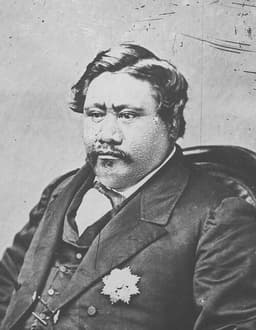
Kamehameha V
Emperor · Modern
45.0Total
Basic Information
Born
1693
1830
Died
1740
1872
Era
Modern
Modern
Nationality
Russia
Hawaii
Occupation
Emperor
Emperor
Civilization
Western
Other
Score Comparison
Military (10%)
14.9
11.3
Political (20%)
33.6
46.6
Influence (20%)
47.9
50.2
Legacy (20%)
38.3
42.5
Leadership (15%)
67.0
74.0
Strategy (15%)
54.6
26.5
TOTAL
43.6
45.0
Anna of Russia — Complete Timeline
1730 AD
Accession as Empress of RussiaPolitical Action◆ Major
Anna was invited to become empress by the Supreme Privy Council, which imposed conditions limiting her power. She accepted but soon tore up the conditions, dissolved the council, and established autocratic rule. Her accession marked a return to absolute monarchy after Peter II's death.
SuccessionAutocracySupreme Privy Council
Impact: national
Dissolution of the Supreme Privy CouncilPolitical Action◆ Major
Anna, with support from the nobility and guards, revoked the conditions of her accession and dissolved the Supreme Privy Council. She replaced it with a cabinet of ministers loyal to her, consolidating her autocratic power and ending the experiment with constitutional limits.
Government ReformAutocracyNobility
Impact: nationalconstructive
Dominance of German Favorites (Bironovshchina)Political Action◆ Major
Anna's reign was dominated by her German favorite, Ernst Johann von Biron, who became de facto ruler. Biron and other Baltic Germans filled key government posts, leading to widespread resentment among the Russian nobility. This period, known as Bironovshchina, was marked by corruption and repression.
FavoritismGerman InfluenceCorruption
Impact: nationaldestructive
1732 AD
Construction of the Winter PalaceCultural
Anna commissioned the construction of the first Winter Palace in Saint Petersburg, designed by Francesco Bartolomeo Rastrelli. The palace became the official residence of the Russian monarchs and a symbol of imperial power. It was later expanded and rebuilt by subsequent rulers.
ArchitectureWinter PalaceSaint Petersburg
Impact: nationalconstructive
1735 AD
Russo-Turkish War (1735–1739)War◆ Major
Anna's government waged war against the Ottoman Empire, seeking access to the Black Sea. Russian forces captured the fortress of Azov and invaded the Crimea, but the war ended with the Treaty of Belgrade (1739), which returned most gains to the Ottomans. The war was costly and inconclusive.
Russo-Turkish WarAzovTreaty of Belgrade
Impact: regional
Kamehameha V — Complete Timeline
1863 AD
Ascended to the Throne as Kamehameha VPolitical Action◆ Major
Lot Kapuāiwa became King Kamehameha V after the death of his brother Kamehameha IV. He was the last monarch of the Kamehameha dynasty.
Impact: national
1864 AD
Promulgated the 1864 ConstitutionReform◆ Major
Kamehameha V abrogated the 1852 constitution and promulgated a new one that increased royal power. The 1864 constitution abolished the office of kuhina nui (premier), gave the king veto power, and restricted suffrage to property owners.
Impact: national
1865 AD
Oversaw Economic Growth and Public WorksReform
Kamehameha V promoted economic development, including the expansion of the sugar industry, construction of roads and harbors, and the establishment of the Hawaiian Board of Health. His reign saw increased foreign investment and trade.
Impact: nationalconstructive
1867 AD
Refused to Sign the Reciprocity TreatyPolitical Action◆ Major
Kamehameha V refused to sign a reciprocity treaty with the United States that would have reduced tariffs on Hawaiian sugar. He believed the treaty would compromise Hawaiian sovereignty and lead to American domination.
Impact: national
1872 AD
Died Without an HeirOther◆ Major
Kamehameha V died without naming an heir, ending the Kamehameha dynasty. His death triggered a succession crisis that led to the election of Lunalilo as the next king.
Impact: nationaltragic
Expert Analysis
Origins
Anna of Russia (born 1693) was the daughter of Ivan V, co-tsar with Peter the Great. After her father's death, she was raised in a politically turbulent court. In 1710, she married Frederick William, Duke of Courland, but he died en route to their new home. Anna spent the next 20 years as a widow in Mitau, dependent on Russian support. Her lack of a secure power base made her reliant on nobles and foreign advisors.
Kamehameha V (born 1830 as Lot Kapuāiwa) was the grandson of Kamehameha I, the unifier of the Hawaiian Islands. He was educated at the Royal School in Honolulu, where he learned English and Western governance. His brother, Kamehameha IV, preceded him as king. Lot was deeply influenced by Hawaiian traditions and the desire to preserve indigenous sovereignty amid growing foreign influence.
Rise to Power
Anna's rise came in 1730 when the Supreme Privy Council, seeking a weak monarch, offered her the throne with conditions limiting her power. She accepted, but upon arrival in Moscow, she quickly rallied the nobility and guards to revoke the conditions. She dissolved the Council (1730) and exiled its members. Anna's coup was swift, establishing her as an autocrat with the support of the gentry who feared oligarchic rule.
Kamehameha V ascended the throne in 1863 after his brother's death. Unlike Anna, he inherited a constitutional monarchy. However, he immediately clashed with the legislature. In 1864, he abrogated the 1852 constitution and promulgated a new one that concentrated power in the monarchy, abolished the office of kuhina nui (premier), and established property qualifications for voters. This move was supported by native Hawaiians and some foreign residents but opposed by many American missionaries.
Leadership & Governance
Anna's leadership style was indirect, relying heavily on her German favorite, Ernst Johann von Biron. The period known as Bironovshchina saw Baltic Germans dominate key government posts. Anna's governance score is 67.0, but her political score is only 33.6, reflecting her delegation of power. She maintained autocracy but was not an active reformer. Her reign saw the construction of the Winter Palace but also harsh repression of dissent.
Kamehameha V, with a leadership score of 74.0, was more hands-on. He personally oversaw the drafting of the 1864 constitution, which increased royal authority. He promoted economic development, expanding the sugar industry and building infrastructure. However, his refusal to sign the Reciprocity Treaty with the US (1867) showed his strategic caution (strategy score 26.5) but also his determination to avoid dependency. His political score of 46.6 indicates moderate success in navigating internal politics.
Triumph & Tragedy
Anna's triumph was securing her throne and dissolving the Supreme Privy Council, which could have reduced her to a figurehead. She also waged the Russo-Turkish War (1735–1739), capturing Azov and gaining Black Sea access, though at high cost. Her tragedy was the dominance of Biron, whose corruption and favoritism alienated the nobility and weakened the state. The Bironovshchina stained her legacy.
Kamehameha V's triumph was the 1864 constitution, which strengthened the monarchy and preserved Hawaiian sovereignty for a time. He also oversaw economic growth, with sugar exports rising. His tragedy was dying without an heir in 1872, ending the Kamehameha dynasty. This triggered a succession crisis that eventually led to the overthrow of the monarchy in 1893. His refusal of the reciprocity treaty may have been wise, but it also limited economic opportunities.
Character & Destiny
Anna was pragmatic and ruthless, willing to break promises to gain power. Her reliance on Biron suggests a need for trusted advisors, but it also reflected her isolation as a foreign-born ruler. Her character led to a reign of stability but also mediocrity.
Kamehameha V was proud and determined, committed to Hawaiian autonomy. He was educated in Western ways but chose traditional governance. His refusal to compromise on the constitution and treaty showed his strong will but also inflexibility. His death without an heir was a personal and national tragedy.
Legacy
Anna's legacy is mixed: she is remembered for the Bironovshchina and the construction of the Winter Palace, but her reign did not significantly advance Russia. Her military score of 14.9 reflects limited success. Her influence score of 47.9 and legacy score of 38.3 indicate moderate long-term impact.
Kamehameha V's legacy is more significant for Hawaii. His constitution lasted until the monarchy's end. His economic policies laid groundwork for the sugar industry. His influence score of 50.2 and legacy score of 42.5 are slightly higher than Anna's. However, his failure to secure the dynasty weakened Hawaii's future.
Conclusion
Kamehameha V had a greater impact on his nation's trajectory. His leadership score (74.0 vs 67.0) and total score (45.0 vs 43.6) reflect his active role. While Anna maintained autocracy, she did so through delegation and foreign favorites, leaving a weaker legacy. Kamehameha V's actions directly shaped Hawaii's constitutional and economic development, even if his death undid the dynasty. For a smaller state, his influence was more profound. Thus, Kamehameha V edges out Anna of Russia.
Rankings
🥇
Kamehameha VLeader
Mil: 11.3Pol: 46.6Inf: 50.2
45.0
🥈
Anna of Russia
Mil: 14.9Pol: 33.6Inf: 47.9
43.6
+1.4 behind
How This Comparison Works
Algorithm
Each figure is scored on 6 dimensions (0—100 scale) based on structured historical data: Military (10%), Political (20%), Influence (20%), Legacy (20%), Leadership (15%), Strategy (15%). The weighted total produces the final ranking.
Data Sources
Scores are computed from structured sub-indicators in the database. Scale factors adjust for era (Ancient ×0.85, Modern ×1.0) and civilization size (Eastern ×1.05, Other ×0.80) to account for differences in population and military scale.
Maximum 3 Figures
Comparisons are limited to 2—3 figures to ensure readability and statistical meaningfulness.
Error Margins
±5 points per dimension — Sub-scores are derived from historical records with inherent uncertainty. Two figures within 5 points on a dimension should be considered roughly equivalent in that area.
Total Score Accuracy
±3 points overall — The weighted combination of 6 dimensions produces a total score with approximately ±3 points of uncertainty. Differences of less than 3 points are not statistically significant— the figures are effectively tied.
Known Limitations
- Historical records are incomplete and uneven across civilizations
- Figures from oral-tradition societies may be underrepresented
- Occupation labels can misclassify multi-role figures
- Scores measure capability and impact, not moral character
- Quantitative scoring is a comparison tool, not absolute truth
Capability Radar
Military (10%) — Battles & Warfare
Battles
10
4
Win Rate
10
9
Expansion
10
11
Political (20%) — Governance & Reform
Reform
20
20
Diplomacy
30
30
Economy
20
35
Influence (20%) — Cultural & Global Reach
Cultural
15
30
Global
10
10
Legacy (20%) — Historical Impact
Historical
20
35
Longevity
10
20
Leadership (15%) — Power & Stability
Tenure
50
40
Stability
20
25
Strategy (15%) — Tactics & Innovation
Strategy
5
15
Tactics
5
15
Reform
10
21
Similar Comparisons
Comments & Discussion
No comments yet. Be the first to share your thoughts!