Loading...
Alexander the Great vs Kamehameha V
Alexander the Great leads by 40.2 pts · 2 figures compared
…
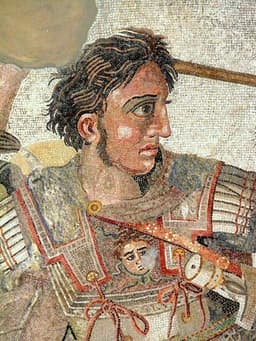
Alexander the Great
General · Ancient
85.2Total
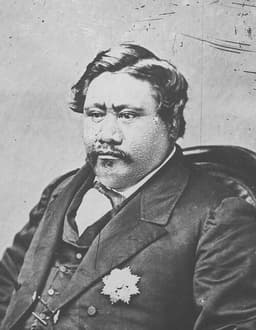
Kamehameha V
Emperor · Modern
45.0Total
Basic Information
Born
-356
1830
Died
-323
1872
Era
Ancient
Modern
Nationality
Macedon
Hawaii
Occupation
General
Emperor
Civilization
Western
Other
Score Comparison
Military (10%)
95.0
11.3
Political (20%)
60.0
46.6
Influence (20%)
92.0
50.2
Legacy (20%)
90.0
42.5
Leadership (15%)
80.0
74.0
Strategy (15%)
92.0
26.5
TOTAL
85.2
45.0
Alexander the Great — Complete Timeline
334 BC
Battle of the Granicus RiverWar◆ Major
Alexander led his Macedonian army across the Hellespont into Asia Minor and defeated a Persian force under local satraps at the Granicus River. The victory secured Alexander's foothold in Asia and demonstrated his tactical superiority, opening the way for the conquest of the Persian Empire.
Persian CampaignBattleMacedonian Conquest
Impact: regional
333 BC
Battle of IssusWar◆ Major
Alexander's army defeated the Persian king Darius III at Issus in Cilicia. Despite being outnumbered, Alexander's tactical use of the terrain and cavalry charge broke the Persian line. Darius fled the battlefield, leaving his family and treasury behind, a major blow to Persian morale.
Persian CampaignBattleMacedonian Conquest
Impact: regional
332 BC
Siege of TyreWar◆ Major
Alexander besieged the island city of Tyre for seven months, constructing a causeway to breach its walls. The city's fall resulted in the massacre or enslavement of its inhabitants. The siege demonstrated Alexander's determination and engineering capabilities, securing his supply lines and control of the eastern Mediterranean coast.
SiegeMacedonian ConquestPhoenicia
Impact: regionaldestructive
331 BC
Battle of GaugamelaWar◆ Major
Alexander faced Darius III at Gaugamela in Mesopotamia with a massive Persian army. Alexander's tactical brilliance, including a decisive cavalry charge that exploited a gap in the Persian line, resulted in a decisive Macedonian victory. Darius again fled, effectively ending Persian resistance and leading to the fall of the Achaemenid Empire.
Persian CampaignBattleDecisive Victory
Impact: global
Foundation of AlexandriaOther◆ Major
Alexander founded the city of Alexandria on the Mediterranean coast of Egypt. He personally selected the site and oversaw the initial planning. Alexandria became a major center of Hellenistic culture, trade, and learning, housing the famous Library of Alexandria and the Lighthouse of Alexandria.
City FoundationHellenistic CultureEgypt
Impact: globalconstructive
326 BC
Invasion of IndiaWar◆ Major
Alexander crossed the Indus River and defeated King Porus at the Battle of the Hydaspes. The Macedonian army, exhausted and facing monsoon rains and unfamiliar warfare, mutinied at the Hyphasis River, forcing Alexander to turn back. This campaign marked the easternmost extent of his conquests.
Indian CampaignBattleMutiny
Impact: regional
Kamehameha V — Complete Timeline
1863 AD
Ascended to the Throne as Kamehameha VPolitical Action◆ Major
Lot Kapuāiwa became King Kamehameha V after the death of his brother Kamehameha IV. He was the last monarch of the Kamehameha dynasty.
Impact: national
1864 AD
Promulgated the 1864 ConstitutionReform◆ Major
Kamehameha V abrogated the 1852 constitution and promulgated a new one that increased royal power. The 1864 constitution abolished the office of kuhina nui (premier), gave the king veto power, and restricted suffrage to property owners.
Impact: national
1865 AD
Oversaw Economic Growth and Public WorksReform
Kamehameha V promoted economic development, including the expansion of the sugar industry, construction of roads and harbors, and the establishment of the Hawaiian Board of Health. His reign saw increased foreign investment and trade.
Impact: nationalconstructive
1867 AD
Refused to Sign the Reciprocity TreatyPolitical Action◆ Major
Kamehameha V refused to sign a reciprocity treaty with the United States that would have reduced tariffs on Hawaiian sugar. He believed the treaty would compromise Hawaiian sovereignty and lead to American domination.
Impact: national
1872 AD
Died Without an HeirOther◆ Major
Kamehameha V died without naming an heir, ending the Kamehameha dynasty. His death triggered a succession crisis that led to the election of Lunalilo as the next king.
Impact: nationaltragic
Expert Analysis
Alexander the Great vs Kamehameha V
# The Conqueror and the King Who Refused
On a steppe in Central Asia, a young Macedonian king wept because there were no more worlds to conquer. Half a world away and two millennia later, a Hawaiian monarch sat in his palace and wept because his world was shrinking, because the very forces that had made Alexander's empire possible—the march of Western imperialism, the spread of global trade, the erosion of indigenous sovereignty—were closing in on his islands like a tightening fist. One man built an empire that stretched from Greece to India and died at thirty-two, undefeated. The other built nothing but walls around his throne and died at forty-two, childless, the last of his dynasty. How do two rulers, both born into royalty, both determined to preserve their power, end up on such opposite poles of history?
Origins
Alexander was born into a world of iron and ambition. His father, Philip II of Macedon, had transformed a backward kingdom into a military powerhouse, unifying the fractious Greek city-states through conquest and cunning. Alexander grew up in the shadow of his father's greatness, tutored by Aristotle, trained from boyhood to command armies, to think of the world as something to be taken. The Macedonian aristocracy bred warriors the way the Hawaiian aliʻi bred chiefs—through lineage, through ritual, through the constant threat of violence. But where Alexander's world was one of expansion, Kamehameha V's was one of contraction.
Lot Kapuāiwa was born in 1830, a prince of the Kamehameha dynasty that had unified the Hawaiian Islands under a single rule. His grandfather, Kamehameha the Great, had conquered the islands with Western cannons and traditional warfare, but by the time Lot became king in 1863, the kingdom was already bleeding. Foreign merchants controlled the economy, American missionaries shaped the culture, and the great powers of Europe and America circled like sharks. Alexander inherited a sword; Kamehameha V inherited a wound.
Rise to Power
Alexander's path to power was violent and swift. At twenty, after Philip's assassination, he had to crush rebellions in Thebes and Athens before he could even think of invading Persia. He did so with terrifying efficiency—razing Thebes to the ground, selling its inhabitants into slavery, sending a message that echoed across the ancient world. His rise was a sprint, a series of battles that read like a fever dream: Granicus, Issus, Gaugamela. Each victory opened the door to the next, until the entire Persian Empire lay at his feet.
Kamehameha V's rise was gentler but no less decisive. He became king upon the death of his brother, Kamehameha IV, and immediately faced a crisis. The Hawaiian constitution of 1852 had created a legislature that could override the monarch's veto, and foreign interests were using it to erode royal authority. Lot did not go to war; he called a constitutional convention. When the convention refused to give him more power, he simply dismissed them, abrogated the old constitution, and promulgated a new one in 1864 that concentrated authority in the crown. It was a bloodless coup, but a coup nonetheless.
Leadership & Governance
Alexander governed through conquest. His military genius is beyond dispute: he never lost a battle, never failed to adapt to new enemies, never let terrain or weather or logistics stop him. At the Siege of Tyre, he built a causeway half a mile long across the sea. At Gaugamela, he exploited a gap in the Persian lines with a cavalry charge that is still studied at military academies. His political score of 65.0 reflects his weaknesses—he was better at taking cities than administering them, better at inspiring soldiers than governing subjects. He tried to blend Macedonian and Persian cultures, marrying a Persian princess and adopting Persian court rituals, but his empire was held together by his personal charisma and the fear of his army.
Kamehameha V led through resistance. His political score of 50.2 is lower, but it masks a different kind of courage. He refused to sign the Reciprocity Treaty with the United States in 1867, knowing that it would open Hawaiian sugar to American markets but also tie the kingdom's economy to a foreign power. He built roads and harbors, expanded the sugar industry, and tried to modernize Hawaii on its own terms. His military score of 14.6 is almost laughable compared to Alexander's 96.0, but Kamehameha V never needed an army; he needed a nation that could survive without one.
Triumph & Tragedy
Alexander's greatest triumph was also his greatest tragedy: he conquered the known world but could not hold it. At thirty-two, he died in Babylon, possibly from fever, possibly from poison, leaving an empire with no clear heir. His generals carved it up among themselves, and within a generation, the Hellenistic world was a patchwork of warring kingdoms. His legacy score of 90.0 reflects the spread of Greek culture, the founding of cities like Alexandria, the fusion of East and West that would shape the Mediterranean for centuries. But his personal tragedy was that he died believing he had failed.
Kamehameha V's tragedy was smaller but more poignant. He died in 1872 without an heir, ending the Kamehameha dynasty. His refusal to name a successor was not just a personal failure; it was a political catastrophe. The succession crisis that followed led to the election of King Lunalilo, then King Kalākaua, and ultimately to the overthrow of the Hawaiian monarchy in 1893. Kamehameha V's constitution, designed to strengthen the crown, became the tool that weakened it, because it concentrated power in a single person who could not pass it on.
Character & Destiny
Alexander was driven by an insatiable hunger. He believed he was descended from Achilles, that he was destined to conquer the world, that glory was the only measure of a man. His leadership score of 82.0 and strategy score of 92.0 reflect a mind that could see the battlefield and the map with equal clarity. But his personality was also his undoing: he became paranoid, cruel, and megalomaniacal, killing his own friends and generals, drinking himself into rages, alienating the very Macedonians who had made his victories possible.
Kamehameha V was driven by a different kind of hunger: the desire to preserve. He was conservative in the truest sense—he wanted to conserve Hawaiian sovereignty, Hawaiian culture, Hawaiian independence. His leadership score of 78.5 and strategy score of 65.8 suggest a man who was competent but not brilliant, stubborn but not visionary. He could not see that the world was changing in ways that no constitution could stop, that the same forces that had propelled Alexander across Asia were now propelling American whalers and British missionaries across the Pacific.
Legacy
Alexander's legacy is written in stone and scholarship. His military tactics are taught at West Point and Sandhurst. His name is synonymous with conquest, with the spread of civilization, with the very idea of greatness. His influence score of 90.0 and legacy score of 90.0 place him among the most consequential figures in human history. But his legacy is also a warning: empires built on one man's ambition crumble when that man dies.
Kamehameha V's legacy is written in the soil of Hawaii. His constitution survived until the monarchy fell, and his refusal to sign the Reciprocity Treaty delayed the economic colonization of the islands. His influence score of 66.1 and legacy score of 55.6 are modest, but they reflect a different kind of greatness: the courage to say no, the wisdom to know that some battles cannot be won with armies, the dignity to go down fighting on your own terms.
Conclusion
In the end, Alexander and Kamehameha V were both kings who tried to shape the world to their will. Alexander tried to conquer it; Kamehameha V tried to preserve it. One succeeded beyond all measure and died weeping; the other failed and died in silence. But which of them was wiser? Alexander's empire vanished within a generation, leaving behind a legacy of violence and cultural fusion. Kamehameha V's kingdom vanished within a generation too, but it left behind a legacy of resistance, a reminder that small nations can defy great ones, that a king who refuses to bow is still a king. Perhaps the question is not who was greater, but who was more human. Alexander conquered the world and found it empty. Kamehameha V lost his world and found it worth fighting for.
Rankings
🥇
Alexander the GreatLeader
Mil: 95.0Pol: 60.0Inf: 92.0
85.2
🥈
Kamehameha V
Mil: 11.3Pol: 46.6Inf: 50.2
45.0
+40.2 behind
How This Comparison Works
Algorithm
Each figure is scored on 6 dimensions (0—100 scale) based on structured historical data: Military (10%), Political (20%), Influence (20%), Legacy (20%), Leadership (15%), Strategy (15%). The weighted total produces the final ranking.
Data Sources
Scores are computed from structured sub-indicators in the database. Scale factors adjust for era (Ancient ×0.85, Modern ×1.0) and civilization size (Eastern ×1.05, Other ×0.80) to account for differences in population and military scale.
Maximum 3 Figures
Comparisons are limited to 2—3 figures to ensure readability and statistical meaningfulness.
Error Margins
±5 points per dimension — Sub-scores are derived from historical records with inherent uncertainty. Two figures within 5 points on a dimension should be considered roughly equivalent in that area.
Total Score Accuracy
±3 points overall — The weighted combination of 6 dimensions produces a total score with approximately ±3 points of uncertainty. Differences of less than 3 points are not statistically significant— the figures are effectively tied.
Known Limitations
- Historical records are incomplete and uneven across civilizations
- Figures from oral-tradition societies may be underrepresented
- Occupation labels can misclassify multi-role figures
- Scores measure capability and impact, not moral character
- Quantitative scoring is a comparison tool, not absolute truth
Capability Radar
Military (10%) — Battles & Warfare
Battles
98
4
Win Rate
99
9
Expansion
99
11
Political (20%) — Governance & Reform
Reform
75
20
Diplomacy
80
30
Economy
70
35
Influence (20%) — Cultural & Global Reach
Cultural
95
30
Global
95
10
Legacy (20%) — Historical Impact
Historical
98
35
Longevity
95
20
Leadership (15%) — Power & Stability
Tenure
60
40
Stability
55
25
Strategy (15%) — Tactics & Innovation
Strategy
98
15
Tactics
99
15
Reform
85
21
Similar Comparisons
Comments & Discussion
AlexanderTheWeeping6/16/2026
Alexander didn't weep because he had no worlds left—he wept because he knew his empire was unsustainable without a unified administrative system. As a military historian, I'd argue his so-called "genius" was tactical, not strategic. The Battle of Hydaspes in 326 BCE proves this: he won, but his army mutinied soon after. Kamehameha V, on the other hand, preserved Hawaiian sovereignty through legal strategy (the 1864 Constitution) and rejecting offers from US annexationists. One conquered vast lan
历史重构者6/16/2026
我们太迷恋“征服者”这种标签了。亚历山大死在32岁,留下的是一个迅速分裂的帝国,而卡美哈梅哈五世死在42岁,留下的是一个被殖民机器碾碎的王国——这两者真的有高下之分吗?作为修订历史批评者,我要说:亚历山大是典型的西方叙事产物,英雄化个人的征服,而忽视了那些被屠杀的波斯平民。卡美哈梅哈五世的故事才是真正悲剧性的:他在1864年颁布的宪法重新强化了君主权力,试图阻挡美式民主浪潮,但最终被历史吃掉。真英雄,往往是那些“拒绝被征服”的人。
数据怀疑论者6/16/2026
你们都在谈宏大叙事,我来点实际的。亚历山大的帝国有多大?资料显示约520万平方公里,但人口呢?管理效率呢?在他的统治下,真正稳定的地区只有马其顿和希腊核心区,其他区域——比如埃及和波斯——基本是靠恐惧维持的。而卡美哈梅哈五世的夏威夷王国,面积仅约2.8万平方公里,却成功维持了独立直到1893年。从“持续存活”这个指标来看,哪个统治者更成功?别迷信疆域数字,你看看亚历山大的帝国在他死后十年内就碎成什么样子了。
Historian2576/16/2026
Alexander is the quintessential 'world-historical individual' in Hegel's terms—a man whose actions coincidentally advanced the Hellenistic synthesis, even though his primary impulse was personal glory. Kamehameha V is the opposite: a ruler who consciously resisted historical forces. Consider this—at the very moment Alexander was burning Persepolis in 330 BCE as a 'symbolic' act of vengeance, he was also importing Persian court rituals into his own administration. He adapted to conquer. Kamehameh
Chronicler60376/16/2026
You're all missing the emotional core. Kamehameha V didn't just rule—he mourned. He watched his people die from diseases brought by Cook's men, saw missionaries