Loading...
Jiaqing Emperor vs Qin Shi Huang
Qin Shi Huang leads by 38.7 pts · 2 figures compared
…
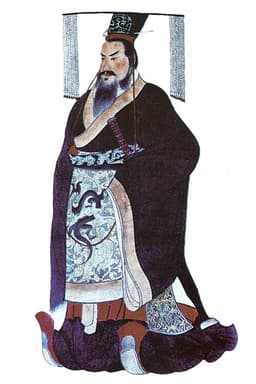
Jiaqing Emperor
Emperor · Modern
46.5Total
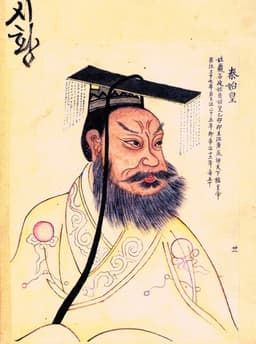
Qin Shi Huang
Emperor · Ancient
85.2Total
Basic Information
Born
1760
-259
Died
1820
-210
Era
Modern
Ancient
Nationality
China
China
Occupation
Emperor
Emperor
Civilization
Eastern
Eastern
Score Comparison
Military (10%)
35.0
80.0
Political (20%)
39.4
90.0
Influence (20%)
51.0
85.0
Legacy (20%)
40.8
90.0
Leadership (15%)
64.0
78.0
Strategy (15%)
45.0
82.0
TOTAL
46.5
85.2
Jiaqing Emperor — Complete Timeline
1795 AD
Suppression of the Miao RebellionWar◆ Major
Jiaqing's forces suppressed a major Miao rebellion in Guizhou and Hunan provinces. The campaign was brutal and costly, but restored Qing control over the region, though it highlighted ethnic tensions.
Miao rebellionEthnic conflictMilitary campaign
Impact: regionaldestructive
1796 AD
White Lotus RebellionWar◆ Major
The White Lotus Rebellion erupted in central China, lasting until 1804. Jiaqing's government struggled to suppress the rebellion due to corruption and inefficiency, draining the Qing treasury and exposing military weakness.
RebellionWhite LotusQing decline
Impact: nationaldestructive
1799 AD
Execution of HeshenPolitical Action◆ Major
Upon taking full power after his father Qianlong's death, Jiaqing ordered the arrest and execution of the corrupt grand councilor Heshen. Heshen's vast wealth was confiscated, temporarily replenishing the imperial treasury.
Anti-corruptionHeshenPolitical purge
Impact: nationalconstructive
1800 AD
Fiscal crisis and tax reformsReform◆ Major
Jiaqing attempted to address the fiscal crisis caused by the White Lotus Rebellion and corruption. He implemented tax reforms, reduced court spending, and tried to curb official embezzlement, but with limited success.
Fiscal reformTax policyEconomic crisis
Impact: nationalconstructive
1805 AD
Decline of the Qing militaryOther◆ Major
The Qing military's inability to quickly suppress the White Lotus Rebellion revealed its decline. The Eight Banners and Green Standard armies were poorly trained and equipped, forcing the use of local militias.
Military declineEight BannersQing weakness
Impact: nationaldestructive
Qin Shi Huang — Complete Timeline
246 BC
Construction of the Mausoleum and Terracotta ArmyOther◆ Major
Qin Shi Huang commissioned a vast mausoleum complex near Xi'an, guarded by thousands of life-sized terracotta soldiers, horses, and chariots. The project employed hundreds of thousands of workers and reflected his obsession with immortality and imperial power.
Impact: global
230 BC
Conquest of the Six Warring StatesWar
From 230 to 221 BCE, Ying Zheng led the Qin state in a series of campaigns that conquered the Han, Zhao, Wei, Chu, Yan, and Qi states. This unified China under a single ruler for the first time, ending the Warring States period.
Impact: global
221 BC
Standardization of Writing, Currency, and MeasurementsReform◆ Major
Qin Shi Huang ordered the standardization of Chinese script, currency, and weights and measures across the unified empire. This facilitated administration, trade, and cultural integration, laying a foundation for future dynasties.
Impact: globalconstructive
Proclamation of the Qin DynastyPolitical Action
After conquering the last independent state, Ying Zheng declared himself Shi Huangdi (First Emperor), founding the Qin Dynasty. He adopted a new title to signify his supreme authority and initiated centralized imperial rule.
Impact: global
214 BC
Initiation of the Great Wall ConstructionOther◆ Major
Qin Shi Huang ordered the connection and extension of existing northern fortifications to create a unified defensive wall against nomadic Xiongnu raids. This project involved massive conscripted labor and became the precursor to the later Great Wall.
Impact: regional
213 BC
Burning of Books and Burying of ScholarsPolitical Action◆ Major
On the advice of Li Si, Qin Shi Huang ordered the burning of historical records and philosophical texts not aligned with Legalist doctrine. He also had 460 Confucian scholars buried alive to suppress dissent and consolidate ideological control.
Impact: nationaldestructive
Expert Analysis
jiaqing-emperor-vs-qin-shi-huang
# The Emperor and the Caretaker
On a spring morning in 221 BC, a 38-year-old king stood atop the walls of Xianyang, watching his armies march home from the last of their conquests. Ying Zheng had done what no one before him had achieved: he had crushed the six warring states and brought all of China under a single rule. He declared himself Shi Huangdi—the First Emperor—and set about remaking the world in his image.
Two thousand years later, in 1799, another emperor faced a very different dawn. The Jiaqing Emperor had just ordered the execution of Heshen, the most corrupt official in Qing history, and discovered that the empire's treasury was nearly empty. While Qin Shi Huang had inherited a powerful war machine and built an empire from scratch, Jiaqing inherited a crumbling colossus and spent his reign trying to keep it from falling apart. One created the template for imperial China; the other watched it begin to dissolve.
Origins
Qin Shi Huang was born into chaos. The Warring States period had torn China apart for centuries, and the Qin state—a harsh, militaristic kingdom on the western frontier—had spent generations preparing for conquest. Ying Zheng became king at thirteen, but real power lay with his mother's lover, the eunuch Lao Ai, and the prime minister Lü Buwei. By the time he seized control in 238 BC, the young king had learned that trust was a weakness and ruthlessness a necessity.
The Jiaqing Emperor, born Aisin Gioro Yongyan in 1760, entered a world of opulent stability. His father, the Qianlong Emperor, had ruled for decades over the wealthiest empire on earth. The Qing dynasty seemed eternal, its Manchu rulers having mastered the art of governing China's Han majority. But beneath the gilded surface, corruption festered. The young prince watched as Heshen, his father's favorite, amassed a fortune larger than the imperial treasury itself.
Rise to Power
For Qin Shi Huang, power came through violence. After eliminating his mother's faction and exiling Lü Buwei, he turned his military genius toward conquest. From 230 to 221 BC, his armies swept through the six kingdoms like a bronze tide. He used overwhelming force, but also bribery and assassination—whatever worked. When the conquered city of Handan resisted, he ordered every adult male executed, a message written in blood for all who might oppose him.
Jiaqing's path was quieter but no less treacherous. For decades, he waited as his father refused to die. The Qianlong Emperor abdicated in 1795 but retained power as "Retired Emperor." Jiaqing was emperor in name only, forced to bow to Heshen and his father's decrees. When Qianlong finally died in 1799, Jiaqing moved swiftly. Within days, Heshen was arrested, his mansion seized, and his wealth—estimated at 800 million taels of silver—confiscated. But the damage was done.
Leadership and Governance
The contrast between these two rulers could not be sharper. Qin Shi Huang governed like a thunderstorm—violent, transformative, and absolute. He standardized writing, currency, and measurements across his empire, forcing a chaotic collection of states into a single civilization. Roads were built, canals dug, and the first foundations of the Great Wall laid. His Legalist philosophy, guided by the minister Li Si, treated law as a weapon: strict, impersonal, and merciless. Dissent was not tolerated. In 213 BC, he ordered the burning of all books not dealing with practical subjects, and the next year, buried 460 scholars alive for criticizing his rule.
Jiaqing governed like a man trying to plug a leaking dike with his fingers. The White Lotus Rebellion, which erupted in 1796 and lasted until 1804, exposed every weakness of the Qing state. The Eight Banners, once invincible, could barely suppress a peasant uprising. Jiaqing tried to reform the tax system, reduce corruption, and revive the military—but every effort met resistance. The bureaucracy that Heshen had corrupted was too entrenched, the fiscal crisis too deep. Where Qin Shi Huang could command and see obedience, Jiaqing could only plead and see evasion.
Triumph and Tragedy
Qin Shi Huang's triumph was absolute: the unification of China. No one before him had even imagined such a thing. His standardization of script meant that a man from the Yangtze could read a document written in the north, and that unity of writing has endured for two millennia. His mausoleum, guarded by the Terracotta Army, remains one of the wonders of the world.
But his tragedy was equally vast. His obsession with immortality led him to consume mercury pills, which likely killed him at 49. His empire collapsed within three years of his death, destroyed by the very harshness that had built it. The Qin dynasty lasted only fifteen years.
Jiaqing's triumph was survival. He held the Qing empire together through two decades of crisis, and his execution of Heshen became a legend of justice. But his tragedy was that survival came at a terrible cost. The White Lotus Rebellion drained the treasury and exposed the dynasty's weakness. The opium trade was already eroding China's social fabric. Jiaqing died in 1820, leaving his successor an empire that was still standing but already hollow.
Character and Destiny
Qin Shi Huang was a man of terrifying clarity. He saw what he wanted—a unified, orderly, eternal China—and he let nothing stand in his way. His paranoia was legendary: he slept in a different palace each night to avoid assassination, and he never revealed his whereabouts. But that paranoia, born of a treacherous childhood, drove him to create systems of control that would define Chinese governance for centuries.
Jiaqing was a man of tragic decency. He wanted to be a good emperor in the Confucian tradition—benevolent, just, and wise. But he inherited a system that rewarded corruption, a military that had lost its edge, and an economy that was bleeding silver. His moderation, which might have been a virtue in better times, became a weakness. He could not be ruthless enough to purge the bureaucracy, nor visionary enough to imagine a new path.
Legacy
Qin Shi Huang's legacy is written in the very fabric of China. The name "China" may derive from "Qin." The Great Wall, the Terracotta Army, the standardized script—these are his monuments. For two thousand years, every Chinese dynasty has built on his foundation. He is remembered as both a tyrant and a unifier, a destroyer and a creator.
Jiaqing's legacy is more ambiguous. He is remembered as the emperor who killed Heshen, but also as the ruler under whom the Qing decline became irreversible. His reign is a cautionary tale about the limits of reform within a corrupt system. The Opium War, which would shatter China just two decades after his death, was already inevitable.
Conclusion
Standing at the extremes of Chinese imperial history, these two emperors illuminate the terrible choices of power. Qin Shi Huang shows us what absolute authority can achieve—and what it destroys. Jiaqing shows us what happens when authority is absolute in name only. One built a world; the other tried to save one. Both failed in their deepest ambitions: the First Emperor could not make his empire eternal, and the caretaker emperor could not make his empire whole again. Their stories remind us that the measure of a ruler is not just what they build, but what they leave behind—and that the distance between triumph and tragedy is often only a matter of time.
Rankings
🥇
Qin Shi HuangLeader
Mil: 80.0Pol: 90.0Inf: 85.0
85.2
🥈
Jiaqing Emperor
Mil: 35.0Pol: 39.4Inf: 51.0
46.5
+38.7 behind
How This Comparison Works
Algorithm
Each figure is scored on 6 dimensions (0—100 scale) based on structured historical data: Military (10%), Political (20%), Influence (20%), Legacy (20%), Leadership (15%), Strategy (15%). The weighted total produces the final ranking.
Data Sources
Scores are computed from structured sub-indicators in the database. Scale factors adjust for era (Ancient ×0.85, Modern ×1.0) and civilization size (Eastern ×1.05, Other ×0.80) to account for differences in population and military scale.
Maximum 3 Figures
Comparisons are limited to 2—3 figures to ensure readability and statistical meaningfulness.
Error Margins
±5 points per dimension — Sub-scores are derived from historical records with inherent uncertainty. Two figures within 5 points on a dimension should be considered roughly equivalent in that area.
Total Score Accuracy
±3 points overall — The weighted combination of 6 dimensions produces a total score with approximately ±3 points of uncertainty. Differences of less than 3 points are not statistically significant— the figures are effectively tied.
Known Limitations
- Historical records are incomplete and uneven across civilizations
- Figures from oral-tradition societies may be underrepresented
- Occupation labels can misclassify multi-role figures
- Scores measure capability and impact, not moral character
- Quantitative scoring is a comparison tool, not absolute truth
Capability Radar
Military (10%) — Battles & Warfare
Battles
40
85
Win Rate
30
90
Expansion
10
90
Political (20%) — Governance & Reform
Reform
25
95
Diplomacy
30
75
Economy
20
90
Influence (20%) — Cultural & Global Reach
Cultural
30
95
Global
15
85
Legacy (20%) — Historical Impact
Historical
35
95
Longevity
20
95
Leadership (15%) — Power & Stability
Tenure
60
70
Stability
15
65
Strategy (15%) — Tactics & Innovation
Strategy
30
85
Tactics
35
80
Reform
20
95
Similar Comparisons
Comments & Discussion
数据分析师6/17/2026
贾诩的记账本:这是皇帝vs维修工,不是同级别对比。秦始皇统一度量衡、铸秦半两,经济基础打死了;嘉庆接手时国库存银7000万两,八年后只剩2000万,白莲教耗光血本。你没法拿创业大佬跟守成末代比——一个设计系统,一个算糊涂账。别被“皇帝”俩字骗了,数据不会撒谎。
历史反讽家6/17/2026
暴君与庸君的差别:秦始皇焚书坑儒但车同轨书同文,敢动真格;嘉庆杀和珅后国库满了吗?没有,因为体制烂透了。他费劲铲除一个贪官,却不敢动官僚体系分毫——结果“和珅跌倒,嘉庆吃饱”成了笑话,吃饱的只有地方官员。一个敢砸烂旧世界,一个连修门都嫌累。历史不给温和的人高分,抱歉。
Historian8736/17/2026
Qin Shi Huang burned books, burying 460 scholars alive to crush dissent—a brutal act, but one that shows he feared ideas enough to fight them. Jiaqing, in contrast, burned his own paper: when the British envoy Lord Macartney arrived in 1793, the Qing court dismissed him as a barbarian tribute-bearer. Qin built a unified script that still shapes China; Jiaqing fumbled diplomacy that would doom his grandson. One shaped civilization, the other let it stagnate.
Historian2386/17/2026
Let’s not romanticize Jiaqing: he inherited a corrupt machine but lacked the spine to reform. His response to the White Lotus Rebellion was half-hearted pacification, not strategic conquest. Meanwhile, Qin Shi Huang standardized roads, weights, and script—forcing unity on a fractured land. One man built a nation-state; the other managed its decay. If you want a stable empire, you need a visionary, not a bureaucrat who fears his own shadow.
Chronicler51656/17/2026
Comparing Jiaqing to Qin Shi Huang is like comparing a janitor to a god of war. Qin forged an empire from chaos, standardizing script and measures while crushing six states with iron discipline. Jiaqing? He fumbled the White Lotus Rebellion for nine years, draining 200 million silver taels—half the treasury. The First Emperor built the Great Wall; Jiaqing just watched it crumble. One is the architect of China, the other its forgetful caretaker.