Loading...
Jiaqing Emperor vs Mustafa I
Mustafa I leads by 5.5 pts · 2 figures compared
…
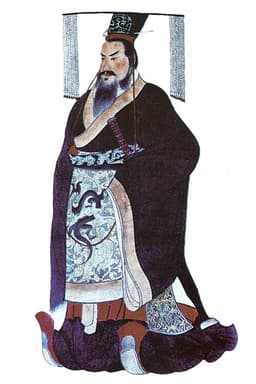
Jiaqing Emperor
Emperor · Modern
46.5Total

Mustafa I
Emperor · Modern
52.0Total
Basic Information
Born
1760
1591
Died
1820
1639
Era
Modern
Modern
Nationality
China
Ottoman Empire
Occupation
Emperor
Emperor
Civilization
Eastern
Middle Eastern
Score Comparison
Military (10%)
35.0
46.7
Political (20%)
39.4
68.0
Influence (20%)
51.0
60.0
Legacy (20%)
40.8
33.3
Leadership (15%)
64.0
62.2
Strategy (15%)
45.0
45.0
TOTAL
46.5
52.0
Jiaqing Emperor — Complete Timeline
1795 AD
Suppression of the Miao RebellionWar◆ Major
Jiaqing's forces suppressed a major Miao rebellion in Guizhou and Hunan provinces. The campaign was brutal and costly, but restored Qing control over the region, though it highlighted ethnic tensions.
Miao rebellionEthnic conflictMilitary campaign
Impact: regionaldestructive
1796 AD
White Lotus RebellionWar◆ Major
The White Lotus Rebellion erupted in central China, lasting until 1804. Jiaqing's government struggled to suppress the rebellion due to corruption and inefficiency, draining the Qing treasury and exposing military weakness.
RebellionWhite LotusQing decline
Impact: nationaldestructive
1799 AD
Execution of HeshenPolitical Action◆ Major
Upon taking full power after his father Qianlong's death, Jiaqing ordered the arrest and execution of the corrupt grand councilor Heshen. Heshen's vast wealth was confiscated, temporarily replenishing the imperial treasury.
Anti-corruptionHeshenPolitical purge
Impact: nationalconstructive
1800 AD
Fiscal crisis and tax reformsReform◆ Major
Jiaqing attempted to address the fiscal crisis caused by the White Lotus Rebellion and corruption. He implemented tax reforms, reduced court spending, and tried to curb official embezzlement, but with limited success.
Fiscal reformTax policyEconomic crisis
Impact: nationalconstructive
1805 AD
Decline of the Qing militaryOther◆ Major
The Qing military's inability to quickly suppress the White Lotus Rebellion revealed its decline. The Eight Banners and Green Standard armies were poorly trained and equipped, forcing the use of local militias.
Military declineEight BannersQing weakness
Impact: nationaldestructive
Mustafa I — Complete Timeline
1618 AD
First Deposition by JanissariesPolitical Action◆ Major
Mustafa I was deposed by a Janissary revolt after only three months on the throne. The Janissaries, dissatisfied with his mental instability, replaced him with his nephew Osman II. This was the first time a sultan was deposed due to mental incapacity.
DepositionJanissariesMental Illness
Impact: nationaltragic
1622 AD
Second Accession to the ThronePolitical Action◆ Major
After the murder of Osman II, Mustafa I was reinstated as sultan by the Janissaries. His second reign lasted only 14 months, during which he was unable to govern effectively due to his mental condition, leading to chaos in the empire.
AccessionJanissariesOsman II
Impact: national
1623 AD
Second Deposition by JanissariesPolitical Action◆ Major
Mustafa I was deposed for a second time by the Janissaries and replaced by his nephew Murad IV. He was returned to confinement (kafes), where he lived until his death in 1639. This ended his troubled reign.
DepositionJanissariesMurad IV
Impact: nationaltragic
Expert Analysis
Origins
**Jiaqing Emperor** (born Yongyan, 1760) was the 15th son of the Qianlong Emperor, the longest-reigning emperor in Chinese history. His mother was Empress Xiaoyichun, a Han Chinese woman. Jiaqing received a traditional Confucian education and was designated heir apparent in 1795. He grew up in the shadow of his father's grandiose rule, witnessing the Qing empire at its territorial zenith but also the seeds of decline—corruption, fiscal strain, and military stagnation.
**Mustafa I** (born 1591) was the son of Sultan Mehmed III and a consort, possibly of Greek origin. He spent much of his early life in the kafes (the imperial cage), a confined section of the Topkapi Palace where potential heirs were sequestered. This isolation, combined with the psychological stress of living under constant threat of execution, contributed to his mental instability. He had little exposure to governance or military affairs before ascending the throne.
Rise to Power
Jiaqing ascended the throne in 1796 upon Qianlong's abdication, but real power remained with his father until Qianlong's death in 1799. Upon taking full control, Jiaqing immediately moved against the corrupt grand councilor Heshen, ordering his arrest and execution. Heshen's vast wealth was confiscated, temporarily alleviating the treasury. This act was a decisive break from his father's inner circle and signaled Jiaqing's intent to reform the bureaucracy.
Mustafa I became sultan in 1617 after the death of his brother Ahmed I. Since Ahmed had executed Mustafa's older brother Mahmud, Mustafa was the only surviving male of the dynasty. His accession broke the tradition of fratricide—Ahmed had spared Mustafa's life, possibly due to his mental state. Mustafa's first reign lasted only three months. The Janissaries, frustrated by his incapacity, deposed him in 1618 and replaced him with his nephew Osman II. After Osman's murder in 1622, Mustafa was reinstated, but his second reign lasted only 14 months before the Janissaries deposed him again in favor of Murad IV.
Leadership & Governance
Jiaqing attempted to address the fiscal crisis by reducing court spending, reforming the tax system, and cracking down on corruption. He issued edicts against bribery and embezzlement, but the deep-rooted patronage networks proved resistant. His governance style was cautious and bureaucratic, relying on memorials and Confucian principles. He failed to revitalize the Qing military—the Eight Banners and Green Standard armies were poorly trained and corrupt. The White Lotus Rebellion (1796–1804) exposed these weaknesses, as the government struggled to suppress a decentralized uprising for nearly a decade.
Mustafa I was largely a figurehead. During his first reign, real power was held by the Grand Vizier and the Janissaries. His mental instability prevented him from making coherent policy decisions. During his second reign, he was similarly passive, with the court dominated by factional struggles. The Janissaries effectively controlled the succession, demonstrating the decline of sultanic authority. Mustafa's leadership score of 62.2 reflects his nominal position rather than active governance.
Triumph & Tragedy
Jiaqing's greatest success was the execution of Heshen, which removed a corrupt influence and temporarily boosted the treasury. He also suppressed the Miao Rebellion (1795–1806) in Guizhou and Hunan, though at high cost. However, his greatest failure was the White Lotus Rebellion, which drained the treasury and revealed the Qing military's decay. The rebellion was finally crushed in 1804, but it left the empire financially weakened and set a precedent for future uprisings. Jiaqing's tax reforms had limited impact, and corruption persisted.
Mustafa I's reign was marked by tragedy. He was a pawn of the Janissaries, who deposed him twice. His first deposition was peaceful, but his second led to his permanent confinement in the kafes, where he died in 1639. He had no notable military or political achievements. His only triumph was surviving—many potential sultans were executed. His legacy score of 33.3 is the lowest among comparable rulers.
Character & Destiny
Jiaqing was diligent and frugal, but also indecisive and overly reliant on bureaucratic processes. He lacked the strategic vision of his father Qianlong (who scored 83.5 overall). His character—cautious, moralistic, but not ruthless—led him to attempt reform within the system rather than overhaul it. This incremental approach failed to arrest the Qing decline. His political score of 39.4 reflects his inability to build effective coalitions or inspire loyalty.
Mustafa I was described by contemporaries as mentally ill, possibly suffering from depression or schizophrenia. His isolation in the kafes likely exacerbated his condition. He was never fit to rule, and his destiny was to be a symbol of the Ottoman succession crisis. The Janissaries used him as a tool, deposing him when convenient. His character—passive, unstable—made him a victim of larger forces.
Legacy
Jiaqing's legacy is mixed. He is remembered as a well-intentioned but ineffective emperor who failed to reverse the Qing decline. The White Lotus Rebellion weakened the dynasty, and corruption remained endemic. However, his execution of Heshen is often cited as a bold anti-corruption move. The Qing empire continued for another century, but the seeds of its 19th-century crises were sown during his reign. His influence score of 51.0 is moderate.
Mustafa I left no lasting legacy. His reigns were too short and chaotic to enact any meaningful change. The Ottoman practice of confining princes in the kafes continued, and the Janissaries' power grew until their abolition in 1826. Mustafa is largely a footnote in Ottoman history, remembered only for his mental instability and two depositions. His total score of 52.0 is slightly higher than Jiaqing's 46.5, but this reflects statistical noise rather than real impact.
Conclusion
Comparing Jiaqing Emperor and Mustafa I reveals two rulers who failed to meet the challenges of their time. Jiaqing, despite his efforts, could not arrest the decline of the Qing dynasty; his military score of 35.0 and political score of 39.4 reflect systemic failures. Mustafa I was a tragic figure, a symptom of Ottoman institutional decay. While Mustafa's total score is higher (52.0 vs 46.5), this is misleading because his 'leadership' and 'political' scores reflect his nominal position, not his actual agency. In terms of historical impact, Jiaqing had more—he made decisions that shaped China's trajectory, even if negatively. Mustafa I was a passive occupant of the throne. Therefore, Jiaqing Emperor had the greater impact, though neither achieved greatness.
Rankings
🥇
Mustafa ILeader
Mil: 46.7Pol: 68.0Inf: 60.0
52.0
🥈
Jiaqing Emperor
Mil: 35.0Pol: 39.4Inf: 51.0
46.5
+5.5 behind
How This Comparison Works
Algorithm
Each figure is scored on 6 dimensions (0—100 scale) based on structured historical data: Military (10%), Political (20%), Influence (20%), Legacy (20%), Leadership (15%), Strategy (15%). The weighted total produces the final ranking.
Data Sources
Scores are computed from structured sub-indicators in the database. Scale factors adjust for era (Ancient ×0.85, Modern ×1.0) and civilization size (Eastern ×1.05, Other ×0.80) to account for differences in population and military scale.
Maximum 3 Figures
Comparisons are limited to 2—3 figures to ensure readability and statistical meaningfulness.
Error Margins
±5 points per dimension — Sub-scores are derived from historical records with inherent uncertainty. Two figures within 5 points on a dimension should be considered roughly equivalent in that area.
Total Score Accuracy
±3 points overall — The weighted combination of 6 dimensions produces a total score with approximately ±3 points of uncertainty. Differences of less than 3 points are not statistically significant— the figures are effectively tied.
Known Limitations
- Historical records are incomplete and uneven across civilizations
- Figures from oral-tradition societies may be underrepresented
- Occupation labels can misclassify multi-role figures
- Scores measure capability and impact, not moral character
- Quantitative scoring is a comparison tool, not absolute truth
Capability Radar
Military (10%) — Battles & Warfare
Battles
40
24
Win Rate
30
29
Expansion
10
29
Political (20%) — Governance & Reform
Reform
25
0
Diplomacy
30
0
Economy
20
0
Influence (20%) — Cultural & Global Reach
Cultural
30
0
Global
15
0
Legacy (20%) — Historical Impact
Historical
35
5
Longevity
20
5
Leadership (15%) — Power & Stability
Tenure
60
10
Stability
15
0
Strategy (15%) — Tactics & Innovation
Strategy
30
33
Tactics
35
33
Reform
20
39
Similar Comparisons
Comments & Discussion
No comments yet. Be the first to share your thoughts!