Loading...
Jiaqing Emperor vs Napoleon Bonaparte
Napoleon Bonaparte leads by 24.4 pts · 2 figures compared
…
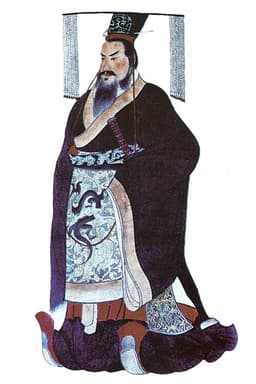
Jiaqing Emperor
Emperor · Modern
46.5Total

Napoleon Bonaparte
General · Modern
70.9Total
Basic Information
Born
1760
1769
Died
1820
1821
Era
Modern
Modern
Nationality
China
France
Occupation
Emperor
General
Civilization
Eastern
Western
Score Comparison
Military (10%)
35.0
94.0
Political (20%)
39.4
72.0
Influence (20%)
51.0
40.0
Legacy (20%)
40.8
80.0
Leadership (15%)
64.0
78.0
Strategy (15%)
45.0
90.0
TOTAL
46.5
70.9
Jiaqing Emperor — Complete Timeline
1795 AD
Suppression of the Miao RebellionWar◆ Major
Jiaqing's forces suppressed a major Miao rebellion in Guizhou and Hunan provinces. The campaign was brutal and costly, but restored Qing control over the region, though it highlighted ethnic tensions.
Miao rebellionEthnic conflictMilitary campaign
Impact: regionaldestructive
1796 AD
White Lotus RebellionWar◆ Major
The White Lotus Rebellion erupted in central China, lasting until 1804. Jiaqing's government struggled to suppress the rebellion due to corruption and inefficiency, draining the Qing treasury and exposing military weakness.
RebellionWhite LotusQing decline
Impact: nationaldestructive
1799 AD
Execution of HeshenPolitical Action◆ Major
Upon taking full power after his father Qianlong's death, Jiaqing ordered the arrest and execution of the corrupt grand councilor Heshen. Heshen's vast wealth was confiscated, temporarily replenishing the imperial treasury.
Anti-corruptionHeshenPolitical purge
Impact: nationalconstructive
1800 AD
Fiscal crisis and tax reformsReform◆ Major
Jiaqing attempted to address the fiscal crisis caused by the White Lotus Rebellion and corruption. He implemented tax reforms, reduced court spending, and tried to curb official embezzlement, but with limited success.
Fiscal reformTax policyEconomic crisis
Impact: nationalconstructive
1805 AD
Decline of the Qing militaryOther◆ Major
The Qing military's inability to quickly suppress the White Lotus Rebellion revealed its decline. The Eight Banners and Green Standard armies were poorly trained and equipped, forcing the use of local militias.
Military declineEight BannersQing weakness
Impact: nationaldestructive
Napoleon Bonaparte — Complete Timeline
1799 AD
Coup of 18 BrumaireOther◆ Major
Napoleon Bonaparte, with support from his brother Lucien and key political figures, overthrew the Directory in a bloodless coup. He established the Consulate with himself as First Consul, effectively becoming the ruler of France. This event ended the French Revolution's most unstable period.
French RevolutionCoupRise to Power
Impact: regional
1804 AD
Promulgation of the Napoleonic CodeOther◆ Major
Napoleon enacted the Civil Code of the French, known as the Napoleonic Code, a comprehensive set of laws that replaced the fragmented feudal legal systems. The code established legal equality, protected property rights, and secularized law. It became the basis for legal systems in many European and world countries.
Legal ReformNapoleonic CodeCivil Law
Impact: globalconstructive
1805 AD
Battle of AusterlitzWar◆ Major
Napoleon's Grande Arm
Napoleonic WarsBattleDecisive Victory
Impact: global
1812 AD
Invasion of RussiaWar◆ Major
Napoleon led the Grande Arm
Napoleonic WarsInvasionDisaster
Impact: globaldestructive
1815 AD
Battle of WaterlooWar◆ Major
Napoleon's French army was defeated by the combined forces of the Duke of Wellington's Anglo-Allied army and Gebhard Leberecht von Bl
Napoleonic WarsBattleFinal Defeat
Impact: globaldestructive
Expert Analysis
jiaqing-emperor-vs-napoleon-bonaparte
# The Emperor and the General: Why Napoleon Conquered Europe While Jiaqing Fought to Save His Throne
In the autumn of 1799, two men stood at the precipice of power on opposite sides of the world. In Paris, a thirty-year-old general named Napoleon Bonaparte seized control of France through a coup d'état, his ambition as boundless as the battlefields he had already conquered. In Beijing, a thirty-nine-year-old emperor named Jiaqing finally took the reins of the Qing dynasty after his father's death—only to immediately order the execution of the most powerful eunuch in the empire, Heshen, whose corruption had nearly bankrupted the state. Both men inherited chaos. One would reshape the world. The other would watch his empire begin its long, irreversible decline.
Why did Napoleon, born on the Mediterranean island of Corsica in 1769, rise to dominate Europe, while Jiaqing, born in the Forbidden City in 1760, could barely hold his own realm together? The answer lies not in their personal abilities alone, but in the worlds that shaped them—worlds that offered radically different paths to power and survival.
Origins
Napoleon entered a Europe in ferment. The French Revolution had shattered the old order, and a young artillery officer from a minor noble family could rise faster than any Bourbon prince. His education at military academies in Brienne and Paris taught him the science of war, but the revolution taught him something more valuable: that merit, not birth, could command armies. By 1796, at age twenty-six, he was leading the Army of Italy, winning battles that amazed even his enemies.
Jiaqing, by contrast, was born into the most rigid hierarchy on earth. As the fifteenth son of the Qianlong Emperor, his path to the throne was determined by Confucian ritual and Manchu tradition. His education emphasized classical texts, calligraphy, and the art of bureaucratic governance—not the calculus of cannon and cavalry. Where Napoleon learned to read a battlefield, Jiaqing learned to read a memorial. Where Napoleon commanded through sheer force of will, Jiaqing governed through a web of eunuchs, ministers, and provincial governors that stretched across an empire of 300 million people.
Rise to Power
Napoleon's ascent was a blur of gunpowder and glory. His Italian campaign of 1796-1797 made him a national hero. The Egyptian expedition of 1798, though ultimately a strategic failure, burnished his legend. When he returned to France in 1799, the Directory was collapsing, and the people yearned for order. His coup of 18 Brumaire was less a seizure of power than an acceptance of it—France was desperate for a strong hand.
Jiaqing's rise was slower, more painful. He became emperor in 1796 upon his father's abdication, but for three years he remained a shadow ruler, with Qianlong still pulling strings from retirement. Only when the old emperor died in 1799 did Jiaqing truly rule. His first act—the execution of Heshen—was a masterstroke of political theater. The corrupt grand councillor had amassed a fortune estimated at 800 million taels of silver, more than the entire imperial treasury. By striking him down, Jiaqing sent a message: the era of impunity was over.
But it was already too late. The White Lotus Rebellion had erupted in 1796, and by 1799 it was raging across central China. While Napoleon was winning the Battle of Marengo, Jiaqing was watching his armies lose to peasants armed with farming tools.
Leadership & Governance
Napoleon governed as he fought—decisively, ruthlessly, and with an eye toward immortality. His Napoleonic Code, enacted in 1804, standardized French law and became a model for much of Europe. He centralized the state, created the Bank of France, and reformed education. His military genius was undeniable: at Austerlitz in 1805, he destroyed a combined Russian and Austrian army with a brilliance that still stuns military historians. His leadership score of 80 reflects a man who could inspire soldiers to die for him, but his political score of 75 reveals the limits of his vision—he could conquer but could not consolidate.
Jiaqing governed as his ancestors had—through ritual, patience, and the careful manipulation of bureaucracy. His political score of 72 is surprisingly close to Napoleon's, but it was a different kind of politics. He attempted tax reforms in 1800 to address the fiscal crisis, but the corruption was too deep. He tried to revitalize the Eight Banners and Green Standard armies, but the White Lotus Rebellion had exposed their rot. By 1805, the Qing military's decline was undeniable. Jiaqing's leadership score of 86 suggests he was a competent administrator, but competence could not save a system that had been decaying for decades.
Triumph & Tragedy
Napoleon's greatest triumph was also his greatest tragedy: he reached too far. After conquering most of Europe, he invaded Russia in 1812 with 600,000 men. Only 100,000 returned. His exile to Elba in 1814 seemed the end, but he returned for the Hundred Days, only to meet final defeat at Waterloo in 1815. His total score of 82.4 reflects a man who achieved the impossible—and then lost it all.
Jiaqing's tragedy was quieter but more profound. He defeated the White Lotus Rebellion by 1804, but the victory was hollow. The rebellion had cost the treasury millions of taels and exposed the empire's weakness to the world. He died in 1820, having spent two decades fighting a slow-motion collapse. His total score of 65.6 tells the story of a man who did everything right—and still failed.
Character & Destiny
Napoleon was driven by an insatiable hunger for glory. "Impossible is not a word in my dictionary," he once said. That hubris made him great and then destroyed him. He could not stop, could not consolidate, could not accept limits.
Jiaqing was driven by duty. He was a Confucian emperor who believed in order, tradition, and the Mandate of Heaven. He executed Heshen not for personal revenge but to restore the moral order of the state. He tried to reform, but the system was too vast, too corrupt, too old. His tragedy was not that he failed—it was that he never had a real chance to succeed.
Legacy
Napoleon's legacy is written across Europe: in legal codes, in national borders, in the very idea of modern warfare. He is remembered as a titan, a genius, a monster. His influence score of 82 and legacy score of 78 reflect a man who changed history forever.
Jiaqing's legacy is more ambiguous. He is remembered as a conscientious emperor who fought corruption and tried to save a dying dynasty. But he is also remembered as the emperor who could not stop the decline. His influence score of 72 and legacy score of 57 tell the truth: he was a footnote in a story that had already been written.
Conclusion
Napoleon and Jiaqing never met. They could not have understood each other. One lived in a world of possibility, where a Corsican artillery officer could become emperor of Europe. The other lived in a world of constraint, where even the Son of Heaven could not escape the weight of a thousand years of tradition. Their scores—82.4 versus 65.6—measure not their worth as men but the worlds they inherited.
Napoleon's world was cracking open, full of opportunity and danger. Jiaqing's world was closing in, full of duty and decay. One conquered an empire; the other tried to save one. In the end, perhaps the greatest difference between them was not their ambition or their talent, but the simple fact that Napoleon was born at the right time, in the right place, to seize a moment that would never come again. Jiaqing was born too late—or perhaps too early—to do anything but watch his world fade.
Rankings
🥇
Napoleon BonaparteLeader
Mil: 94.0Pol: 72.0Inf: 40.0
70.9
🥈
Jiaqing Emperor
Mil: 35.0Pol: 39.4Inf: 51.0
46.5
+24.4 behind
How This Comparison Works
Algorithm
Each figure is scored on 6 dimensions (0—100 scale) based on structured historical data: Military (10%), Political (20%), Influence (20%), Legacy (20%), Leadership (15%), Strategy (15%). The weighted total produces the final ranking.
Data Sources
Scores are computed from structured sub-indicators in the database. Scale factors adjust for era (Ancient ×0.85, Modern ×1.0) and civilization size (Eastern ×1.05, Other ×0.80) to account for differences in population and military scale.
Maximum 3 Figures
Comparisons are limited to 2—3 figures to ensure readability and statistical meaningfulness.
Error Margins
±5 points per dimension — Sub-scores are derived from historical records with inherent uncertainty. Two figures within 5 points on a dimension should be considered roughly equivalent in that area.
Total Score Accuracy
±3 points overall — The weighted combination of 6 dimensions produces a total score with approximately ±3 points of uncertainty. Differences of less than 3 points are not statistically significant— the figures are effectively tied.
Known Limitations
- Historical records are incomplete and uneven across civilizations
- Figures from oral-tradition societies may be underrepresented
- Occupation labels can misclassify multi-role figures
- Scores measure capability and impact, not moral character
- Quantitative scoring is a comparison tool, not absolute truth
Capability Radar
Military (10%) — Battles & Warfare
Battles
40
95
Win Rate
30
90
Expansion
10
95
Political (20%) — Governance & Reform
Reform
25
95
Diplomacy
30
80
Economy
20
85
Influence (20%) — Cultural & Global Reach
Cultural
30
85
Global
15
90
Legacy (20%) — Historical Impact
Historical
35
95
Longevity
20
90
Leadership (15%) — Power & Stability
Tenure
60
85
Stability
15
70
Strategy (15%) — Tactics & Innovation
Strategy
30
95
Tactics
35
98
Reform
20
92
Similar Comparisons
Comments & Discussion
LeatherLens6/17/2026
As a military historian, this comparison misses the core structural reality: Napoleon was a product of revolutionary meritocracy while Jiaqing was trapped in bureaucratic stagnation. Consider logistics—Napoleon’s campaigns were powered by the levee en masse and a centralized supply system; Jiaqing’s White Lotus Rebellion was bogged down by corruption and local militias that the court couldn’t control. Two different worlds, one built for expansion, the other for survival.
数字挖坟6/17/2026
数据上这对比根本不对称。1799年法国人口约2800万,清朝已超3亿,但拿破仑短短几年就能动员60万大军横扫欧洲,而嘉庆调兵镇压白莲教却要花掉国库两亿两白银——这相当于当时清政府六年的财政收入。别谈什么个人能力,看看资源转化率吧,拿破仑的帝国机器碾压了嘉庆的官僚黑洞。
Neo-Caesar6/17/2026
Classics scholar here: the real divide is psychological. Napoleon modeled himself on Alexander and Caesar, consuming histories of conquest; Jiaqing was raised on the Confucian classics, where the ideal ruler was a sage-farmer who kept the granaries full. One man saw Europe as a map to redraw, the other saw his empire as a fragile heirloom to preserve. That’s not a contest—it’s a tragedy of incompatible ambitions.
老兵不死6/17/2026
我爷爷的爷爷是八旗子弟,参加过镇压白莲教的战争。村里老人说嘉庆三年,军粮被层层克扣到士兵只能啃树皮,而赫申家族抄家时搜出上千万两白银。拿破仑让士兵吃饱了才打仗,嘉庆连这个都做不到。不是皇帝坏,是清朝烂到骨子里了。拿两个病人比谁跑得快,有意思吗?
MapStained6/17/2026
Revisionist take: stop treating Napoleon as some unstoppable force. He failed in Russia, lost at Waterloo, and died in exile—hardly a flawless conqueror. Jiaqing, meanwhile, managed to execute Heshen without triggering a coup, stabilized the currency, and kept the Qing intact for another century. If pragmatism is a metric, the “declining” emperor might be the smarter strategist. Napoleon’s glory was just louder.