Loading...
Antiochus III the Great vs Napoleon Bonaparte
Napoleon Bonaparte leads by 12.5 pts · 2 figures compared
…
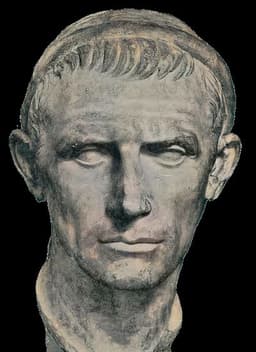
Antiochus III the Great
Emperor · Ancient
58.4Total

Napoleon Bonaparte
General · Modern
70.9Total
Basic Information
Born
-241
1769
Died
-187
1821
Era
Ancient
Modern
Nationality
Seleucid Empire
France
Occupation
Emperor
General
Civilization
Middle Eastern
Western
Score Comparison
Military (10%)
78.5
94.0
Political (20%)
45.0
72.0
Influence (20%)
58.0
40.0
Legacy (20%)
50.0
80.0
Leadership (15%)
66.0
78.0
Strategy (15%)
69.1
90.0
TOTAL
58.4
70.9
Antiochus III the Great — Complete Timeline
217 BC
Battle of Raphia (217 BC)War
Antiochus III defeated Ptolemy IV's army at Raphia in the largest battle of the Syrian Wars. He used war elephants and a phalanx of native Egyptians to secure victory, recapturing Coele-Syria and Palestine from Ptolemaic control, restoring Seleucid power in the region.
Syrian WarBattleSeleucid Victory
Impact: regional
212 BC
Anabasis (Expedition to the East, 212-205 BC)War◆ Major
Antiochus III led a major military expedition to the eastern satrapies of the Seleucid Empire, including Parthia, Bactria, and India. He reasserted Seleucid authority, received tribute from local rulers, and secured the eastern borders, earning the title 'the Great'.
Military CampaignEastern EmpireSeleucid
Impact: regional
192 BC
Roman-Seleucid War (192-188 BC)War
Antiochus III invaded Greece, leading to war with the Roman Republic. He was decisively defeated at the Battle of Thermopylae (191 BC) and the Battle of Magnesia (190 BC) by Roman forces under Scipio Asiaticus, ending Seleucid ambitions in Europe and Asia Minor.
Roman-Seleucid WarDefeatRoman Expansion
Impact: globaldestructive
188 BC
Treaty of Apamea (188 BC)Political Action
Antiochus III signed the Treaty of Apamea with Rome, ending the war. He surrendered all territory in Asia Minor west of the Taurus Mountains, paid a massive indemnity of 15,000 talents, and agreed to limit his navy and war elephants, crippling Seleucid power.
TreatyRoman HegemonySeleucid Decline
Impact: globaltragic
187 BC
Death in Elymais (187 BC)Other◆ Major
Antiochus III was killed while attempting to plunder the temple of Bel in Elymais (southwestern Iran) to raise funds for the Roman indemnity. His death marked the end of Seleucid resurgence and the beginning of the empire's decline.
DeathTemple PlunderSeleucid
Impact: regionaltragic
Napoleon Bonaparte — Complete Timeline
1799 AD
Coup of 18 BrumaireOther◆ Major
Napoleon Bonaparte, with support from his brother Lucien and key political figures, overthrew the Directory in a bloodless coup. He established the Consulate with himself as First Consul, effectively becoming the ruler of France. This event ended the French Revolution's most unstable period.
French RevolutionCoupRise to Power
Impact: regional
1804 AD
Promulgation of the Napoleonic CodeOther◆ Major
Napoleon enacted the Civil Code of the French, known as the Napoleonic Code, a comprehensive set of laws that replaced the fragmented feudal legal systems. The code established legal equality, protected property rights, and secularized law. It became the basis for legal systems in many European and world countries.
Legal ReformNapoleonic CodeCivil Law
Impact: globalconstructive
1805 AD
Battle of AusterlitzWar◆ Major
Napoleon's Grande Arm
Napoleonic WarsBattleDecisive Victory
Impact: global
1812 AD
Invasion of RussiaWar◆ Major
Napoleon led the Grande Arm
Napoleonic WarsInvasionDisaster
Impact: globaldestructive
1815 AD
Battle of WaterlooWar◆ Major
Napoleon's French army was defeated by the combined forces of the Duke of Wellington's Anglo-Allied army and Gebhard Leberecht von Bl
Napoleonic WarsBattleFinal Defeat
Impact: globaldestructive
Expert Analysis
antiochus-iii-the-great-vs-napoleon-bonaparte
# The Great and the Greater: Napoleon and Antiochus III
On a June morning in 1815, Napoleon Bonaparte stood on a muddy ridge near Waterloo, watching his elite Imperial Guard march into the fire of British redcoats. Less than a century earlier, in 188 BC, another would-be world conqueror, Antiochus III of the Seleucid Empire, sat in a tent near Apamea, signing away his kingdom’s western possessions to Rome. Both men had reached for greatness. One reshaped Europe; the other saw his empire crumble. What separates a legend from a footnote? The answer lies not in ambition alone, but in timing, adaptability, and the unforgiving logic of power.
Origins
Napoleon was born in 1769 on the island of Corsica, a backwater recently annexed by France. His family were minor nobles with little wealth but fierce pride. The French Revolution, which erupted when he was twenty, shattered the old order and opened doors that birth could never have unlocked. A young artillery officer from nowhere could rise by talent alone—and Napoleon seized that chance with both hands.
Antiochus III, by contrast, was born into royalty. He became king of the Seleucid Empire in 223 BC at age eighteen, inheriting a vast but decaying realm that stretched from modern Turkey to Afghanistan. His predecessors had lost territory to breakaway kingdoms like Parthia and Bactria, and the Ptolemaic dynasty in Egypt still held Syria. Antiochus’s challenge was not to create an empire from nothing, but to restore what his ancestors had squandered.
The difference in their worlds is stark. Napoleon lived in an age of mass armies, nationalism, and revolutionary ideas. Antiochus ruled in a time of Hellenistic kingship, where power depended on personal loyalty, mercenary armies, and the careful balancing of Greek and Persian traditions. One man emerged from chaos; the other fought to stave off decay.
Rise to Power
Napoleon’s ascent was meteoric. In 1796, at twenty-six, he took command of a starving, unpaid army in Italy and turned it into a conquering force. His victories forced Austria to sue for peace, and he returned to Paris a hero. By 1799, he staged a coup and became First Consul, then Emperor in 1804. Each step was a gamble, but Napoleon understood that in revolutionary France, success was its own legitimacy.
Antiochus’s rise was slower and more methodical. He spent his early years consolidating power at home, crushing a rebellion in Media and securing his eastern borders. His great turning point came in 217 BC at the Battle of Raphia, the largest battle of the Syrian Wars. He faced Ptolemy IV of Egypt with a massive army including war elephants, but was defeated. Rather than collapse, Antiochus learned from the loss. He spent the next decade rebuilding his forces and biding his time.
Between 212 and 205 BC, Antiochus launched his Anabasis—a great expedition to the eastern satrapies. He marched through Parthia and Bactria, reasserting Seleucid authority over lands that had been independent for generations. It was a feat of endurance and diplomacy, not just military force. He secured alliances, collected tribute, and returned to the west with a reputation for invincibility. Napoleon conquered; Antiochus restored.
Leadership & Governance
Napoleon’s genius was strategic and organizational. He won battles by speed, deception, and the ruthless concentration of force. His campaigns—Austerlitz in 1805, Jena in 1806—are still studied in military academies. But his political achievements were equally profound. The Napoleonic Code standardized French law, abolished feudal privileges, and spread the ideals of the Revolution across Europe. He built roads, schools, and a centralized state that outlasted his empire.
Antiochus was a different kind of ruler. He was a skilled diplomat and administrator, but his military record was mixed. After Raphia, he won victories in the east, but when he turned west to confront Rome, he overreached. In 192 BC, he invaded Greece, hoping to rally the Greek city-states against the rising Roman Republic. It was a fatal miscalculation. The Romans crushed him at Thermopylae in 191 BC and again at Magnesia in 190 BC. Antiochus had never faced a power like Rome—disciplined, relentless, and backed by infinite reserves.
Napoleon understood that war was a tool of policy; Antiochus treated it as an extension of personal glory. Napoleon reformed institutions; Antiochus restored old borders. One built a machine; the other tried to patch a crumbling wall.
Triumph & Tragedy
Napoleon’s greatest moment was Austerlitz, where he destroyed a combined Russian-Austrian army in December 1805. His empire then stretched from Spain to Poland. His tragedy came in 1812, when he invaded Russia with 600,000 men and returned with fewer than 100,000. The disaster broke his aura of invincibility, and by 1814, Paris fell. He returned from exile in 1815 only to be defeated at Waterloo, ending his hundred days in defeat.
Antiochus’s triumph was the Anabasis, which restored Seleucid prestige and filled his treasury. His tragedy was the Treaty of Apamea in 188 BC, where he surrendered all territory west of the Taurus Mountains, paid a crushing indemnity, and gave hostages—including his own son—to Rome. He died the following year, in 187 BC, while trying to plunder a temple in Elymais to raise funds. A king reduced to a temple robber.
Character & Destiny
Napoleon was driven by an insatiable hunger for glory. “I am not a man,” he once said, “but a thing.” He saw himself as the instrument of history, and his confidence bordered on delusion. Yet he also possessed a cold pragmatism. He knew when to negotiate, when to marry for alliance, and when to retreat—at least until Russia.
Antiochus was more cautious but less perceptive. He understood the art of recovery but not the nature of rising powers. He saw Rome as another Hellenistic kingdom, not a republic with unlimited capacity for war. His fatal flaw was not ambition but blindness—an inability to recognize that the world had changed.
Legacy
Napoleon’s legacy is monumental. The Napoleonic Code influenced legal systems across Europe and the world. His military innovations shaped modern warfare. His name became synonymous with ambition and genius. He is remembered as a tyrant and a reformer, a liberator and a conqueror.
Antiochus III is remembered, if at all, as the last great Seleucid king—a man who briefly revived a dying empire before Rome crushed it. His name survives in history books, but his achievements are overshadowed by the power that destroyed him. He scored a 71.0 overall, compared to Napoleon’s 82.4, but numbers cannot capture the tragedy of a ruler who did everything right—except choose the wrong enemy.
Conclusion
Napoleon and Antiochus III both reached for greatness, but one seized a new world while the other clung to an old one. Napoleon’s rise was fueled by revolution, his fall by overreach. Antiochus’s rise was a restoration, his fall by miscalculation. In the end, the difference is not in ambition but in understanding—the ability to see not just what is, but what is coming. Napoleon saw the future and tried to own it. Antiochus saw the past and tried to reclaim it. History, as always, rewarded the one who looked forward.
Rankings
🥇
Napoleon BonaparteLeader
Mil: 94.0Pol: 72.0Inf: 40.0
70.9
🥈
Antiochus III the Great
Mil: 78.5Pol: 45.0Inf: 58.0
58.4
+12.5 behind
How This Comparison Works
Algorithm
Each figure is scored on 6 dimensions (0—100 scale) based on structured historical data: Military (10%), Political (20%), Influence (20%), Legacy (20%), Leadership (15%), Strategy (15%). The weighted total produces the final ranking.
Data Sources
Scores are computed from structured sub-indicators in the database. Scale factors adjust for era (Ancient ×0.85, Modern ×1.0) and civilization size (Eastern ×1.05, Other ×0.80) to account for differences in population and military scale.
Maximum 3 Figures
Comparisons are limited to 2—3 figures to ensure readability and statistical meaningfulness.
Error Margins
±5 points per dimension — Sub-scores are derived from historical records with inherent uncertainty. Two figures within 5 points on a dimension should be considered roughly equivalent in that area.
Total Score Accuracy
±3 points overall — The weighted combination of 6 dimensions produces a total score with approximately ±3 points of uncertainty. Differences of less than 3 points are not statistically significant— the figures are effectively tied.
Known Limitations
- Historical records are incomplete and uneven across civilizations
- Figures from oral-tradition societies may be underrepresented
- Occupation labels can misclassify multi-role figures
- Scores measure capability and impact, not moral character
- Quantitative scoring is a comparison tool, not absolute truth
Capability Radar
Military (10%) — Battles & Warfare
Battles
85
95
Win Rate
80
90
Expansion
90
95
Political (20%) — Governance & Reform
Reform
65
95
Diplomacy
70
80
Economy
60
85
Influence (20%) — Cultural & Global Reach
Cultural
50
85
Global
60
90
Legacy (20%) — Historical Impact
Historical
65
95
Longevity
55
90
Leadership (15%) — Power & Stability
Tenure
80
85
Stability
55
70
Strategy (15%) — Tactics & Innovation
Strategy
85
95
Tactics
75
98
Reform
70
92
Similar Comparisons
Comments & Discussion
Φίλε Μέγας6/17/2026
Napoleon earned "the Great" by forging a new empire from revolution’s chaos; Antiochus stole it by birthright and lost it all at Magnesia. Waterloo was a gamble that came up snake eyes—Napoleon’s veterans died to the last guard, but his Code shaped Europe for centuries. Antiochus signed away Asia Minor over wine with Scipio, then died looting a temple. One built a legacy; the other just ruined a good dynasty.
数据骷髅兵6/17/2026
呵呵,大数据看个鬼比较?拿破仑打了两百多场战役,伤亡率才15%,安条克三世就靠马格尼西亚一场送掉5万大军直接破产。拿破仑从科西嘉乡下杀到巴黎当皇帝,概率堪比彗星撞地球;安条克?含着金钥匙出生连老爹的烂摊子都补不好。还“伟大”?这标题该改成《暴发户vs败家子》才对。
Sparta’s Shadow6/17/2026
Fun fact: Antiochus III hired Hannibal as an advisor and still botched Magnesia. Napoleon personally led charges when his marshals failed—that’s the difference. The Seleucid 'Great' fled at Raphia when his phalanx broke, while Bonaparte stood in burning Moscow waiting for peace that never came. Ambition without nerve is just a costume drama with better PR.
月下观史6/17/2026
作为一个古典迷,我必须说安条克三世输得不冤。罗马当时已经吞了迦太基,刚从第二次布匿战争里淬炼出来,那支军队连汉尼拔都打不过——安条克一个东方君主拿什么挡?拿破仑的对手是沙俄和英国,都是旧制度的老朽,根本不是罗马式的战争机器。把安条克扔到1796年意大利战役,他连洛迪桥都过不去。这不是能力问题,是时代碾压。
Boneyard Prophet6/17/2026
Both men died stripped of power, but here’s the kicker: Napoleon’s memoirs turned him into a martyr for liberalism, while Antiochus III’s death robbing a temple in Elymaïs just made him a punchline. Perception is legacy. The Corsican knew how to spin a story; the Seleucid king couldn’t even sack a backwater shrine without getting killed by locals. Greatness? You’re only great if you survive the historian’s pen.