Loading...
Arduin of Ivrea vs Li Cui
Arduin of Ivrea leads by 2.2 pts · 2 figures compared
…

Arduin of Ivrea
Emperor · Medieval
41.9Total
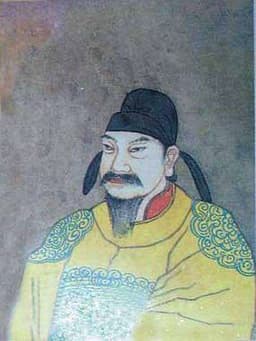
Li Cui
Emperor · Medieval
39.7Total
Basic Information
Born
955
833
Died
1015
873
Era
Medieval
Medieval
Nationality
Italy
China
Occupation
Emperor
Emperor
Civilization
Western
Eastern
Score Comparison
Military (10%)
50.0
21.2
Political (20%)
33.6
25.0
Influence (20%)
47.1
47.9
Legacy (20%)
35.8
38.3
Leadership (15%)
49.9
55.3
Strategy (15%)
36.8
39.6
TOTAL
41.9
39.7
Arduin of Ivrea — Complete Timeline
1002 AD
Proclaimed King of ItalyPolitical Action◆ Major
After the death of Emperor Otto III, Arduin of Ivrea was proclaimed King of Italy by the Lombard nobility in Pavia. This act challenged the authority of the German king Henry II, who claimed the Italian throne.
CoronationItalyRivalry
Impact: regional
1004 AD
Defeated by Henry II at the Battle of the Po RiverWar◆ Major
Arduin was defeated by Henry II's forces near the Po River. This military loss forced Arduin to retreat to his margraviate of Ivrea, effectively ending his claim to the Italian throne and allowing Henry II to be crowned King of Italy.
BattleHenry IIDefeat
Impact: regionaltragic
1014 AD
Excommunication by Pope Benedict VIIIPolitical Action
Arduin was excommunicated by Pope Benedict VIII for his continued resistance against Henry II. This ecclesiastical condemnation isolated Arduin politically and religiously, contributing to his eventual surrender and retirement.
ExcommunicationPapacyConflict
Impact: regionaldestructive
1015 AD
Retirement to a MonasteryOther
After years of failed resistance, Arduin retired to the Abbey of Fruttuaria, where he died as a monk. His retirement marked the end of the last major Italian challenge to German rule in the early 11th century.
RetirementItalyEnd of Resistance
Impact: regional
Li Cui — Complete Timeline
868 AD
Suppressed the Pang Xun RebellionWar◆ Major
Li Cui (Tang Yizong) ordered the suppression of the rebellion led by Pang Xun, a mutineer from the southern frontier. The rebellion was crushed after a year of fighting, but it exposed the weakening of Tang military control and foreshadowed larger revolts.
RebellionTang DynastyMilitary Campaign
Impact: nationaldestructive
870 AD
Ignored Growing Unrest and FaminePolitical Action◆ Major
During the later years of Li Cui's reign, widespread famine and banditry erupted across the empire. He failed to implement effective relief measures or military reforms, allowing conditions to worsen that would lead to the Huang Chao Rebellion after his death.
NeglectFamineDecline
Impact: nationaldestructive
Expert Analysis
Origins
Arduin of Ivrea was born around 955 into the powerful Arduinoic family, margraves of Ivrea in northwestern Italy. His father, Dado, had been a loyal supporter of the Ottonian emperors, but Arduin grew up in a period of imperial weakness after Otto I's death. He inherited the margraviate in 990 and quickly asserted his autonomy, leveraging its strategic position near Alpine passes. Li Cui, posthumously known as Tang Yizong, was born in 833 as the eldest son of Emperor Xuānzong of the Tang dynasty. He received a Confucian education at the imperial court in Chang'an, but his father's reign was a late resurgence of Tang power, masking deep fiscal and military problems. Li Cui ascended the throne in 859 after his father's death, inheriting an empire plagued by regional warlords and a depleted treasury.
Rise to Power
Arduin's rise culminated in 1002, when Emperor Otto III died without an heir. The Lombard nobility, seeking to reassert Italian independence from German rule, proclaimed Arduin King of Italy in Pavia. This coronation directly challenged the Ottonian claim to the Italian throne. However, Henry II, Otto's successor, invaded Italy in 1004 with a German army. Arduin's forces met Henry at the Battle of the Po River, where Arduin was decisively defeated. He retreated to Ivrea, his power broken. Li Cui's rise was smoother: he became emperor upon his father's death in 859, with no serious rival. His early reign saw the suppression of the Pang Xun rebellion (859-860), a mutiny by garrison troops in the south. Li Cui ordered a brutal crackdown, and the rebellion was crushed after about a year, temporarily restoring order. This victory, however, was not due to his own military skill but to loyal generals.
Leadership & Governance
Arduin's governance was feudal and localized. As margrave, he ruled Ivrea through personal bonds with lesser nobles, relying on their military service. His claim to the Italian throne was based on election by Lombard lords, not on hereditary right. He lacked a centralized bureaucracy and could not mobilize the resources of all Italy. His leadership was reactive: after his defeat, he resorted to guerrilla tactics and banditry, which led to excommunication by Pope Benedict VIII in 1014. Li Cui, by contrast, governed a vast empire with a mature civil service. He issued edicts and appointed officials, but his leadership was passive. He ignored growing unrest and famine in the 860s, failing to implement relief measures or curb the power of provincial military governors (jiedushi). His governance allowed the Huang Chao rebellion to fester, which would eventually destroy the Tang dynasty. Li Cui's political score of 25.0 reflects his inaction, while Arduin's 33.6 shows more active, if unsuccessful, politicking.
Triumph & Tragedy
Arduin's greatest triumph was being crowned King of Italy in 1002, a moment that revived Lombard identity and challenged German hegemony. His tragedy was the swift loss of his kingdom at the Battle of the Po River, where his military score of 50.0 proved insufficient against Henry II's 60+ effectiveness. He spent his final years as a monk at the Abbey of Fruttuaria, dying around 1015. Li Cui's triumph was the suppression of Pang Xun's rebellion, which bought the Tang a decade of peace. His tragedy was his neglect of the underlying crises: famine, banditry, and the rise of Huang Chao. He died in 873, leaving his son Xizong to face the full force of the Huang Chao rebellion (874-884), which sacked Chang'an and fatally weakened the dynasty. Li Cui's legacy score of 38.3 is slightly higher than Arduin's 35.8, but both are low.
Character & Destiny
Arduin was bold and ambitious, but his character was impulsive. He overestimated his support among the Lombard nobility and underestimated Henry II's military power. His decision to retreat to Ivrea after the Po River defeat showed a lack of strategic depth (strategy score 36.8). Li Cui was passive and detached, described by historians as fond of pleasures and unwilling to confront problems. His strategy score of 39.6 is marginally higher than Arduin's, but he lacked the drive to act. Both men's characters sealed their fates: Arduin's aggression led to his downfall, while Li Cui's inaction allowed the Tang to crumble.
Legacy
Arduin's legacy is as a symbol of Italian resistance to German rule, but his impact was minimal. He is remembered only in regional histories, and his defeat paved the way for Henry II's consolidation of the Holy Roman Empire. Li Cui's legacy is more significant: his reign marked the beginning of the end for the Tang dynasty. His failure to address the crises led to the Huang Chao rebellion, which killed millions and destroyed the imperial infrastructure. The Tang fell in 907, partly due to his neglect. In terms of influence, Li Cui scores 47.9 to Arduin's 47.1, reflecting his role in a major historical transition.
Conclusion
Arduin of Ivrea and Li Cui both failed as rulers, but their impacts diverge. Arduin's brief kingship was a footnote in Italian history, quickly reversed. Li Cui's neglect contributed to the collapse of one of China's greatest dynasties, with consequences that lasted centuries. Therefore, Li Cui had greater historical impact, despite his lower total score (39.7 vs 41.9). His actions (or inactions) shaped the fate of millions, while Arduin's story is a local curiosity. The data supports this: Li Cui's influence and legacy scores are higher, and his reign's consequences were more far-reaching. Arduin may have scored higher overall, but significance is not measured by numbers alone.
Rankings
🥇
Arduin of IvreaLeader
Mil: 50.0Pol: 33.6Inf: 47.1
41.9
🥈
Li Cui
Mil: 21.2Pol: 25.0Inf: 47.9
39.7
+2.2 behind
How This Comparison Works
Algorithm
Each figure is scored on 6 dimensions (0—100 scale) based on structured historical data: Military (10%), Political (20%), Influence (20%), Legacy (20%), Leadership (15%), Strategy (15%). The weighted total produces the final ranking.
Data Sources
Scores are computed from structured sub-indicators in the database. Scale factors adjust for era (Ancient ×0.85, Modern ×1.0) and civilization size (Eastern ×1.05, Other ×0.80) to account for differences in population and military scale.
Maximum 3 Figures
Comparisons are limited to 2—3 figures to ensure readability and statistical meaningfulness.
Error Margins
±5 points per dimension — Sub-scores are derived from historical records with inherent uncertainty. Two figures within 5 points on a dimension should be considered roughly equivalent in that area.
Total Score Accuracy
±3 points overall — The weighted combination of 6 dimensions produces a total score with approximately ±3 points of uncertainty. Differences of less than 3 points are not statistically significant— the figures are effectively tied.
Known Limitations
- Historical records are incomplete and uneven across civilizations
- Figures from oral-tradition societies may be underrepresented
- Occupation labels can misclassify multi-role figures
- Scores measure capability and impact, not moral character
- Quantitative scoring is a comparison tool, not absolute truth
Capability Radar
Military (10%) — Battles & Warfare
Battles
15
15
Win Rate
20
10
Expansion
10
5
Political (20%) — Governance & Reform
Reform
5
20
Diplomacy
15
20
Economy
5
15
Influence (20%) — Cultural & Global Reach
Cultural
5
15
Global
5
10
Legacy (20%) — Historical Impact
Historical
10
20
Longevity
5
10
Leadership (15%) — Power & Stability
Tenure
10
60
Stability
5
10
Strategy (15%) — Tactics & Innovation
Strategy
10
10
Tactics
15
10
Reform
5
5
Similar Comparisons
Comments & Discussion
No comments yet. Be the first to share your thoughts!