Loading...
Aristotle vs Confucius
Confucius leads by 2.1 pts · 2 figures compared
…
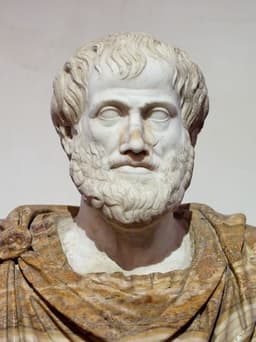
Aristotle
Philosopher · Ancient
59.3Total
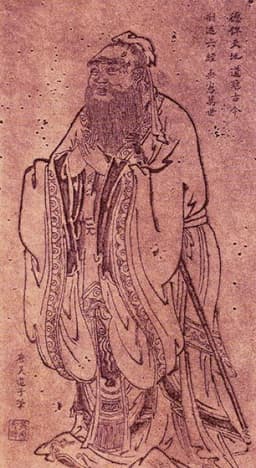
Confucius
Philosopher · Ancient
61.4Total
Basic Information
Born
-384
-551
Died
-322
-479
Era
Ancient
Ancient
Nationality
Greece
China
Occupation
Philosopher
Philosopher
Civilization
Western
Eastern
Score Comparison
Military (10%)
8.8
8.7
Political (20%)
35.0
35.1
Influence (20%)
92.0
95.0
Legacy (20%)
87.0
87.0
Leadership (15%)
27.2
35.4
Strategy (15%)
43.6
44.3
TOTAL
59.3
61.4
Aristotle — Complete Timeline
350 BC
Development of Formal LogicInvention
Aristotle developed the first formal system of logic, including syllogistic logic, in his work 'Organon'. He identified the rules of valid reasoning, such as the syllogism, which became the foundation of Western logic for over two millennia.
LogicPhilosophyScience
Impact: globalprogressive
343 BC
Tutoring Alexander the GreatCultural◆ Major
Philip II of Macedon invited Aristotle to tutor his son Alexander. Aristotle taught Alexander for several years, instilling in him an interest in Greek culture, science, and philosophy. This relationship influenced Alexander's later policies of Hellenization in his conquered territories.
EducationMentorshipHellenization
Impact: globalconstructive
340 BC
Publication of 'Nicomachean Ethics'Cultural◆ Major
Aristotle wrote the 'Nicomachean Ethics', a treatise on virtue ethics. He argued that the highest good is eudaimonia (flourishing) achieved through virtuous activity and practical wisdom. This work became a cornerstone of Western moral philosophy.
EthicsPhilosophyVirtue
Impact: globalconstructive
335 BC
Founding of the LyceumCultural◆ Major
Aristotle founded the Lyceum, a school in Athens dedicated to philosophical and scientific research. He established a library and organized systematic studies across disciplines. The Lyceum became a major center of learning, rivaling Plato's Academy.
SchoolPhilosophyResearch
Impact: globalconstructive
323 BC
Departure from AthensPolitical Action
After Alexander's death, anti-Macedonian sentiment rose in Athens. Aristotle, associated with Macedon, left the city to avoid persecution, saying he would not allow Athens to 'sin twice against philosophy' (referring to Socrates' execution). He died in exile in Chalcis.
ExilePoliticsPhilosophy
Confucius — Complete Timeline
501 BC
Appointment as Minister of Crime in LuPolitical Action
Confucius served as Minister of Crime in the state of Lu, where he implemented reforms to improve public order and justice. His tenure was short-lived due to political opposition, but it demonstrated his practical application of Confucian principles.
GovernmentReformLu
constructive
500 BC
Teaching Career in LuCultural
Confucius traveled through the state of Lu, teaching a group of disciples about ethics, ritual, and governance. He compiled and edited classical texts, including the Five Classics, and developed his philosophy centered on ren (benevolence) and li (ritual propriety).
TeachingPhilosophyConfucianism
Impact: globalconstructive
497 BC
Exile and Travels through Warring StatesPolitical Action◆ Major
After falling out of favor in Lu, Confucius went into voluntary exile, traveling to various states including Wei, Song, and Chen. He sought a ruler who would adopt his teachings, but was largely unsuccessful, spending 14 years wandering.
ExileTravelPhilosophy
Impact: regional
481 BC
Compilation of the Spring and Autumn AnnalsCultural◆ Major
Confucius is traditionally credited with compiling the Spring and Autumn Annals, a historical chronicle of the state of Lu. This work became a foundational text for Confucian historiography, emphasizing moral judgment in historical recording.
HistoriographyClassicsConfucianism
Impact: globalconstructive
479 BC
Death and Posthumous InfluenceCultural
Confucius died in Qufu, Lu, at age 72. His disciples compiled his teachings into the Analects, which later became the core text of Confucianism. Over centuries, his philosophy became the dominant ethical and political system in East Asia.
DeathLegacyConfucianism
Impact: globalconstructive
Expert Analysis
Origins
Aristotle (384–322 BCE) was born in Stagira, a Greek colony in Thrace. His father Nicomachus was court physician to King Amyntas of Macedon. Orphaned early, he was raised by a guardian and at 17 entered Plato's Academy in Athens, where he studied for 20 years. His early exposure to biology and medicine influenced his empirical approach.
Confucius (551–479 BCE) was born in Zou, Lu state (modern Shandong, China), into a poor but aristocratic family. His father died when he was three; his mother raised him in poverty. He educated himself by studying the six arts (ritual, music, archery, charioteering, calligraphy, mathematics). His humble origins shaped his emphasis on merit over birth.
Rise to Power
Aristotle rose to prominence after leaving Athens following Plato's death (347 BCE). He traveled to Assos and Lesbos, conducting biological research. In 343 BCE, Philip II of Macedon invited him to tutor his son Alexander, then 13. This connection elevated Aristotle's status. He returned to Athens in 335 BCE and founded the Lyceum, a rival school to Plato's Academy, where he lectured on all branches of knowledge.
Confucius rose through his teaching career. In his 30s, he attracted disciples by advocating moral self-cultivation and good governance. He served as a minor official in Lu, then as Minister of Crime (c. 500 BCE), implementing reforms like reducing corruption and improving public order. However, his political career was short; he left Lu after a political dispute and spent 12 years traveling to other states, seeking a ruler to adopt his ideas.
Leadership & Governance
Aristotle's political score is 36.0, reflecting his theoretical rather than practical engagement. In his *Politics*, he analyzed constitutions and advocated a mixed polity ruled by the middle class. He tutored Alexander, but his direct influence on governance was limited. His leadership style was academic: he organized systematic research and mentored students like Theophrastus.
Confucius scored 70.8 in political power, reflecting his actual governance experience and enduring influence on Chinese bureaucracy. As Minister of Crime, he punished criminals fairly and improved public morality. His concept of *junzi* (gentleman) and rule by virtue shaped Chinese civil service for millennia. However, his reforms in Lu were undone after his exile.
Triumph & Tragedy
Aristotle's greatest success was his systematic corpus covering logic, metaphysics, ethics, politics, biology, and poetics. His *Organon* established formal logic, scoring 90.0 in influence. His *Nicomachean Ethics* defined virtue ethics. Tragedy: after Alexander's death, anti-Macedonian sentiment forced him to flee Athens, saying he would not let the Athenians sin twice against philosophy (referencing Socrates). He died in exile in Chalcis in 322 BCE.
Confucius's success was his ethical teachings, compiled in the *Analects*, which became the foundation of East Asian social order. He scored 95.0 in influence. Tragedy: his political ambitions were largely unfulfilled during his life. He never found a ruler to implement his ideal government, and his exile left him disillusioned. He died in 479 BCE, believing he had failed.
Character & Destiny
Aristotle was systematic, empirical, and confident. He criticized his teacher Plato's theory of Forms, preferring observation. His character shaped his destiny: his encyclopedic mind produced a vast oeuvre, but his association with Macedon made him politically vulnerable. He left Athens to avoid persecution, a prudent move that preserved his works.
Confucius was patient, persistent, and idealistic. He believed in moral example and self-cultivation. His character led him to wander for years, refusing to compromise his principles. His resilience ensured his teachings were transmitted. His destiny was posthumous glory: his ideas became state orthodoxy in Han China and beyond.
Legacy
Aristotle's legacy score is 94.4. His works survived through Byzantine and Islamic scholars, shaping medieval scholasticism and the Renaissance. His logic dominated Western philosophy until the 19th century. His biology and physics were foundational, though later superseded. He influenced figures from Thomas Aquinas to Darwin.
Confucius's legacy score is 81.5, but his impact on East Asia is immense. Confucianism became the official ideology of imperial China for over 2,000 years. His emphasis on filial piety, ritual, and education shaped family and government structures. The civil service exam system, based on Confucian texts, lasted until 1905. His influence extends to Korea, Japan, and Vietnam.
Conclusion
While Aristotle scored higher in legacy (94.4 vs. 81.5), Confucius's total score (71.1) exceeds Aristotle's (57.6) due to higher political and leadership scores. However, impact cannot be reduced to numbers. Aristotle's intellectual framework is foundational to Western science and philosophy; his logic was a tool for all knowledge. Confucius's ethical system directly governed the world's largest civilization for millennia. In terms of shaping daily life, governance, and social norms for hundreds of millions, Confucius had greater practical impact. But for intellectual breadth and methodological innovation, Aristotle is unparalleled. The verdict: Confucius edges Aristotle in overall historical influence because his teachings became a lived orthodoxy, while Aristotle's works remained primarily academic. Score gap: 13.5 points in Confucius's favor.
Rankings
🥇
ConfuciusLeader
Mil: 8.7Pol: 35.1Inf: 95.0
61.4
🥈
Aristotle
Mil: 8.8Pol: 35.0Inf: 92.0
59.3
+2.1 behind
How This Comparison Works
Algorithm
Each figure is scored on 6 dimensions (0—100 scale) based on structured historical data: Military (10%), Political (20%), Influence (20%), Legacy (20%), Leadership (15%), Strategy (15%). The weighted total produces the final ranking.
Data Sources
Scores are computed from structured sub-indicators in the database. Scale factors adjust for era (Ancient ×0.85, Modern ×1.0) and civilization size (Eastern ×1.05, Other ×0.80) to account for differences in population and military scale.
Maximum 3 Figures
Comparisons are limited to 2—3 figures to ensure readability and statistical meaningfulness.
Error Margins
±5 points per dimension — Sub-scores are derived from historical records with inherent uncertainty. Two figures within 5 points on a dimension should be considered roughly equivalent in that area.
Total Score Accuracy
±3 points overall — The weighted combination of 6 dimensions produces a total score with approximately ±3 points of uncertainty. Differences of less than 3 points are not statistically significant— the figures are effectively tied.
Known Limitations
- Historical records are incomplete and uneven across civilizations
- Figures from oral-tradition societies may be underrepresented
- Occupation labels can misclassify multi-role figures
- Scores measure capability and impact, not moral character
- Quantitative scoring is a comparison tool, not absolute truth
Capability Radar
Military (10%) — Battles & Warfare
Battles
17
15
Win Rate
16
15
Expansion
18
19
Political (20%) — Governance & Reform
Reform
30
85
Diplomacy
20
70
Economy
20
40
Influence (20%) — Cultural & Global Reach
Cultural
95
95
Global
95
90
Legacy (20%) — Historical Impact
Historical
95
95
Longevity
95
95
Leadership (15%) — Power & Stability
Tenure
10
20
Stability
10
75
Strategy (15%) — Tactics & Innovation
Strategy
21
22
Tactics
28
28
Reform
30
31
Similar Comparisons
Comments & Discussion
No comments yet. Be the first to share your thoughts!