Loading...
Aristotle vs Plato
Plato leads by 0.1 pts · 2 figures compared
…
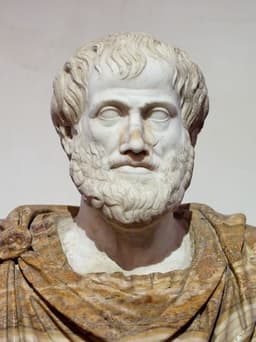
Aristotle
Philosopher · Ancient
59.3Total

Plato
Philosopher · Ancient
59.4Total
Basic Information
Born
-384
-428
Died
-322
-348
Era
Ancient
Ancient
Nationality
Greece
Greece
Occupation
Philosopher
Philosopher
Civilization
Western
Western
Score Comparison
Military (10%)
8.8
8.6
Political (20%)
35.0
35.0
Influence (20%)
92.0
88.0
Legacy (20%)
87.0
87.0
Leadership (15%)
27.2
35.4
Strategy (15%)
43.6
41.8
TOTAL
59.3
59.4
Aristotle — Complete Timeline
350 BC
Development of Formal LogicInvention
Aristotle developed the first formal system of logic, including syllogistic logic, in his work 'Organon'. He identified the rules of valid reasoning, such as the syllogism, which became the foundation of Western logic for over two millennia.
LogicPhilosophyScience
Impact: globalprogressive
343 BC
Tutoring Alexander the GreatCultural◆ Major
Philip II of Macedon invited Aristotle to tutor his son Alexander. Aristotle taught Alexander for several years, instilling in him an interest in Greek culture, science, and philosophy. This relationship influenced Alexander's later policies of Hellenization in his conquered territories.
EducationMentorshipHellenization
Impact: globalconstructive
340 BC
Publication of 'Nicomachean Ethics'Cultural◆ Major
Aristotle wrote the 'Nicomachean Ethics', a treatise on virtue ethics. He argued that the highest good is eudaimonia (flourishing) achieved through virtuous activity and practical wisdom. This work became a cornerstone of Western moral philosophy.
EthicsPhilosophyVirtue
Impact: globalconstructive
335 BC
Founding of the LyceumCultural◆ Major
Aristotle founded the Lyceum, a school in Athens dedicated to philosophical and scientific research. He established a library and organized systematic studies across disciplines. The Lyceum became a major center of learning, rivaling Plato's Academy.
SchoolPhilosophyResearch
Impact: globalconstructive
323 BC
Departure from AthensPolitical Action
After Alexander's death, anti-Macedonian sentiment rose in Athens. Aristotle, associated with Macedon, left the city to avoid persecution, saying he would not allow Athens to 'sin twice against philosophy' (referring to Socrates' execution). He died in exile in Chalcis.
ExilePoliticsPhilosophy
Plato — Complete Timeline
387 BC
Founding of the AcademyCultural
Plato founded the Academy in Athens, a school dedicated to philosophical and scientific inquiry. It became the first institution of higher learning in the Western world, operating for nearly 900 years. Students studied mathematics, astronomy, and philosophy.
EducationPhilosophyAcademy
Impact: globalconstructive
375 BC
Writing of The RepublicCultural
Plato wrote The Republic, a Socratic dialogue exploring justice, the ideal state, and the philosopher-king. The work introduced the theory of Forms, the allegory of the cave, and concepts of education and governance that became foundational to Western philosophy.
PhilosophyPolitical theoryDialogue
Impact: globalconstructive
367 BC
Journey to SyracusePolitical Action◆ Major
Plato traveled to Syracuse to tutor the young ruler Dionysius II, hoping to create a philosopher-king. The experiment failed due to court intrigues and Dionysius's lack of aptitude. Plato narrowly escaped with his life, disillusioned with practical politics.
Political experimentSyracusePhilosopher-king
Impact: regional
350 BC
Writing of the LawsCultural◆ Major
Plato wrote the Laws, his longest dialogue, outlining a practical legal code for a hypothetical city-state. It addressed governance, education, and religion, reflecting his later, more pragmatic political philosophy. The work influenced later legal and political thought.
PhilosophyLawPolitical theory
Impact: globalconstructive
Expert Analysis
Origins
Plato was born around 428 BCE in Athens to an aristocratic family. His birth name was Aristocles; Plato was a nickname. He was a student of Socrates, whose execution profoundly shaped his thinking. After Socrates' death, Plato traveled extensively, including to Egypt and Italy. He returned to Athens around 387 BCE and founded the Academy, the first institution of higher learning in the Western world. The Academy would operate for nearly 900 years.
Aristotle was born in 384 BCE in Stagira, a Greek colony in northern Greece. His father, Nicomachus, was a physician to the Macedonian king. Aristotle moved to Athens at age 17 to study at Plato's Academy, where he remained for 20 years until Plato's death. He then traveled, married, and eventually became the tutor of Alexander the Great. In 335 BCE, he returned to Athens and founded the Lyceum, a rival school to the Academy. Aristotle's Lyceum emphasized empirical research and systematic collection of knowledge.
Rise to Power
Plato's rise came through his founding of the Academy. His early dialogues, such as the Apology and Crito, defended Socrates' memory. The Republic, written around 375 BCE, established his reputation as a political philosopher. Plato attempted to implement his ideas in Syracuse, tutoring Dionysius II in 367 BCE and again in 361 BCE, but both attempts failed due to court intrigues. Despite these failures, his writings continued to attract students and scholars to the Academy.
Aristotle's rise was accelerated by his connection to the Macedonian court. In 343 BCE, Philip II invited Aristotle to tutor his son Alexander, then 13. Aristotle spent three years with Alexander, instilling in him an interest in Greek culture and science. After Alexander became king, Aristotle returned to Athens and founded the Lyceum in 335 BCE. The Lyceum quickly became a center for research, with a library and collections of natural specimens. Aristotle's systematic approach to philosophy and science attracted many students.
Leadership & Governance
Plato's leadership was that of a school founder and intellectual authority. He directed the Academy, which operated as a community of scholars. His governance ideas are expressed in The Republic, where he advocates for rule by philosopher-kings, a meritocratic elite trained in dialectic and the theory of Forms. In his later work, the Laws, Plato proposed a mixed constitution with a balance of monarchy and democracy. However, his own attempts to influence Syracusan politics failed, highlighting the gap between theory and practice.
Aristotle's leadership style was more empirical and collaborative. At the Lyceum, he organized research projects, including the collection of 158 Greek constitutions and systematic studies of animals. His Politics advocates for a mixed constitution, similar to Plato, but with more emphasis on the middle class and the rule of law. Aristotle also tutored Alexander, but his direct political influence was limited. He scored 27.2 in leadership and 35.0 in political, while Plato scored 35.4 in leadership and 35.0 in political. Both were more influential as thinkers than as active politicians.
Triumph & Tragedy
Plato's greatest triumph was the founding of the Academy and the creation of a comprehensive philosophical system. The Republic remains one of the most influential works in political philosophy. His theory of Forms provided a foundation for metaphysics and epistemology. However, his greatest failure was his inability to realize his political ideals in Syracuse. His attempts to create a philosopher-king ended in disappointment, and he was even sold into slavery briefly after one journey. Additionally, his ideal state has been criticized as totalitarian.
Aristotle's greatest triumph was his development of formal logic, which dominated Western thought for over two millennia. His biological works, such as History of Animals, were based on empirical observation and remained influential until the 19th century. His Nicomachean Ethics and Politics shaped ethical and political thought. However, his association with Alexander the Great made him vulnerable after Alexander's death. In 322 BCE, anti-Macedonian sentiment forced him to flee Athens, and he died soon after in Chalcis. His Lyceum declined after his departure.
Character & Destiny
Plato was an idealist, driven by the pursuit of perfect truth and justice. His character was shaped by Socrates' execution, leading him to distrust democracy and seek a more stable foundation for society. He was a gifted writer, using dialogues to explore complex ideas. His destiny was to become the father of Western philosophy, but his political failures showed the limits of abstract theory in practical governance.
Aristotle was a realist and empiricist, more focused on observation and classification. His character was methodical and systematic, as seen in his extensive writings on diverse subjects. He was also practical, as shown by his successful tutoring of Alexander. His destiny was to become the founder of many disciplines, but his flight from Athens suggests a man aware of political realities. His total score of 59.3 is nearly identical to Plato's 59.4, reflecting their comparable overall impact.
Legacy
Plato's legacy is immense. The Academy set the model for universities, and his dialogues preserved Socratic thought. Neoplatonism influenced Christian theology, and his ideas about ideal forms shaped philosophy for centuries. His political philosophy influenced thinkers from Augustine to Rawls. Plato scored 88.0 in influence and 87.0 in legacy.
Aristotle's legacy is equally profound. His logic was unchallenged until the 19th century, and his works on ethics, politics, and biology laid foundations for Western science. The Lyceum's empirical approach foreshadowed modern research methods. His influence extends through Scholasticism, the Enlightenment, and beyond. He scored 92.0 in influence and 87.0 in legacy. His score in military (8.8 vs 8.6) and strategy (43.6 vs 41.8) slightly edges Plato, but the differences are minor.
Conclusion
In comparing Plato and Aristotle, we see two titans of philosophy with nearly identical total scores (59.4 vs 59.3). Plato's idealist vision created the framework for Western idealism and political utopianism, while Aristotle's empirical approach established the foundations for science and logic. However, Aristotle's influence was broader across disciplines—his works encompass logic, biology, physics, ethics, and politics. Plato's influence was more concentrated in philosophy and theology. Given Aristotle's development of formal logic, which provided the tools for rational inquiry, and his comprehensive system that integrated empirical observation, he had a slightly greater overall impact on Western thought. His scores in influence (92.0) and strategy (43.6) reflect this. Therefore, while both are indispensable, Aristotle's contributions were more foundational to the scientific and logical methods that define modern thought.
Rankings
🥇
PlatoLeader
Mil: 8.6Pol: 35.0Inf: 88.0
59.4
🥈
Aristotle
Mil: 8.8Pol: 35.0Inf: 92.0
59.3
+0.1 behind
How This Comparison Works
Algorithm
Each figure is scored on 6 dimensions (0—100 scale) based on structured historical data: Military (10%), Political (20%), Influence (20%), Legacy (20%), Leadership (15%), Strategy (15%). The weighted total produces the final ranking.
Data Sources
Scores are computed from structured sub-indicators in the database. Scale factors adjust for era (Ancient ×0.85, Modern ×1.0) and civilization size (Eastern ×1.05, Other ×0.80) to account for differences in population and military scale.
Maximum 3 Figures
Comparisons are limited to 2—3 figures to ensure readability and statistical meaningfulness.
Error Margins
±5 points per dimension — Sub-scores are derived from historical records with inherent uncertainty. Two figures within 5 points on a dimension should be considered roughly equivalent in that area.
Total Score Accuracy
±3 points overall — The weighted combination of 6 dimensions produces a total score with approximately ±3 points of uncertainty. Differences of less than 3 points are not statistically significant— the figures are effectively tied.
Known Limitations
- Historical records are incomplete and uneven across civilizations
- Figures from oral-tradition societies may be underrepresented
- Occupation labels can misclassify multi-role figures
- Scores measure capability and impact, not moral character
- Quantitative scoring is a comparison tool, not absolute truth
Capability Radar
Military (10%) — Battles & Warfare
Battles
17
13
Win Rate
16
16
Expansion
18
18
Political (20%) — Governance & Reform
Reform
30
40
Diplomacy
20
35
Economy
20
20
Influence (20%) — Cultural & Global Reach
Cultural
95
95
Global
95
90
Legacy (20%) — Historical Impact
Historical
95
95
Longevity
95
95
Leadership (15%) — Power & Stability
Tenure
10
30
Stability
10
25
Strategy (15%) — Tactics & Innovation
Strategy
21
22
Tactics
28
24
Reform
30
28
Similar Comparisons
Comments & Discussion
No comments yet. Be the first to share your thoughts!