Loading...
Armand de Vignerot du Plessis vs Qin Shi Huang
Qin Shi Huang leads by 29.2 pts · 2 figures compared
…

Armand de Vignerot du Plessis
General · Modern
56.0Total
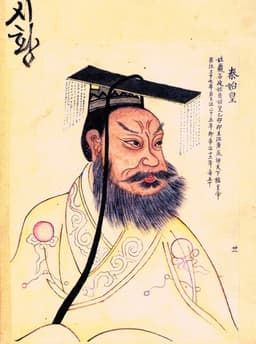
Qin Shi Huang
Emperor · Ancient
85.2Total
Basic Information
Born
1696
-259
Died
1788
-210
Era
Modern
Ancient
Nationality
France
China
Occupation
General
Emperor
Civilization
Western
Eastern
Score Comparison
Military (10%)
50.0
80.0
Political (20%)
68.0
90.0
Influence (20%)
57.2
85.0
Legacy (20%)
45.8
90.0
Leadership (15%)
62.0
78.0
Strategy (15%)
57.5
82.0
TOTAL
56.0
85.2
Armand de Vignerot du Plessis — Complete Timeline
1745 AD
Battle of Fontenoy (1745)War◆ Major
Duke de Richelieu (as he was known) commanded a French division at the Battle of Fontenoy during the War of the Austrian Succession. The French victory over the Anglo-Dutch-Hanoverian army was a major success.
War of Austrian SuccessionBattle
Impact: regionalconstructive
1746 AD
Siege of Genoa (1746-1747)War
Richelieu commanded French forces during the Siege of Genoa. The city surrendered after a prolonged blockade, securing French influence in northern Italy.
War of Austrian SuccessionSiege
Impact: regional
1748 AD
Appointment as Marshal of FrancePolitical Action◆ Major
Armand de Vignerot du Plessis was appointed Marshal of France in recognition of his military service. This rank made him one of the highest-ranking officers in the French army.
Military PromotionMarshal
Impact: national
1755 AD
Governor of GuyennePolitical Action
Richelieu was appointed Governor of Guyenne, a major province in southwestern France. This position gave him significant administrative and military authority.
GovernorshipAdministration
1756 AD
Battle of Minorca (1756)War◆ Major
Richelieu commanded the French expedition that captured the British-held island of Minorca. The victory was a key early success in the Seven Years' War.
Seven Years' WarNaval Campaign
Impact: regionalconstructive
1757 AD
Battle of Rossbach (1757)War◆ Major
Richelieu commanded French forces at the Battle of Rossbach, where they were decisively defeated by the Prussian army under Frederick the Great. The defeat was a major setback for France.
Seven Years' WarDefeat
Impact: regionaltragic
1758 AD
Recall and Disgrace (1758)Political Action
After the defeat at Rossbach and accusations of mismanagement, Richelieu was recalled to France and fell out of favor at court. He was stripped of some commands.
DisgraceRecall
Impact: nationaldestructive
Qin Shi Huang — Complete Timeline
246 BC
Construction of the Mausoleum and Terracotta ArmyOther◆ Major
Qin Shi Huang commissioned a vast mausoleum complex near Xi'an, guarded by thousands of life-sized terracotta soldiers, horses, and chariots. The project employed hundreds of thousands of workers and reflected his obsession with immortality and imperial power.
Impact: global
230 BC
Conquest of the Six Warring StatesWar
From 230 to 221 BCE, Ying Zheng led the Qin state in a series of campaigns that conquered the Han, Zhao, Wei, Chu, Yan, and Qi states. This unified China under a single ruler for the first time, ending the Warring States period.
Impact: global
221 BC
Standardization of Writing, Currency, and MeasurementsReform◆ Major
Qin Shi Huang ordered the standardization of Chinese script, currency, and weights and measures across the unified empire. This facilitated administration, trade, and cultural integration, laying a foundation for future dynasties.
Impact: globalconstructive
Proclamation of the Qin DynastyPolitical Action
After conquering the last independent state, Ying Zheng declared himself Shi Huangdi (First Emperor), founding the Qin Dynasty. He adopted a new title to signify his supreme authority and initiated centralized imperial rule.
Impact: global
214 BC
Initiation of the Great Wall ConstructionOther◆ Major
Qin Shi Huang ordered the connection and extension of existing northern fortifications to create a unified defensive wall against nomadic Xiongnu raids. This project involved massive conscripted labor and became the precursor to the later Great Wall.
Impact: regional
213 BC
Burning of Books and Burying of ScholarsPolitical Action◆ Major
On the advice of Li Si, Qin Shi Huang ordered the burning of historical records and philosophical texts not aligned with Legalist doctrine. He also had 460 Confucian scholars buried alive to suppress dissent and consolidate ideological control.
Impact: nationaldestructive
Expert Analysis
armand-de-vignerot-du-plessis-vs-qin-shi-huang
# The Emperor and the Courtier: Two Paths to Power
On a spring morning in 221 BC, a thirty-eight-year-old king stood before his assembled army in the plains of central China, having just accepted the surrender of the last independent state. He declared himself *Shi Huangdi*—the First Emperor—and in doing so, invented a title that would echo across millennia. Nearly two thousand years later and half a world away, another man of ambition watched his own star rise not through conquest but through connection. Armand de Vignerot du Plessis, great-nephew of the legendary Cardinal Richelieu, was born into a name that opened doors which for others remained forever closed. One man created a world; the other navigated one already built. Their stories, separated by time and civilization, reveal how personality and circumstance conspire to produce radically different legacies.
Origins
Qin Shi Huang entered history in 259 BC as Ying Zheng, a prince of the Qin state during the chaotic Warring States period. His father was a hostage in a neighboring kingdom; his mother, a former concubine. From infancy, he learned that power was a game of survival, played with daggers and poison. When he ascended the throne at thirteen, his regent Lü Buwei effectively ruled—until the young king discovered his mother’s affair with a eunuch named Lao Ai. Ying Zheng executed his mother’s lover, exiled Lü Buwei, and seized absolute control. He was fifteen.
Armand de Vignerot du Plessis, born in 1696, inherited a different kind of battlefield: the glittering, treacherous court of Louis XV. His great-uncle had been the architect of French absolutism, but the nephew was no cardinal. He was a soldier by profession, a courtier by necessity. The Bourbon monarchy had already centralized power; there were no warring states to conquer, only rivals to outmaneuver. Where Ying Zheng learned that trust was weakness, Armand learned that patronage was oxygen.
Rise to Power
Ying Zheng’s ascent was a matter of steel and strategy. From 230 to 221 BC, he unleashed a series of campaigns that swallowed the six rival kingdoms one by one. He used bribery to weaken his enemies before attacking, employed innovative siege tactics, and never let sentiment delay a campaign. When the King of Wei offered him territory in exchange for peace, Ying Zheng took the land and continued the war. By 221 BC, every major state in China lay under his control. He had conquered an empire before turning forty.
Armand’s rise was slower, more delicate. He fought competently at Fontenoy in 1745, where French forces defeated the British and their allies, but his real talents lay in the salons of Versailles. He cultivated the king’s mistress, Madame de Pompadour, and married well. In 1748, he was made Marshal of France—a rank that owed as much to his name as to his service. His capture of Minorca from the British in 1756 was a genuine military achievement, but it was the exception, not the rule.
Leadership & Governance
As emperor, Qin Shi Huang governed with a ferocity that matched his conquest. He standardized writing, currency, and measurements across his realm, creating the administrative skeleton that would hold China together for two thousand years. He ordered the connection of northern fortifications into what would become the Great Wall. But he also burned books that contradicted his ideology and buried scholars alive—perhaps as many as 460 in a single purge. His advisor Li Si argued that the past must be destroyed to build the future, and the First Emperor agreed.
Armand governed as a provincial administrator, serving as Governor of Guyenne and later commanding French forces in the War of the Austrian Succession. His style was pragmatic rather than visionary. He maintained order, collected taxes, and ensured that local nobles remained loyal to the crown. He was neither a reformer nor a tyrant—he was a manager of existing systems. The contrast is stark: one ruler reshaped civilization itself; the other kept the machinery of state running smoothly.
Triumph & Tragedy
Qin Shi Huang’s greatest triumph was also his most haunting. He commissioned a vast mausoleum near Xi’an, guarded by an army of life-sized terracotta soldiers—thousands of them, each with a unique face, standing in battle formation for eternity. It was a monument to absolute control, a statement that even death would not diminish his power. Yet his tragedy was equally profound: he died in 210 BC while searching for an elixir of immortality, poisoned by mercury pills prescribed by his own alchemists. Within three years, his dynasty collapsed into rebellion.
Armand’s triumph came at Minorca in 1756, where he captured the British garrison and secured French control of the Mediterranean island. It was a clean victory, widely celebrated. His tragedy followed a year later at Rossbach, where his forces were routed by Frederick the Great of Prussia. The defeat was not entirely his fault—his army was poorly supplied and his allies unreliable—but he bore the blame. Recalled to France in disgrace, he spent his final decades in provincial obscurity, dying in 1788 at the age of ninety-two, just before the revolution that would sweep away everything he had served.
Character & Destiny
Qin Shi Huang was paranoid, brilliant, and utterly ruthless. He slept in different rooms each night to avoid assassination. He believed that his will alone could reshape the world—and in many ways, it did. His personality drove him to extremes that created both his empire and its fragility. He could not delegate, could not trust, could not imagine a future without himself.
Armand was adaptable, charming, and fundamentally cautious. He knew that in the world of Versailles, survival depended on flexibility. He was not a visionary because visionaries were dangerous. He survived the fall of ministers, the shifting of royal favor, and the humiliation of defeat. His personality was suited to a system that rewarded patience over brilliance.
Legacy
Qin Shi Huang’s legacy is the template of Chinese imperial rule. The administrative divisions he created, the writing system he standardized, the very concept of a unified China—these are his enduring monuments. He is remembered as both a unifier and a tyrant, a figure of awe and horror. The Terracotta Army, discovered in 1974, has made him one of the most recognizable figures in world history.
Armand de Vignerot du Plessis is largely forgotten outside of specialist histories. His name appears in footnotes about the War of the Austrian Succession and the Seven Years’ War. He was competent, well-connected, and ultimately unremarkable. He did not change the course of history; he rode it.
Conclusion
What separates a figure who reshapes the world from one who merely inhabits it? In part, it is timing: Qin Shi Huang lived in an age when a single conqueror could forge a civilization. Armand lived in an age of established states, where power was negotiated rather than seized. But it is also character: the First Emperor’s monomaniacal vision, his willingness to destroy everything in pursuit of unity, created something that outlasted him. Armand’s prudence, his skill at navigating systems, ensured his survival but not his immortality. One burned books to build a future; the other kept his library tidy. History remembers the arsonist.
Rankings
🥇
Qin Shi HuangLeader
Mil: 80.0Pol: 90.0Inf: 85.0
85.2
🥈
Armand de Vignerot du Plessis
Mil: 50.0Pol: 68.0Inf: 57.2
56.0
+29.2 behind
How This Comparison Works
Algorithm
Each figure is scored on 6 dimensions (0—100 scale) based on structured historical data: Military (10%), Political (20%), Influence (20%), Legacy (20%), Leadership (15%), Strategy (15%). The weighted total produces the final ranking.
Data Sources
Scores are computed from structured sub-indicators in the database. Scale factors adjust for era (Ancient ×0.85, Modern ×1.0) and civilization size (Eastern ×1.05, Other ×0.80) to account for differences in population and military scale.
Maximum 3 Figures
Comparisons are limited to 2—3 figures to ensure readability and statistical meaningfulness.
Error Margins
±5 points per dimension — Sub-scores are derived from historical records with inherent uncertainty. Two figures within 5 points on a dimension should be considered roughly equivalent in that area.
Total Score Accuracy
±3 points overall — The weighted combination of 6 dimensions produces a total score with approximately ±3 points of uncertainty. Differences of less than 3 points are not statistically significant— the figures are effectively tied.
Known Limitations
- Historical records are incomplete and uneven across civilizations
- Figures from oral-tradition societies may be underrepresented
- Occupation labels can misclassify multi-role figures
- Scores measure capability and impact, not moral character
- Quantitative scoring is a comparison tool, not absolute truth
Capability Radar
Military (10%) — Battles & Warfare
Battles
45
85
Win Rate
50
90
Expansion
35
90
Political (20%) — Governance & Reform
Reform
45
95
Diplomacy
55
75
Economy
40
90
Influence (20%) — Cultural & Global Reach
Cultural
30
95
Global
25
85
Legacy (20%) — Historical Impact
Historical
35
95
Longevity
30
95
Leadership (15%) — Power & Stability
Tenure
60
70
Stability
50
65
Strategy (15%) — Tactics & Innovation
Strategy
50
85
Tactics
55
80
Reform
40
95
Similar Comparisons
Comments & Discussion
RuthlessRealist6/17/2026
The comparison forgets something crucial: Qin Shi Huang built an empire from scratch with blood and iron, while du Plessis just inherited his uncle's shadow. One unified writing systems, standardized measures, connected China with roads; the other played courtly games for ministerial scraps. Show me one law du Plessis authored that survived a decade. Exactly. Legacy isn't about birth—it's about forging something that outlasts your bones.
书同文皇帝6/17/2026
说到底是格局问题。始皇帝灭六国,书同文车同轨,把不可能变成可能。这位法国贵族呢?靠着叔父的名号在凡尔赛宫打转,功劳簿上写的都是别人的血汗。没有嬴政,中国历史走向完全不同;没有杜普莱西,法国十八世纪照样运转。这种对比,就像把彗星跟萤火虫摆在一起比亮度。
DataDriller6/17/2026
Let's talk numbers. Qin Shi Huang commanded armies that fielded up to 600,000 men in a single campaign—that's more combatants than all of France's standing army in du Plessis's era combined. The First Emperor's terracotta army pits cover 50 square kilometers. Du Plessis's achievements? He negotiated treaties that got him some land and a better seat at court. Scale matters. This isn't comparing paths to power; it's comparing a supernova to a candle.
战果论英雄6/17/2026
比战功?始皇帝十五岁铲除嫪毐和吕不韦,二十二岁完全掌权,这个年纪杜普莱西还在凡尔赛宫学跳舞。统一六国需要的不是外交辞令,而是把二十万人命压在一个决策上的铁腕。你让法王把全国兵权交给这位贵族打一场类似长平之战试试?肯定连个伯爵领都打不下来。血里泡过的权术,跟香水里泡的权术,有本质区别。