Loading...
This comparison has not been analyzed yet.
One-time AI generation (~1 minute). Scores and timeline are already available below.
Arsinoe IV of Egypt vs Hezekiah of Judah
Hezekiah of Judah leads by 14.1 pts · 2 figures compared
…
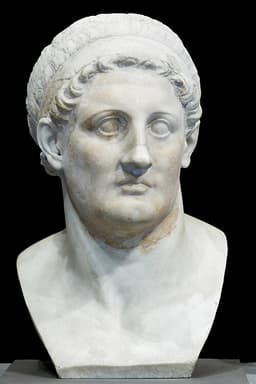
Arsinoe IV of Egypt
Emperor · Ancient
40.7Total
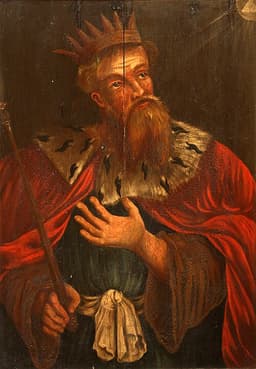
Hezekiah of Judah
Emperor · Ancient
54.8Total
Basic Information
Born
-68
-715
Died
-41
-686
Era
Ancient
Ancient
Nationality
Ptolemaic Egypt
Judah
Occupation
Emperor
Emperor
Civilization
Middle Eastern
Middle Eastern
Score Comparison
Military (10%)
36.0
20.0
Political (20%)
40.8
62.7
Influence (20%)
42.4
55.7
Legacy (20%)
32.5
49.2
Leadership (15%)
45.0
74.0
Strategy (15%)
54.9
60.7
TOTAL
40.7
54.8
Arsinoe IV of Egypt — Complete Timeline
48 BC
Role in the Alexandrian WarWar◆ Major
Arsinoe IV escaped from the royal palace during the Alexandrian War between Julius Caesar and Ptolemy XIII. She joined the Egyptian army opposing Caesar and was proclaimed queen by the forces of Achillas.
Alexandrian WarPtolemaic Dynasty
Impact: regional
Command of the Egyptian armyWar◆ Major
Arsinoe IV, with her advisor Ganymedes, took command of the Egyptian forces besieging Caesar in Alexandria. She organized the defense and directed military operations against the Romans, prolonging the conflict.
Alexandrian WarMilitary Command
Impact: regional
47 BC
Capture and exile to the Temple of ArtemisPolitical Action◆ Major
After Caesar's victory in the Alexandrian War, Arsinoe IV was captured and taken to Rome. She was paraded in Caesar's triumph but spared execution; instead, she was exiled to the Temple of Artemis at Ephesus.
ExileRoman Triumph
Impact: regionaltragic
41 BC
Execution by Mark AntonyPolitical Action◆ Major
At the request of Cleopatra VII, Mark Antony ordered the execution of Arsinoe IV at the Temple of Artemis in Ephesus. Her death removed a rival claimant to the Ptolemaic throne and eliminated a threat to Cleopatra's rule.
ExecutionPtolemaic DynastyCleopatra
Impact: regionaltragic
Hezekiah of Judah — Complete Timeline
715 BC
Religious reforms and centralization of worshipReform◆ Major
Hezekiah removed high places, smashed sacred stones, and cut down Asherah poles. He centralized worship at the Temple in Jerusalem, destroying local shrines throughout Judah. This reform aimed to eliminate idolatry and enforce exclusive worship of Yahweh.
Religious ReformCentralizationIdolatry
Impact: nationalconstructive
705 BC
Hezekiah's rebellion against AssyriaPolitical Action◆ Major
After the death of Assyrian king Sargon II, Hezekiah stopped paying tribute to Assyria and formed an anti-Assyrian alliance with Egypt and other states. This rebellion provoked Sennacherib's invasion and the siege of Jerusalem.
RebellionAllianceAssyria
Impact: regional
701 BC
Siege of Jerusalem by SennacheribWar
Assyrian king Sennacherib besieged Jerusalem after Hezekiah rebelled. Hezekiah paid heavy tribute but the city was not captured. According to biblical accounts, an angel struck down 185,000 Assyrian soldiers, forcing Sennacherib to withdraw. The event preserved Judah's independence.
Assyrian SiegeDivine InterventionSurvival
Impact: regional
Construction of the Siloam TunnelOther◆ Major
Hezekiah ordered the excavation of a 533-meter tunnel through solid rock to bring water from the Gihon Spring into Jerusalem, securing the city's water supply during the Assyrian siege. The tunnel is a major engineering achievement of the ancient Near East.
EngineeringWater SupplySiege Preparation
constructive
Hezekiah's illness and recoveryOther
Hezekiah fell critically ill with a boil. The prophet Isaiah told him he would die, but Hezekiah prayed fervently. God granted him 15 additional years of life and performed a sign by making the shadow on the sundial go backward ten steps.
MiracleHealingProphecy
Impact: national
This comparison has not been analyzed yet.
One-time AI generation (~1 minute). Scores and timeline are already available below.
Rankings
🥇
Hezekiah of JudahLeader
Mil: 20.0Pol: 62.7Inf: 55.7
54.8
🥈
Arsinoe IV of Egypt
Mil: 36.0Pol: 40.8Inf: 42.4
40.7
+14.1 behind
How This Comparison Works
Algorithm
Each figure is scored on 6 dimensions (0—100 scale) based on structured historical data: Military (10%), Political (20%), Influence (20%), Legacy (20%), Leadership (15%), Strategy (15%). The weighted total produces the final ranking.
Data Sources
Scores are computed from structured sub-indicators in the database. Scale factors adjust for era (Ancient ×0.85, Modern ×1.0) and civilization size (Eastern ×1.05, Other ×0.80) to account for differences in population and military scale.
Maximum 3 Figures
Comparisons are limited to 2—3 figures to ensure readability and statistical meaningfulness.
Error Margins
±5 points per dimension — Sub-scores are derived from historical records with inherent uncertainty. Two figures within 5 points on a dimension should be considered roughly equivalent in that area.
Total Score Accuracy
±3 points overall — The weighted combination of 6 dimensions produces a total score with approximately ±3 points of uncertainty. Differences of less than 3 points are not statistically significant— the figures are effectively tied.
Known Limitations
- Historical records are incomplete and uneven across civilizations
- Figures from oral-tradition societies may be underrepresented
- Occupation labels can misclassify multi-role figures
- Scores measure capability and impact, not moral character
- Quantitative scoring is a comparison tool, not absolute truth
Capability Radar
Military (10%) — Battles & Warfare
Battles
40
45
Win Rate
40
50
Expansion
43
20
Political (20%) — Governance & Reform
Reform
0
70
Diplomacy
10
60
Economy
0
55
Influence (20%) — Cultural & Global Reach
Cultural
5
55
Global
5
40
Legacy (20%) — Historical Impact
Historical
10
60
Longevity
5
55
Leadership (15%) — Power & Stability
Tenure
5
55
Stability
0
50
Strategy (15%) — Tactics & Innovation
Strategy
44
65
Tactics
52
60
Reform
54
55
Similar Comparisons
Comments & Discussion
No comments yet. Be the first to share your thoughts!