Loading...
Artur Mas vs Jawaharlal Nehru
Jawaharlal Nehru leads by 9.5 pts · 2 figures compared
…
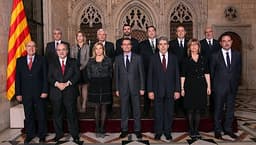
Artur Mas
Politician · Modern
50.4Total
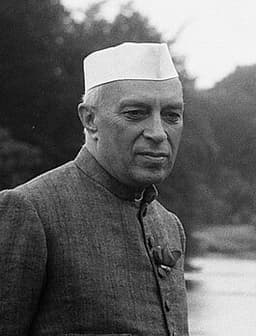
Jawaharlal Nehru
Politician · Modern
59.9Total
Basic Information
Born
1956
1889
Died
—
1964
Era
Modern
Modern
Nationality
Spain
India
Occupation
Politician
Politician
Civilization
Western
Indian
Score Comparison
Military (10%)
48.3
10.0
Political (20%)
48.0
78.0
Influence (20%)
54.9
88.0
Legacy (20%)
41.7
40.0
Leadership (15%)
67.0
78.0
Strategy (15%)
42.1
35.0
TOTAL
50.4
59.9
Artur Mas — Complete Timeline
2010 AD
Elected President of the Government of CataloniaPolitical Action◆ Major
Mas was elected as the 129th President of the Government of Catalonia, succeeding Jos
Catalan PoliticsElectionGovernance
Impact: regionalconstructive
2012 AD
Shifted to Pro-Independence StancePolitical Action
After a large pro-independence demonstration on September 11, 2012, Mas shifted his political position from autonomy to supporting Catalan independence. He called early elections and campaigned on a platform of self-determination, marking a major change in Catalan politics.
Catalan PoliticsIndependencePolitical Shift
Impact: regionalconstructive
2014 AD
Held the 2014 Catalan Self-Determination ConsultationPolitical Action◆ Major
Mas's government organized a non-binding consultation on Catalan independence on November 9, 2014, despite a Spanish constitutional court suspension. Over 2.3 million people participated, with 80% voting for independence. The event was symbolic but led to legal charges against Mas.
Catalan PoliticsReferendumLegal Conflict
Impact: regionalconstructive
2016 AD
Stepped Down as President to Allow Puigdemont's ElectionPolitical Action◆ Major
Mas stepped down as President of Catalonia to facilitate the election of Carles Puigdemont as his successor, after failing to secure enough support for his own re-election. This move allowed the pro-independence coalition to continue its agenda.
Catalan PoliticsSuccessionCoalition
Impact: regionalconstructive
2017 AD
Banned from Holding Public OfficePolitical Action◆ Major
Mas was convicted of disobedience for organizing the 2014 consultation and banned from holding public office for two years. The ban effectively ended his political career, though he remained influential in the independence movement.
Catalan PoliticsLegal ConflictDisqualification
Impact: regionaltragic
Jawaharlal Nehru — Complete Timeline
1919 AD
Jallianwala Bagh Massacre ResponsePolitical Action◆ Major
Nehru, deeply affected by the Jallianwala Bagh massacre, joined the Indian independence movement. He became a key leader in the Indian National Congress, advocating for non-violent resistance against British rule.
Independence MovementIndian National CongressNon-violence
Impact: national
1929 AD
Election as Congress President (Lahore Session)Political Action◆ Major
Nehru was elected President of the Indian National Congress at its Lahore session, where he declared Purna Swaraj (complete independence) as the party's goal. This marked a shift from dominion status to full independence.
Indian National CongressIndependencePurna Swaraj
Impact: nationalprogressive
1942 AD
Quit India Movement LeadershipPolitical Action◆ Major
Nehru, alongside Gandhi, led the Quit India Movement, demanding an end to British rule. He was arrested and imprisoned for nearly three years, but the movement intensified pressure on Britain to leave India.
Quit IndiaCivil DisobedienceImprisonment
Impact: nationalprogressive
1947 AD
First Prime Minister of IndiaPolitical Action
Nehru became the first Prime Minister of independent India, delivering his 'Tryst with Destiny' speech. He led the nation through partition, integration of princely states, and the drafting of a secular, democratic constitution.
IndependencePrime MinisterConstitution
Impact: globalconstructive
1961 AD
Founding of the Non-Aligned MovementPolitical Action◆ Major
Nehru co-founded the Non-Aligned Movement with Tito, Nasser, and Sukarno, advocating for a third way during the Cold War. This positioned India as a leader of developing nations, promoting peace and decolonization.
Non-Aligned MovementCold WarForeign Policy
Impact: globalconstructive
Expert Analysis
Origins
Artur Mas (born 1956) was born into a middle-class family in Barcelona, Catalonia. He studied economics at the University of Barcelona and later worked as a civil servant. His early political career was within the moderate Catalan nationalist party Convergència Democràtica de Catalunya (CDC), where he served in various administrative roles before becoming President of the Generalitat.
Jawaharlal Nehru (1889–1964) was born into a wealthy Kashmiri Brahmin family in Allahabad, India. His father, Motilal Nehru, was a prominent lawyer and politician. Nehru was educated at Harrow and Cambridge, earning a degree in natural sciences, and later studied law at the Inner Temple. He returned to India in 1912 and was drawn into the Indian independence movement through the Indian National Congress.
Rise to Power
Mas rose through the ranks of the CDC, serving as Minister of Economy and Finance under President Jordi Pujol from 2001 to 2003. After Pujol's retirement, Mas became the leader of the Convergence and Union (CiU) coalition. He led the coalition to victory in the 2010 Catalan election and was elected President of the Generalitat on December 27, 2010. A key turning point was the massive pro-independence demonstration on September 11, 2012, after which Mas shifted from advocating autonomy to supporting outright independence.
Nehru's rise was intertwined with the Indian independence movement. He was deeply affected by the Jallianwala Bagh massacre in 1919, which propelled him into active politics. He became a close associate of Mahatma Gandhi and was elected President of the Indian National Congress in 1929 at the Lahore session, where he declared Purna Swaraj (complete independence) as the party's goal. He led the Quit India Movement in 1942, resulting in his imprisonment for nearly three years. After India's independence in 1947, Nehru became the first Prime Minister, a position he held until his death in 1964.
Leadership & Governance
Mas's leadership was defined by his push for Catalan self-determination. He organized a non-binding consultation on independence on November 9, 2014, despite a Spanish constitutional court suspension. This act of civil disobedience led to his conviction and a two-year ban from public office. His governance focused on economic recovery from the 2008 financial crisis, but his legacy is dominated by the independence movement. His leadership score of 67.0 reflects his ability to mobilize support, but his political score of 48.0 indicates limited success in achieving his goals.
Nehru's leadership was foundational for modern India. He championed secularism, democracy, and economic modernization through a mixed economy and five-year plans. He co-founded the Non-Aligned Movement, positioning India as a leader among developing nations. His political score of 78.0 and leadership score of 78.0 reflect his central role in shaping India's institutions and foreign policy. However, his strategy score of 35.0 is lower, partly due to the 1962 Sino-Indian War, which exposed military and diplomatic weaknesses.
Triumph & Tragedy
Mas's greatest triumph was organizing the 2014 consultation, which demonstrated the strength of the Catalan independence movement. However, his greatest failure was the subsequent conviction and ban, which effectively ended his political career. He also failed to secure enough support to form a government after the 2015 election, leading him to step down in favor of Carles Puigdemont.
Nehru's triumphs include leading India through the turbulent post-partition period, integrating princely states, and establishing democratic institutions. His foreign policy success is marked by the Non-Aligned Movement. However, his failures include the 1962 war with China, which resulted in a humiliating defeat, and his handling of the Kashmir conflict, which remains unresolved. His legacy score of 40.0 is modest, reflecting both his achievements and controversies.
Character & Destiny
Mas was a pragmatic and cautious leader who became more radicalized by events. His decision to pivot to independence was a calculated response to popular pressure, but his legal misstep proved costly. His character was that of a technocrat turned activist, but he lacked the political ruthlessness to navigate the Spanish legal system.
Nehru was an intellectual and idealist, deeply influenced by socialism and liberal democracy. His vision for India was inclusive and secular, but his autocratic tendencies sometimes alienated colleagues. His character shaped India's destiny as a democratic, non-aligned nation, but his strategic miscalculations, especially regarding China, tarnished his later years.
Legacy
Mas's legacy is as a key figure in the Catalan independence movement, but his impact is largely confined to Catalonia and Spain. His actions set the stage for the 2017 independence referendum, but his personal legacy is limited by his legal troubles. His influence score of 54.9 reflects a moderate but regional impact.
Nehru's legacy is immense: he shaped modern India's political identity, its secular constitution, and its role in global affairs. His influence score of 88.0 underscores his global stature. However, his legacy score of 40.0 is surprisingly low, possibly due to criticisms of his economic policies and the unresolved Kashmir issue. Nevertheless, he remains one of the most significant figures of the 20th century.
Conclusion
While Artur Mas scored 50.4 overall and Nehru 59.9, the gap is not just numerical. Nehru's impact on India and the world far exceeds Mas's regional influence. Nehru's political and leadership scores (78.0 each) reflect his role in founding a nation and shaping global diplomacy, whereas Mas's scores (48.0 and 67.0) indicate a more limited, albeit significant, regional impact. The total score difference of 9.5 points understates the vast disparity in historical importance. Nehru clearly had greater impact, as his decisions affected hundreds of millions and shaped the course of the Cold War. Mas, while pivotal for Catalonia, remains a footnote in Spanish history.
Rankings
🥇
Jawaharlal NehruLeader
Mil: 10.0Pol: 78.0Inf: 88.0
59.9
🥈
Artur Mas
Mil: 48.3Pol: 48.0Inf: 54.9
50.4
+9.5 behind
How This Comparison Works
Algorithm
Each figure is scored on 6 dimensions (0—100 scale) based on structured historical data: Military (10%), Political (20%), Influence (20%), Legacy (20%), Leadership (15%), Strategy (15%). The weighted total produces the final ranking.
Data Sources
Scores are computed from structured sub-indicators in the database. Scale factors adjust for era (Ancient ×0.85, Modern ×1.0) and civilization size (Eastern ×1.05, Other ×0.80) to account for differences in population and military scale.
Maximum 3 Figures
Comparisons are limited to 2—3 figures to ensure readability and statistical meaningfulness.
Error Margins
±5 points per dimension — Sub-scores are derived from historical records with inherent uncertainty. Two figures within 5 points on a dimension should be considered roughly equivalent in that area.
Total Score Accuracy
±3 points overall — The weighted combination of 6 dimensions produces a total score with approximately ±3 points of uncertainty. Differences of less than 3 points are not statistically significant— the figures are effectively tied.
Known Limitations
- Historical records are incomplete and uneven across civilizations
- Figures from oral-tradition societies may be underrepresented
- Occupation labels can misclassify multi-role figures
- Scores measure capability and impact, not moral character
- Quantitative scoring is a comparison tool, not absolute truth
Capability Radar
Military (10%) — Battles & Warfare
Battles
29
26
Win Rate
33
28
Expansion
36
32
Political (20%) — Governance & Reform
Reform
35
85
Diplomacy
45
90
Economy
40
70
Influence (20%) — Cultural & Global Reach
Cultural
35
80
Global
25
85
Legacy (20%) — Historical Impact
Historical
30
85
Longevity
20
80
Leadership (15%) — Power & Stability
Tenure
40
85
Stability
30
75
Strategy (15%) — Tactics & Innovation
Strategy
38
35
Tactics
41
37
Reform
42
36
Similar Comparisons
Comments & Discussion
No comments yet. Be the first to share your thoughts!