Loading...
Jawaharlal Nehru vs Vojislav Kostunica
Jawaharlal Nehru leads by 5.4 pts · 2 figures compared
…
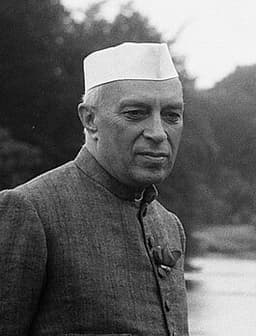
Jawaharlal Nehru
Politician · Modern
59.9Total

Vojislav Kostunica
Politician · Modern
54.5Total
Basic Information
Born
1889
1944
Died
1964
—
Era
Modern
Modern
Nationality
India
Serbia
Occupation
Politician
Politician
Civilization
Indian
Western
Score Comparison
Military (10%)
10.0
50.0
Political (20%)
78.0
72.0
Influence (20%)
88.0
54.9
Legacy (20%)
40.0
43.3
Leadership (15%)
78.0
66.0
Strategy (15%)
35.0
42.4
TOTAL
59.9
54.5
Jawaharlal Nehru — Complete Timeline
1919 AD
Jallianwala Bagh Massacre ResponsePolitical Action◆ Major
Nehru, deeply affected by the Jallianwala Bagh massacre, joined the Indian independence movement. He became a key leader in the Indian National Congress, advocating for non-violent resistance against British rule.
Independence MovementIndian National CongressNon-violence
Impact: national
1929 AD
Election as Congress President (Lahore Session)Political Action◆ Major
Nehru was elected President of the Indian National Congress at its Lahore session, where he declared Purna Swaraj (complete independence) as the party's goal. This marked a shift from dominion status to full independence.
Indian National CongressIndependencePurna Swaraj
Impact: nationalprogressive
1942 AD
Quit India Movement LeadershipPolitical Action◆ Major
Nehru, alongside Gandhi, led the Quit India Movement, demanding an end to British rule. He was arrested and imprisoned for nearly three years, but the movement intensified pressure on Britain to leave India.
Quit IndiaCivil DisobedienceImprisonment
Impact: nationalprogressive
1947 AD
First Prime Minister of IndiaPolitical Action
Nehru became the first Prime Minister of independent India, delivering his 'Tryst with Destiny' speech. He led the nation through partition, integration of princely states, and the drafting of a secular, democratic constitution.
IndependencePrime MinisterConstitution
Impact: globalconstructive
1961 AD
Founding of the Non-Aligned MovementPolitical Action◆ Major
Nehru co-founded the Non-Aligned Movement with Tito, Nasser, and Sukarno, advocating for a third way during the Cold War. This positioned India as a leader of developing nations, promoting peace and decolonization.
Non-Aligned MovementCold WarForeign Policy
Impact: globalconstructive
Vojislav Kostunica — Complete Timeline
2000 AD
Election as President of YugoslaviaPolitical Action
Kostunica was elected President of the Federal Republic of Yugoslavia after defeating Slobodan Milosevic in the presidential election. His victory marked the end of Milosevic's rule and the beginning of democratic transition.
DemocratizationElectionPost-Milosevic
Impact: regionalprogressive
Admission of Yugoslavia to the United NationsPolitical Action◆ Major
Kostunica oversaw the readmission of the Federal Republic of Yugoslavia to the United Nations. The country had been suspended from the UN during the Milosevic era due to the wars in the former Yugoslavia.
United NationsDiplomacyReintegration
Impact: globalconstructive
2008 AD
Opposition to the Independence of KosovoPolitical Action◆ Major
Kostunica, as Prime Minister of Serbia, strongly opposed the unilateral declaration of independence by Kosovo. He pursued diplomatic and legal measures to prevent international recognition of Kosovo's independence.
KosovoIndependenceNationalism
Impact: regionaldestructive
Expert Analysis
Origins
**Jawaharlal Nehru** was born on November 14, 1889, in Allahabad, India, into a wealthy Kashmiri Brahmin family. His father, Motilal Nehru, was a prominent lawyer and early Indian National Congress leader. Nehru was educated at home by private tutors and later at Harrow School in England, followed by Trinity College, Cambridge, where he studied natural sciences. He qualified as a barrister from the Inner Temple in London. His exposure to Western political thought and the Irish Home Rule movement influenced his nationalism.
**Vojislav Kostunica** was born on September 24, 1944, in Belgrade, Yugoslavia (now Serbia). His father was a judge, and his family had a legal background. He studied law at the University of Belgrade, earning his doctorate in 1974 with a thesis on the legal system of the medieval Serbian Nemanjic dynasty. He became a professor of constitutional law at the University of Belgrade. His early career was marked by opposition to the communist regime, advocating for constitutional democracy.
Rise to Power
Nehru rose to prominence through the Indian independence movement. He was deeply affected by the Jallianwala Bagh massacre in 1919, which pushed him into active politics. He became a close associate of Mahatma Gandhi and was elected President of the Indian National Congress in 1929 at the Lahore session, where he declared Purna Swaraj (complete independence) as the party's goal. He led the Quit India Movement in 1942, resulting in his arrest and imprisonment for nearly three years. After World War II, Nehru became the first Prime Minister of independent India on August 15, 1947.
Kostunica's rise came after the fall of Slobodan Milosevic. He founded the Democratic Party of Serbia in 1992 and remained a consistent critic of Milosevic's authoritarian rule. In the 2000 Yugoslav presidential election, he ran as the candidate of the Democratic Opposition of Serbia. Despite Milosevic's attempts to manipulate the election, mass protests (the Bulldozer Revolution) forced Milosevic to concede, and Kostunica became President of the Federal Republic of Yugoslavia on October 7, 2000. His political score of 72.0 reflects his ability to unify the opposition and navigate a peaceful transition.
Leadership & Governance
Nehru's leadership was characterized by a commitment to secularism, democracy, and socialism. He implemented a mixed-economy model with state-led industrialization, establishing institutions like the Planning Commission and the Indian Institutes of Technology. His foreign policy centered on non-alignment, co-founding the Non-Aligned Movement in 1961. He also oversaw the integration of princely states into India. However, his handling of the Sino-Indian War in 1962 was criticized for unpreparedness, and his economic policies led to slow growth. His leadership score of 78.0 reflects his vision but also strategic shortcomings (strategy score 35.0).
Kostunica, as president and later prime minister (2004-2008), focused on democratic consolidation and European integration. He oversaw Yugoslavia's readmission to the United Nations in 2000. His governance was marked by cautious reforms and a strong stance against Kosovo's independence, which he pursued through diplomatic and legal means. However, his tenure was marred by political instability, failure to arrest war criminals like Ratko Mladic, and economic stagnation. His leadership score of 66.0 reflects his democratic credentials but limited effectiveness.
Triumph & Tragedy
Nehru's greatest triumph was leading India through its formative years, establishing democratic institutions, and maintaining national unity despite partition. His Non-Aligned Movement gave voice to developing nations. His tragedy was the 1962 Sino-Indian War, where India suffered a humiliating defeat due to his policy of non-alignment and neglect of border defense. He died in 1964, leaving unresolved border disputes and economic challenges.
Kostunica's triumph was ending Milosevic's rule and restoring democracy to Yugoslavia. His tragedy was the failure to prevent the breakup of the state union with Montenegro (2006) and Kosovo's declaration of independence (2008). His opposition to Kosovo's independence isolated Serbia internationally and hindered EU integration. He resigned as prime minister in 2008 after failing to form a government.
Character & Destiny
Nehru was an intellectual, idealistic, and visionary, but also arrogant and detached from ground realities. His character shaped India's secular and democratic path, but his strategic blindness led to the China debacle. He scored 78.0 in political and 88.0 in influence, reflecting his global stature.
Kostunica was a constitutional lawyer, principled but inflexible. His legalistic approach helped in the transition from Milosevic but also caused delays in reforms. His influence score of 54.9 indicates limited global impact compared to Nehru.
Legacy
Nehru's legacy is enduring: India remains a secular democracy with strong institutions. His economic model was later reformed, but his emphasis on science and education left a mark. He is remembered as the architect of modern India, with a legacy score of 40.0 (possibly underrated).
Kostunica's legacy is more mixed. He is credited with ending authoritarianism but criticized for not doing enough to reform the economy or join the EU. His opposition to Kosovo independence defined his later career. His legacy score of 43.3 reflects a limited but significant impact.
Conclusion
Jawaharlal Nehru had a greater impact on world history than Vojislav Kostunica. Nehru's total score of 59.9 surpasses Kostunica's 54.5 by 5.4 points. Nehru shaped a nation of over a billion people, founded a major foreign policy movement, and established democratic institutions that have endured for over seven decades. Kostunica's role in ending Milosevic's rule was crucial for Serbia, but his influence was regional and his achievements less transformative. Nehru's influence score of 88.0 dwarfs Kostunica's 54.9. While both faced failures, Nehru's foundational role in building a modern India gives him a clear edge in historical significance.
Rankings
🥇
Jawaharlal NehruLeader
Mil: 10.0Pol: 78.0Inf: 88.0
59.9
🥈
Vojislav Kostunica
Mil: 50.0Pol: 72.0Inf: 54.9
54.5
+5.4 behind
How This Comparison Works
Algorithm
Each figure is scored on 6 dimensions (0—100 scale) based on structured historical data: Military (10%), Political (20%), Influence (20%), Legacy (20%), Leadership (15%), Strategy (15%). The weighted total produces the final ranking.
Data Sources
Scores are computed from structured sub-indicators in the database. Scale factors adjust for era (Ancient ×0.85, Modern ×1.0) and civilization size (Eastern ×1.05, Other ×0.80) to account for differences in population and military scale.
Maximum 3 Figures
Comparisons are limited to 2—3 figures to ensure readability and statistical meaningfulness.
Error Margins
±5 points per dimension — Sub-scores are derived from historical records with inherent uncertainty. Two figures within 5 points on a dimension should be considered roughly equivalent in that area.
Total Score Accuracy
±3 points overall — The weighted combination of 6 dimensions produces a total score with approximately ±3 points of uncertainty. Differences of less than 3 points are not statistically significant— the figures are effectively tied.
Known Limitations
- Historical records are incomplete and uneven across civilizations
- Figures from oral-tradition societies may be underrepresented
- Occupation labels can misclassify multi-role figures
- Scores measure capability and impact, not moral character
- Quantitative scoring is a comparison tool, not absolute truth
Capability Radar
Military (10%) — Battles & Warfare
Battles
26
28
Win Rate
28
34
Expansion
32
33
Political (20%) — Governance & Reform
Reform
85
55
Diplomacy
90
60
Economy
70
40
Influence (20%) — Cultural & Global Reach
Cultural
80
30
Global
85
30
Legacy (20%) — Historical Impact
Historical
85
40
Longevity
80
20
Leadership (15%) — Power & Stability
Tenure
85
60
Stability
75
35
Strategy (15%) — Tactics & Innovation
Strategy
35
40
Tactics
37
40
Reform
36
42
Similar Comparisons
Comments & Discussion
No comments yet. Be the first to share your thoughts!