Loading...
Ashikaga Yoshinori vs Napoleon Bonaparte
Napoleon Bonaparte leads by 25.6 pts · 2 figures compared
…
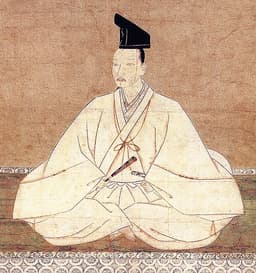
Ashikaga Yoshinori
Emperor · Medieval
45.3Total

Napoleon Bonaparte
General · Modern
70.9Total
Basic Information
Born
1394
1769
Died
1441
1821
Era
Medieval
Modern
Nationality
Japan
France
Occupation
Emperor
General
Civilization
Eastern
Western
Score Comparison
Military (10%)
50.0
94.0
Political (20%)
35.1
72.0
Influence (20%)
51.0
40.0
Legacy (20%)
43.3
80.0
Leadership (15%)
48.4
78.0
Strategy (15%)
41.7
90.0
TOTAL
45.3
70.9
Ashikaga Yoshinori — Complete Timeline
1429 AD
Appointment as Sixth ShogunPolitical Action◆ Major
Ashikaga Yoshinori became the sixth shogun of the Ashikaga shogunate after the death of his brother Ashikaga Yoshikazu. He inherited a shogunate weakened by factional strife and sought to restore its authority.
AppointmentShogunAshikaga Shogunate
Impact: national
1438 AD
Suppression of the Eikyō RebellionWar◆ Major
Yoshinori suppressed the Eiky
RebellionSuppressionKantō Region
Impact: regionaldestructive
1441 AD
Assassination by Akamatsu MitsusukePolitical Action
Ashikaga Yoshinori was assassinated by Akamatsu Mitsusuke during a banquet in Kyoto. His death triggered the Kakitsu Rebellion and led to a period of instability in the Ashikaga shogunate, contributing to the eventual decline of central authority.
AssassinationKakitsu RebellionShogunate Decline
Impact: nationaltragic
Napoleon Bonaparte — Complete Timeline
1799 AD
Coup of 18 BrumaireOther◆ Major
Napoleon Bonaparte, with support from his brother Lucien and key political figures, overthrew the Directory in a bloodless coup. He established the Consulate with himself as First Consul, effectively becoming the ruler of France. This event ended the French Revolution's most unstable period.
French RevolutionCoupRise to Power
Impact: regional
1804 AD
Promulgation of the Napoleonic CodeOther◆ Major
Napoleon enacted the Civil Code of the French, known as the Napoleonic Code, a comprehensive set of laws that replaced the fragmented feudal legal systems. The code established legal equality, protected property rights, and secularized law. It became the basis for legal systems in many European and world countries.
Legal ReformNapoleonic CodeCivil Law
Impact: globalconstructive
1805 AD
Battle of AusterlitzWar◆ Major
Napoleon's Grande Arm
Napoleonic WarsBattleDecisive Victory
Impact: global
1812 AD
Invasion of RussiaWar◆ Major
Napoleon led the Grande Arm
Napoleonic WarsInvasionDisaster
Impact: globaldestructive
1815 AD
Battle of WaterlooWar◆ Major
Napoleon's French army was defeated by the combined forces of the Duke of Wellington's Anglo-Allied army and Gebhard Leberecht von Bl
Napoleonic WarsBattleFinal Defeat
Impact: globaldestructive
Expert Analysis
ashikaga-yoshinori-vs-napoleon-bonaparte
**The Iron Cage and the Silk Thread: Napoleon and Ashikaga Yoshinori**
On a June morning in 1815, Napoleon Bonaparte watched the sun rise over a muddy field near Waterloo, his Grand Armée arrayed in perfect order. He was the master of Europe, a man who had remade the world in his image. Fifteen hundred miles away and four centuries earlier, in the summer of 1441, Ashikaga Yoshinori, shogun of Japan, sat down to a feast in Kyoto. He was the supreme warlord of a fractured realm, a man who believed he had finally tamed his rebellious vassals. Both men were about to be destroyed. One by a coalition of kings, the other by a single sword. Their stories, though separated by oceans and eras, ask the same question: what does it mean to rule, and what happens when the world refuses to bend?
**Origins**
Napoleon Bonaparte was born in 1769 on the island of Corsica, a place that had only recently become French. He was an outsider, a provincial Italian-speaking noble in a kingdom that sneered at his accent. This fueled an ambition so immense it could only be satisfied by conquering the continent that had rejected him. The French Revolution, which erupted when he was twenty, shattered the old order. It was a world that rewarded talent over birth, and Napoleon, a brilliant artillery officer, seized the opportunity. He was forged in the crucible of revolutionary chaos, where every cannonball could be a stepping stone.
Ashikaga Yoshinori was born in 1394 into the very heart of power. He was the son of the third shogun, Ashikaga Yoshimitsu, the man who built the Golden Pavilion and unified the Northern and Southern Courts. But Yoshinori was not first in line. He spent his early years as a monk, a quiet observer in the shadows of a dynasty that was already fraying. When his brother, the fifth shogun, died in 1429, the Ashikaga shogunate was a hollow shell—the emperors in Kyoto were puppets, but the great provincial lords, the *daimyō*, were growing independent. Yoshinori was pulled from his monastery, given the title of shogun, and tasked with rebuilding a house that was already crumbling.
**Rise to Power**
Napoleon’s ascent was a rocket. He won his first major command at the siege of Toulon in 1793 at age twenty-four. By 1796, he was leading the Army of Italy, where his lightning campaigns stunned the world. He did not inherit power; he seized it. By 1799, he was First Consul of France, and in 1804, he crowned himself Emperor in Notre-Dame. Every step was a gamble, every victory a proof of his genius. His legitimacy came from victory itself.
Yoshinori’s rise was a careful, deliberate climb. He was appointed shogun in 1429, but his authority was not absolute. The Ashikaga shogunate was a coalition of powerful families, and the shogun was often a first among equals. Yoshinori understood that to rule, he had to break the independence of his vassals. In 1438, the Eikyō Rebellion gave him his chance. The Kantō kubō, Ashikaga Mochiuji, a powerful regional lord, defied Kyoto. Yoshinori moved with cold precision, suppressing the rebellion and executing Mochiuji. It was his Toulon, his Marengo—a decisive victory that made him the undisputed master of the shogunate.
**Leadership & Governance**
Napoleon ruled through energy and terror. He was everywhere at once, dictating dispatches, leading charges, rewriting laws. His Napoleonic Code, enacted in 1804, was a masterpiece of rational order: it abolished feudalism, guaranteed religious toleration, and standardized law across Europe. But his genius was also his curse. He could not stop. He created a system that depended on his constant motion; when he paused, it collapsed.
Yoshinori ruled through ritual and iron discipline. He was not a battlefield commander like Napoleon; his score in military strategy is a modest 50.2, compared to Napoleon’s 93.0. Instead, he was a political spider. He centralized the shogunate, demanded obedience, and punished defiance with execution. But his rule was a cage of silk—beautiful, intricate, but fragile. He had no code, no revolution, no new foundation. He was restoring an old order, not building a new one.
**Triumph & Tragedy**
Napoleon’s triumph was Austerlitz in 1805, where he destroyed the armies of Russia and Austria. His empire stretched from Spain to Poland. His tragedy was the invasion of Russia in 1812, a catastrophic miscalculation that cost half a million men. He was exiled, returned, and finally beaten at Waterloo in 1815. He died in 1821 on a remote island in the South Atlantic, a prisoner of the very powers he had once humbled.
Yoshinori’s triumph was the Eikyō Rebellion in 1438. He had crushed his greatest rival. His tragedy came three years later, in 1441, during a banquet. His own vassal, Akamatsu Mitsusuke, drew a sword and cut him down. The Kakitsu Incident, as it is known, was not a battle—it was a betrayal at a table. Yoshinori’s centralized power vanished with his life. The shogunate plunged into chaos, and Japan slid toward the century-long civil war known as the Sengoku period. He died not in exile, but in a pool of sake.
**Character & Destiny**
Napoleon was a man of fire. He believed in destiny, in his own star. “Impossible is a word to be found only in the dictionary of fools,” he said. His personality—arrogant, restless, brilliant—drove him to conquer, but also to overreach. He could not share power, could not compromise. His destiny was to burn bright and then be extinguished.
Yoshinori was a man of ice. He was patient, calculating, and ruthless. He believed in order, in hierarchy. But his personality—cold, suspicious, and unforgiving—created enemies faster than he could eliminate them. He made the fatal error of humiliating Akamatsu Mitsusuke, driving a powerful ally to murder. His destiny was to be consumed by the very system he tried to control.
**Legacy**
Napoleon’s legacy is a continent transformed. The Napoleonic Code still forms the basis of civil law in much of Europe. He reshaped borders, inspired nationalism, and left a shadow that haunted the nineteenth century. His scores—Military 94, Influence 82—reflect a man who changed the world, for better and worse.
Yoshinori’s legacy is a cautionary tale. He is remembered not as a builder, but as a trigger. His assassination in 1441 unraveled the Ashikaga shogunate and plunged Japan into a century of war. His scores—Military 31, Legacy 58—reflect a ruler who failed to secure what he built. He is a footnote in the West, but in Japan, his name is whispered as a lesson: power that depends on fear is power that can be cut down with a single blade.
**Conclusion**
Napoleon and Yoshinori both sought absolute control. Napoleon tried to conquer the world; Yoshinori tried to cage it. One died on an island, the other at a feast. Their fates remind us that power is never secure. It can be lost by a single miscalculation, a single betrayal, a single morning. The iron cage and the silk thread both break. The question is not how to hold power forever, but what you build while you have it. Napoleon built a code. Yoshinori built a pyre. History remembers the difference.
Rankings
🥇
Napoleon BonaparteLeader
Mil: 94.0Pol: 72.0Inf: 40.0
70.9
🥈
Ashikaga Yoshinori
Mil: 50.0Pol: 35.1Inf: 51.0
45.3
+25.6 behind
How This Comparison Works
Algorithm
Each figure is scored on 6 dimensions (0—100 scale) based on structured historical data: Military (10%), Political (20%), Influence (20%), Legacy (20%), Leadership (15%), Strategy (15%). The weighted total produces the final ranking.
Data Sources
Scores are computed from structured sub-indicators in the database. Scale factors adjust for era (Ancient ×0.85, Modern ×1.0) and civilization size (Eastern ×1.05, Other ×0.80) to account for differences in population and military scale.
Maximum 3 Figures
Comparisons are limited to 2—3 figures to ensure readability and statistical meaningfulness.
Error Margins
±5 points per dimension — Sub-scores are derived from historical records with inherent uncertainty. Two figures within 5 points on a dimension should be considered roughly equivalent in that area.
Total Score Accuracy
±3 points overall — The weighted combination of 6 dimensions produces a total score with approximately ±3 points of uncertainty. Differences of less than 3 points are not statistically significant— the figures are effectively tied.
Known Limitations
- Historical records are incomplete and uneven across civilizations
- Figures from oral-tradition societies may be underrepresented
- Occupation labels can misclassify multi-role figures
- Scores measure capability and impact, not moral character
- Quantitative scoring is a comparison tool, not absolute truth
Capability Radar
Military (10%) — Battles & Warfare
Battles
15
95
Win Rate
10
90
Expansion
20
95
Political (20%) — Governance & Reform
Reform
35
95
Diplomacy
30
80
Economy
25
85
Influence (20%) — Cultural & Global Reach
Cultural
30
85
Global
15
90
Legacy (20%) — Historical Impact
Historical
35
95
Longevity
25
90
Leadership (15%) — Power & Stability
Tenure
40
85
Stability
20
70
Strategy (15%) — Tactics & Innovation
Strategy
25
95
Tactics
20
98
Reform
30
92
Similar Comparisons
Comments & Discussion
CANNON vs. KATANA6/17/2026
Let's be real: Napoleon's influence was global — he rewrote laws, reshaped borders, and changed warfare forever. Yoshinori? A competent shogun who got assassinated mid-dinner. That's not a comparison; that's a tragedy. The only thing they share is dying after a feast of power — one took a dagger, the other took a continent's worth of exile. Napoleon wins by sheer scale.
REBEL BUREAUCRAT6/17/2026
I respect Yoshinori more because he ruled through negotiation, not just conquest. He centralized power, controlled court appointments, and suppressed pirates — all without leaving Japan. Napoleon's battles were epic, sure, but his governance relied on constant war. Yoshinori's diplomacy held a fractured nation together for years. He understood that power isn't just cannon fire — it's patience. And he died because one vassal refused to bend.
火药与茶道6/17/2026
别跟我谈拿破仑那些欧陆战争,听起来就像一群鸡在争食。义教才是真正的掌权艺术家——他用政治联姻和佛教仪式织出一张网,而你拿破仑只知道拿刀捅人。别忘了,义教削平了大名叛乱,整顿了朝廷,甚至打击海盗。拿破仑?滑铁卢后就被流放了。谁更懂统治?一眼便知。
数据党出击6/17/2026
从数字看,拿破仑统治过8000万欧洲人,义教管的大概就日本1000万人口。拿破仑打了几十场战役,义教只有几场小冲突。拿破仑的民法典影响了半个地球,义教的政策只留在日本历史书里。嘲讽什么?你要真比统治力,拿破仑甩义教十条街。别拿餐桌谋杀当悲剧,那是无能的表现。
历史解码者6/17/2026
你们只看到结果,却忽略本质。义教死于宴会不是偶然,而是他碰触了日本最敏感的权力神经:打破守护大名平衡。他试图废弃一些氏族,像拿破仑捣毁旧欧洲王座。但日本没有滑铁卢,只有一把刀。拿破仑活到52岁,写下回忆录;义教47岁被砍。不同的是,拿破仑可以逃脱,义教无处可逃。这才是两个铁笼的区别。