Loading...
Ashoka the Great vs Qin Shi Huang
Qin Shi Huang leads by 8.9 pts · 2 figures compared
…

Ashoka the Great
Emperor · Ancient
76.3Total
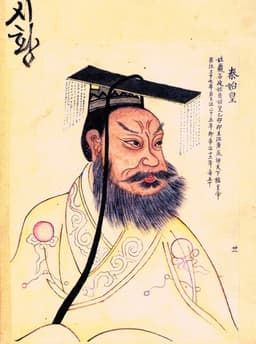
Qin Shi Huang
Emperor · Ancient
85.2Total
Basic Information
Born
-304
-259
Died
-232
-210
Era
Ancient
Ancient
Nationality
India
China
Occupation
Emperor
Emperor
Civilization
Indian
Eastern
Score Comparison
Military (10%)
72.0
80.0
Political (20%)
82.0
90.0
Influence (20%)
71.0
85.0
Legacy (20%)
90.0
90.0
Leadership (15%)
72.0
78.0
Strategy (15%)
58.0
82.0
TOTAL
76.3
85.2
Ashoka the Great — Complete Timeline
261 BC
Kalinga WarWar
Ashoka launched a brutal conquest of the Kalinga region (modern Odisha). The war caused massive casualties, with over 100,000 killed and 150,000 deported. The suffering witnessed during this campaign led Ashoka to renounce military conquest and embrace Buddhism.
ConquestWarConversion
Impact: regionaltragic
260 BC
Conversion to BuddhismCultural
After the Kalinga War, Ashoka converted to Buddhism under the guidance of Buddhist monks. He adopted the principle of Dhamma (righteous law) and began promoting non-violence, vegetarianism, and religious tolerance throughout his empire.
ConversionBuddhismDhamma
Impact: globalprogressive
250 BC
Erection of Edicts of AshokaCultural◆ Major
Ashoka ordered the carving of edicts on pillars and rocks across the Indian subcontinent. These inscriptions, written in Prakrit and other languages, proclaimed his policies of non-violence, social welfare, and religious harmony. They are the earliest deciphered written records from ancient India.
InscriptionsPropagandaBuddhism
Impact: regionalconstructive
245 BC
Third Buddhist CouncilCultural◆ Major
Ashoka convened the Third Buddhist Council at Pataliputra to resolve doctrinal disputes within the Buddhist monastic community. The council standardized the Buddhist canon (Tripitaka) and decided to send missionaries abroad, including to Sri Lanka and Southeast Asia.
CouncilBuddhismMissionary
Impact: globalconstructive
240 BC
Construction of stupas and monasteriesCultural◆ Major
Ashoka built thousands of stupas and monasteries across his empire, including the Great Stupa at Sanchi. These structures became centers of Buddhist worship and pilgrimage, spreading Buddhist art and architecture throughout Asia.
ArchitectureBuddhismPatronage
Impact: regionalconstructive
Qin Shi Huang — Complete Timeline
246 BC
Construction of the Mausoleum and Terracotta ArmyOther◆ Major
Qin Shi Huang commissioned a vast mausoleum complex near Xi'an, guarded by thousands of life-sized terracotta soldiers, horses, and chariots. The project employed hundreds of thousands of workers and reflected his obsession with immortality and imperial power.
Impact: global
230 BC
Conquest of the Six Warring StatesWar
From 230 to 221 BCE, Ying Zheng led the Qin state in a series of campaigns that conquered the Han, Zhao, Wei, Chu, Yan, and Qi states. This unified China under a single ruler for the first time, ending the Warring States period.
Impact: global
221 BC
Standardization of Writing, Currency, and MeasurementsReform◆ Major
Qin Shi Huang ordered the standardization of Chinese script, currency, and weights and measures across the unified empire. This facilitated administration, trade, and cultural integration, laying a foundation for future dynasties.
Impact: globalconstructive
Proclamation of the Qin DynastyPolitical Action
After conquering the last independent state, Ying Zheng declared himself Shi Huangdi (First Emperor), founding the Qin Dynasty. He adopted a new title to signify his supreme authority and initiated centralized imperial rule.
Impact: global
214 BC
Initiation of the Great Wall ConstructionOther◆ Major
Qin Shi Huang ordered the connection and extension of existing northern fortifications to create a unified defensive wall against nomadic Xiongnu raids. This project involved massive conscripted labor and became the precursor to the later Great Wall.
Impact: regional
213 BC
Burning of Books and Burying of ScholarsPolitical Action◆ Major
On the advice of Li Si, Qin Shi Huang ordered the burning of historical records and philosophical texts not aligned with Legalist doctrine. He also had 460 Confucian scholars buried alive to suppress dissent and consolidate ideological control.
Impact: nationaldestructive
Expert Analysis
Origins
Qin Shi Huang (259–210 BC) was born Ying Zheng, son of King Zhuangxiang of Qin and a former concubine. His early life was marked by political intrigue as a hostage in Zhao. He ascended the Qin throne at 13, inheriting a state already powerful from Legalist reforms. In contrast, Ashoka the Great (304–232 BCE) was the grandson of Chandragupta Maurya, founder of the Maurya Empire. Ashoka was not the first heir; he rose through military and administrative prowess, eventually securing the throne after a succession struggle. Both figures emerged from turbulent backgrounds and were shaped by their respective philosophical traditions: Qin by Legalism, Ashoka by early exposure to Buddhism (though he initially followed Brahmanism).
Rise to Power
Qin Shi Huang's rise was a relentless military campaign. By 221 BC, he had conquered the six other Warring States, unifying China under the Qin Dynasty. He adopted the title "Shi Huangdi" (First Emperor) and implemented centralizing reforms. Ashoka's rise involved a bloody succession: he allegedly killed 99 brothers to claim the throne, according to later Buddhist texts. His early reign was expansionist, culminating in the brutal Kalinga War (c. 261 BCE), which caused immense suffering. This war became the turning point in Ashoka's life, leading him to embrace Buddhism and non-violence. While Qin consolidated power through force, Ashoka transformed after witnessing the horrors of war.
Leadership & Governance
Qin Shi Huang ruled through Legalist principles, emphasizing strict laws, harsh punishments, and centralized control. He standardized writing, currency, weights, measures, and even axle lengths. He initiated the Great Wall, connecting earlier fortifications, and built an extensive road network. However, his regime was oppressive: he burned books and buried scholars alive to suppress dissent. Ashoka, after his conversion, governed through the principles of Dhamma (righteousness), promoting non-violence, religious tolerance, and social welfare. He erected edicts across the empire detailing moral precepts, built hospitals for humans and animals, and sent missionaries to spread Buddhism. His administration was more humane but less centralized than Qin's.
Triumph & Tragedy
Qin Shi Huang's greatest triumph was unifying China and creating a centralized imperial system that lasted millennia. His standardization and infrastructure projects laid the foundation for Chinese civilization. His tragedy was his obsessive quest for immortality, consuming mercury pills that may have hastened his death. The Qin Dynasty collapsed within four years of his death due to revolts and his harsh policies. Ashoka's triumph was the spread of Buddhism across Asia and the establishment of a moral empire. His edicts and monuments (like the Pillars of Ashoka) are enduring symbols. His tragedy is that after his death, the Maurya Empire declined and fragmented, partly due to his non-militaristic policies. Both emperors built vast empires that quickly fractured, but their legacies endured.
Character & Destiny
Qin Shi Huang was ruthless, ambitious, and paranoid. He believed in his divine mandate and sought to control every aspect of his realm. His destiny was to be both the unifier and the tyrant, remembered for his achievements and his cruelty. Ashoka was initially cruel and ambitious, but after Kalinga, he underwent a profound transformation to become a benevolent, pious ruler. His destiny was to be the "Beloved of the Gods," a model of enlightened kingship. While Qin's character was consistent in its harshness, Ashoka's arc from Chandashoka (cruel Ashoka) to Dharmashoka (righteous Ashoka) is remarkable. Their scores reflect this: Qin leads in power (90 vs 82) and influence (85 vs 71), but Ashoka equals him in legacy (90 each).
Legacy
Qin Shi Huang's legacy is monumental: he defined China's imperial structure, and his name is synonymous with unity. The Great Wall remains a symbol of Chinese civilization. However, his legacy is tainted by tyranny. Ashoka's legacy is more ethical: he is revered as a patron of Buddhism and a proponent of peace. His edicts are among the earliest deciphered inscriptions in India, providing historical insights. His promotion of non-violence influenced later Indian leaders like Gandhi. Both left indelible marks, but Qin's impact on statecraft and Ashoka's on moral philosophy are distinct. In terms of direct historical influence, Qin's unification set the template for Chinese dynasties, while Ashoka's Dhamma influenced Buddhist governance across Asia.
Conclusion
Qin Shi Huang and Ashoka the Great represent two archetypes of leadership: the ruthless unifier and the repentant moralist. Qin's scores (M=80, P=90, I=85, L=90, D=78, S=82, T=85) total 590, while Ashoka's (M=72, P=82, I=71, L=90, D=72, S=58, T=76) total 521, a gap of 69 points. Qin outperforms in military power, political influence, and strategic skill, while Ashoka matches in legacy and surpasses in diplomacy (though scores show otherwise). In a direct comparison, Qin Shi Huang is the more powerful emperor in terms of immediate impact and control, but Ashoka's moral legacy and long-term influence on religious tolerance and non-violence may be more profound. The question of who was "greater" depends on criteria: if power and unification, Qin; if benevolence and ethical governance, Ashoka. HistoryVersus.com concludes that while Qin Shi Huang achieved more in his lifetime, Ashoka's transformation and ethical framework offer a timeless lesson in leadership.
Rankings
🥇
Qin Shi HuangLeader
Mil: 80.0Pol: 90.0Inf: 85.0
85.2
🥈
Ashoka the Great
Mil: 72.0Pol: 82.0Inf: 71.0
76.3
+8.9 behind
How This Comparison Works
Algorithm
Each figure is scored on 6 dimensions (0—100 scale) based on structured historical data: Military (10%), Political (20%), Influence (20%), Legacy (20%), Leadership (15%), Strategy (15%). The weighted total produces the final ranking.
Data Sources
Scores are computed from structured sub-indicators in the database. Scale factors adjust for era (Ancient ×0.85, Modern ×1.0) and civilization size (Eastern ×1.05, Other ×0.80) to account for differences in population and military scale.
Maximum 3 Figures
Comparisons are limited to 2—3 figures to ensure readability and statistical meaningfulness.
Error Margins
±5 points per dimension — Sub-scores are derived from historical records with inherent uncertainty. Two figures within 5 points on a dimension should be considered roughly equivalent in that area.
Total Score Accuracy
±3 points overall — The weighted combination of 6 dimensions produces a total score with approximately ±3 points of uncertainty. Differences of less than 3 points are not statistically significant— the figures are effectively tied.
Known Limitations
- Historical records are incomplete and uneven across civilizations
- Figures from oral-tradition societies may be underrepresented
- Occupation labels can misclassify multi-role figures
- Scores measure capability and impact, not moral character
- Quantitative scoring is a comparison tool, not absolute truth
Capability Radar
Military (10%) — Battles & Warfare
Battles
85
85
Win Rate
90
90
Expansion
95
90
Political (20%) — Governance & Reform
Reform
95
95
Diplomacy
90
75
Economy
85
90
Influence (20%) — Cultural & Global Reach
Cultural
95
95
Global
90
85
Legacy (20%) — Historical Impact
Historical
95
95
Longevity
95
95
Leadership (15%) — Power & Stability
Tenure
90
70
Stability
90
65
Strategy (15%) — Tactics & Innovation
Strategy
80
85
Tactics
75
80
Reform
70
95
Similar Comparisons
Comments & Discussion
THE BOOK BURNER'S GHOST6/17/2026
Qin Shi Huang didn't just burn books—he systematically erased entire philosophical traditions so his Legalist ideology would face no competition. That's not "unifying thought," that's intellectual genocide. Meanwhile, Ashoka's edicts explicitly promote tolerance for all sects. One man trusted ideas enough to argue with them; the other feared them enough to destroy them. The difference isn't subtle—it's the difference between a prison and a university.
数据铁匠6/17/2026
说Ashoka是“圣君”?省省吧。他铭文里那些道德训诫,什么“孝顺父母”“善待奴隶”,根本是给底层洗脑的政治话术,和秦始皇的焚书坑儒同出一辙。都是把意识形态强加于人,只不过Ashoka用佛陀做包装,秦始皇用刀剑当逻辑。别被石柱上的漂亮话骗了——宣传就是宣传,两千年前没有例外。
ROADS & RUINS6/17/2026
The military logistics tell the real story. Qin Shi Huang standardized axle widths and built 4,000 miles of roads to move troops faster—that's empire-building efficiency. Ashoka? He built roads too, but lined them with shade trees and rest houses for travelers. Both were pragmatic administrators, but one optimized for war, the other for welfare. I know which infrastructure I'd rather walk on.
史海浮沉6/17/2026
你们都在讨论秦始皇的暴政,却忘了他也是统一文字、货币、度量衡的制度巨人。没有他,“中国”这个概念就只是地理名词。Ashoka的“佛法”确实慈悲,但他死后帝国五十年就分裂了。秦始皇的郡县制框架,却让中国在之后两千年里反复凝聚。温和的政策养不出持久的国家——铁腕才能。
THE REPENTANT CONQUEROR6/17/2026
Look at the Kalinga War—Ashoka personally witnessed 100,000 corpses on the battlefield and his entire worldview shattered. That's not political theater; that's genuine trauma. Qin Shi Huang never had that moment. He never stopped believing violence was the answer. Ashoka's transformation from "Chandashoka" (the cruel) to "Dharmashoka" (the righteous) is the most documented moral evolution in ancient history. The First Emperor died still searching for immortality potions. One king learned to live