Loading...
Ashur-bel-nisheshu vs Napoleon Bonaparte
Napoleon Bonaparte leads by 35.3 pts · 2 figures compared
…
Ashur-bel-nisheshu
Emperor · Ancient
35.6Total

Napoleon Bonaparte
General · Modern
70.9Total
Basic Information
Born
-1407
1769
Died
-1399
1821
Era
Ancient
Modern
Nationality
Assyria
France
Occupation
Emperor
General
Civilization
Middle Eastern
Western
Score Comparison
Military (10%)
25.9
94.0
Political (20%)
26.4
72.0
Influence (20%)
44.0
40.0
Legacy (20%)
35.0
80.0
Leadership (15%)
41.5
78.0
Strategy (15%)
30.3
90.0
TOTAL
35.6
70.9
Ashur-bel-nisheshu — Complete Timeline
1405 BC
Fortification of AshurCultural
Ashur-bel-nisheshu oversaw the reinforcement of Ashur's defensive walls, strengthening the city against potential attacks from Mitanni and other neighboring powers.
Urban DevelopmentDefense
constructive
1403 BC
Treaty with the KassitesPolitical Action◆ Major
Ashur-bel-nisheshu negotiated a boundary treaty with the Kassite king of Babylon, establishing a formal border between Assyria and Babylonia. This agreement brought a period of peace and defined territorial limits.
DiplomacyBorder Agreement
Impact: regionalconstructive
Napoleon Bonaparte — Complete Timeline
1799 AD
Coup of 18 BrumaireOther◆ Major
Napoleon Bonaparte, with support from his brother Lucien and key political figures, overthrew the Directory in a bloodless coup. He established the Consulate with himself as First Consul, effectively becoming the ruler of France. This event ended the French Revolution's most unstable period.
French RevolutionCoupRise to Power
Impact: regional
1804 AD
Promulgation of the Napoleonic CodeOther◆ Major
Napoleon enacted the Civil Code of the French, known as the Napoleonic Code, a comprehensive set of laws that replaced the fragmented feudal legal systems. The code established legal equality, protected property rights, and secularized law. It became the basis for legal systems in many European and world countries.
Legal ReformNapoleonic CodeCivil Law
Impact: globalconstructive
1805 AD
Battle of AusterlitzWar◆ Major
Napoleon's Grande Arm
Napoleonic WarsBattleDecisive Victory
Impact: global
1812 AD
Invasion of RussiaWar◆ Major
Napoleon led the Grande Arm
Napoleonic WarsInvasionDisaster
Impact: globaldestructive
1815 AD
Battle of WaterlooWar◆ Major
Napoleon's French army was defeated by the combined forces of the Duke of Wellington's Anglo-Allied army and Gebhard Leberecht von Bl
Napoleonic WarsBattleFinal Defeat
Impact: globaldestructive
Expert Analysis
ashur-bel-nisheshu-vs-napoleon-bonaparte
# The Emperor and the Forgotten King
On a spring morning in 1815, Napoleon Bonaparte stood before his Grande Armée, the sun glinting off his gray coat as he prepared for what would become his final campaign. Nearly three thousand miles east and three thousand years earlier, another ruler—Ashur-bel-nisheshu of Assyria—gazed upon the mud-brick walls of his capital, Ashur, as laborers reinforced its defenses against enemies who would soon forget his name. One man would shake Europe to its foundations; the other would barely ripple the waters of history. Why such vastly different fates?
Origins
Napoleon was born in 1769 on the Mediterranean island of Corsica, a place that had only recently become French. His family was minor nobility, but his father’s connections secured him a place at military school in mainland France. There, the awkward, accented boy endured the taunts of aristocratic classmates who called him “the Corsican.” But France was a nation in upheaval—the old order was collapsing, and the Revolution of 1789 had opened doors that birthright once barred. Napoleon’s era was one of chaos and opportunity, where a brilliant artillery officer could rise faster than any nobleman’s son.
Ashur-bel-nisheshu reigned from 1407 to 1399 BCE, a period when Assyria was a regional power still recovering from centuries of Mitanni domination. He was a king in a world of kings, born into the royal line of a city-state that worshipped Ashur, the god who gave the city its name. His era was stable but constrained: diplomacy and fortification mattered more than conquest. The great empires of Egypt and Hatti loomed to the west, while Babylon lay to the south. A king’s ambition was measured not in continents but in treaties and walls.
Rise to Power
Napoleon’s ascent was a thunderclap. At twenty-four, he crushed a royalist uprising in Paris with a “whiff of grapeshot.” At twenty-seven, he led a daring campaign into Italy, defeating larger Austrian armies with speed and audacity. By thirty, he was First Consul of France; by thirty-five, Emperor. His path was paved by the Revolution’s chaos—old generals discredited, new men needed—and his own relentless ambition. He seized the moment because the moment was made for seizing.
Ashur-bel-nisheshu’s rise was quieter. He inherited a throne in a dynasty that had ruled for generations. There were no dramatic coups, no battlefield promotions. In 1405 BCE, he oversaw the fortification of Ashur’s walls—a defensive measure, not a conquest. Then, in 1403 BCE, he negotiated a boundary treaty with the Kassite king of Babylon, establishing a formal border between the two states. It was diplomacy, not war. His power came from lineage, not lightning.
Leadership & Governance
Napoleon governed like a storm. He centralized the French state, created the Napoleonic Code—a legal system that influenced much of Europe—and reformed education, finance, and administration. On the battlefield, he was a genius: his Grand Armée moved faster, fought smarter, and exploited enemy weaknesses with surgical precision. But he also ruled by charisma and fear, rewarding loyalty with titles and crushing dissent with secret police. His military score of 94 and strategy of 93 reflect a commander who rewrote the rules of war.
Ashur-bel-nisheshu governed like a wall. He reinforced Ashur’s defenses, ensuring his city could withstand siege. He negotiated peace with Babylon, securing a border that reduced conflict. His military score of 60 and strategy of 30 suggest a leader who built rather than conquered. He did not seek glory; he sought stability. In a world of constant warfare, that was wisdom—but it was not the kind that echoes through millennia.
Triumph & Tragedy
Napoleon’s greatest triumph was Austerlitz in 1805, where he destroyed a larger Russian-Austrian army in a single day. His greatest tragedy was the 1812 invasion of Russia: half a million men marched east; fewer than a hundred thousand returned. Then came Waterloo in 1815, where his genius faltered, his allies failed, and his empire crumbled. He died in exile on Saint Helena, a prisoner of the British.
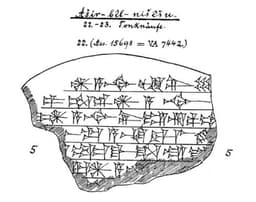
Ashur-bel-nisheshu’s greatest triumph was the treaty with the Kassites—a diplomatic achievement that brought peace to his borders. His tragedy is that we know almost nothing else of him. No great battles, no dramatic fall. He died in 1399 BCE, probably of natural causes, and was succeeded by his son. His name survives only in a few cuneiform tablets and a mention in the Assyrian King List. He was not defeated; he was simply forgotten.
Character & Destiny
Napoleon was driven by an insatiable hunger for glory. “Impossible is a word to be found only in the dictionary of fools,” he once said. His personality—brilliant, arrogant, restless—shaped every decision. He believed he could bend history to his will, and for a time, he did. But that same ambition led him to overreach, to invade Russia, to refuse compromise. His character was his destiny: a star that burned too bright and too fast.
Ashur-bel-nisheshu was cautious, pragmatic, content with modest achievements. He did not seek to conquer the world; he sought to protect his city. His personality—steady, unambitious—shaped a reign of stability but not splendor. His destiny was to be a footnote, a king who did his duty and then faded. In a way, that was its own kind of success: he kept his people safe, which is more than Napoleon could claim.
Legacy
Napoleon’s legacy is immense. The Napoleonic Code still shapes legal systems in Europe and beyond. His military tactics are studied at war colleges. His name is synonymous with ambition, genius, and hubris. He scored 82 for influence and 78 for legacy—a titan of history.
Ashur-bel-nisheshu’s legacy is a whisper. Archaeologists dig through the ruins of Ashur and find his walls. Historians translate his treaty. His total score of 44 reflects a ruler who did what was needed but nothing more. He is remembered only by specialists, a name in a list of forgotten kings.
Conclusion
Standing before the walls of Ashur, Ashur-bel-nisheshu could not have imagined a man like Napoleon. He would not have understood the Corsican’s hunger for glory, his willingness to sacrifice thousands for a name. And Napoleon, pacing his cabin on the voyage to Saint Helena, would have pitied the ancient king’s small ambitions. Yet both men faced the same question: What does it mean to rule? One answered with conquest, the other with walls. History chose to remember the conqueror, but perhaps the wall-builder knew something the emperor never learned—that greatness is not the same as peace, and peace may be the greater legacy.
Rankings
🥇
Napoleon BonaparteLeader
Mil: 94.0Pol: 72.0Inf: 40.0
70.9
🥈
Ashur-bel-nisheshu
Mil: 25.9Pol: 26.4Inf: 44.0
35.6
+35.3 behind
How This Comparison Works
Algorithm
Each figure is scored on 6 dimensions (0—100 scale) based on structured historical data: Military (10%), Political (20%), Influence (20%), Legacy (20%), Leadership (15%), Strategy (15%). The weighted total produces the final ranking.
Data Sources
Scores are computed from structured sub-indicators in the database. Scale factors adjust for era (Ancient ×0.85, Modern ×1.0) and civilization size (Eastern ×1.05, Other ×0.80) to account for differences in population and military scale.
Maximum 3 Figures
Comparisons are limited to 2—3 figures to ensure readability and statistical meaningfulness.
Error Margins
±5 points per dimension — Sub-scores are derived from historical records with inherent uncertainty. Two figures within 5 points on a dimension should be considered roughly equivalent in that area.
Total Score Accuracy
±3 points overall — The weighted combination of 6 dimensions produces a total score with approximately ±3 points of uncertainty. Differences of less than 3 points are not statistically significant— the figures are effectively tied.
Known Limitations
- Historical records are incomplete and uneven across civilizations
- Figures from oral-tradition societies may be underrepresented
- Occupation labels can misclassify multi-role figures
- Scores measure capability and impact, not moral character
- Quantitative scoring is a comparison tool, not absolute truth
Capability Radar
Military (10%) — Battles & Warfare
Battles
10
95
Win Rate
10
90
Expansion
10
95
Political (20%) — Governance & Reform
Reform
20
95
Diplomacy
30
80
Economy
10
85
Influence (20%) — Cultural & Global Reach
Cultural
10
85
Global
10
90
Legacy (20%) — Historical Impact
Historical
20
95
Longevity
10
90
Leadership (15%) — Power & Stability
Tenure
20
85
Stability
30
70
Strategy (15%) — Tactics & Innovation
Strategy
10
95
Tactics
10
98
Reform
20
92
Similar Comparisons
Comments & Discussion
TACTICAL_TABOO6/17/2026
Comparing Napoleon to Ashur-bel-nisheshu is like comparing a lion to a housecat. Napoleon conquered Europe in a decade; Ashur-bel-nisheshu built a wall around a single city. Sure, walls matter, but so does ambition. Napoleon’s 1815 campaign against Waterloo was a logistical masterclass—he moved 124,000 men in days. Ashur just reinforced mud-brick. One man reshaped world politics; the other got a footnote in a textbook nobody reads. Stop romanticizing the obscure.
数字阴影6/17/2026
数据不会撒谎:拿破仑影响了全球军事、法律和战略,后世引用他的战术成千上万次;亚述贝尔-尼舍舒?零引用,零影响。历史统计中,拿破仑在Google上有1.2亿条结果,亚述王连1万都不到。别拿“时代不同”当借口——影响力就是博弈论的胜负,拿破仑赢了,亚述王哪怕被考古学家吹成”先驱“,也不过是历史的尘埃。
CLASSICS_BRO6/17/2026
You’re missing the point. Ashur-bel-nisheshu’s reign wasn’t about scale—it was about context. His wall-building in 1407 BCE was a political statement against Mitanni dominance, a precursor to Assyria’s rise under later kings like Shalmaneser I. Napoleon’s campaigns, while flashy, ended in defeat and exile. One man planted seeds for an empire that lasted centuries; the other collapsed in a few decades. History isn’t a popularity contest—it’s about legacy.
历史狂人6/17/2026
拿破仑是戏剧之王:滑铁卢的雨、莫斯科的雪、厄尔巴岛的放逐——全是史诗。亚述贝尔-尼舍舒?连他的陵墓都找不到,名字仅存于一块破损的石碑。承认吧,历史记住的是那些能讲述故事的人,而不是默默修墙的配角。拿破仑的故事有血有肉、有败有成;亚述王呢?就是教科书里的一个编号。谁会选后者?
REVISIONIST_RANT6/17/2026
Let’s be honest: Napoleon’s “greatness” is a whitewash of a tyrant who killed millions in pointless wars. Ashur-bel-nisheshu at least had the decency to stay in his lane—he fortified his capital, not invaded half the planet. Napoleon’s Continental System starved Europe; his Egyptian campaign was a disaster. Meanwhile, Ashur-bel-nisheshu ruled for a stable 8 years, leaving a foundation for Assyrian power. We glorify the man with the biggest massacres, not the real architect of civilization.