Loading...
Ashur-nadin-ahhe II vs Napoleon Bonaparte
Napoleon Bonaparte leads by 34.2 pts · 2 figures compared
…
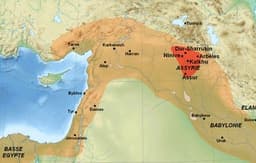
Ashur-nadin-ahhe II
Emperor · Ancient
36.7Total

Napoleon Bonaparte
General · Modern
70.9Total
Basic Information
Born
-1390
1769
Died
-1381
1821
Era
Ancient
Modern
Nationality
Assyria
France
Occupation
Emperor
General
Civilization
Middle Eastern
Western
Score Comparison
Military (10%)
10.2
94.0
Political (20%)
30.7
72.0
Influence (20%)
45.5
40.0
Legacy (20%)
34.2
80.0
Leadership (15%)
44.5
78.0
Strategy (15%)
45.0
90.0
TOTAL
36.7
70.9
Ashur-nadin-ahhe II — Complete Timeline
1385 BC
Diplomatic Contact with EgyptPolitical Action◆ Major
Ashur-nadin-ahhe II received a gift of gold from Pharaoh Amenhotep III of Egypt, recorded in the Amarna letters. This marked one of the earliest known diplomatic exchanges between Assyria and Egypt, signaling Assyria's growing international recognition.
DiplomacyInternational Relations
Impact: regionalconstructive
Napoleon Bonaparte — Complete Timeline
1799 AD
Coup of 18 BrumaireOther◆ Major
Napoleon Bonaparte, with support from his brother Lucien and key political figures, overthrew the Directory in a bloodless coup. He established the Consulate with himself as First Consul, effectively becoming the ruler of France. This event ended the French Revolution's most unstable period.
French RevolutionCoupRise to Power
Impact: regional
1804 AD
Promulgation of the Napoleonic CodeOther◆ Major
Napoleon enacted the Civil Code of the French, known as the Napoleonic Code, a comprehensive set of laws that replaced the fragmented feudal legal systems. The code established legal equality, protected property rights, and secularized law. It became the basis for legal systems in many European and world countries.
Legal ReformNapoleonic CodeCivil Law
Impact: globalconstructive
1805 AD
Battle of AusterlitzWar◆ Major
Napoleon's Grande Arm
Napoleonic WarsBattleDecisive Victory
Impact: global
1812 AD
Invasion of RussiaWar◆ Major
Napoleon led the Grande Arm
Napoleonic WarsInvasionDisaster
Impact: globaldestructive
1815 AD
Battle of WaterlooWar◆ Major
Napoleon's French army was defeated by the combined forces of the Duke of Wellington's Anglo-Allied army and Gebhard Leberecht von Bl
Napoleonic WarsBattleFinal Defeat
Impact: globaldestructive
Expert Analysis
ashur-nadin-ahhe-ii-vs-napoleon-bonaparte
# The Emperor and the Shadow King
In the winter of 1812, Napoleon Bonaparte watched his Grand Army burn Moscow to the ground, a desperate act of defiance by a retreating enemy. Nearly three thousand years earlier, a far less famous ruler—Ashur-nadin-ahhe II—sat in his palace in the ancient city of Ashur, counting gold sent from the distant court of Egypt. One man commanded the largest army Europe had ever seen, the other governed a kingdom so small that we know him today mainly through a single letter. Yet both were kings, both shaped their worlds, and both reveal the strange gulf between fame and significance. Why does one name echo through millennia while the other barely whispers?
Origins
Napoleon Bonaparte was born in 1769 on the Mediterranean island of Corsica, a place conquered by France only the year before. His family were minor nobles, proud and poor, and young Napoleon grew up speaking Italian-accented French—an outsider in his own nation. The world he entered was one of revolution. France had just begun its transformation from absolute monarchy to modern state, and opportunity opened for those with talent rather than birth.
Ashur-nadin-ahhe II, by contrast, was born around 1390 BCE, into the blood-soaked world of ancient Mesopotamia. Assyria was then a modest kingdom, squeezed between the great powers of Mitanni and Babylon. He inherited a throne, not a career. His name means “Ashur has given a brother,” and he ruled for perhaps nine years—from 1390 to 1381 BCE—before vanishing from history. We know almost nothing of his upbringing, but his world was one of bronze weapons, clay tablets, and gods whose anger required constant appeasement.
The difference is stark: Napoleon rose from the margins of a continent in upheaval; Ashur-nadin-ahhe II was born into the center of a small, stable world. One had everything to prove, the other nothing to lose.
Rise to Power
Napoleon’s path was forged in fire. He graduated from military school in 1785 at age sixteen, a lieutenant of artillery. The French Revolution, which began in 1789, shattered the old order and created chaos—the perfect environment for a brilliant, ambitious young officer. In 1793, at the Siege of Toulon, he devised the plan that recaptured the city from royalist rebels and their British allies. At twenty-four, he was promoted to brigadier general.
Ashur-nadin-ahhe II’s rise was simpler: he was born to rule. His father, perhaps Ashur-rim-nisheshu, had already established Assyrian independence from Mitanni. When his father died, the throne passed to him. There were no elections, no revolutions, no dramatic sieges. He became king because that was the order of things.
The contrast reveals a fundamental truth about their eras. In Napoleon’s time, a man could remake himself through talent and luck. In Ashur-nadin-ahhe II’s time, destiny was determined by blood. One climbed; the other inherited.
Leadership & Governance
Napoleon governed with an energy that exhausted everyone around him. As First Consul after the coup of 1799, and then Emperor from 1804, he centralized the French state, created the Bank of France, and—most enduringly—established the Napoleonic Code, a legal system that enshrined equality before the law, property rights, and secular governance. He was a military genius, winning battles like Austerlitz in 1805, where he crushed the combined armies of Austria and Russia. His strategy score of 93 reflects this: he was one of history’s greatest commanders.
But his political wisdom was uneven. He crowned himself Emperor, placed his brothers on European thrones, and alienated potential allies. His leadership score of 80 suggests a man who could inspire loyalty but also breed resentment. He once said, “In politics, stupidity is not a handicap,” a bitter joke that applied to his enemies—and sometimes to himself.
Ashur-nadin-ahhe II ruled a far smaller domain. His one known act of significance was diplomatic: around 1385 BCE, he received a gift of gold from Pharaoh Amenhotep III of Egypt, recorded in the Amarna letters. This was not conquest but courtesy—a recognition of Assyria as a player in the great game of Near Eastern diplomacy. His political score of 34.5 and military score of 39 suggest a ruler who managed, rather than dominated. He did not reform law, build an empire, or lead armies into battle. He simply maintained what he had inherited.
Why the difference? Napoleon had the tools of modernity—printing presses, standing armies, a unified nation. Ashur-nadin-ahhe II had clay, bronze, and a handful of scribes. One could reshape continents; the other could only send a letter.
Triumph & Tragedy
Napoleon’s greatest triumph was Austerlitz, a battle so perfect it is still studied in military academies. His greatest tragedy was the invasion of Russia in 1812. He marched with over 600,000 men; fewer than 100,000 returned. The Russian winter, the scorched-earth tactics, and his own overreach destroyed his army and his reputation. He was exiled to Elba in 1814, returned for a hundred days, and was finally defeated at Waterloo in 1815. He died in 1821 on the remote island of Saint Helena, alone and bitter.
Ashur-nadin-ahhe II’s triumphs and tragedies are lost to time. Perhaps he secured Assyria’s independence, perhaps he died in a palace coup. We do not know. His tragedy is not a single event but the silence that surrounds him. He lived, ruled, and vanished, leaving behind only a name on a clay tablet.
The difference is not just scale but record. Napoleon’s failures are documented in volumes; Ashur-nadin-ahhe II’s entire existence is a footnote. One man’s tragedy is epic; the other’s is emptiness.
Character & Destiny
Napoleon was driven by an insatiable ambition. He once said, “Impossible is a word to be found only in the dictionary of fools.” His personality—restless, calculating, charismatic—shaped every decision. He believed in destiny, but he also believed he could force it. His downfall came from this same trait: he could not stop.
Ashur-nadin-ahhe II’s character is a blank. We cannot know if he was wise or foolish, kind or cruel. He existed in a world where personality mattered less than position. His destiny was to be a king, nothing more.
This is the deepest difference. Napoleon’s character created his destiny; Ashur-nadin-ahhe II’s destiny consumed his character.
Legacy
Napoleon’s legacy is immense. The Napoleonic Code influenced legal systems across Europe and the world. He redrew borders, ended feudalism, and spread nationalism. His total score of 82.4 reflects a man who changed history. Yet his legacy is also contested—was he a liberator or a tyrant? He remains a figure of fascination, a symbol of both genius and hubris.
Ashur-nadin-ahhe II’s legacy is almost invisible. His total score of 45.0 places him among history’s footnotes. Yet his one diplomatic act helped establish Assyria as a power that would, under later kings, conquer an empire from Egypt to Persia. He was a seed, not a tree.
Conclusion
Standing at the edge of history, we see two figures: one a giant, one a ghost. Napoleon Bonaparte conquered Europe and left a mark on every nation he touched. Ashur-nadin-ahhe II received gold from a pharaoh and faded into dust. Yet both were kings, both faced the same fundamental question: what does it mean to rule?
Napoleon’s answer was to remake the world in his image. Ashur-nadin-ahhe II’s answer was to keep his world intact. One burned bright and burned out; the other flickered and endured. Perhaps the most lasting lesson is this: history does not measure significance by fame alone. The quiet king who held his kingdom together for nine years may have mattered as much to his people as the emperor who shook the earth. We simply cannot hear his story anymore.
Rankings
🥇
Napoleon BonaparteLeader
Mil: 94.0Pol: 72.0Inf: 40.0
70.9
🥈
Ashur-nadin-ahhe II
Mil: 10.2Pol: 30.7Inf: 45.5
36.7
+34.2 behind
How This Comparison Works
Algorithm
Each figure is scored on 6 dimensions (0—100 scale) based on structured historical data: Military (10%), Political (20%), Influence (20%), Legacy (20%), Leadership (15%), Strategy (15%). The weighted total produces the final ranking.
Data Sources
Scores are computed from structured sub-indicators in the database. Scale factors adjust for era (Ancient ×0.85, Modern ×1.0) and civilization size (Eastern ×1.05, Other ×0.80) to account for differences in population and military scale.
Maximum 3 Figures
Comparisons are limited to 2—3 figures to ensure readability and statistical meaningfulness.
Error Margins
±5 points per dimension — Sub-scores are derived from historical records with inherent uncertainty. Two figures within 5 points on a dimension should be considered roughly equivalent in that area.
Total Score Accuracy
±3 points overall — The weighted combination of 6 dimensions produces a total score with approximately ±3 points of uncertainty. Differences of less than 3 points are not statistically significant— the figures are effectively tied.
Known Limitations
- Historical records are incomplete and uneven across civilizations
- Figures from oral-tradition societies may be underrepresented
- Occupation labels can misclassify multi-role figures
- Scores measure capability and impact, not moral character
- Quantitative scoring is a comparison tool, not absolute truth
Capability Radar
Military (10%) — Battles & Warfare
Battles
5
95
Win Rate
5
90
Expansion
5
95
Political (20%) — Governance & Reform
Reform
5
95
Diplomacy
20
80
Economy
10
85
Influence (20%) — Cultural & Global Reach
Cultural
5
85
Global
5
90
Legacy (20%) — Historical Impact
Historical
10
95
Longevity
5
90
Leadership (15%) — Power & Stability
Tenure
10
85
Stability
10
70
Strategy (15%) — Tactics & Innovation
Strategy
5
95
Tactics
5
98
Reform
5
92
Similar Comparisons
Comments & Discussion
铁血数据控6/17/2026
拿一封信和一个帝国比?拿破仑打了几十场战役,动员过百万大军,而这位亚述王留下的不过是对埃及进贡数字的炫耀。历史看重的是影响力,不是考古学家的猎奇藏品。Napoleon defeated Prussia at Jena in a single day; Ashur-nadin-ahhe II couldn’t even conquer the next valley. 拿他们对比就像把大象和蚂蚁放在天平上,纯粹是标题党行为。
Vox Antiqua6/17/2026
Let’s not dismiss the shadow king so quickly. Ashur-nadin-ahhe II’s reign marks Assyria’s fragile dawn—a time when a single letter to Pharaoh could mean survival or annihilation. Napoleon commanded legions; this man negotiated with empires. The Amarna correspondence shows Egypt’s pharaohs treating Assyria as a junior partner, but that very letter proves Ashur-nadin-ahhe II played the great game of diplomacy. He didn’t need to burn Moscow; he kept his kingdom alive through wit and tribute. That’s
罗马假日的幽灵6/17/2026
拿破仑是革命之子,踩着旧制度的废墟崛起;亚述王是血缘的囚徒,困在青铜时代的诅咒里。Bonaparte wrote his own story while Ashur-nadin-ahhe II recited his ancestors’. 一个打破规则,一个遵循传统,这就是为什么一个名字响彻五洲,另一个只能躺在博物馆的玻璃柜里,等学者来翻译他卑微的请求。时代塑造英雄,但英雄也选择了逆流而上。
苏美尔编年史6/17/2026
别被“shadow king”这种浪漫修辞骗了。Ashur-nadin-ahhe II 统治不到十年,留下的唯一“功绩”是埃及人施舍的金子——还不是自给自足的财富。Napoleon’s Code Napoleon transformed legal systems across Europe even after his defeat. 这位亚述王连名字都没有完全传下来,他的“成就”不过是考古学家的放大镜下的幻觉。拿他和拿破仑比,简直是对历史意义的侮辱。
Historian9366/17/2026
Napoleon’s name roars through history like his cannon at Austerlitz, but Ashur-nadin-ahhe II? He’s a footnote from a single clay letter. That’s the difference between commanding a continent’s fate and being a minor player in a forgotten game. Napoleon reshaped Europe’s map in a decade; this Assyrian king barely held his tiny kingdom together. Fame isn’t fair—it’s about scale and spectacle. Ashur-nadin-ahhe II might as well be a ghost in the sand.