Loading...
This comparison has not been analyzed yet.
One-time AI generation (~1 minute). Scores and timeline are already available below.
Askar Akayev vs Zaid al-Rifai
Zaid al-Rifai leads by 7.8 pts · 2 figures compared
…

Askar Akayev
Politician · Modern
43.5Total
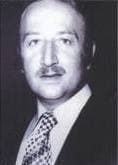
Zaid al-Rifai
Politician · Modern
51.3Total
Basic Information
Born
1944
1936
Died
—
—
Era
Modern
Modern
Nationality
Kyrgyzstan
Jordan
Occupation
Politician
Politician
Civilization
Eastern
Middle Eastern
Score Comparison
Military (10%)
17.5
41.8
Political (20%)
43.7
68.0
Influence (20%)
49.4
51.0
Legacy (20%)
40.0
40.8
Leadership (15%)
64.0
66.0
Strategy (15%)
32.5
41.0
TOTAL
43.5
51.3
Askar Akayev — Complete Timeline
1991 AD
Elected First President of KyrgyzstanPolitical Action◆ Major
Askar Akayev was elected as the first president of independent Kyrgyzstan after the dissolution of the Soviet Union. He was initially seen as a reformer, promoting democratic reforms and market economics. His early presidency was marked by openness and relative political freedom.
IndependenceDemocratic ReformPost-Soviet Transition
Impact: nationalconstructive
1993 AD
Introduced Democratic ReformsReform◆ Major
Akayev oversaw the adoption of a new constitution that established a parliamentary system with a strong presidency. He implemented economic liberalization, including privatization and land reform. Kyrgyzstan became known as an 'island of democracy' in Central Asia during this period.
Constitutional ReformEconomic LiberalizationDemocracy
Impact: nationalconstructive
2005 AD
Overthrown in the Tulip RevolutionPolitical Action◆ Major
Following disputed parliamentary elections in February 2005, mass protests erupted across Kyrgyzstan. The protests, known as the Tulip Revolution, forced Akayev to flee the country and resign. He was succeeded by Kurmanbek Bakiyev. The revolution was part of the Color Revolution wave in post-Soviet states.
RevolutionRegime ChangeColor Revolution
Impact: nationaldestructive
Exiled to RussiaPolitical Action
After being overthrown, Akayev fled to Russia where he was granted asylum. He settled in Moscow and worked as a professor at Moscow State University. His exile marked the end of his political career, and he remained in Russia for the rest of his life.
ExilePolitical AsylumPost-Presidency
Impact: nationaltragic
Zaid al-Rifai — Complete Timeline
1973 AD
Appointment as Prime Minister of JordanPolitical Action◆ Major
Zaid al-Rifai was appointed Prime Minister of Jordan in May 1973 by King Hussein. He served multiple terms, becoming one of the longest-serving prime ministers in Jordanian history, known for his close ties to the monarchy and conservative policies.
Prime MinisterGovernmentLong Service
Impact: nationalconstructive
1974 AD
Role in the 1974 Arab League SummitPolitical Action◆ Major
Rifai played a key role in the 1974 Arab League summit in Rabat, which recognized the PLO as the sole legitimate representative of the Palestinian people. This decision led to Jordan's disengagement from the West Bank, a major shift in policy.
Arab LeaguePLOWest Bank Disengagement
Impact: regional
1985 AD
Economic Liberalization PoliciesReform◆ Major
During his later terms, Rifai oversaw economic liberalization policies, including privatization of state-owned enterprises and encouragement of foreign investment. These reforms aimed to reduce Jordan's debt and stimulate growth, though they also increased inequality.
Economic ReformPrivatizationLiberalization
Impact: nationalconstructive
1997 AD
President of the SenatePolitical Action
Rifai was appointed President of the Jordanian Senate in 1997, a position he held until 2009. As Senate president, he wielded significant influence over legislation and appointments, serving as a key advisor to King Abdullah II.
SenateLegislative RoleAdvisor
Impact: nationalconstructive
This comparison has not been analyzed yet.
One-time AI generation (~1 minute). Scores and timeline are already available below.
Rankings
🥇
Zaid al-RifaiLeader
Mil: 41.8Pol: 68.0Inf: 51.0
51.3
🥈
Askar Akayev
Mil: 17.5Pol: 43.7Inf: 49.4
43.5
+7.8 behind
How This Comparison Works
Algorithm
Each figure is scored on 6 dimensions (0—100 scale) based on structured historical data: Military (10%), Political (20%), Influence (20%), Legacy (20%), Leadership (15%), Strategy (15%). The weighted total produces the final ranking.
Data Sources
Scores are computed from structured sub-indicators in the database. Scale factors adjust for era (Ancient ×0.85, Modern ×1.0) and civilization size (Eastern ×1.05, Other ×0.80) to account for differences in population and military scale.
Maximum 3 Figures
Comparisons are limited to 2—3 figures to ensure readability and statistical meaningfulness.
Error Margins
±5 points per dimension — Sub-scores are derived from historical records with inherent uncertainty. Two figures within 5 points on a dimension should be considered roughly equivalent in that area.
Total Score Accuracy
±3 points overall — The weighted combination of 6 dimensions produces a total score with approximately ±3 points of uncertainty. Differences of less than 3 points are not statistically significant— the figures are effectively tied.
Known Limitations
- Historical records are incomplete and uneven across civilizations
- Figures from oral-tradition societies may be underrepresented
- Occupation labels can misclassify multi-role figures
- Scores measure capability and impact, not moral character
- Quantitative scoring is a comparison tool, not absolute truth
Capability Radar
Military (10%) — Battles & Warfare
Battles
12
21
Win Rate
17
23
Expansion
19
30
Political (20%) — Governance & Reform
Reform
40
40
Diplomacy
35
55
Economy
30
45
Influence (20%) — Cultural & Global Reach
Cultural
20
20
Global
15
15
Legacy (20%) — Historical Impact
Historical
25
25
Longevity
15
20
Leadership (15%) — Power & Stability
Tenure
55
65
Stability
20
50
Strategy (15%) — Tactics & Innovation
Strategy
24
29
Tactics
25
36
Reform
30
38
Similar Comparisons
Comments & Discussion
No comments yet. Be the first to share your thoughts!