Loading...
Cyrus the Great vs Emperor Wu of Han
Cyrus the Great leads by 12.6 pts · 2 figures compared
…
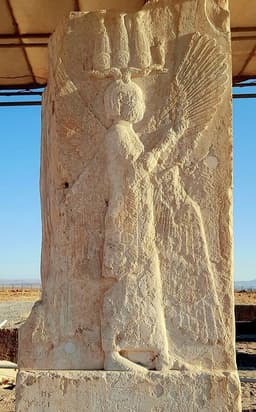
Cyrus the Great
Emperor · Ancient
83.9Total
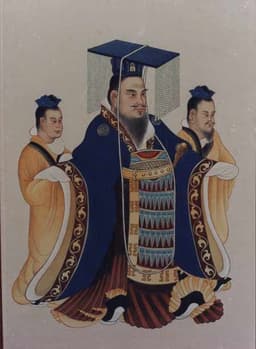
Emperor Wu of Han
Emperor · Ancient
71.3Total
Basic Information
Born
-600
-156
Died
-530
-87
Era
Ancient
Ancient
Nationality
Persia
China
Occupation
Emperor
Emperor
Civilization
Middle Eastern
Eastern
Score Comparison
Military (10%)
82.0
78.5
Political (20%)
85.0
72.0
Influence (20%)
85.0
65.0
Legacy (20%)
90.0
70.0
Leadership (15%)
78.0
80.0
Strategy (15%)
75.0
69.1
TOTAL
83.9
71.3
Cyrus the Great — Complete Timeline
550 BC
Founding of the Achaemenid EmpirePolitical Action
Cyrus led a rebellion against the Median Empire, defeating King Astyages and capturing Ecbatana. He then united the Persian and Median tribes, establishing the Achaemenid Empire, which became the largest empire the world had yet seen.
Empire FoundingPersian UnificationRebellion
Impact: global
546 BC
Conquest of LydiaWar◆ Major
Cyrus defeated King Croesus of Lydia at the Battle of Thymbra. The Lydian capital Sardis was captured, and Croesus was taken prisoner. This conquest brought Anatolia under Persian control and secured access to the Aegean coast.
Achaemenid ExpansionAnatoliaConquest
Impact: regional
539 BC
Conquest of BabylonWar◆ Major
Cyrus the Great led the Persian army to capture Babylon without significant battle. The city's gates were opened, and Cyrus entered peacefully. This conquest added Mesopotamia to the Achaemenid Empire and marked the end of the Neo-Babylonian Empire.
Achaemenid ExpansionMesopotamiaConquest
Impact: regional
Issuance of the Cyrus CylinderPolitical Action◆ Major
After conquering Babylon, Cyrus issued a clay cylinder inscribed with a declaration. It described his policy of restoring temples, repatriating displaced peoples, and allowing religious freedom. The cylinder is often cited as an early charter of human rights.
Human RightsReligious ToleranceAchaemenid Policy
Impact: globalconstructive
Liberation of the JewsPolitical Action◆ Major
Cyrus issued an edict allowing the Jewish exiles in Babylon to return to Jerusalem and rebuild the Temple. This event is recorded in the biblical Book of Ezra and is a key moment in Jewish history, ending the Babylonian captivity.
Jewish HistoryReligious FreedomReturn from Exile
Impact: regionalconstructive
Emperor Wu of Han — Complete Timeline
138 BC
Establishment of the Silk RoadPolitical Action
Emperor Wu dispatched Zhang Qian on a diplomatic mission to the Western Regions, initiating direct contact between China and Central Asian states. This led to the establishment of the Silk Road trade network, facilitating cultural and economic exchange.
Silk RoadDiplomacyTrade
Impact: globalconstructive
136 BC
Promotion of Confucianism as State DoctrineCultural
Emperor Wu established the Imperial Academy and made Confucian texts the basis for civil service examinations. This elevated Confucianism to the official state ideology, shaping Chinese governance and education for two millennia.
ConfucianismEducationBureaucracy
Impact: globalconstructive
133 BC
Campaigns against the XiongnuWar◆ Major
Emperor Wu launched a series of large-scale military campaigns against the Xiongnu confederation, pushing them north of the Gobi Desert. These wars secured the Hexi Corridor and opened the way for trade with Central Asia.
XiongnuExpansionSilk Road
Impact: regional
117 BC
Salt and Iron MonopoliesReform◆ Major
Emperor Wu nationalized the salt and iron industries, placing them under state control to generate revenue for his military campaigns. This policy increased central government power and became a model for later dynasties.
Economic ReformMonopolyRevenue
Impact: national
111 BC
Annexation of the Nanyue KingdomWar◆ Major
Emperor Wu's forces conquered the Nanyue kingdom in modern-day southern China and northern Vietnam. This expanded Han territory to the South China Sea and incorporated the region into the empire.
ExpansionNanyueVietnam
Impact: regional
Expert Analysis
Origins
Cyrus II of Persia (c. 600–530 BCE) was born into the Achaemenid clan, a vassal of the Median Empire. His father, Cambyses I, ruled the Persian kingdom of Anshan. Cyrus's early life is shrouded in legend, but he likely received a noble education in martial and administrative skills. The Median court, under King Astyages, provided a backdrop of imperial power that Cyrus would later challenge.
Emperor Wu of Han (156–87 BCE), born Liu Che, was the seventh emperor of the Han dynasty. He was the son of Emperor Jing and Empress Wang. As a younger son, he was not initially heir, but political maneuvering secured his position as crown prince. His education emphasized Confucian classics and statecraft, shaping his later policies.
Rise to Power
Cyrus rose by leading a rebellion against the Medes around 553 BCE. He defeated Astyages at the Battle of Hyrba and captured Ecbatana in 550 BCE. He then united Persian and Median tribes, founding the Achaemenid Empire. His subsequent conquests of Lydia (547 BCE) and Babylon (539 BCE) were swift, using diplomacy and military prowess. The peaceful capture of Babylon, where Cyrus presented himself as a liberator, marked a key turning point.
Emperor Wu ascended the throne at age 15 in 141 BCE, but his grandmother Empress Dowager Dou held real power until her death in 135 BCE. Once in control, Wu aggressively pursued expansion. He established the Imperial Academy (136 BCE) to promote Confucianism and launched campaigns against the Xiongnu in 133 BCE. His dispatch of Zhang Qian to the Western Regions in 138 BCE initiated the Silk Road.
Leadership & Governance
Cyrus governed through a decentralized system of satrapies, allowing local autonomy while maintaining loyalty. He respected local customs and religions, as seen in his restoration of temples and repatriation of peoples. The Cyrus Cylinder (c. 539 BCE) exemplifies his policy of toleration, often cited as an early human rights document. His leadership scored 78.0 in leadership and 75.0 in strategy.
Emperor Wu centralized power by promoting Confucianism as state doctrine, establishing the Imperial Academy, and instituting civil service exams based on Confucian texts. He nationalized salt and iron industries (119 BCE) to fund wars, increasing state control. His authoritarian style led to efficient tax collection but also to corruption and discontent. His leadership score was 80.0, higher than Cyrus's, but his political score of 72.0 lagged.
Triumph & Tragedy
Cyrus's greatest triumph was founding the largest empire of his time, stretching from the Indus to the Mediterranean. His liberation of the Jews (as recorded in the Bible) and issuance of the Cyrus Cylinder are enduring legacies. However, his death in battle (c. 530 BCE) against the Massagetae was a tragic end. His empire later faced internal revolts.
Emperor Wu's triumphs include expanding Han territory to the South China Sea and Central Asia, and establishing the Silk Road. His campaigns against the Xiongnu secured China's northern border. However, his later years were marked by paranoia and persecution, including the Witchcraft Trials (91-87 BCE) that killed thousands. His heavy taxation and monopolies led to economic strain.
Character & Destiny
Cyrus is remembered as a magnanimous conqueror, using diplomacy and respect for local cultures. His character of tolerance helped unify diverse peoples. In contrast, Emperor Wu was ambitious and ruthless, driven by a desire for glory and control. His promotion of Confucianism was a tool for centralization. Historical assessments differ: Cyrus is idealized, while Wu is seen as a brilliant but flawed ruler.
Legacy
Cyrus's Achaemenid Empire set a model for imperial administration, influencing later empires like the Roman. The Cyrus Cylinder is a symbol of human rights. Cyrus scored 90.0 in legacy, the highest among all scores. Emperor Wu's legacy is more complex: he established Confucianism as the state ideology for two millennia and opened the Silk Road, but his policies also contributed to Han decline. He scored 70.0 in legacy.
Conclusion
Cyrus the Great had a greater impact than Emperor Wu of Han. With a total score of 83.9 to Wu's 71.3, Cyrus's achievements in founding a multi-ethnic empire based on tolerance and effective administration set a standard that outlasted his reign. While Wu's military and cultural contributions were significant, his methods were more coercive and less sustainable. Cyrus's legacy of human rights and imperial governance surpasses Wu's in enduring influence.
Rankings
🥇
Cyrus the GreatLeader
Mil: 82.0Pol: 85.0Inf: 85.0
83.9
🥈
Emperor Wu of Han
Mil: 78.5Pol: 72.0Inf: 65.0
71.3
+12.6 behind
How This Comparison Works
Algorithm
Each figure is scored on 6 dimensions (0—100 scale) based on structured historical data: Military (10%), Political (20%), Influence (20%), Legacy (20%), Leadership (15%), Strategy (15%). The weighted total produces the final ranking.
Data Sources
Scores are computed from structured sub-indicators in the database. Scale factors adjust for era (Ancient ×0.85, Modern ×1.0) and civilization size (Eastern ×1.05, Other ×0.80) to account for differences in population and military scale.
Maximum 3 Figures
Comparisons are limited to 2—3 figures to ensure readability and statistical meaningfulness.
Error Margins
±5 points per dimension — Sub-scores are derived from historical records with inherent uncertainty. Two figures within 5 points on a dimension should be considered roughly equivalent in that area.
Total Score Accuracy
±3 points overall — The weighted combination of 6 dimensions produces a total score with approximately ±3 points of uncertainty. Differences of less than 3 points are not statistically significant— the figures are effectively tied.
Known Limitations
- Historical records are incomplete and uneven across civilizations
- Figures from oral-tradition societies may be underrepresented
- Occupation labels can misclassify multi-role figures
- Scores measure capability and impact, not moral character
- Quantitative scoring is a comparison tool, not absolute truth
Capability Radar
Military (10%) — Battles & Warfare
Battles
85
85
Win Rate
90
80
Expansion
92
90
Political (20%) — Governance & Reform
Reform
90
80
Diplomacy
95
85
Economy
80
75
Influence (20%) — Cultural & Global Reach
Cultural
90
90
Global
90
85
Legacy (20%) — Historical Impact
Historical
95
95
Longevity
95
95
Leadership (15%) — Power & Stability
Tenure
70
85
Stability
85
70
Strategy (15%) — Tactics & Innovation
Strategy
88
85
Tactics
80
75
Reform
75
70
Similar Comparisons
Comments & Discussion
No comments yet. Be the first to share your thoughts!