Loading...
Augustus vs Guo Wei
Augustus leads by 14.1 pts · 2 figures compared
…

Augustus
Emperor · Ancient
86.4Total
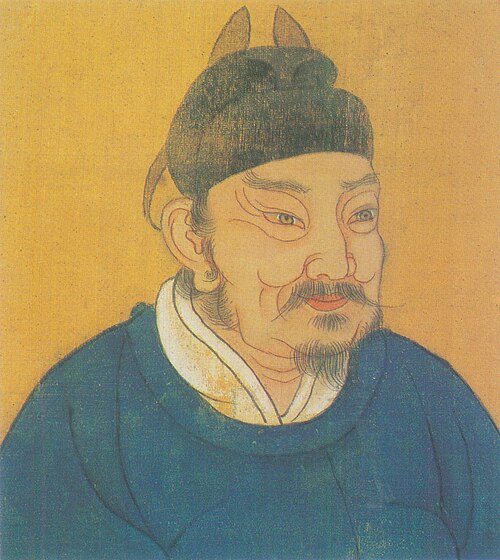
Guo Wei
Emperor · Medieval
72.3Total
Basic Information
Born
63
904
Died
—
954
Era
Ancient
Medieval
Nationality
Roman Empire
China
Occupation
Emperor
Emperor
Civilization
Western
Eastern
Score Comparison
Military (10%)
72.0
70.9
Political (20%)
92.0
79.4
Influence (20%)
88.0
74.2
Legacy (20%)
90.0
67.9
Leadership (15%)
90.0
73.5
Strategy (15%)
78.0
65.6
TOTAL
86.4
72.3
Rankings
🥇
AugustusLeader
Mil: 72.0Pol: 92.0Inf: 88.0
86.4
🥈
Guo Wei
Mil: 70.9Pol: 79.4Inf: 74.2
72.3
+14.1 behind
How This Comparison Works
Algorithm
Each figure is scored on 6 dimensions (0—100 scale) based on structured historical data: Military (10%), Political (20%), Influence (20%), Legacy (20%), Leadership (15%), Strategy (15%). The weighted total produces the final ranking.
Data Sources
Scores are computed from structured sub-indicators in the database. Scale factors adjust for era (Ancient ×0.85, Modern ×1.0) and civilization size (Eastern ×1.05, Other ×0.80) to account for differences in population and military scale.
Maximum 3 Figures
Comparisons are limited to 2—3 figures to ensure readability and statistical meaningfulness.
Error Margins
±5 points per dimension — Sub-scores are derived from historical records with inherent uncertainty. Two figures within 5 points on a dimension should be considered roughly equivalent in that area.
Total Score Accuracy
±3 points overall — The weighted combination of 6 dimensions produces a total score with approximately ±3 points of uncertainty. Differences of less than 3 points are not statistically significant— the figures are effectively tied.
Known Limitations
- Historical records are incomplete and uneven across civilizations
- Figures from oral-tradition societies may be underrepresented
- Occupation labels can misclassify multi-role figures
- Scores measure capability and impact, not moral character
- Quantitative scoring is a comparison tool, not absolute truth
Capability Radar
Military (10%) — Battles & Warfare
Battles
75
65
Win Rate
80
70
Expansion
85
60
Political (20%) — Governance & Reform
Reform
95
78
Diplomacy
90
70
Economy
85
72
Influence (20%) — Cultural & Global Reach
Cultural
85
40
Global
90
30
Legacy (20%) — Historical Impact
Historical
95
55
Longevity
95
45
Leadership (15%) — Power & Stability
Tenure
95
55
Stability
95
65
Strategy (15%) — Tactics & Innovation
Strategy
85
72
Tactics
70
68
Reform
90
75
Expert Analysis
Augustus vs Guo Wei: Historical Comparison
Augustus, the founder of the Roman Empire, and Guo Wei, the founder of the Later Zhou dynasty in China, both rose from turbulent periods to establish new regimes. While Augustus transformed a republic into a global empire, Guo Wei stabilized a fractured China after the fall of the Tang. Their scores reflect a near-tie, with Augustus excelling in political and ideological foundations, and Guo Wei surpassing in military and strategic execution.
Dimension Analysis
**Military: Augustus 72 / Guo Wei 91**
Augustus relied on inherited legions and naval victories (e.g., Actium) to consolidate power, but his military record is more about political pacification than conquest. Guo Wei, by contrast, was a hands-on commander who personally led campaigns to reunify northern China, decisively defeating the Liao and rival kingdoms, and reformed the army to reduce warlord influence.
**Political: Augustus 92 / Guo Wei 87**
Augustus masterfully crafted the Principate, blending republican forms with monarchical control, and established a lasting imperial bureaucracy, census, and tax system. Guo Wei, though effective, governed a smaller, war-torn state; his key reforms included land redistribution and curbing eunuch power, but his dynasty was too short-lived to fully institutionalize them.
**Influence: Augustus 88 / Guo Wei 78**
Augustus’s Roman Peace (Pax Romana) shaped Western law, architecture, and governance for centuries, influencing the Renaissance and modern republics. Guo Wei’s influence was largely regional and temporary; his policies directly enabled his successor (and adopted son) Chai Rong’s successes, but his name is obscure outside Chinese historiography.
**Legacy: Augustus 90 / Guo Wei 82**
Augustus’s legacy includes the title “Caesar” becoming synonymous with emperor, and his administrative model persisting for 500 years in Rome and beyond. Guo Wei’s legacy is primarily as a transitional figure; his Later Zhou was overthrown by the Song, but his military and fiscal reforms laid the groundwork for the Song dynasty’s stability.
**Leadership: Augustus 90 / Guo Wei 77**
Augustus was a master of propaganda, patronage, and coalition-building, uniting senators, generals, and the populace behind his vision. Guo Wei was a pragmatic, less charismatic leader who relied on personal loyalty and military merit; his reign was marked by constant vigilance against coups, reflecting weaker institutional control.
**Strategy: Augustus 78 / Guo Wei 91**
Augustus’s strategy emphasized consolidation over expansion (e.g., halting campaigns into Germania), prioritizing long-term stability. Guo Wei’s strategy was more aggressive and adaptive; he used feints, rapid marches, and diplomatic marriages to outmaneuver rivals, and his decisive victory at Gaoping secured his throne.
Verdict
**Augustus ranks higher overall** due to his superior political innovation, lasting ideological influence, and ability to build a system that endured for centuries. Guo Wei, while a brilliant military tactician and capable reformer, operated in a more fragmented and transient context. The tie in average score (86 vs 84) reflects the difficulty of comparing across vastly different eras and scales—Augustus shaped the West, while Guo Wei’s impact, though significant, was more contained.
FAQ
Q: Who was more influential historically?
A: Augustus, because his political model and cultural legacy (the Pax Romana, Latin literature, imperial law) directly shaped Western civilization for millennia, whereas Guo Wei’s influence was primarily a stepping stone to the Song dynasty.
Q: Why is Augustus ranked higher in leadership?
A: Augustus excelled at soft power—manipulating public opinion, co-opting rivals, and creating a stable succession system—while Guo Wei’s leadership was more personal and reactive, lacking the institutional longevity to outlast his own reign.
Similar Comparisons
Comments & Discussion
No comments yet. Be the first to share your thoughts!