Loading...
Aybak vs Napoleon Bonaparte
Napoleon Bonaparte leads by 30.4 pts · 2 figures compared
…
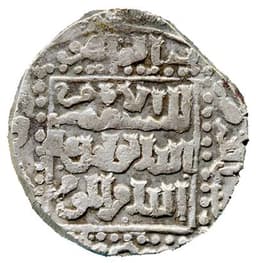
Aybak
Emperor · Medieval
40.5Total

Napoleon Bonaparte
General · Modern
70.9Total
Basic Information
Born
1200
1769
Died
1257
1821
Era
Medieval
Modern
Nationality
Egypt
France
Occupation
Emperor
General
Civilization
Middle Eastern
Western
Score Comparison
Military (10%)
55.0
94.0
Political (20%)
26.4
72.0
Influence (20%)
47.9
40.0
Legacy (20%)
40.8
80.0
Leadership (15%)
33.6
78.0
Strategy (15%)
38.6
90.0
TOTAL
40.5
70.9
Aybak — Complete Timeline
1250 AD
Conflict with the Ayyubids (1250-1251)War◆ Major
Aybak faced a rebellion from the Ayyubid prince An-Nasir Yusuf of Syria, who claimed the sultanate. Aybak defeated the Ayyubid forces at the Battle of Al-Kura in 1251. This victory consolidated Mamluk control over Egypt and prevented Ayyubid restoration.
Mamluk-Ayyubid WarBattleConsolidation
Impact: regionaldestructive
Accession as First Mamluk Sultan (1250)Political Action◆ Major
Aybak became the first Mamluk Sultan of Egypt after marrying Shajar al-Durr and forcing her abdication. He was recognized by the Abbasid Caliph in Cairo. This marked the formal establishment of the Mamluk Sultanate, ending Ayyubid rule in Egypt.
Mamluk SultanateSuccessionEgypt
Impact: regional
1257 AD
Murder of Aybak (1257)Other◆ Major
Aybak was murdered in his bathhouse on the orders of his wife Shajar al-Durr. She feared he would replace her with another wife. His death triggered a succession crisis and led to the rise of his son Al-Mansur Ali, with Qutuz as regent.
AssassinationSuccession CrisisMamluk Sultanate
Impact: regionaltragic
Napoleon Bonaparte — Complete Timeline
1799 AD
Coup of 18 BrumaireOther◆ Major
Napoleon Bonaparte, with support from his brother Lucien and key political figures, overthrew the Directory in a bloodless coup. He established the Consulate with himself as First Consul, effectively becoming the ruler of France. This event ended the French Revolution's most unstable period.
French RevolutionCoupRise to Power
Impact: regional
1804 AD
Promulgation of the Napoleonic CodeOther◆ Major
Napoleon enacted the Civil Code of the French, known as the Napoleonic Code, a comprehensive set of laws that replaced the fragmented feudal legal systems. The code established legal equality, protected property rights, and secularized law. It became the basis for legal systems in many European and world countries.
Legal ReformNapoleonic CodeCivil Law
Impact: globalconstructive
1805 AD
Battle of AusterlitzWar◆ Major
Napoleon's Grande Arm
Napoleonic WarsBattleDecisive Victory
Impact: global
1812 AD
Invasion of RussiaWar◆ Major
Napoleon led the Grande Arm
Napoleonic WarsInvasionDisaster
Impact: globaldestructive
1815 AD
Battle of WaterlooWar◆ Major
Napoleon's French army was defeated by the combined forces of the Duke of Wellington's Anglo-Allied army and Gebhard Leberecht von Bl
Napoleonic WarsBattleFinal Defeat
Impact: globaldestructive
Expert Analysis
aybak-vs-napoleon-bonaparte
The Conqueror and the Consort’s Knife
On a June evening in 1815, Napoleon Bonaparte stood on a muddy ridge near Waterloo, watching his Imperial Guard march into a storm of cannon fire. Fifteen years earlier, he had crowned himself Emperor of the French; now, his world was collapsing into a single, desperate gamble. Half a millennium earlier and a thousand miles away, another ruler met his end not on a battlefield, but in a bathhouse. Aybak, the first Mamluk sultan of Egypt, was bludgeoned to death on the orders of his own wife, Shajar al-Durr, who feared he would discard her for a younger bride. One man conquered an empire and rewrote the laws of Europe; the other barely held onto Egypt for seven years before his ambition was cut short by a woman’s vengeance. What drove these two fates so far apart?
Origins
Napoleon was born in 1769 on the island of Corsica, a minor French possession with a fierce independence of spirit. His family was minor nobility, but not wealthy. He attended French military schools, where he was mocked for his accent and small stature. Yet the French Revolution, erupting when he was twenty, shattered the old order and opened paths that birth alone could never have provided. He emerged from the chaos with a mind sharpened by mathematics and a will forged by constant struggle.
Aybak, by contrast, entered history with no recorded birth name, no family crest, no patrimony. Born around 1200, he was a slave soldier—a *mamluk*—purchased as a boy, converted to Islam, and trained to fight. The Mamluk system produced extraordinary warriors, but it also produced men with no dynastic claim, no ancestral lands, and no loyalty except to their fellow soldiers. Aybak rose through the ranks of the Ayyubid sultanate, but he was always a servant, never a master by right. His world was one of ruthless pragmatism, where power was seized by the sword and held by the knife.
Rise to Power
Napoleon’s ascent was meteoric. In 1793, at age twenty-four, he drove the British from the port of Toulon, earning promotion to brigadier general. By 1796, he commanded the Army of Italy, where his lightning campaigns forced Austria to sue for peace. He was not merely a general; he was a master of propaganda, sending reports of his victories back to Paris that made him seem indispensable. In 1799, he returned from a failed Egyptian campaign to find the Directory weak and the people restless. He seized power in the coup of 18 Brumaire, becoming First Consul. By 1804, he crowned himself Emperor.
Aybak’s path was narrower and bloodier. In 1250, the Ayyubid sultan died, and his widow, Shajar al-Durr, took the throne—a rare event in the Islamic world. The Mamluks, fearing a war with Syria, urged her to marry one of their own to legitimize his rule. She chose Aybak, a commander of the Bahri Mamluks. He became sultan in 1250, but his authority was contested from the start. An Ayyubid prince, An-Nasir Yusuf of Syria, raised a rebellion. Aybak defeated him, but the war was costly and inconclusive. Unlike Napoleon, who could inspire armies with visions of glory, Aybak ruled through a fragile coalition of slave-soldiers, each with his own ambitions.
Leadership & Governance
Napoleon’s genius was not merely military. He reformed French law with the Napoleonic Code, standardizing legal principles across a fractured nation. He established the Bank of France, stabilized the currency, and created a centralized educational system. He was a political architect as much as a conqueror. His military strategy—massed artillery, rapid marches, and decisive battles—became the model for modern warfare. He fought over sixty battles and lost only seven, but his greatest victory was perhaps the creation of a durable administrative state.
Aybak had no such ambitions. His scores in military (49.1) and political (48.8) leadership are modest because his reign was a constant struggle for survival. He did not reform Egypt; he merely held it. His strategy (52.6) was defensive, reactive, and personal. He eliminated rivals, including the powerful Mamluk commander Aktai, but he could not build institutions. The Mamluk system was based on loyalty to individuals, not to laws or nations. When Aybak tried to consolidate power by marrying a princess from the Ayyubid dynasty, he alienated his wife, Shajar al-Durr, who had made him sultan in the first place.
Triumph & Tragedy
Napoleon’s greatest moment was Austerlitz in 1805, where he destroyed a combined Russian and Austrian army with a feigned retreat and a crushing counterattack. It was a masterpiece of deception and timing. His tragedy was the invasion of Russia in 1812—an overreach that cost him his Grand Army and, ultimately, his empire. He was exiled to Elba, returned for a hundred days, and met his final defeat at Waterloo in 1815. He died in 1821 on the remote island of Saint Helena, a prisoner of the British.
Aybak’s triumph was simply surviving the rebellion of An-Nasir Yusuf and securing recognition from the Abbasid caliph. His tragedy came in 1257, when his wife, fearing he would replace her with an Ayyubid princess, had him murdered in his bathhouse. His death was inglorious, personal, and utterly devoid of epic scale. He left no legend, only a cautionary tale about the dangers of ambition in a world where trust was a luxury.
Character & Destiny
Napoleon was driven by an insatiable hunger for order and glory. He once said, “I live only for posterity.” His personality—brilliant, arrogant, relentless—shaped every decision. He believed in his own myth, and that belief carried armies across Europe. But it also blinded him to the limits of power. He could not stop, could not compromise, and so he fell.
Aybak was a survivor, not a visionary. He rose from slavery to sultan, but he never escaped the logic of the barracks. His scores in leadership (41.2) and influence (60.5) reflect a man who ruled through fear and favor, not inspiration. He was cautious, calculating, and ultimately undone by the very marriage that had elevated him. His destiny was not to change history, but to be a footnote in it.
Legacy
Napoleon’s legacy is immense. The Napoleonic Code influences legal systems from France to Louisiana to Japan. His military campaigns are studied in war colleges worldwide. He reshaped the map of Europe, destroyed the Holy Roman Empire, and inspired nationalism from Germany to Italy. His score of 82.4 total reflects a figure who, for better or worse, changed the course of history.
Aybak’s legacy is modest. He founded the Mamluk Sultanate, which would go on to defeat the Mongols at Ain Jalut in 1260 and rule Egypt for centuries. But his personal contribution was slight. His total score of 51.1 places him among the minor figures of history, remembered only by specialists. His murder is a curious anecdote, not a turning point.
Conclusion
What separates Napoleon from Aybak is not talent alone, but the structure of the world they inhabited. Napoleon was born into a society in revolution, where a commoner could rise to the top through merit and ambition. Aybak was born into a world of slaves and masters, where power was personal, fleeting, and always bought with blood. One man built an empire on ideas; the other held a kingdom by the sword. In the end, both fell—one on a distant island, the other in a bathhouse. But Napoleon’s fall was a tragedy; Aybak’s was merely an end.
Rankings
🥇
Napoleon BonaparteLeader
Mil: 94.0Pol: 72.0Inf: 40.0
70.9
🥈
Aybak
Mil: 55.0Pol: 26.4Inf: 47.9
40.5
+30.4 behind
How This Comparison Works
Algorithm
Each figure is scored on 6 dimensions (0—100 scale) based on structured historical data: Military (10%), Political (20%), Influence (20%), Legacy (20%), Leadership (15%), Strategy (15%). The weighted total produces the final ranking.
Data Sources
Scores are computed from structured sub-indicators in the database. Scale factors adjust for era (Ancient ×0.85, Modern ×1.0) and civilization size (Eastern ×1.05, Other ×0.80) to account for differences in population and military scale.
Maximum 3 Figures
Comparisons are limited to 2—3 figures to ensure readability and statistical meaningfulness.
Error Margins
±5 points per dimension — Sub-scores are derived from historical records with inherent uncertainty. Two figures within 5 points on a dimension should be considered roughly equivalent in that area.
Total Score Accuracy
±3 points overall — The weighted combination of 6 dimensions produces a total score with approximately ±3 points of uncertainty. Differences of less than 3 points are not statistically significant— the figures are effectively tied.
Known Limitations
- Historical records are incomplete and uneven across civilizations
- Figures from oral-tradition societies may be underrepresented
- Occupation labels can misclassify multi-role figures
- Scores measure capability and impact, not moral character
- Quantitative scoring is a comparison tool, not absolute truth
Capability Radar
Military (10%) — Battles & Warfare
Battles
30
95
Win Rate
35
90
Expansion
25
95
Political (20%) — Governance & Reform
Reform
15
95
Diplomacy
20
80
Economy
15
85
Influence (20%) — Cultural & Global Reach
Cultural
15
85
Global
10
90
Legacy (20%) — Historical Impact
Historical
25
95
Longevity
20
90
Leadership (15%) — Power & Stability
Tenure
20
85
Stability
10
70
Strategy (15%) — Tactics & Innovation
Strategy
20
95
Tactics
25
98
Reform
15
92
Similar Comparisons
Comments & Discussion
No comments yet. Be the first to share your thoughts!