Loading...
Bahram IV vs Napoleon Bonaparte
Napoleon Bonaparte leads by 32.3 pts · 2 figures compared
…
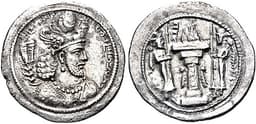
Bahram IV
Emperor · Ancient
38.6Total

Napoleon Bonaparte
General · Modern
70.9Total
Basic Information
Born
370
1769
Died
399
1821
Era
Ancient
Modern
Nationality
Sasanian Empire
France
Occupation
Emperor
General
Civilization
Middle Eastern
Western
Score Comparison
Military (10%)
50.0
94.0
Political (20%)
26.4
72.0
Influence (20%)
44.0
40.0
Legacy (20%)
33.3
80.0
Leadership (15%)
41.5
78.0
Strategy (15%)
41.0
90.0
TOTAL
38.6
70.9
Bahram IV — Complete Timeline
388 AD
Accession to the Sasanian thronePolitical Action◆ Major
Bahram IV became Shahanshah of the Sasanian Empire after the death of Shapur III. His reign was marked by conflicts with the Roman Empire and internal unrest.
SuccessionSasanian Empire
Impact: national
399 AD
Assassination by his own soldiersPolitical Action◆ Major
Bahram IV was killed by his own soldiers, likely due to dissatisfaction with his rule or military failures. His death led to a succession crisis.
AssassinationMilitary Revolt
Impact: nationaltragic
Napoleon Bonaparte — Complete Timeline
1799 AD
Coup of 18 BrumaireOther◆ Major
Napoleon Bonaparte, with support from his brother Lucien and key political figures, overthrew the Directory in a bloodless coup. He established the Consulate with himself as First Consul, effectively becoming the ruler of France. This event ended the French Revolution's most unstable period.
French RevolutionCoupRise to Power
Impact: regional
1804 AD
Promulgation of the Napoleonic CodeOther◆ Major
Napoleon enacted the Civil Code of the French, known as the Napoleonic Code, a comprehensive set of laws that replaced the fragmented feudal legal systems. The code established legal equality, protected property rights, and secularized law. It became the basis for legal systems in many European and world countries.
Legal ReformNapoleonic CodeCivil Law
Impact: globalconstructive
1805 AD
Battle of AusterlitzWar◆ Major
Napoleon's Grande Arm
Napoleonic WarsBattleDecisive Victory
Impact: global
1812 AD
Invasion of RussiaWar◆ Major
Napoleon led the Grande Arm
Napoleonic WarsInvasionDisaster
Impact: globaldestructive
1815 AD
Battle of WaterlooWar◆ Major
Napoleon's French army was defeated by the combined forces of the Duke of Wellington's Anglo-Allied army and Gebhard Leberecht von Bl
Napoleonic WarsBattleFinal Defeat
Impact: globaldestructive
Expert Analysis
bahram-iv-vs-napoleon-bonaparte
# The Emperor and the General: Two Paths to Power, Two Destinies
In the summer of 1815, Napoleon Bonaparte stood on the deck of the *Bellerophon*, watching the coast of France recede into the Atlantic mist. He was forty-five years old, a man who had crowned himself emperor, rewritten the laws of Europe, and led armies from Madrid to Moscow. Sixteen centuries earlier, another ruler met a more inglorious end: Bahram IV, Shahanshah of the Sasanian Empire, was cut down by his own soldiers somewhere on a dusty campaign trail, his body left to the mercy of men he had once commanded. One died in exile, mourned by loyal veterans; the other died in disgrace, erased from memory by his own army. What separates a legend from a footnote? The answer lies not in the stars, but in the choices made when power was within reach.
Origins
Napoleon was born in 1769 on the island of Corsica, a place that had only become French the year before. His family was minor nobility, poor enough to feel the sting of hunger but proud enough to nurse grievances. He spoke Italian-accented French throughout his life, a mark of the outsider. This marginality shaped him: he had to prove everything, take everything, trust nothing. The French Revolution, which erupted when he was twenty, shattered the old order and opened doors that birth alone would never have unlocked. For a young artillery officer with a mathematical mind and a hunger for glory, the timing was perfect.
Bahram IV, born in 370, entered a world of inherited certainty. He was a son of the Sasanian dynasty, which had ruled Persia for nearly two centuries. His father was Shapur III; his grandfather was a king. The throne was his by blood, not merit. In the Sasanian court, power flowed through lineage, alliances, and the careful management of nobles and priests. There were no revolutions to scramble the hierarchy, no new ideas to challenge the ancient order. Bahram inherited a system designed to preserve itself, and he inherited the expectations that came with it.
Rise to Power
Napoleon’s ascent was a masterclass in opportunism. In 1795, he dispersed a royalist mob in Paris with a "whiff of grapeshot," earning the gratitude of the revolutionary government. By 1796, at twenty-six, he was commander of the Army of Italy. He won battles not by grinding attrition but by speed, deception, and the ruthless concentration of force. His Italian campaign of 1796–97 made him a national hero. In 1799, he returned from a failed Egyptian expedition to find the Directory crumbling. Within weeks, he had seized power in a coup d'état, becoming First Consul. He was thirty.
Bahram IV’s path was quieter and narrower. He acceded to the throne in 388, after the death of Shapur III, likely by natural causes. There is no record of a dramatic struggle, no coup, no battlefield triumph that announced his arrival. He simply became king. The Sasanian Empire was then locked in a grinding stalemate with the Roman Empire, and its eastern frontiers were troubled by nomadic incursions. Bahram’s task was not to conquer but to hold. He had no revolution to ride, no crisis to exploit. He was a caretaker ruler in a world that demanded heroes.
Leadership & Governance
Napoleon governed with the energy of a man who believed he could reshape reality. He centralized the French state, created the Bank of France, and established lycées to train a new elite. His greatest achievement was the Napoleonic Code of 1804, a comprehensive legal system that enshrined equality before the law, protected property rights, and secularized the state. It spread across Europe and remains influential today. On the battlefield, he was nearly peerless: his strategy score of 93 reflects a genius for maneuver, logistics, and psychological warfare. He won sixty battles and lost only seven.
Bahram IV governed in a different key. The Sasanian Empire was a theocratic monarchy, where the Zoroastrian priesthood held immense power. Bahram’s reign saw continued conflicts with the Romans and internal tensions with the nobility. He did not reform the legal system, expand the economy, or launch ambitious building projects. His military score of 23.5 and leadership score of 34.2 suggest a ruler who struggled to command respect. He may have been competent, but competence was not enough to satisfy an army accustomed to warrior-kings.
Triumph & Tragedy
Napoleon’s greatest moment came in 1805 at Austerlitz, where he crushed the combined armies of Russia and Austria. It was a battle of perfect execution: he feigned weakness on his right flank, drew the allies into a trap, and then shattered their center. The sun rose that morning over a frozen battlefield; by evening, he had destroyed the Third Coalition. His greatest tragedy was the 1812 invasion of Russia. He marched with 600,000 men and returned with fewer than 100,000. The disaster broke his aura of invincibility. By 1814, Paris was occupied; by 1815, Waterloo ended his return.
Bahram IV’s reign had no Austerlitz. His greatest moment may have been simply surviving for eleven years as shah, a feat in a dynasty plagued by assassinations. His tragedy was that he did not survive longer. In 399, during a campaign—perhaps against the Hephthalites or rebellious nobles—his own soldiers turned on him. The details are lost, but the pattern is clear: a king who could not inspire loyalty was a king who would not last. His death left the empire in crisis, and his son Yazdegerd I would inherit a throne stained by his father’s blood.
Character & Destiny
Napoleon was driven by an insatiable need for validation. He once said, "I live only for posterity." He was ruthless, brilliant, and incapable of stopping. His personality shaped every decision: the refusal to delegate, the obsession with speed, the belief that he could defy geography and weather. In the end, it was this same personality that doomed him. He could not share power, could not accept limits, could not retreat. He was his own greatest asset and his own worst enemy.
Bahram IV is harder to read. The sources are sparse, but the pattern suggests a man who failed to command the respect of his peers. In a warrior culture, he may have been seen as weak or indecisive. His assassination by his own soldiers indicates a breakdown of trust so complete that men who had sworn to die for him chose instead to kill him. He lacked the charisma, the victories, or the terror that might have held them in line. His character, whatever it was, could not bridge the gap between inherited authority and earned legitimacy.
Legacy
Napoleon’s legacy is immense. The Napoleonic Code shaped modern civil law across Europe and the Americas. He reorganized Germany, inspired nationalism, and sold the Louisiana Territory to the United States. He is remembered as a military genius, a tyrant, a reformer, and a cautionary tale. His tomb at Les Invalides is a pilgrimage site. His scores—military 94, influence 82, legacy 78—reflect a man who changed the world, for better and worse.
Bahram IV is almost forgotten. His legacy score of 44 is a near-blank page. He appears in the margins of histories of the Sasanian Empire, a king who reigned and died without leaving a mark. No code, no monument, no battle bears his name. He is remembered only as a warning: that power inherited is not power held, and that a ruler who cannot inspire will be erased.
Conclusion
We remember Napoleon because he dared everything, won spectacularly, and lost catastrophically. We forget Bahram IV because he dared nothing, won nothing, and lost quietly. The difference is not in their titles—both were sovereigns—but in the fire they brought to the role. Napoleon seized his fate; Bahram accepted his. One shaped the world; the other was swallowed by it. History, it seems, has little patience for those who merely inherit.
Rankings
🥇
Napoleon BonaparteLeader
Mil: 94.0Pol: 72.0Inf: 40.0
70.9
🥈
Bahram IV
Mil: 50.0Pol: 26.4Inf: 44.0
38.6
+32.3 behind
How This Comparison Works
Algorithm
Each figure is scored on 6 dimensions (0—100 scale) based on structured historical data: Military (10%), Political (20%), Influence (20%), Legacy (20%), Leadership (15%), Strategy (15%). The weighted total produces the final ranking.
Data Sources
Scores are computed from structured sub-indicators in the database. Scale factors adjust for era (Ancient ×0.85, Modern ×1.0) and civilization size (Eastern ×1.05, Other ×0.80) to account for differences in population and military scale.
Maximum 3 Figures
Comparisons are limited to 2—3 figures to ensure readability and statistical meaningfulness.
Error Margins
±5 points per dimension — Sub-scores are derived from historical records with inherent uncertainty. Two figures within 5 points on a dimension should be considered roughly equivalent in that area.
Total Score Accuracy
±3 points overall — The weighted combination of 6 dimensions produces a total score with approximately ±3 points of uncertainty. Differences of less than 3 points are not statistically significant— the figures are effectively tied.
Known Limitations
- Historical records are incomplete and uneven across civilizations
- Figures from oral-tradition societies may be underrepresented
- Occupation labels can misclassify multi-role figures
- Scores measure capability and impact, not moral character
- Quantitative scoring is a comparison tool, not absolute truth
Capability Radar
Military (10%) — Battles & Warfare
Battles
20
95
Win Rate
15
90
Expansion
10
95
Political (20%) — Governance & Reform
Reform
20
95
Diplomacy
20
80
Economy
20
85
Influence (20%) — Cultural & Global Reach
Cultural
10
85
Global
10
90
Legacy (20%) — Historical Impact
Historical
10
95
Longevity
10
90
Leadership (15%) — Power & Stability
Tenure
40
85
Stability
10
70
Strategy (15%) — Tactics & Innovation
Strategy
20
95
Tactics
20
98
Reform
10
92
Similar Comparisons
Comments & Discussion
SwordOfAusterlitz6/17/2026
Napoleon's real edge wasn't genius—it was *credibility*. He could lose a battle, write a masterful bulletin blaming subordinates, and troops would still charge into columns of fire for him. Bahram IV lost credibility in a single campaign: his soldiers suspected betrayal or incompetence, so they killed him mid-march. That's the difference between an emperor and a cautionary tale. Military leadership isn't just tactics—it's the trust you carry before the first cannon fires.
波斯遗民6/17/2026
巴赫拉姆四世死得窝囊?我不这么看。他的死恰恰证明了萨珊军事体系的健康:当一个沙赫连续葬送两个军团后,近卫军当场执行了"废君权"。拿破仑在滑铁卢后还能退位体面流放,那是因为法国贵族需要他签字画押。两千年帝国政治有它自己的冷酷法则,巴黎那套"告别演说"的戏码在泰西封根本行不通。真要说失败,拿破仑的失败更虚伪。
DataMancer6/17/2026
The comparison implies Napoleon was "greater" because he died later and more famously, but that's survivorship bias inflated by post-1815 propaganda. Bahram IV reigned for 14 years as a stable Sasanian monarch in a period of regional peace. Napoleon crushed Europe for a decade and left it in ruins, exiled twice. By any objective metric—GDP growth, population safety, territorial integrity at death—Bahram's reign was more successful. We just romanticize the dramatic loser.
武庙别传6/17/2026
拿巴赫拉姆四世跟拿破仑比,本身就是史学上的降维打击。拿破仑的军事遗产留下了现代参谋制度和《拿破仑法典》,沙赫们留下的只有银盘上的猎狮图和琐罗亚斯德教年表。一个18岁从科西嘉爬到欧洲之巅的人,和一个靠血统继承王位后被禁卫军砍死的波斯贵族,在"成就"维度根本没有可比性。非要找共同点?两人都死于自己亲手打造的体系之内——仅此而已。