Loading...
Bai Chongxi vs Qin Shi Huang
Qin Shi Huang leads by 24.1 pts · 2 figures compared
…

Bai Chongxi
General · Modern
61.1Total
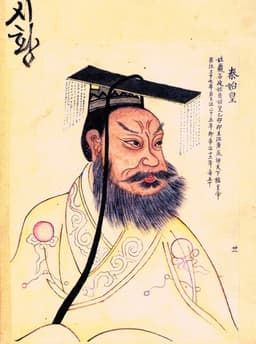
Qin Shi Huang
Emperor · Ancient
85.2Total
Basic Information
Born
1893
-259
Died
1966
-210
Era
Modern
Ancient
Nationality
China
China
Occupation
General
Emperor
Civilization
Eastern
Eastern
Score Comparison
Military (10%)
67.3
80.0
Political (20%)
68.0
90.0
Influence (20%)
62.0
85.0
Legacy (20%)
50.0
90.0
Leadership (15%)
62.0
78.0
Strategy (15%)
69.1
82.0
TOTAL
61.1
85.2
Bai Chongxi — Complete Timeline
1926 AD
Command in the Northern ExpeditionWar◆ Major
Bai Chongxi served as a key military commander in the National Revolutionary Army during the Northern Expedition. He led forces that captured Shanghai and Nanjing, helping to defeat warlords and unify China under the KMT.
Northern ExpeditionMilitary CommandKMT
Impact: national
1927 AD
Shanghai Massacre of 1927Political Action
Bai Chongxi played a key role in the Shanghai Massacre, where KMT forces purged Communists and leftists from Shanghai. Thousands were killed, solidifying KMT control but deepening the split with the CCP.
Chinese Civil WarPurgeKMT
Impact: nationaldestructive
1938 AD
Defense of WuhanWar◆ Major
Bai Chongxi commanded Chinese forces in the defense of Wuhan against the Japanese during the Second Sino-Japanese War. Although the city fell, his tactics delayed the Japanese advance and inflicted heavy casualties.
Second Sino-Japanese WarBattleDefense
Impact: national
1944 AD
Battle of Central HenanWar◆ Major
Bai Chongxi led Chinese forces in the Battle of Central Henan during Operation Ichigo, a Japanese offensive. The Chinese forces were defeated, leading to significant territorial losses and weakening KMT control.
Second Sino-Japanese WarBattleDefeat
Impact: nationaltragic
1949 AD
Retreat to TaiwanPolitical Action◆ Major
Bai Chongxi retreated to Taiwan with the KMT after the Communist victory in the Chinese Civil War. He served as a military advisor but was sidelined by Chiang Kai-shek, ending his active political career.
Chinese Civil WarRetreatTaiwan
Impact: nationaltragic
Qin Shi Huang — Complete Timeline
246 BC
Construction of the Mausoleum and Terracotta ArmyOther◆ Major
Qin Shi Huang commissioned a vast mausoleum complex near Xi'an, guarded by thousands of life-sized terracotta soldiers, horses, and chariots. The project employed hundreds of thousands of workers and reflected his obsession with immortality and imperial power.
Impact: global
230 BC
Conquest of the Six Warring StatesWar
From 230 to 221 BCE, Ying Zheng led the Qin state in a series of campaigns that conquered the Han, Zhao, Wei, Chu, Yan, and Qi states. This unified China under a single ruler for the first time, ending the Warring States period.
Impact: global
221 BC
Standardization of Writing, Currency, and MeasurementsReform◆ Major
Qin Shi Huang ordered the standardization of Chinese script, currency, and weights and measures across the unified empire. This facilitated administration, trade, and cultural integration, laying a foundation for future dynasties.
Impact: globalconstructive
Proclamation of the Qin DynastyPolitical Action
After conquering the last independent state, Ying Zheng declared himself Shi Huangdi (First Emperor), founding the Qin Dynasty. He adopted a new title to signify his supreme authority and initiated centralized imperial rule.
Impact: global
214 BC
Initiation of the Great Wall ConstructionOther◆ Major
Qin Shi Huang ordered the connection and extension of existing northern fortifications to create a unified defensive wall against nomadic Xiongnu raids. This project involved massive conscripted labor and became the precursor to the later Great Wall.
Impact: regional
213 BC
Burning of Books and Burying of ScholarsPolitical Action◆ Major
On the advice of Li Si, Qin Shi Huang ordered the burning of historical records and philosophical texts not aligned with Legalist doctrine. He also had 460 Confucian scholars buried alive to suppress dissent and consolidate ideological control.
Impact: nationaldestructive
Expert Analysis
bai-chongxi-vs-qin-shi-huang
# The First Emperor and the Last Warlord
On a winter morning in 221 BC, Ying Zheng stood before the conquered palaces of the six warring states and declared himself *Shi Huangdi*—the First Emperor. Two thousand one hundred and seventy years later, another Chinese military commander, Bai Chongxi, boarded a ship in Shanghai bound for Taiwan, his cause lost, his country divided. Both men sought to unify China. One succeeded beyond imagination; the other failed despite brilliance. What separated them was not merely time, but the nature of power itself—and the cruel logic of history.
Origins
Qin Shi Huang was born into chaos. The Warring States period had torn China apart for centuries, and his father, King Zhuangxiang of Qin, ruled a state that had already grown powerful through legalist reforms. Young Ying Zheng ascended the throne at thirteen, a boy king in a land that respected only strength. His tutor, Lü Buwei, and his mother, Queen Dowager Zhao, fought for control of his court, teaching him early that trust was a weapon and paranoia a shield. The Qin state, harsh and efficient, molded him into a ruler who saw unity as the only antidote to anarchy.
Bai Chongxi emerged from an entirely different China. Born in 1893 in Guilin, Guangxi, he came of age during the dying gasp of the Qing Dynasty. His family were Hui Muslims, a minority in a land convulsed by foreign humiliation and internal collapse. Where Qin Shi Huang inherited a kingdom, Bai inherited a question: what does it mean to be Chinese when the old order is gone? He attended military academies, studied Sun Tzu alongside Western tactics, and joined the Kuomintang—a revolutionary party, not an ancient dynasty. His world was one of ideologies, not kingdoms.
Rise to Power
Qin Shi Huang’s path was brutal and linear. From 230 to 221 BC, he unleashed his generals—Wang Jian, Meng Tian, and others—in a series of campaigns that devoured the Han, Zhao, Wei, Chu, Yan, and Qi states one by one. Each conquest was a masterpiece of strategy and ruthlessness: he bribed ministers, assassinated rivals, and flooded cities when sieges stalled. By 221 BC, at just thirty-eight, he had achieved what no Chinese ruler had before—total military unification.
Bai Chongxi’s rise was more tangled, shaped by alliance and betrayal. His great moment came in 1926, when he served as a key commander in the Northern Expedition, Chiang Kai-shek’s campaign to crush the warlords and unify China under the KMT. Bai was brilliant—he planned the capture of Shanghai and helped break the back of the warlord Sun Chuanfang. But in 1927, he participated in the Shanghai Massacre, purging Communists from the city in a bloody political purge. It was a turning point: Bai chose the KMT over the revolution, and that choice would haunt him.
Leadership & Governance
Qin Shi Huang governed as he conquered: with absolute authority and a vision of total control. He standardized writing, currency, and measurements across his empire, creating a unified administrative system that would outlast his dynasty by two millennia. He ordered the burning of books and the burying of scholars who opposed his Legalist philosophy, believing that history must begin with him. His Great Wall—actually the linking of older walls—was a defensive monument to his paranoia. His mausoleum, guarded by the Terracotta Army, was a declaration of immortality.
Bai Chongxi governed differently. As a Muslim general in a Confucian army, he was a pragmatist. He commanded Chinese forces in the defense of Wuhan in 1938, holding the line against the Japanese with tactical brilliance despite inferior equipment. He understood guerrilla warfare and the importance of civilian support. But his political wisdom was limited. He never commanded the loyalty of the whole KMT; he was a Guangxi man, a regional strongman in a party of factions. His reforms were military, not civilizational.
Triumph & Tragedy
Qin Shi Huang’s triumph was absolute: he created China. His tragedy was that his dynasty collapsed within four years of his death, undone by his own harshness and the rebellion of the very peasants he had exploited. The First Emperor died in 210 BC, possibly from mercury poisoning from his own immortality elixirs, leaving a paranoid legacy of terror.
Bai Chongxi’s tragedy was more intimate. He was a brilliant strategist who lost the big war. In 1944, during the Battle of Central Henan, his forces were routed by the Japanese in Operation Ichigo—a humiliating defeat that exposed the KMT’s rot. By 1949, he watched Mao Zedong’s Communists sweep across the mainland while he retreated to Taiwan, a general without a country. He died in 1966, a footnote to a revolution he could not stop.
Character & Destiny
Qin Shi Huang was shaped by isolation. He believed that unity required uniformity, that dissent was treason, and that his will was law. His personality—cold, suspicious, megalomaniacal—drove him to build a system so rigid it shattered. Bai Chongxi was shaped by division. He was a brilliant tactician in an era of ideological war, but he lacked a unifying vision. He fought for a party, not a civilization; for a leader, not an idea. His personality—cautious, calculating, loyal to a flawed cause—made him a servant of history, not its master.
Legacy
Qin Shi Huang’s legacy is the Chinese nation itself. Every emperor who followed him, from Han to Qing, ruled over a land he had defined. His standardization of script and currency made China literate and commercial. His Great Wall became a symbol of endurance. He is remembered as both tyrant and founder—a man who burned books but built a country.
Bai Chongxi’s legacy is quieter. He is honored in Taiwan as a KMT loyalist, in mainland China as a complex figure of the civil war. His military writings are studied, but his name does not echo like Mao’s or Chiang’s. He was a brilliant general in a losing cause, a Muslim in a Confucian world, a man who fought for unity but could not achieve it.
Conclusion
What separates the First Emperor from the Last Warlord is the scale of their ambition and the era of their struggle. Qin Shi Huang built a nation from nothing with blood and iron. Bai Chongxi tried to save a nation already fractured by modernity. One created the template; the other could not escape its cracks. History remembers the founders, not the defenders. But perhaps Bai Chongxi’s story is the more human one: a brilliant man caught in a storm he could not control, fighting for a China that was slipping away. In the end, both men remind us that unity is the dream, but division is the tragedy—and that the cost of empire is always paid in blood.
Rankings
🥇
Qin Shi HuangLeader
Mil: 80.0Pol: 90.0Inf: 85.0
85.2
🥈
Bai Chongxi
Mil: 67.3Pol: 68.0Inf: 62.0
61.1
+24.1 behind
How This Comparison Works
Algorithm
Each figure is scored on 6 dimensions (0—100 scale) based on structured historical data: Military (10%), Political (20%), Influence (20%), Legacy (20%), Leadership (15%), Strategy (15%). The weighted total produces the final ranking.
Data Sources
Scores are computed from structured sub-indicators in the database. Scale factors adjust for era (Ancient ×0.85, Modern ×1.0) and civilization size (Eastern ×1.05, Other ×0.80) to account for differences in population and military scale.
Maximum 3 Figures
Comparisons are limited to 2—3 figures to ensure readability and statistical meaningfulness.
Error Margins
±5 points per dimension — Sub-scores are derived from historical records with inherent uncertainty. Two figures within 5 points on a dimension should be considered roughly equivalent in that area.
Total Score Accuracy
±3 points overall — The weighted combination of 6 dimensions produces a total score with approximately ±3 points of uncertainty. Differences of less than 3 points are not statistically significant— the figures are effectively tied.
Known Limitations
- Historical records are incomplete and uneven across civilizations
- Figures from oral-tradition societies may be underrepresented
- Occupation labels can misclassify multi-role figures
- Scores measure capability and impact, not moral character
- Quantitative scoring is a comparison tool, not absolute truth
Capability Radar
Military (10%) — Battles & Warfare
Battles
75
85
Win Rate
70
90
Expansion
60
90
Political (20%) — Governance & Reform
Reform
40
95
Diplomacy
60
75
Economy
35
90
Influence (20%) — Cultural & Global Reach
Cultural
45
95
Global
35
85
Legacy (20%) — Historical Impact
Historical
55
95
Longevity
40
95
Leadership (15%) — Power & Stability
Tenure
55
70
Stability
30
65
Strategy (15%) — Tactics & Innovation
Strategy
80
85
Tactics
85
80
Reform
65
95
Similar Comparisons
Comments & Discussion
大秦噬血者6/17/2026
你说得对,但忽略了一个致命点:白崇禧是军阀时代的产物,而秦始皇是创建者。白崇禧在抗战中打赢了台儿庄,但那是一场战术防御战,不是统一战争。秦始皇扫灭六国靠的是百战精锐和铁腕政策——焚书坑儒就是他的手段。白崇禧跟蒋介石争权夺利,最终连自己人都不信任他。中国不是靠辩论统一的,是靠铁与血。这个对比本身就不公平——一个是开国皇帝,一个是跳梁小丑。
新儒家6/17/2026
从文化角度看,秦始皇是蛮族征服者,而白崇禧是传统秩序的维护者。秦始皇车同轨、书同文,那是强制性的文化灭绝——焚书坑儒,消灭百家争鸣。白崇禧至少懂得尊重多元:他是回民将领,却能在汉人为主的军队中指挥,还保护了西南少数民族文化。统一不是简单的领土合并,而是人心的凝聚。秦始皇用恐吓,白崇禧用智慧。哪个更有价值?
Historian7776/17/2026
Look at the numbers: Qin Shi Huang unified 7 warring states into 1 empire comprising roughly 30 million people. Bai Chongxi's Kuomintang controlled a fragmented territory of 400 million weak—and lost it. The scale difference alone should trigger skepticism. Bai's military genius is overstated: he lost the Huaihai Campaign, the decisive battle of the civil war, despite outnumbering the Communists in some sectors. History doesn't reward tactical brilliance when strategy fails. Case closed.
Chronicler54036/17/2026
The "military historian" angle here misses the fundamental difference: timing and technology. Qin Shi Huang built a unification machine from scratch over centuries—Xiao He's centralized bureaucracy, Shang Yang's legal codes, iron weapons. Bai Chongxi, despite being a brilliant commander, was fighting with rifles against Mao's ideological army. One man inherited a dynasty; the other inherited a mess. The game was rigged from the start, not by skill but by historical context.
Chronicler57816/17/2026
Both were products of their eras, but one was a builder and the other a tinkerer. Qin Shi Huang created the template for Chinese civilization—the centralized bureaucracy, the Great Wall, the standardized script—that lasted 2000 years. Bai Chongxi just tried to patch a crumbling dynasty with Guomindang slogans. The true measure: after Qin's death, China reunited under Han; after Bai's flight to Taiwan, China split permanently. History judges by legacy, not intentions.