Loading...
Bakaffa vs Christian IV
Christian IV leads by 3.7 pts · 2 figures compared
…
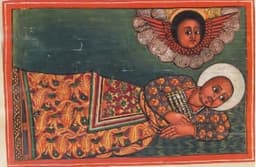
Bakaffa
Emperor · Modern
51.7Total
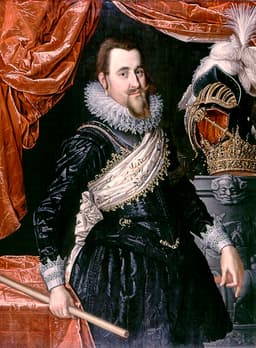
Christian IV
Emperor · Modern
55.4Total
Basic Information
Born
1695
1577
Died
1730
1648
Era
Modern
Modern
Nationality
Ethiopia
Denmark
Occupation
Emperor
Emperor
Civilization
Other
Western
Score Comparison
Military (10%)
50.0
55.0
Political (20%)
62.7
45.0
Influence (20%)
53.3
60.0
Legacy (20%)
44.2
49.2
Leadership (15%)
66.0
66.0
Strategy (15%)
30.3
60.0
TOTAL
51.7
55.4
Bakaffa — Complete Timeline
1722 AD
Marriage to MentewabPolitical Action◆ Major
Bakaffa married Mentewab, a woman of humble origins who became his most influential wife. Mentewab later served as regent for their son Iyasu II, wielding significant political power and shaping Ethiopian politics for decades after Bakaffa's death.
MarriageRegencyMentewab
Impact: national
1725 AD
Construction of the Qusquam ChurchCultural
Bakaffa commissioned the construction of the Qusquam Church in Gondar, dedicated to the Virgin Mary. The church became an important religious site and a symbol of the Gondarine architectural style.
ChurchArchitectureGondar
constructive
Christian IV — Complete Timeline
1624 AD
Founding of Christiania (Oslo)Cultural◆ Major
After a fire destroyed Oslo, Christian IV ordered the city rebuilt on a new site and renamed it Christiania. He designed the new city with a grid plan and Renaissance architecture, which became the foundation of modern Oslo, Norway's capital.
Urban PlanningArchitectureNorway
Impact: regionalconstructive
1625 AD
Danish intervention in the Thirty Years' WarWar◆ Major
Christian IV led Denmark-Norway into the Thirty Years' War as a Protestant champion. His campaign ended in disaster after defeat by Imperial forces under Albrecht von Wallenstein at the Battle of Lutter (1626), leading to Danish occupation and loss of territory.
WarThirty Years' WarDefeat
Impact: regionaldestructive
1629 AD
Treaty of LübeckPolitical Action◆ Major
Christian IV signed the Treaty of L
TreatyThirty Years' WarDiplomacy
Impact: regional
1642 AD
Construction of the Round TowerCultural◆ Major
Christian IV commissioned the construction of the Round Tower in Copenhagen as an astronomical observatory. Part of the Trinitatis Complex, it was built to advance scientific knowledge and remains a symbol of his patronage of the arts and sciences.
ArchitectureScienceCopenhagen
constructive
Expert Analysis
Origins
Bakaffa (also known as Tewoflos) was born around 1680 in Gondar, Ethiopia, into the Solomonic dynasty. He was the son of Emperor Iyasu I and ascended the throne after a period of dynastic struggle. His early life was marked by the political intrigues of the Ethiopian court. He married Mentewab, a woman of humble origins who became his most influential wife. Mentewab later served as regent for their son Iyasu II, wielding significant power.
Christian IV was born on April 12, 1577, at Frederiksborg Castle in Denmark, the eldest son of King Frederick II and Sophie of Mecklenburg. He received a comprehensive education, including training in statecraft and military affairs. He ascended the throne at age 11, with a regency governing until he assumed full power in 1596. His upbringing prepared him for a reign focused on strengthening Denmark's position in Europe.
Rise to Power
Bakaffa became emperor in 1721 after the death of his brother, Emperor Dawit III, following a period of civil unrest. He consolidated power by suppressing rebellions and centralizing authority. His marriage to Mentewab helped him secure support from various factions. His reign was relatively stable, but he faced challenges from regional nobles.
Christian IV became king at age 11 in 1588, with a regency council ruling until he was crowned in 1596. He quickly asserted his authority, embarking on ambitious building projects and economic reforms. He founded the city of Christiania (Oslo) in 1624 after a fire destroyed the original Oslo, designing it with a grid plan. He also commissioned the Round Tower in Copenhagen (1642) as an astronomical observatory, part of the Trinitatis Complex.
Leadership & Governance
Bakaffa's leadership style was autocratic but pragmatic. He focused on maintaining the feudal system of Ethiopia, relying on regional governors. He commissioned the construction of the Qusquam Church in Gondar, dedicated to the Virgin Mary, which became an important religious site. His governance was marked by traditional practices, with limited reforms. He scored 66.0 in leadership against Christian IV's 66.0, showing parity in this dimension.
Christian IV was an energetic and hands-on ruler. He personally oversaw many projects, from urban planning to military campaigns. He introduced economic reforms to boost trade, including the founding of new towns and improvements to Copenhagen's infrastructure. His governance was more progressive than Bakaffa's, but his intervention in the Thirty Years' War (1625-1629) led to disaster. He scored 60.0 in strategy, significantly higher than Bakaffa's 30.3.
Triumph & Tragedy
Bakaffa's greatest success was the construction of the Qusquam Church, which enhanced Gondar's religious and architectural heritage. He also maintained stability during his reign. However, his greatest failure was his inability to strengthen the central government against powerful nobles, leading to future succession crises. His legacy is overshadowed by his wife Mentewab's regency.
Christian IV's triumphs include founding Christiania (Oslo) and building iconic structures like the Round Tower and Rosenborg Castle. These contributed to Denmark's cultural and urban development. His tragedy was the disastrous intervention in the Thirty Years' War, where his forces were defeated by Imperial general Tilly. The Treaty of Lübeck (1629) ended Denmark's involvement but forced him to renounce claims and pay reparations, weakening Denmark's influence.
Character & Destiny
Bakaffa was described as shrewd and cautious, but his reliance on traditional methods limited his impact. His character shaped a destiny of modest achievements, with his wife overshadowing his legacy. He scored 51.7 overall, reflecting a balanced but unremarkable reign.
Christian IV was bold, ambitious, and often reckless. His determination to make Denmark a major power led to both iconic buildings and military defeat. His character drove him to take risks, but his strategic miscalculations (strategy score 60.3 vs Bakaffa's 30.3) ultimately limited his success. He is remembered as a builder king who overreached in foreign affairs.
Legacy
Bakaffa's legacy is tied to the Qusquam Church and the enduring influence of his wife Mentewab. However, his reign did not produce lasting institutional changes. He scored 44.2 in legacy, reflecting limited long-term impact.
Christian IV's legacy is more tangible: the Round Tower, Rosenborg Castle, and the city of Oslo (Christiania) endure as symbols of his reign. His architectural projects shaped Copenhagen's identity. However, his military failures and the decline of Danish power after the Thirty Years' War temper his legacy. He scored 49.2 in legacy, slightly higher than Bakaffa.
Conclusion
Christian IV had a greater impact than Bakaffa, as evidenced by his higher total score (55.4 vs 51.7) and more enduring contributions to urban development and architecture. While Bakaffa maintained stability in Ethiopia, his achievements were limited to one church and a regency transition. Christian IV's buildings and city foundations are still visible today, and his ambitious vision, despite failures, left a stronger mark on history. Thus, Christian IV is the more significant figure.
Rankings
🥇
Christian IVLeader
Mil: 55.0Pol: 45.0Inf: 60.0
55.4
🥈
Bakaffa
Mil: 50.0Pol: 62.7Inf: 53.3
51.7
+3.7 behind
How This Comparison Works
Algorithm
Each figure is scored on 6 dimensions (0—100 scale) based on structured historical data: Military (10%), Political (20%), Influence (20%), Legacy (20%), Leadership (15%), Strategy (15%). The weighted total produces the final ranking.
Data Sources
Scores are computed from structured sub-indicators in the database. Scale factors adjust for era (Ancient ×0.85, Modern ×1.0) and civilization size (Eastern ×1.05, Other ×0.80) to account for differences in population and military scale.
Maximum 3 Figures
Comparisons are limited to 2—3 figures to ensure readability and statistical meaningfulness.
Error Margins
±5 points per dimension — Sub-scores are derived from historical records with inherent uncertainty. Two figures within 5 points on a dimension should be considered roughly equivalent in that area.
Total Score Accuracy
±3 points overall — The weighted combination of 6 dimensions produces a total score with approximately ±3 points of uncertainty. Differences of less than 3 points are not statistically significant— the figures are effectively tied.
Known Limitations
- Historical records are incomplete and uneven across civilizations
- Figures from oral-tradition societies may be underrepresented
- Occupation labels can misclassify multi-role figures
- Scores measure capability and impact, not moral character
- Quantitative scoring is a comparison tool, not absolute truth
Capability Radar
Military (10%) — Battles & Warfare
Battles
20
45
Win Rate
25
30
Expansion
15
30
Political (20%) — Governance & Reform
Reform
55
65
Diplomacy
50
40
Economy
50
60
Influence (20%) — Cultural & Global Reach
Cultural
30
60
Global
20
40
Legacy (20%) — Historical Impact
Historical
35
55
Longevity
30
50
Leadership (15%) — Power & Stability
Tenure
60
70
Stability
55
45
Strategy (15%) — Tactics & Innovation
Strategy
20
35
Tactics
20
40
Reform
15
50
Similar Comparisons
Comments & Discussion
No comments yet. Be the first to share your thoughts!