Loading...
This comparison has not been analyzed yet.
One-time AI generation (~1 minute). Scores and timeline are already available below.
Baldwin IV of Jerusalem vs Roderic
Baldwin IV of Jerusalem leads by 15.4 pts · 2 figures compared
…
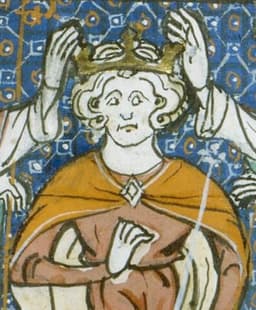
Baldwin IV of Jerusalem
Emperor · Medieval
53.5Total

Roderic
Emperor · Medieval
38.1Total
Basic Information
Born
1161
688
Died
1185
711
Era
Medieval
Medieval
Nationality
Jerusalem
Visigothic Kingdom
Occupation
Emperor
Emperor
Civilization
Western
Western
Score Comparison
Military (10%)
40.0
21.2
Political (20%)
43.7
32.1
Influence (20%)
57.2
47.9
Legacy (20%)
54.0
40.0
Leadership (15%)
65.7
44.5
Strategy (15%)
52.5
25.0
TOTAL
53.5
38.1
Baldwin IV of Jerusalem — Complete Timeline
1177 AD
Battle of MontgisardWar
Baldwin IV, despite suffering from leprosy, led a small force to victory against Saladin's larger army at Montgisard. Saladin was forced to retreat to Egypt, and the victory boosted Christian morale in the Kingdom of Jerusalem.
Crusader StatesBattleSaladin
Impact: regional
1183 AD
Siege of KerakWar◆ Major
Baldwin IV led a relief force to the Siege of Kerak, where Saladin was besieging the castle. Baldwin's arrival forced Saladin to lift the siege, demonstrating Baldwin's continued military leadership despite his illness.
Crusader StatesSiegeSaladin
Impact: regional
Appointment of Guy of Lusignan as RegentPolitical Action◆ Major
Due to his worsening leprosy, Baldwin appointed Guy of Lusignan as regent. This decision proved disastrous, as Guy's incompetence led to internal strife and ultimately the loss of Jerusalem.
Crusader StatesPoliticsRegency
Impact: regionaltragic
Coronation of Baldwin VPolitical Action◆ Major
Baldwin IV had his nephew, Baldwin V, crowned co-king to ensure a smooth succession and prevent Guy of Lusignan from inheriting the throne. This move aimed to stabilize the kingdom but failed after Baldwin IV's death.
Crusader StatesSuccession
Impact: regional
Roderic — Complete Timeline
710 AD
Civil War with Achila's FactionWar◆ Major
Roderic's claim to the throne was contested by Achila, son of Wittiza, who controlled the northeastern part of the kingdom. This civil war divided Visigothic forces and resources, contributing to the kingdom's inability to effectively resist the Muslim invasion in 711.
Visigothic KingdomCivil WarSuccession Crisis
Impact: regionaldestructive
Accession as Visigothic KingPolitical Action◆ Major
Roderic became king of the Visigoths after the death of King Wittiza. His accession was disputed by Wittiza's family, leading to a civil war. This internal division weakened the Visigothic Kingdom and made it vulnerable to external threats.
Visigothic KingdomSuccessionCivil War
Impact: regional
711 AD
Battle of GuadaleteWar
Roderic led the Visigothic army against an invading Muslim force under Tariq ibn Ziyad at the Battle of Guadalete. The Visigoths were decisively defeated, and Roderic was killed in the battle. This defeat marked the end of the Visigothic Kingdom and the beginning of Muslim rule in Hispania.
Visigothic KingdomBattleMuslim Conquest
Impact: regionaltragic
This comparison has not been analyzed yet.
One-time AI generation (~1 minute). Scores and timeline are already available below.
Rankings
🥇
Baldwin IV of JerusalemLeader
Mil: 40.0Pol: 43.7Inf: 57.2
53.5
🥈
Roderic
Mil: 21.2Pol: 32.1Inf: 47.9
38.1
+15.4 behind
How This Comparison Works
Algorithm
Each figure is scored on 6 dimensions (0—100 scale) based on structured historical data: Military (10%), Political (20%), Influence (20%), Legacy (20%), Leadership (15%), Strategy (15%). The weighted total produces the final ranking.
Data Sources
Scores are computed from structured sub-indicators in the database. Scale factors adjust for era (Ancient ×0.85, Modern ×1.0) and civilization size (Eastern ×1.05, Other ×0.80) to account for differences in population and military scale.
Maximum 3 Figures
Comparisons are limited to 2—3 figures to ensure readability and statistical meaningfulness.
Error Margins
±5 points per dimension — Sub-scores are derived from historical records with inherent uncertainty. Two figures within 5 points on a dimension should be considered roughly equivalent in that area.
Total Score Accuracy
±3 points overall — The weighted combination of 6 dimensions produces a total score with approximately ±3 points of uncertainty. Differences of less than 3 points are not statistically significant— the figures are effectively tied.
Known Limitations
- Historical records are incomplete and uneven across civilizations
- Figures from oral-tradition societies may be underrepresented
- Occupation labels can misclassify multi-role figures
- Scores measure capability and impact, not moral character
- Quantitative scoring is a comparison tool, not absolute truth
Capability Radar
Military (10%) — Battles & Warfare
Battles
55
20
Win Rate
60
5
Expansion
20
5
Political (20%) — Governance & Reform
Reform
30
10
Diplomacy
55
10
Economy
35
10
Influence (20%) — Cultural & Global Reach
Cultural
45
15
Global
40
10
Legacy (20%) — Historical Impact
Historical
60
25
Longevity
55
15
Leadership (15%) — Power & Stability
Tenure
45
15
Stability
40
5
Strategy (15%) — Tactics & Innovation
Strategy
60
15
Tactics
65
15
Reform
30
5
Similar Comparisons
Comments & Discussion
No comments yet. Be the first to share your thoughts!