Loading...
Barkiyaruq vs Napoleon Bonaparte
Napoleon Bonaparte leads by 24.0 pts · 2 figures compared
…
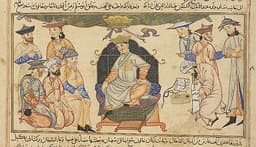
Barkiyaruq
Emperor · Medieval
46.9Total

Napoleon Bonaparte
General · Modern
70.9Total
Basic Information
Born
1080
1769
Died
1105
1821
Era
Medieval
Modern
Nationality
Seljuk Empire
France
Occupation
Emperor
General
Civilization
Middle Eastern
Western
Score Comparison
Military (10%)
50.0
94.0
Political (20%)
36.5
72.0
Influence (20%)
51.0
40.0
Legacy (20%)
41.7
80.0
Leadership (15%)
48.4
78.0
Strategy (15%)
60.0
90.0
TOTAL
46.9
70.9
Barkiyaruq — Complete Timeline
1092 AD
Accession as SultanPolitical Action◆ Major
Following the death of his father Malik Shah I, Barkiyaruq was proclaimed sultan in Isfahan at age twelve. His claim was immediately challenged by his half-brother Mahmud I and his uncle Tutush I, initiating a decade-long succession war.
SuccessionCivil WarIsfahan
Impact: national
1095 AD
Defeat of Tutush IWar◆ Major
Barkiyaruq's forces defeated the army of his uncle Tutush I, the Seljuk ruler of Syria, near Rayy. Tutush was killed in battle, eliminating a major rival and securing Barkiyaruq's control over the eastern Seljuk domains.
Civil WarTutush ISyria
Impact: regional
1099 AD
Conflict with Muhammad I TaparWar◆ Major
Barkiyaruq fought a series of campaigns against his half-brother Muhammad I Tapar, who rebelled with support from the Abbasid Caliph. The conflict lasted for years, draining Seljuk resources and preventing a unified response to the First Crusade.
Civil WarMuhammad I TaparCrusades
Impact: regionaldestructive
1104 AD
Treaty with Muhammad I TaparPolitical Action◆ Major
Barkiyaruq and Muhammad I Tapar agreed to a partition of the Seljuk Empire. Barkiyaruq retained the title of sultan and control over western Persia and Iraq, while Muhammad ruled the eastern provinces. The treaty temporarily ended the civil war.
TreatyPartitionCivil War
Impact: regional
1105 AD
Death of BarkiyaruqPolitical Action◆ Major
Barkiyaruq died of tuberculosis at age 25 in Isfahan. His death left Muhammad I Tapar as the sole sultan, but the Seljuk Empire remained weakened by years of internal conflict and the ongoing Crusader presence in the Levant.
DeathTuberculosisSeljuk Decline
Impact: regionaltragic
Napoleon Bonaparte — Complete Timeline
1799 AD
Coup of 18 BrumaireOther◆ Major
Napoleon Bonaparte, with support from his brother Lucien and key political figures, overthrew the Directory in a bloodless coup. He established the Consulate with himself as First Consul, effectively becoming the ruler of France. This event ended the French Revolution's most unstable period.
French RevolutionCoupRise to Power
Impact: regional
1804 AD
Promulgation of the Napoleonic CodeOther◆ Major
Napoleon enacted the Civil Code of the French, known as the Napoleonic Code, a comprehensive set of laws that replaced the fragmented feudal legal systems. The code established legal equality, protected property rights, and secularized law. It became the basis for legal systems in many European and world countries.
Legal ReformNapoleonic CodeCivil Law
Impact: globalconstructive
1805 AD
Battle of AusterlitzWar◆ Major
Napoleon's Grande Arm
Napoleonic WarsBattleDecisive Victory
Impact: global
1812 AD
Invasion of RussiaWar◆ Major
Napoleon led the Grande Arm
Napoleonic WarsInvasionDisaster
Impact: globaldestructive
1815 AD
Battle of WaterlooWar◆ Major
Napoleon's French army was defeated by the combined forces of the Duke of Wellington's Anglo-Allied army and Gebhard Leberecht von Bl
Napoleonic WarsBattleFinal Defeat
Impact: globaldestructive
Expert Analysis
barkiyaruq-vs-napoleon-bonaparte
# The Sultan Who Never Was: Napoleon and Barkiyaruq, Two Lives on History's Margins
In the summer of 1105, a twenty-five-year-old man lay dying in Isfahan, his lungs ravaged by tuberculosis. He had spent the last thirteen years of his life fighting his own family for a throne that would slip from his grasp within days of his final breath. Half a world away and seven centuries later, another young man—barely older, equally ambitious—stood on a bridge at Arcola, leading his troops through a hail of Austrian fire. One would be remembered as a footnote, the other as a force that reshaped the world. Yet both began with the same raw material: youth, intelligence, and a hunger for power that bordered on obsession.
Origins
Napoleon Bonaparte was born in 1769 on Corsica, an island that had just been sold to France by Genoa. His family belonged to the minor nobility, but they were poor, and young Napoleon grew up speaking Italian-accented French in a household that resented the French crown. This outsider status shaped him: he would spend his entire life trying to prove himself to a nation that never fully accepted him. His education at military academies in Brienne and Paris gave him the tools of war, but his real education came from reading—Plutarch, Rousseau, the campaigns of Alexander and Caesar. He learned that history belonged to those who seized it.
Barkiyaruq was born in 1080 into the ruling house of the Seljuk Empire, a Turkic dynasty that had swept out of Central Asia to dominate Persia, Mesopotamia, and Syria. His father, Malik Shah I, ruled an empire that stretched from the Mediterranean to the borders of China. But the Seljuk succession was not a matter of primogeniture; it was a blood sport. Barkiyaruq was twelve years old when his father died in 1092, and his uncles and half-brothers immediately began circling. He was proclaimed sultan in Isfahan, but the title meant nothing without an army to back it.
Rise to Power
Napoleon's rise was a masterpiece of timing and opportunism. The French Revolution had shattered the old order, creating a vacuum that a brilliant young officer could fill. In 1793, at age twenty-four, he drove the British out of Toulon and was promoted to brigadier general. By 1796, he was commanding the Army of Italy, where his lightning campaigns against the Austrians made him a national hero. Each victory fed the next: the Egyptian campaign of 1798, the coup of 18 Brumaire in 1799, and by 1804, the crown of Emperor of the French. He did not wait for history to call him; he announced himself.
Barkiyaruq's path was narrower. He had no revolution to ride, no collapsing order to exploit. The Seljuk system was stable in theory but brutal in practice: power passed to the strongest son, and the strongest son was the one who survived the longest. Barkiyaruq's first major test came in 1095, when his uncle Tutush I, the ruler of Syria, marched on him with a veteran army. At the Battle of Rayy, the teenage sultan defeated and killed his uncle—a stunning victory for a boy of fifteen. But it was a victory that solved nothing. His half-brother Muhammad I Tapar soon raised the standard of rebellion, and the civil war dragged on for years.
Leadership & Governance
Napoleon governed as he fought: with speed, clarity, and an iron will. The Napoleonic Code, implemented in 1804, standardized French law and became a model for legal systems across Europe. He reformed education, established the Bank of France, and built roads and canals that tied his empire together. His military genius was breathtaking—Austerlitz in 1805, Jena in 1806, Friedland in 1807—but his political wisdom was more fragile. He believed that power was a zero-sum game, that allies were tools to be used and discarded. This worked brilliantly in conquest but disastrously in governance.
Barkiyaruq had no such luxury. His reign was consumed by war against his own blood. In 1099, Muhammad I Tapar rebelled with support from the Abbasid Caliph, and the brothers fought a series of campaigns that bled the empire dry. Barkiyaruq was a capable commander—his defeat of Tutush proved that—but he lacked the resources to crush his rivals decisively. The Seljuk Empire was a patchwork of semi-independent lords, and every victory required new alliances, new concessions. By 1104, Barkiyaruq was exhausted. He agreed to a partition treaty with Muhammad, retaining the title of sultan but surrendering most of his territory.
Triumph & Tragedy
Napoleon's greatest moment was Austerlitz, where he destroyed the combined armies of Russia and Austria in a single day. His worst was the invasion of Russia in 1812, where he lost half a million men to winter, disease, and the scorched-earth tactics of the retreating enemy. The tragedy was not that he failed, but that he could not stop. Waterloo in 1815 was the final act, but the pattern was set long before: Napoleon could win battles, but he could not win peace.
Barkiyaruq's triumph was his survival. He held the Seljuk throne for thirteen years against relentless opposition, a feat that required extraordinary resilience. His tragedy was that survival was all he achieved. He died at twenty-five, his empire divided, his brothers still fighting, his name forgotten by all but specialists. The First Crusade had begun in 1096, and while Barkiyaruq was too preoccupied with civil war to stop it, the Crusaders carved out kingdoms in the Levant that would last for generations.
Character & Destiny
Napoleon was driven by an insatiable need for glory. "Glory is fleeting," he once said, "but obscurity is forever." He believed that a man's destiny was his own creation, that will and intelligence could overcome any obstacle. This made him unstoppable in his ascent and insufferable in his decline. He could not delegate, could not compromise, could not admit defeat. His personality was his engine and his anchor.
Barkiyaruq was more cautious, more pragmatic. He had to be. The Seljuk court was a nest of vipers, and a wrong move meant death. He learned to negotiate, to wait, to strike only when sure. But caution has its limits. He never built the alliances or the institutions that could have outlasted him. He ruled by force and fear, and when he died, the empire he had fought to preserve fell apart.
Legacy
Napoleon's legacy is written in the legal codes, national borders, and military doctrines of the modern world. He is remembered as a genius and a tyrant, a liberator and a conqueror. His name appears in every history of Europe, every study of leadership, every debate about power. He changed the world, for better and worse.
Barkiyaruq is a ghost. He appears in a few scholarly works on the Seljuk period, a brief entry in encyclopedias. His reign is described as a time of civil war and decline. He did not change the world; the world changed around him. The Crusaders took Jerusalem while he fought his brothers. The Seljuk Empire collapsed within decades of his death. He was a sultan who never truly ruled.
Conclusion
Napoleon and Barkiyaruq lived parallel lives in opposite directions. Both inherited chaos and chose to fight. Both rose young and died young. But Napoleon had the good fortune to fail on a grand stage, his defeats as spectacular as his victories. Barkiyaruq failed quietly, in a forgotten war, against forgotten enemies. History remembers the man who burns bright, even if he burns out. It forgets the man who simply burns. And perhaps that is the deepest lesson: glory is not just fleeting—it is selective, capricious, and cruel.
Rankings
🥇
Napoleon BonaparteLeader
Mil: 94.0Pol: 72.0Inf: 40.0
70.9
🥈
Barkiyaruq
Mil: 50.0Pol: 36.5Inf: 51.0
46.9
+24.0 behind
How This Comparison Works
Algorithm
Each figure is scored on 6 dimensions (0—100 scale) based on structured historical data: Military (10%), Political (20%), Influence (20%), Legacy (20%), Leadership (15%), Strategy (15%). The weighted total produces the final ranking.
Data Sources
Scores are computed from structured sub-indicators in the database. Scale factors adjust for era (Ancient ×0.85, Modern ×1.0) and civilization size (Eastern ×1.05, Other ×0.80) to account for differences in population and military scale.
Maximum 3 Figures
Comparisons are limited to 2—3 figures to ensure readability and statistical meaningfulness.
Error Margins
±5 points per dimension — Sub-scores are derived from historical records with inherent uncertainty. Two figures within 5 points on a dimension should be considered roughly equivalent in that area.
Total Score Accuracy
±3 points overall — The weighted combination of 6 dimensions produces a total score with approximately ±3 points of uncertainty. Differences of less than 3 points are not statistically significant— the figures are effectively tied.
Known Limitations
- Historical records are incomplete and uneven across civilizations
- Figures from oral-tradition societies may be underrepresented
- Occupation labels can misclassify multi-role figures
- Scores measure capability and impact, not moral character
- Quantitative scoring is a comparison tool, not absolute truth
Capability Radar
Military (10%) — Battles & Warfare
Battles
55
95
Win Rate
50
90
Expansion
35
95
Political (20%) — Governance & Reform
Reform
30
95
Diplomacy
35
80
Economy
30
85
Influence (20%) — Cultural & Global Reach
Cultural
25
85
Global
20
90
Legacy (20%) — Historical Impact
Historical
30
95
Longevity
20
90
Leadership (15%) — Power & Stability
Tenure
40
85
Stability
20
70
Strategy (15%) — Tactics & Innovation
Strategy
40
95
Tactics
45
98
Reform
30
92
Similar Comparisons
Comments & Discussion
SultanOfSpades6/17/2026
Napoleon was a game-changer; Barkiyaruq was a game-staller. Barkiyaruq wasted his prime fighting brothers for a crumbling Seljuk throne, while Napoleon at 26 was rewriting European maps. One died in obscurity, the other in exile—but Napoleon’s exile came after he’d conquered half a continent. Barkiyaruq never even held his empire together long enough to matter. History remembers winners, not squabblers.|zh|拿破仑在26岁就改写了欧洲版图,而巴尔基雅鲁克26岁还在跟兄弟抢一个摇摇欲坠的王位。一个死于流放,一个死于肺结核——但拿破仑的流放发生在征服半个大陆之后。巴尔基雅鲁克连自己的帝国都
TuberculosisTamer6/17/2026
Fact: Barkiyaruq died at 25 after 13 years of civil war. Napoleon was just starting his Italian campaign at 27. The young Turk had more battle experience but zero strategic legacy. Napoleon’s early brilliance at Arcola (1796) showed tactical genius; Barkiyaruq’s endless fratricidal conflicts show a dynasty decaying from within. Age isn’t the equalizer—outcomes are. Barkiyaruq’s reign was a footnote in Seljuk decline, while Napoleon’s early victories launched an era.|zh|事实:巴尔基雅鲁克25岁死于内战,而拿破仑27岁才开
CorsicanCutter6/17/2026
Napoleon’s outsider status drove him to conquer; Barkiyaruq’s insider status trapped him in a family feud. One used his marginalization as fuel, the other as a cage. Barkiyaruq had the Seljuk military machine—Napoleon had to build his from scraps of a revolutionary army. Yet one reshaped history, the other barely survives in textbooks. The difference isn’t talent; it’s whether you let your circumstances define you or you define them.|zh|拿破仑的边缘身份把他推向征服之路,巴尔基雅鲁克的帝王身份却把他困在家族内斗。一个把流放地变成跳板,另一个把王座变成牢笼
FootnoteFighter6/17/2026
Seven centuries of separation don’t make this a fair fight. Barkiyaruq’s world was one of internal collapse—the