Loading...
This comparison has not been analyzed yet.
One-time AI generation (~1 minute). Scores and timeline are already available below.
Barquq vs Pepin the Short
Barquq leads by 4.5 pts · 2 figures compared
…

Barquq
Emperor · Medieval
57.4Total
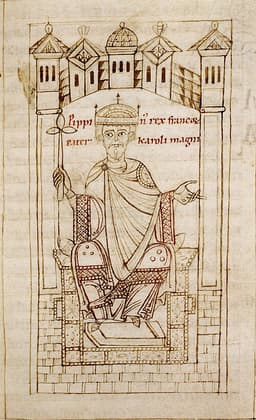
Pepin the Short
Emperor · Medieval
52.9Total
Basic Information
Born
1339
714
Died
1399
768
Era
Medieval
Medieval
Nationality
Egypt
Frankish Empire
Occupation
Emperor
Emperor
Civilization
Middle Eastern
Western
Score Comparison
Military (10%)
72.5
70.0
Political (20%)
68.0
53.8
Influence (20%)
58.0
55.0
Legacy (20%)
50.0
40.0
Leadership (15%)
53.2
53.2
Strategy (15%)
50.0
60.7
TOTAL
57.4
52.9
Barquq — Complete Timeline
1382 AD
Accession as Sultan (1382)Political Action◆ Major
Barquq, a Circassian Mamluk, seized the sultanate after deposing the young Sultan Hajji II. He was the first sultan of the Burji dynasty, named after the Circassian Mamluks stationed in the Cairo Citadel. This marked a shift from the Qalawunid dynasty.
SuccessionBurji DynastyMamluk Sultanate
Impact: regional
Consolidation of Power (1382-1389)Political Action◆ Major
Barquq purged rival Mamluk factions, particularly the Z
Power ConsolidationPurgeBurji Dynasty
Impact: regionaldestructive
1389 AD
Deposition and Exile (1389)Political Action◆ Major
Barquq was deposed by a coalition of Mamluk rebels led by Mintash and Yalbugha al-Nasiri. He was imprisoned in the Cairo Citadel and later exiled to al-Karak. This rebellion temporarily restored the Qalawunid puppet Sultan Hajji II.
DepositionExileMamluk Rebellion
Impact: regionaldestructive
1390 AD
Return to Power (1390)Political Action◆ Major
Barquq escaped from al-Karak and raised an army. He defeated the rebel forces and recaptured Cairo. He was restored to the sultanate and executed his rivals. This return solidified his control and ended the Qalawunid restoration.
Return to PowerCivil WarBurji Dynasty
Impact: regionalconstructive
1393 AD
Conflict with Timur (1393-1394)War◆ Major
Barquq faced the threat of Timur's invasion of Syria. He sent an army to defend Aleppo but avoided a direct confrontation. Barquq's diplomatic efforts and military preparations deterred Timur from invading Egypt, preserving Mamluk rule.
Timurid WarsDefenseDiplomacy
Impact: regionalconstructive
1399 AD
Death of Barquq (1399)Other◆ Major
Barquq died in Cairo, likely from natural causes. He was succeeded by his son An-Nasir Faraj. Barquq's reign founded the Burji dynasty, which ruled Egypt until the Ottoman conquest in 1517.
DeathSuccessionBurji Dynasty
Impact: regional
Pepin the Short — Complete Timeline
751 AD
Anointment as King of the FranksPolitical Action
Pepin deposed the last Merovingian king, Childeric III, with the support of Pope Zachary. He was anointed king by Boniface, establishing the Carolingian dynasty and legitimizing his rule through papal approval.
Carolingian DynastyPapacyAnointment
Impact: regionalconstructive
755 AD
Siege of PaviaWar
Pepin besieged the Lombard capital of Pavia, forcing King Aistulf to surrender and cede territories. This campaign secured Frankish dominance in Italy and fulfilled Pepin's alliance with the papacy.
Lombard WarItalySiege
Impact: regional
756 AD
Donation of PepinPolitical Action◆ Major
Pepin granted the Pope control over territories in central Italy, including Ravenna and the Pentapolis, after defeating the Lombards. This created the Papal States and established the temporal power of the papacy.
Papal StatesLombardsDonation
Impact: regionalconstructive
This comparison has not been analyzed yet.
One-time AI generation (~1 minute). Scores and timeline are already available below.
Rankings
🥇
BarquqLeader
Mil: 72.5Pol: 68.0Inf: 58.0
57.4
🥈
Pepin the Short
Mil: 70.0Pol: 53.8Inf: 55.0
52.9
+4.5 behind
How This Comparison Works
Algorithm
Each figure is scored on 6 dimensions (0—100 scale) based on structured historical data: Military (10%), Political (20%), Influence (20%), Legacy (20%), Leadership (15%), Strategy (15%). The weighted total produces the final ranking.
Data Sources
Scores are computed from structured sub-indicators in the database. Scale factors adjust for era (Ancient ×0.85, Modern ×1.0) and civilization size (Eastern ×1.05, Other ×0.80) to account for differences in population and military scale.
Maximum 3 Figures
Comparisons are limited to 2—3 figures to ensure readability and statistical meaningfulness.
Error Margins
±5 points per dimension — Sub-scores are derived from historical records with inherent uncertainty. Two figures within 5 points on a dimension should be considered roughly equivalent in that area.
Total Score Accuracy
±3 points overall — The weighted combination of 6 dimensions produces a total score with approximately ±3 points of uncertainty. Differences of less than 3 points are not statistically significant— the figures are effectively tied.
Known Limitations
- Historical records are incomplete and uneven across civilizations
- Figures from oral-tradition societies may be underrepresented
- Occupation labels can misclassify multi-role figures
- Scores measure capability and impact, not moral character
- Quantitative scoring is a comparison tool, not absolute truth
Capability Radar
Military (10%) — Battles & Warfare
Battles
60
55
Win Rate
65
65
Expansion
55
65
Political (20%) — Governance & Reform
Reform
65
70
Diplomacy
60
65
Economy
55
55
Influence (20%) — Cultural & Global Reach
Cultural
40
50
Global
40
60
Legacy (20%) — Historical Impact
Historical
55
75
Longevity
50
70
Leadership (15%) — Power & Stability
Tenure
70
60
Stability
50
60
Strategy (15%) — Tactics & Innovation
Strategy
60
60
Tactics
55
50
Reform
50
70
Similar Comparisons
Comments & Discussion
No comments yet. Be the first to share your thoughts!