Loading...
Basil II vs John I Tzimiskes
Basil II leads by 1.0 pts · 2 figures compared
…
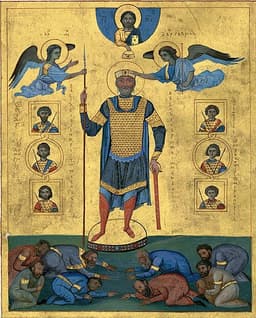
Basil II
Emperor · Medieval
63.8Total
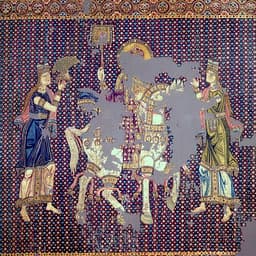
John I Tzimiskes
Emperor · Medieval
62.8Total
Basic Information
Born
958
925
Died
1025
976
Era
Medieval
Medieval
Nationality
Byzantine Empire
Byzantine Empire
Occupation
Emperor
Emperor
Civilization
Western
Western
Score Comparison
Military (10%)
85.0
85.0
Political (20%)
59.3
72.0
Influence (20%)
56.7
60.0
Legacy (20%)
55.0
52.0
Leadership (15%)
78.0
53.2
Strategy (15%)
68.0
75.0
TOTAL
63.8
62.8
Basil II — Complete Timeline
986 AD
Battle of the Gates of TrajanWar◆ Major
Basil II led an invasion of Bulgaria but was ambushed and defeated at the Gates of Trajan pass. The Byzantine army was routed, and Basil barely escaped. This defeat forced him to adopt a more cautious strategy and delayed the conquest of Bulgaria.
Byzantine-Bulgarian WarsDefeatAmbush
Impact: regionaltragic
1000 AD
Reforms of the Military and Land SystemReform◆ Major
Basil II implemented reforms to strengthen the Byzantine military and economy. He increased the size of the army, improved fortifications, and curbed the power of the landed aristocracy by enforcing laws against the accumulation of large estates. These measures stabilized the empire.
Military ReformLand ReformByzantine Empire
Impact: nationalconstructive
1014 AD
Battle of KleidionWar
Basil II decisively defeated the Bulgarian army at the Battle of Kleidion. After the victory, he blinded 15,000 Bulgarian prisoners, leaving one in every hundred with one eye to lead them home. This earned him the epithet 'Bulgar-Slayer' and broke Bulgarian resistance.
Byzantine-Bulgarian WarsMass BlindingBulgar-Slayer
Impact: regionaldestructive
1018 AD
Annexation of BulgariaWar◆ Major
Following the death of Bulgarian Tsar Samuel and the collapse of Bulgarian resistance, Basil II formally annexed the First Bulgarian Empire into the Byzantine Empire. He established the Theme of Bulgaria, integrating the territory and ending the long war.
AnnexationBulgariaByzantine Expansion
Impact: regionalconstructive
John I Tzimiskes — Complete Timeline
969 AD
Accession as Emperor (969)Political Action◆ Major
John I Tzimiskes became emperor after assassinating his uncle Nikephoros II Phokas. He was a skilled general and continued the military expansion of the Byzantine Empire.
AccessionCoup
Impact: regional
970 AD
Campaign against the Rus (970-971)War◆ Major
John I led a campaign against the Rus under Sviatoslav I, who had invaded Bulgaria. He defeated the Rus at the Battle of Dorostolon in 971, forcing Sviatoslav to withdraw. This secured Byzantine control over the Balkans.
Byzantine-Rus WarsMilitary Campaign
Impact: regionalconstructive
974 AD
Campaigns in Syria (974-975)War◆ Major
John I launched a major campaign into Syria, capturing Damascus, Beirut, and other cities. He advanced as far as Jerusalem, but did not capture it. These campaigns extended Byzantine influence in the Levant.
Byzantine-Arab WarsMilitary Campaign
Impact: regional
976 AD
Death from Poison (976)Other◆ Major
John I Tzimiskes died suddenly, possibly from poison. His death cut short his ambitious campaigns. He was succeeded by Basil II, who would later become known as the 'Bulgar-Slayer'.
DeathPoison
Impact: regionaltragic
Expert Analysis
Origins
Basil II was born in 958 to Emperor Romanos II and Empress Theophano. His father died when he was two, leaving him and his brother Constantine VIII as co-emperors under a regency. His formative years were marked by court intrigue and the influence of powerful figures like his mother and the general Nikephoros Phokas, who married Theophano and became emperor. Basil's education emphasized military and administrative skills, but he was overshadowed by his uncle until he seized control.
John I Tzimiskes was born around 925 into the Armenian Kourkouas family, a military clan. He served under his uncle Nikephoros II Phokas, distinguishing himself in campaigns against the Arabs. His early career was defined by military prowess and ambition. He was well-educated in Greek and Armenian traditions, and his marriage to Nikephoros's niece tied him to the imperial family.
Rise to Power
Basil II's rise was gradual. After the death of his father, he and his brother were nominal rulers. The regency was dominated by Nikephoros II (963-969) and then John I Tzimiskes (969-976). Basil watched from the sidelines as others wielded power. In 976, John I died suddenly, and Basil, now 18, asserted his authority. He faced rebellions from powerful aristocrats like Bardas Skleros and Bardas Phokas, which he suppressed by 989, securing his sole rule.
John I Tzimiskes rose through assassination. On December 10, 969, he and a group of conspirators murdered Nikephoros II in his bedchamber. John was then crowned emperor. His coup was justified as a restoration of justice, but it set a precedent for violent succession. Despite the bloody start, he quickly proved his military competence, stabilizing the empire after Nikephoros's death.
Leadership & Governance
Basil II was an autocrat who centralized power. He broke the influence of the landed aristocracy by curbing their tax exemptions and land accumulation. He favored the middle class and small farmers, strengthening the theme system. Militarily, he led campaigns personally, spending years on the Bulgarian frontier. His governance was frugal; he left a full treasury. He never married or had children, devoting himself entirely to the state. His leadership scored 78.0, reflecting his effective but harsh control.
John I Tzimiskes was more diplomatic and delegating. He maintained the policies of Nikephoros but with less severity. He reformed the army, integrating Armenian and Rus mercenaries. His political score of 72.0 indicates his ability to manage factions, but his short reign limited long-term reforms. He was known for his charm and intellect, contrasting with Basil's sternness.
Triumph & Tragedy
Basil II's greatest triumph was the conquest of Bulgaria. After decades of war, he defeated Tsar Samuel at the Battle of Kleidion in 1014, blinding 15,000 prisoners. By 1018, the First Bulgarian Empire was annexed, restoring Byzantine dominance in the Balkans. His tragedy was the failure to secure a successor. His brother Constantine VIII was incompetent, and Basil's harsh policies sowed resentment among the nobility, leading to decline after his death.
John I Tzimiskes's triumph was the defeat of the Rus in 971. At the Battle of Dorostolon, he forced Sviatoslav to abandon Bulgaria, securing the Danube frontier. His Syrian campaigns in 974-975 captured key cities like Damascus and Beirut, extending Byzantine influence. His tragedy was his sudden death in 976, possibly poisoned by the imperial chamberlain. His campaigns were cut short, and his gains in Syria were later lost. He died without a clear heir, leading to Basil II's accession.
Character & Destiny
Basil II was methodical, patient, and ruthless. He held grudges, as seen in his blinding of prisoners. His character was shaped by his early powerlessness; he became determined to control everything. This made him an effective emperor but a lonely one. His decision to remain unmarried avoided dynastic conflicts but created a succession crisis. He scored 68.0 in strategy, showing his long-term planning.
John I Tzimiskes was charismatic, ambitious, and impulsive. His assassination of his uncle shows his willingness to take extreme measures. He was a brilliant general (military score 85.0) but lacked patience for politics. His death at 51 prevented him from consolidating his gains. His destiny was cut short by his own ambition and the treachery he himself used.
Legacy
Basil II's legacy is the restoration of Byzantine power in the Balkans. His annexation of Bulgaria lasted until the Fourth Crusade. He is remembered as "Bulgar-Slayer" for his brutality. His military reforms influenced later emperors. His total score of 63.8 reflects his overall impact, though his political score of 59.3 indicates the flaws in his governance.
John I Tzimiskes is remembered as a capable general who expanded the empire eastward. His campaigns laid groundwork for later successes under Basil II. However, his short reign and violent rise limit his legacy. His influence score of 60.0 shows his contributions were significant but not enduring.
Conclusion
Basil II had a greater impact on Byzantine history. His 42-year reign transformed the empire's borders and internal structure. John I's achievements were impressive but fleeting. Basil's military score (85.0) equals John's, but his leadership (78.0 vs 53.2) and strategic persistence enabled lasting change. While John scored higher in politics (72.0 vs 59.3), his death prevented long-term stability. Basil II's total score of 63.8 edges out John's 62.8, and his legacy of a strengthened empire justifies his higher rank.
Rankings
🥇
Basil IILeader
Mil: 85.0Pol: 59.3Inf: 56.7
63.8
🥈
John I Tzimiskes
Mil: 85.0Pol: 72.0Inf: 60.0
62.8
+1.0 behind
How This Comparison Works
Algorithm
Each figure is scored on 6 dimensions (0—100 scale) based on structured historical data: Military (10%), Political (20%), Influence (20%), Legacy (20%), Leadership (15%), Strategy (15%). The weighted total produces the final ranking.
Data Sources
Scores are computed from structured sub-indicators in the database. Scale factors adjust for era (Ancient ×0.85, Modern ×1.0) and civilization size (Eastern ×1.05, Other ×0.80) to account for differences in population and military scale.
Maximum 3 Figures
Comparisons are limited to 2—3 figures to ensure readability and statistical meaningfulness.
Error Margins
±5 points per dimension — Sub-scores are derived from historical records with inherent uncertainty. Two figures within 5 points on a dimension should be considered roughly equivalent in that area.
Total Score Accuracy
±3 points overall — The weighted combination of 6 dimensions produces a total score with approximately ±3 points of uncertainty. Differences of less than 3 points are not statistically significant— the figures are effectively tied.
Known Limitations
- Historical records are incomplete and uneven across civilizations
- Figures from oral-tradition societies may be underrepresented
- Occupation labels can misclassify multi-role figures
- Scores measure capability and impact, not moral character
- Quantitative scoring is a comparison tool, not absolute truth
Capability Radar
Military (10%) — Battles & Warfare
Battles
85
85
Win Rate
90
90
Expansion
80
80
Political (20%) — Governance & Reform
Reform
80
65
Diplomacy
70
70
Economy
75
65
Influence (20%) — Cultural & Global Reach
Cultural
60
55
Global
65
45
Legacy (20%) — Historical Impact
Historical
75
60
Longevity
70
50
Leadership (15%) — Power & Stability
Tenure
85
60
Stability
80
60
Strategy (15%) — Tactics & Innovation
Strategy
85
85
Tactics
80
88
Reform
75
70
Similar Comparisons
Comments & Discussion
No comments yet. Be the first to share your thoughts!