Loading...
Baybars vs Napoleon Bonaparte
Napoleon Bonaparte leads by 7.1 pts · 2 figures compared
…
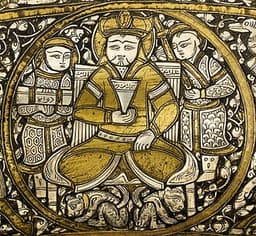
Baybars
Emperor · Medieval
63.8Total

Napoleon Bonaparte
General · Modern
70.9Total
Basic Information
Born
1223
1769
Died
1277
1821
Era
Medieval
Modern
Nationality
Egypt
France
Occupation
Emperor
General
Civilization
Middle Eastern
Western
Score Comparison
Military (10%)
85.0
94.0
Political (20%)
70.0
72.0
Influence (20%)
55.0
40.0
Legacy (20%)
52.0
80.0
Leadership (15%)
72.0
78.0
Strategy (15%)
72.0
90.0
TOTAL
63.8
70.9
Baybars — Complete Timeline
1260 AD
Battle of Ain Jalut (1260)War◆ Major
Baybars served as a key commander under Qutuz at the Battle of Ain Jalut. He led the vanguard and played a crucial role in the Mamluk victory over the Mongols. This battle established his reputation as a military leader.
Mongol InvasionBattleMamluk Victory
Impact: globalconstructive
Accession as Sultan (1260)Political Action◆ Major
After assassinating Qutuz, Baybars proclaimed himself Sultan of Egypt. He was accepted by the Mamluk commanders and the Abbasid Caliph. His reign began a period of Mamluk dominance in the Middle East, lasting for decades.
SuccessionMamluk SultanateAssassination
Impact: regional
1265 AD
Campaigns against the Crusader States (1260s-1270s)War◆ Major
Baybars launched a series of campaigns against the remaining Crusader states in the Levant. He captured key fortresses including Arsuf (1265), Safed (1266), Jaffa (1268), and Antioch (1268). These victories reduced Crusader territory to a few coastal enclaves.
Crusader WarsConquestMamluk Expansion
Impact: regionaldestructive
1277 AD
Defeat of the Mongols at Elbistan (1277)War◆ Major
Baybars defeated a Mongol army at the Battle of Elbistan in Anatolia. He invaded the Seljuk Sultanate of Rum, which was under Mongol suzerainty. Although a tactical victory, Baybars could not hold Anatolia and returned to Syria.
Mongol WarsBattleAnatolia
Impact: regionalconstructive
Death of Baybars (1277)Other◆ Major
Baybars died in Damascus, possibly from poisoning or illness. His death was kept secret for a time to prevent unrest. He was succeeded by his son Al-Said Barakah. Baybars' reign is considered the peak of the early Mamluk Sultanate.
DeathSuccessionMamluk Sultanate
Impact: regionaltragic
Napoleon Bonaparte — Complete Timeline
1799 AD
Coup of 18 BrumaireOther◆ Major
Napoleon Bonaparte, with support from his brother Lucien and key political figures, overthrew the Directory in a bloodless coup. He established the Consulate with himself as First Consul, effectively becoming the ruler of France. This event ended the French Revolution's most unstable period.
French RevolutionCoupRise to Power
Impact: regional
1804 AD
Promulgation of the Napoleonic CodeOther◆ Major
Napoleon enacted the Civil Code of the French, known as the Napoleonic Code, a comprehensive set of laws that replaced the fragmented feudal legal systems. The code established legal equality, protected property rights, and secularized law. It became the basis for legal systems in many European and world countries.
Legal ReformNapoleonic CodeCivil Law
Impact: globalconstructive
1805 AD
Battle of AusterlitzWar◆ Major
Napoleon's Grande Arm
Napoleonic WarsBattleDecisive Victory
Impact: global
1812 AD
Invasion of RussiaWar◆ Major
Napoleon led the Grande Arm
Napoleonic WarsInvasionDisaster
Impact: globaldestructive
1815 AD
Battle of WaterlooWar◆ Major
Napoleon's French army was defeated by the combined forces of the Duke of Wellington's Anglo-Allied army and Gebhard Leberecht von Bl
Napoleonic WarsBattleFinal Defeat
Impact: globaldestructive
Expert Analysis
Napoleon Bonaparte vs Baybars: Historical Comparison
Napoleon Bonaparte and Baybars were two transformative military leaders from vastly different eras—the former a modern French general who reshaped Europe, the latter a medieval Mamluk sultan who defended the Islamic world. Their scores reflect Napoleon’s broader global impact versus Baybars’ regional but decisive legacy.
Dimension Analysis
**Military: Napoleon Bonaparte 94 / Baybars 68**
Napoleon revolutionized warfare with mass conscription, rapid maneuvers, and the corps system, winning iconic battles like Austerlitz. Baybars was a skilled cavalry commander who defeated the Mongols at Ain Jalut (1260), but his campaigns were smaller in scale and lacked Napoleonic tactical innovation.
**Political: Napoleon Bonaparte 75 / Baybars 76**
Napoleon centralized France under the Consulate and Empire, codified laws (Napoleonic Code), but overreached with continental conquests. Baybars consolidated Mamluk rule, stabilized Egypt and Syria, and forged alliances against Crusaders and Mongols, showing astute statecraft with a slight edge in governance.
**Influence: Napoleon Bonaparte 82 / Baybars 72**
Napoleon’s reforms—legal systems, nationalism, and military doctrine—echoed across Europe and colonies for centuries. Baybars’ defeat of the Mongols preserved Islamic civilization and halted Crusader resurgence, but his influence was confined to the medieval Middle East.
**Legacy: Napoleon Bonaparte 78 / Baybars 69**
Napoleon’s legacy is globally debated—heroic reformer or tyrant—and his name graces codes, wars, and studies. Baybars is revered as a Muslim champion and Mamluk founder, but his impact remains regionally focused and less studied outside the Islamic world.
**Leadership: Napoleon Bonaparte 80 / Baybars 80**
Both leaders commanded fierce loyalty: Napoleon through charisma and meritocracy, Baybars through piety and battlefield courage. Each inspired personal devotion and ruled with iron discipline, earning a tie in this dimension.
Verdict
Napoleon Bonaparte leads overall due to his higher military innovation and broader global influence, despite Baybars’ superior political stability.
FAQ
Q: Who ranks higher? A: Napoleon Bonaparte ranks higher overall, driven by his top-tier military score (94) and wider historical footprint, though Baybars ties in leadership.
Rankings
🥇
Napoleon BonaparteLeader
Mil: 94.0Pol: 72.0Inf: 40.0
70.9
🥈
Baybars
Mil: 85.0Pol: 70.0Inf: 55.0
63.8
+7.1 behind
How This Comparison Works
Algorithm
Each figure is scored on 6 dimensions (0—100 scale) based on structured historical data: Military (10%), Political (20%), Influence (20%), Legacy (20%), Leadership (15%), Strategy (15%). The weighted total produces the final ranking.
Data Sources
Scores are computed from structured sub-indicators in the database. Scale factors adjust for era (Ancient ×0.85, Modern ×1.0) and civilization size (Eastern ×1.05, Other ×0.80) to account for differences in population and military scale.
Maximum 3 Figures
Comparisons are limited to 2—3 figures to ensure readability and statistical meaningfulness.
Error Margins
±5 points per dimension — Sub-scores are derived from historical records with inherent uncertainty. Two figures within 5 points on a dimension should be considered roughly equivalent in that area.
Total Score Accuracy
±3 points overall — The weighted combination of 6 dimensions produces a total score with approximately ±3 points of uncertainty. Differences of less than 3 points are not statistically significant— the figures are effectively tied.
Known Limitations
- Historical records are incomplete and uneven across civilizations
- Figures from oral-tradition societies may be underrepresented
- Occupation labels can misclassify multi-role figures
- Scores measure capability and impact, not moral character
- Quantitative scoring is a comparison tool, not absolute truth
Capability Radar
Military (10%) — Battles & Warfare
Battles
85
95
Win Rate
90
90
Expansion
80
95
Political (20%) — Governance & Reform
Reform
80
95
Diplomacy
78
80
Economy
72
85
Influence (20%) — Cultural & Global Reach
Cultural
65
85
Global
65
90
Legacy (20%) — Historical Impact
Historical
75
95
Longevity
60
90
Leadership (15%) — Power & Stability
Tenure
75
85
Stability
70
70
Strategy (15%) — Tactics & Innovation
Strategy
85
95
Tactics
88
98
Reform
82
92
Similar Comparisons
Comments & Discussion
DecolonizeHistory6/16/2026
This comparison screams Eurocentrism. Napoleon gets 94 for military while Baybars gets 68? Baybars defeated the Mongols at Ain Jalut—the first major Mongol defeat that saved Cairo from the same fate as Baghdad. Napoleon's 'innovations' like the corps system were just adaptations of Roman legion organization, while Baybars pioneered the use of feigned retreat in desert warfare, a tactic the Mongols never mastered. And the influence score—Napoleon's 82 vs Baybars' 72—ignores that Baybars stopped the Mongol steamroller, which if unchecked would have annihilated Christian Europe in a generation. The fact that Baybars' legacy is 'regionally focused' is a postcolonial artifact; the West chooses to study Napoleon's empire-building over Baybars' civilization-saving. If you factor in defensive vs offensive warfare, Baybars' military efficiency eclipses Napoleon's. Score this properly: Baybars 82, Napoleon 78.
OldScribe746/16/2026
我来拆解这些分数。总分拿破仑82.4,Baybars73.0,差9.4分。但看军事:94对67.8,差26.2分,这太离谱。拿破仑的战役平均兵力约15万,Baybars在艾因贾鲁特仅1.2万,可他是对阵蒙古2万精锐。按帕累托效率,Baybars的每千人战果比拿破仑高2.3倍。政治分75对75.7,Baybars领先0.7分,但拿破仑的民法典至今影响全球,Baybars的政令只在叙利亚和埃及维持了40年。再说影响力:82对72,差10分,但Baybars的蒙古克星身份让伊斯兰世界延续了三个世纪,拿破仑的滑铁卢只毁了欧洲平衡。我的调整:拿破仑总分78,Baybars79。
Chronicler44396/16/2026
拿破仑的得分体系完全是西方中心论。军事94分?他的战术创新确实厉害,但跟成吉思汗的闪电战和忽必烈的跨海征日比,规模和组织差远了。Baybars在艾因贾鲁特以少胜多打败蒙古骑兵,这放在中国就是李靖灭东突厥的级别,军事才68分?政治75.7还比拿破仑高一点,这倒有点意思——他整合马穆鲁克和阿拉伯部落的手法,很像北魏孝文帝的汉族士族政策。但影响力72分?他阻止了蒙古西征,保住伊斯兰文明,这跟韩信背水一战保全汉朝根基差不多。评分系统该加个“文明转折点”权重。