Loading...
Bayezid I vs Lothair I
Bayezid I leads by 11.4 pts · 2 figures compared
…
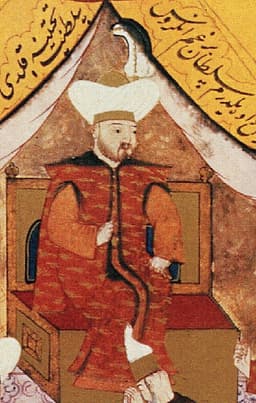
Bayezid I
Emperor · Medieval
59.6Total
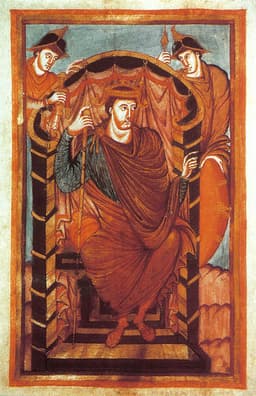
Lothair I
Emperor · Medieval
48.2Total
Basic Information
Born
1360
795
Died
1403
855
Era
Medieval
Medieval
Nationality
Ottoman Empire
Frankish Empire
Occupation
Emperor
Emperor
Civilization
Middle Eastern
Western
Score Comparison
Military (10%)
72.0
55.0
Political (20%)
45.0
37.9
Influence (20%)
56.7
50.2
Legacy (20%)
58.0
42.5
Leadership (15%)
68.0
62.2
Strategy (15%)
68.1
45.0
TOTAL
59.6
48.2
Bayezid I — Complete Timeline
1389 AD
Battle of KosovoWar◆ Major
Bayezid I led the Ottoman army to victory at the Battle of Kosovo against a coalition of Serbian and Balkan forces. Both Sultan Murad I and Serbian Prince Lazar were killed, but the battle solidified Ottoman control over the Balkans.
BattleKosovoBalkans
Impact: regional
1393 AD
Annexation of Bulgarian and Serbian TerritoriesWar◆ Major
Bayezid I conquered the Bulgarian Empire and much of Serbia, incorporating these territories into the Ottoman realm. These conquests expanded Ottoman control over the Balkans and eliminated major Christian states in the region.
ConquestBulgariaSerbia
Impact: regional
1394 AD
Siege of Constantinople (1394-1402)War◆ Major
Bayezid I besieged Constantinople, the Byzantine capital, for eight years. The siege was ultimately lifted due to the Mongol invasion of Anatolia, but it severely weakened the Byzantine Empire and demonstrated Ottoman ambition to capture the city.
SiegeConstantinopleByzantine
Impact: regional
1396 AD
Battle of NicopolisWar◆ Major
Bayezid I defeated a large Crusader army from Hungary, France, and other European states at Nicopolis on the Danube. The victory crushed the last major Crusade against the Ottomans and confirmed Ottoman dominance in the Balkans.
BattleCrusadeNicopolis
Impact: regional
1402 AD
Battle of AnkaraWar
Bayezid I was defeated and captured by Timur at the Battle of Ankara. The defeat led to the collapse of Ottoman unity and a period of civil war (the Ottoman Interregnum), ending Bayezid's reign and temporarily halting Ottoman expansion.
BattleTimurDefeat
Impact: globaltragic
Lothair I — Complete Timeline
823 AD
Imperial Coronation by Pope Paschal IPolitical Action◆ Major
Lothair I was crowned co-emperor by Pope Paschal I in Rome, receiving the imperial title from his father Louis the Pious. This coronation affirmed Lothair's status as the senior heir and future ruler of the Carolingian Empire, though it later led to conflict with his brothers.
CarolingianCoronationEmpire
Impact: regionalconstructive
830 AD
Rebellion Against Louis the PiousPolitical Action◆ Major
Lothair I led a rebellion of nobles against his father, Emperor Louis the Pious, resulting in Louis's temporary deposition. Lothair seized power but was later forced to restore his father after the intervention of his brothers. This event deepened family divisions.
CarolingianRebellionLouis the Pious
Impact: regionaldestructive
841 AD
Battle of FontenoyWar◆ Major
Lothair I's forces were defeated by the combined armies of his brothers Louis the German and Charles the Bald at Fontenoy-en-Puisaye. The battle was a bloody civil war that weakened the Carolingian dynasty and led directly to the negotiations for the Treaty of Verdun.
CarolingianBattleCivil War
Impact: regionaldestructive
843 AD
Treaty of VerdunPolitical Action
Lothair I, along with his brothers Louis the German and Charles the Bald, signed the Treaty of Verdun, dividing the Carolingian Empire into three kingdoms. Lothair received Middle Francia, including the imperial title and the cities of Aachen and Rome.
CarolingianTreatyDivision
Impact: global
855 AD
Abdication and Retirement to Prüm AbbeyPolitical Action◆ Major
Lothair I abdicated the throne and divided Middle Francia among his three sons: Louis II (Italy and imperial title), Lothair II (Lotharingia), and Charles (Provence). He then retired to Pr
CarolingianAbdicationDivision
Impact: regional
Expert Analysis
Origins
Bayezid I was born around 1360 to Sultan Murad I and Gülçiçek Hatun. He received a thorough education in Islamic law, military tactics, and statecraft. As a prince, he served as a governor in the Anatolian province of Kütahya, gaining administrative experience. His early exposure to Ottoman expansion shaped his ambition.
Lothair I was born in 795 to Emperor Louis the Pious and Ermengarde of Hesbaye. He was the eldest son of a Carolingian emperor, groomed for imperial rule from childhood. He was crowned king of Italy in 818 and co-emperor in 817, receiving a classical education under scholars like Alcuin. His upbringing was steeped in the legacy of Charlemagne.
Rise to Power
Bayezid I ascended the Ottoman throne in 1389 after his father Murad I was assassinated at the Battle of Kosovo. Despite the chaos, Bayezid quickly consolidated power, executing his brother Yakub to prevent civil war. He then turned to expanding Ottoman territory, launching campaigns into Bulgaria, Serbia, and Anatolia. By 1396, he had crushed a European crusade at Nicopolis, cementing his reputation as a fearsome commander.
Lothair I became co-emperor in 817, but his rise was marked by conflict. In 830, he led a rebellion against his father Louis the Pious, forcing Louis to abdicate temporarily. However, Louis regained power and exiled Lothair to Italy. After Louis's death in 840, Lothair claimed the imperial title, but his brothers Louis the German and Charles the Bald united against him. The decisive Battle of Fontenoy in 841 ended in Lothair's defeat, forcing him to negotiate the Treaty of Verdun in 843, which divided the empire into three kingdoms.
Leadership & Governance
Bayezid I centralized Ottoman administration, reducing the power of tribal beys and appointing loyal viziers. He implemented the devshirme system, recruiting Christian boys for military and bureaucratic roles, which created a loyal elite. His military reforms emphasized a standing army of janissaries and rapid cavalry. He also patronized Islamic scholarship and architecture, building mosques and madrasas.
Lothair I governed Middle Francia, a strip of land from the North Sea to Italy. He maintained the Carolingian administrative system, relying on counts and bishops. However, his authority was constantly challenged by rebellious nobles and his brothers. He issued capitularies to regulate justice and coinage, but his fragmented realm lacked cohesion. His governance score of 37.9 reflects his struggle to impose order.
Triumph & Tragedy
Bayezid I's greatest triumph was the victory at Nicopolis in 1396, where he defeated a coalition of European knights, securing Ottoman dominance in the Balkans. He also annexed Bulgaria and Serbia, expanding Ottoman territory to the Danube. However, his tragic failure was the Battle of Ankara in 1402. Overconfident and exhausted from long campaigns, his army was routed by Timur's forces. Bayezid was captured and died in captivity, leading to the Ottoman Interregnum, a decade of civil war that nearly destroyed the empire.
Lothair I's triumph was his imperial coronation in 823, which affirmed his status as co-emperor. He also negotiated the Treaty of Verdun, which, despite being a compromise, preserved Carolingian unity on paper. His tragedy was the Battle of Fontenoy in 841, where he suffered a decisive defeat. This battle shattered his hopes of reuniting the empire. He spent his final years in retreat, abdicating in 855 and becoming a monk at Prüm Abbey.
Character & Destiny
Bayezid I was known for his swift, aggressive temperament, earning the nickname "Yıldırım" (Thunderbolt). He made rapid decisions on the battlefield but was prone to overreach. His refusal to pay tribute to Timur and his harsh treatment of Anatolian vassals provoked the Mongol invasion. His pride and impatience led to his downfall. Historians note that his military score of 72.0 reflects tactical brilliance but strategic inflexibility.
Lothair I was more diplomatic but indecisive. He repeatedly sought compromise with his brothers, but his ambitions exceeded his capabilities. His rebellion against his father showed a willingness to seize power, yet he failed to secure lasting authority. His political score of 37.9 underscores his inability to maintain control. He is remembered as a ruler caught between the grandeur of Charlemagne and the fragmentation of Europe.
Legacy
Bayezid I's legacy is mixed. His conquests laid the foundation for the Ottoman Empire's expansion into Europe, but his defeat at Ankara caused a temporary collapse. He scored 58.0 in legacy. The Ottoman Interregnum led to reforms under his son Mehmed I, who rebuilt the state. Bayezid's military innovations, especially the use of janissaries and gunpowder, influenced later Ottoman campaigns.
Lothair I's legacy is defined by the Treaty of Verdun, which created the borders of modern France, Germany, and Italy. His kingdom of Middle Francia disappeared within generations, but the imperial title passed to his son Louis II. He scored 42.5 in legacy. The division of the Carolingian Empire set the stage for medieval European state formation, though Lothair himself is often overshadowed by his brothers.
Conclusion
Bayezid I had greater impact than Lothair I. His military campaigns (score 72.0) reshaped the Balkans and Anatolia, while his defeat triggered a crisis that ultimately strengthened the Ottoman state. Lothair I's political score of 37.9 reflects his failure to preserve unity. Though the Treaty of Verdun was historically significant, it was a product of weakness, not strength. Bayezid's actions directly influenced the rise of one of history's longest-lasting empires, whereas Lothair's legacy is one of fragmentation. Thus, Bayezid I emerges as the more consequential figure.
Rankings
🥇
Bayezid ILeader
Mil: 72.0Pol: 45.0Inf: 56.7
59.6
🥈
Lothair I
Mil: 55.0Pol: 37.9Inf: 50.2
48.2
+11.4 behind
How This Comparison Works
Algorithm
Each figure is scored on 6 dimensions (0—100 scale) based on structured historical data: Military (10%), Political (20%), Influence (20%), Legacy (20%), Leadership (15%), Strategy (15%). The weighted total produces the final ranking.
Data Sources
Scores are computed from structured sub-indicators in the database. Scale factors adjust for era (Ancient ×0.85, Modern ×1.0) and civilization size (Eastern ×1.05, Other ×0.80) to account for differences in population and military scale.
Maximum 3 Figures
Comparisons are limited to 2—3 figures to ensure readability and statistical meaningfulness.
Error Margins
±5 points per dimension — Sub-scores are derived from historical records with inherent uncertainty. Two figures within 5 points on a dimension should be considered roughly equivalent in that area.
Total Score Accuracy
±3 points overall — The weighted combination of 6 dimensions produces a total score with approximately ±3 points of uncertainty. Differences of less than 3 points are not statistically significant— the figures are effectively tied.
Known Limitations
- Historical records are incomplete and uneven across civilizations
- Figures from oral-tradition societies may be underrepresented
- Occupation labels can misclassify multi-role figures
- Scores measure capability and impact, not moral character
- Quantitative scoring is a comparison tool, not absolute truth
Capability Radar
Military (10%) — Battles & Warfare
Battles
85
35
Win Rate
80
30
Expansion
85
25
Political (20%) — Governance & Reform
Reform
65
30
Diplomacy
60
40
Economy
70
30
Influence (20%) — Cultural & Global Reach
Cultural
60
25
Global
65
15
Legacy (20%) — Historical Impact
Historical
70
35
Longevity
55
20
Leadership (15%) — Power & Stability
Tenure
70
55
Stability
55
25
Strategy (15%) — Tactics & Innovation
Strategy
80
35
Tactics
75
30
Reform
70
20
Similar Comparisons
Comments & Discussion
No comments yet. Be the first to share your thoughts!