Loading...
Lothair I vs Muhammad bin Tughluq
Muhammad bin Tughluq leads by 0.2 pts · 2 figures compared
…
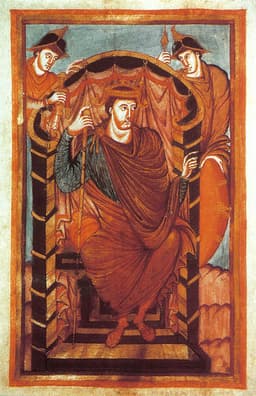
Lothair I
Emperor · Medieval
48.2Total
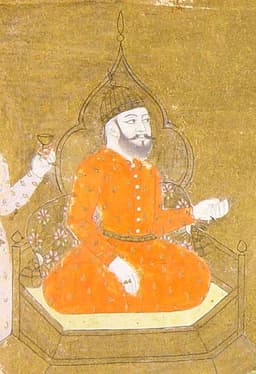
Muhammad bin Tughluq
Emperor · Medieval
48.4Total
Basic Information
Born
795
1290
Died
855
1351
Era
Medieval
Medieval
Nationality
Frankish Empire
India
Occupation
Emperor
Emperor
Civilization
Western
Indian
Score Comparison
Military (10%)
55.0
20.0
Political (20%)
37.9
40.8
Influence (20%)
50.2
57.2
Legacy (20%)
42.5
47.5
Leadership (15%)
62.2
65.0
Strategy (15%)
45.0
43.3
TOTAL
48.2
48.4
Lothair I — Complete Timeline
823 AD
Imperial Coronation by Pope Paschal IPolitical Action◆ Major
Lothair I was crowned co-emperor by Pope Paschal I in Rome, receiving the imperial title from his father Louis the Pious. This coronation affirmed Lothair's status as the senior heir and future ruler of the Carolingian Empire, though it later led to conflict with his brothers.
CarolingianCoronationEmpire
Impact: regionalconstructive
830 AD
Rebellion Against Louis the PiousPolitical Action◆ Major
Lothair I led a rebellion of nobles against his father, Emperor Louis the Pious, resulting in Louis's temporary deposition. Lothair seized power but was later forced to restore his father after the intervention of his brothers. This event deepened family divisions.
CarolingianRebellionLouis the Pious
Impact: regionaldestructive
841 AD
Battle of FontenoyWar◆ Major
Lothair I's forces were defeated by the combined armies of his brothers Louis the German and Charles the Bald at Fontenoy-en-Puisaye. The battle was a bloody civil war that weakened the Carolingian dynasty and led directly to the negotiations for the Treaty of Verdun.
CarolingianBattleCivil War
Impact: regionaldestructive
843 AD
Treaty of VerdunPolitical Action
Lothair I, along with his brothers Louis the German and Charles the Bald, signed the Treaty of Verdun, dividing the Carolingian Empire into three kingdoms. Lothair received Middle Francia, including the imperial title and the cities of Aachen and Rome.
CarolingianTreatyDivision
Impact: global
855 AD
Abdication and Retirement to Prüm AbbeyPolitical Action◆ Major
Lothair I abdicated the throne and divided Middle Francia among his three sons: Louis II (Italy and imperial title), Lothair II (Lotharingia), and Charles (Provence). He then retired to Pr
CarolingianAbdicationDivision
Impact: regional
Muhammad bin Tughluq — Complete Timeline
1325 AD
Accession to the Delhi SultanatePolitical Action
Muhammad bin Tughluq succeeded his father Ghiyas-ud-din Tughluq as sultan of Delhi. He inherited a vast empire but soon embarked on ambitious and often controversial policies that would define his reign.
Delhi SultanateTughluqSuccession
Impact: regional
1327 AD
Transfer of Capital to DaulatabadPolitical Action◆ Major
Muhammad bin Tughluq ordered the transfer of the capital from Delhi to Daulatabad in the Deccan, forcing the entire population and administration to move. The plan failed due to water scarcity and logistical issues, and the capital was later moved back to Delhi.
Capital TransferDaulatabadFailed Reform
Impact: regionaldestructive
1329 AD
Introduction of Token CurrencyReform◆ Major
Muhammad bin Tughluq introduced a token currency made of copper and brass, intended to replace silver coins. The government failed to prevent counterfeiting, leading to economic chaos and the eventual withdrawal of the currency at great loss.
Token CurrencyEconomic ReformFailure
Impact: regionaldestructive
1330 AD
Campaign in the Deccan and South IndiaWar◆ Major
Muhammad bin Tughluq led military campaigns into the Deccan and southern India, attempting to consolidate control over the region. He faced rebellions from local rulers, including the Hoysala and Kakatiya, and the campaigns drained the treasury.
DeccanSouthern IndiaRebellion
Impact: regional
1335 AD
Revolt of the Nobility and Provincial GovernorsPolitical Action◆ Major
Muhammad bin Tughluq faced multiple revolts from nobles and provincial governors, including in Bengal, Gujarat, and the Deccan. These rebellions weakened the central authority and led to the fragmentation of the Delhi Sultanate, with the rise of independent states like the Bahmani Sultanate.
RevoltNobilityFragmentation
Impact: regionaldestructive
1340 AD
Famine in Northern IndiaOther◆ Major
A severe famine struck northern India during Muhammad bin Tughluq's reign, exacerbated by his failed economic policies and military campaigns. The famine caused widespread suffering and depopulation, further destabilizing the empire.
FamineEconomic CrisisDepopulation
Impact: regionaltragic
Expert Analysis
Origins
Lothair I (795-855) was the eldest son of Emperor Louis the Pious and grandson of Charlemagne. Born into the Carolingian dynasty, he was groomed for imperial rule from childhood, receiving education in courtly and military affairs. His upbringing was steeped in the legacy of his grandfather's vast empire, which stretched across Western and Central Europe. In contrast, Muhammad bin Tughluq (c. 1290-1351) was born into the Tughluq dynasty of the Delhi Sultanate. His father, Ghiyas-ud-din Tughluq, was a Turkic noble who rose to power. Muhammad received a broad education, including Islamic theology, philosophy, and military tactics, preparing him for governance. Both emerged from powerful families but faced different geopolitical contexts: Lothair inherited a fragmented empire, while Muhammad ruled a consolidated but rebellious sultanate.
Rise to Power
Lothair I was crowned co-emperor by Pope Paschal I in 823, a move that affirmed his status as heir to the Carolingian Empire. However, his father Louis the Pious attempted to revise the succession in favor of Lothair's half-brother Charles the Bald, sparking conflict. In 833, Lothair led a rebellion that temporarily deposed Louis, but his inability to consolidate support led to his own downfall. The Treaty of Verdun in 843 formally divided the empire among Lothair and his brothers, granting him Middle Francia. Muhammad bin Tughluq's rise was more straightforward: he succeeded his father in 1325 after Ghiyas-ud-din's death in a pavilion collapse. Some sources suggest Muhammad engineered the accident, but this remains debated. His accession was uncontested, and he inherited a stable empire, controlling much of the Indian subcontinent.
Leadership & Governance
Lothair's leadership was marked by constant struggle to maintain authority. He scored 62.2 in leadership, reflecting his efforts to assert imperial prerogative, but his political score of 37.9 reveals his failure to secure lasting alliances. He governed Middle Francia with a feudal system, relying on counts and bishops, but faced rebellions from nobles and his own sons. In contrast, Muhammad bin Tughluq, with a leadership score of 65.0, was an active administrator who implemented bold reforms. He introduced token currency (copper and brass coins intended to replace silver), but the experiment failed due to widespread counterfeiting, causing economic chaos. His decision to transfer the capital from Delhi to Daulatabad (1327) aimed to centralize control in the Deccan but proved disastrous, as the forced migration caused immense suffering and administrative breakdown. Both rulers struggled with governance: Lothair's political score of 37.9 and Muhammad's 40.8 indicate their limited effectiveness.
Triumph & Tragedy
Lothair's greatest achievement was securing the imperial title and Middle Francia through the Treaty of Verdun, which established a territorial legacy. However, his tragedy was the fragmentation of the Carolingian Empire; his kingdom was divided among his sons after his abdication in 855, leading to further instability. Muhammad bin Tughluq's triumphs include expanding the Delhi Sultanate's influence into South India and patronizing scholars like Ibn Battuta. Yet his ambitious reforms backfired: the token currency debacle and capital relocation drained the treasury and sparked revolts across Bengal, Gujarat, and the Deccan. His military campaign scored 20.0, indicating his inability to suppress rebellions effectively. Both experienced significant failures that undermined their reigns.
Character & Destiny
Lothair I was described as ambitious but indecisive, often relying on shifting alliances. His decision to rebel against his father and then compromise at Verdun shows a pragmatic but short-sighted approach. Muhammad bin Tughluq was known for his intellectual curiosity and harsh justice; he executed opponents ruthlessly, earning a reputation for cruelty. His strategic score of 43.3 reflects flawed decision-making, such as imposing reforms without adequate preparation. Lothair's character led to a diminished legacy, while Muhammad's erratic policies alienated his subjects, weakening the sultanate after his death.
Legacy
Lothair I's legacy is tied to the division of the Carolingian Empire, which shaped medieval European boundaries. His name survives in 'Lotharingia', the precursor to modern Lorraine. He scored 42.5 in legacy, reflecting his role in the fragmentation of Charlemagne's empire. Muhammad bin Tughluq's legacy is more complex: he is remembered as a visionary but failed reformer. His token currency experiment influenced later monetary policies, and his administrative measures despite failures demonstrated an attempt at centralization. He scored 47.5 in legacy, slightly higher than Lothair, due to his lasting impact on Indian governance and historical discourse.
Conclusion
Muhammad bin Tughluq, with a total score of 48.4 versus Lothair I's 48.2, had a slightly greater impact. His ambitious reforms, though failed, left a deeper historical footprint, influencing later Delhi sultans and Mughal administration. Lothair's partition of the empire, while significant, was a reactive outcome of family conflict. Muhammad's higher influence (57.2 vs 50.2) and legacy scores support this conclusion. Thus, despite both being flawed rulers, Muhammad bin Tughluq's attempts at transformative governance give him an edge in historical significance.
Rankings
🥇
Muhammad bin TughluqLeader
Mil: 20.0Pol: 40.8Inf: 57.2
48.4
🥈
Lothair I
Mil: 55.0Pol: 37.9Inf: 50.2
48.2
+0.2 behind
How This Comparison Works
Algorithm
Each figure is scored on 6 dimensions (0—100 scale) based on structured historical data: Military (10%), Political (20%), Influence (20%), Legacy (20%), Leadership (15%), Strategy (15%). The weighted total produces the final ranking.
Data Sources
Scores are computed from structured sub-indicators in the database. Scale factors adjust for era (Ancient ×0.85, Modern ×1.0) and civilization size (Eastern ×1.05, Other ×0.80) to account for differences in population and military scale.
Maximum 3 Figures
Comparisons are limited to 2—3 figures to ensure readability and statistical meaningfulness.
Error Margins
±5 points per dimension — Sub-scores are derived from historical records with inherent uncertainty. Two figures within 5 points on a dimension should be considered roughly equivalent in that area.
Total Score Accuracy
±3 points overall — The weighted combination of 6 dimensions produces a total score with approximately ±3 points of uncertainty. Differences of less than 3 points are not statistically significant— the figures are effectively tied.
Known Limitations
- Historical records are incomplete and uneven across civilizations
- Figures from oral-tradition societies may be underrepresented
- Occupation labels can misclassify multi-role figures
- Scores measure capability and impact, not moral character
- Quantitative scoring is a comparison tool, not absolute truth
Capability Radar
Military (10%) — Battles & Warfare
Battles
35
55
Win Rate
30
40
Expansion
25
50
Political (20%) — Governance & Reform
Reform
30
40
Diplomacy
40
35
Economy
30
20
Influence (20%) — Cultural & Global Reach
Cultural
25
30
Global
15
25
Legacy (20%) — Historical Impact
Historical
35
45
Longevity
20
30
Leadership (15%) — Power & Stability
Tenure
55
65
Stability
25
15
Strategy (15%) — Tactics & Innovation
Strategy
35
45
Tactics
30
60
Reform
20
30
Similar Comparisons
Comments & Discussion
No comments yet. Be the first to share your thoughts!