Loading...
This comparison has not been analyzed yet.
One-time AI generation (~1 minute). Scores and timeline are already available below.
Bayezid II vs Robert II the Pious
Bayezid II leads by 14.7 pts · 2 figures compared
…
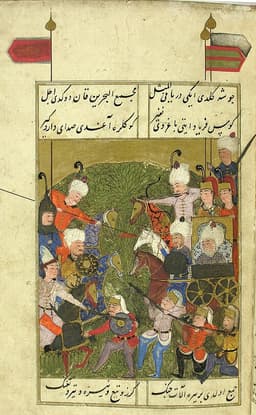
Bayezid II
Emperor · Medieval
59.6Total
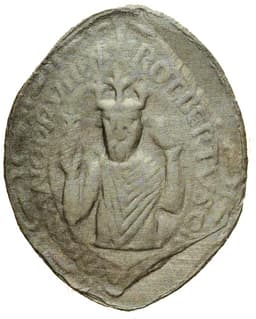
Robert II the Pious
Emperor · Medieval
44.9Total
Basic Information
Born
1447
972
Died
1512
1031
Era
Medieval
Medieval
Nationality
Ottoman Empire
France
Occupation
Emperor
Emperor
Civilization
Middle Eastern
Western
Score Comparison
Military (10%)
50.0
20.0
Political (20%)
72.0
37.9
Influence (20%)
56.7
50.2
Legacy (20%)
56.0
41.7
Leadership (15%)
66.0
65.0
Strategy (15%)
57.5
45.0
TOTAL
59.6
44.9
Bayezid II — Complete Timeline
1481 AD
Suppressed the Cem Sultan RebellionWar◆ Major
Bayezid II faced a civil war against his brother Cem Sultan, who claimed the throne. Cem was defeated and fled to Rhodes, then to Europe, where he was held captive. This conflict ended the immediate succession crisis but left a rival claimant alive.
Civil WarSuccession CrisisCem Sultan
Impact: nationaldestructive
1492 AD
Issued Edict of Expulsion for Jews from SpainPolitical Action◆ Major
Bayezid II issued a decree welcoming Jewish refugees expelled from Spain by the Alhambra Decree. He sent the Ottoman fleet to transport them to safety, settling them in Salonica, Istanbul, and other cities, strengthening the empire's economy and intellectual life.
Jewish MigrationOttoman EmpireReligious Tolerance
Impact: regionalconstructive
1499 AD
Battle of ZonchioWar◆ Major
The Ottoman navy under Bayezid II defeated the Venetian fleet off the coast of Greece. This victory secured Ottoman control over the Ionian Sea and marked the first major naval battle where cannons were used on ships.
Ottoman-Venetian WarNaval BattleCannon
Impact: regional
1503 AD
Concluded the Treaty of Constantinople with VenicePolitical Action
Bayezid II signed a peace treaty with the Republic of Venice, ending the Ottoman-Venetian War (1499-1503). The treaty confirmed Ottoman gains in the Morea and established a border in the Adriatic, bringing a period of peace.
Peace TreatyVeniceOttoman-Venetian War
Impact: regionalconstructive
1512 AD
Abdicated the Throne to Selim IPolitical Action
Bayezid II was forced to abdicate by his son Selim I, who led a Janissary revolt. Bayezid agreed to step down but died shortly after under suspicious circumstances. This transfer of power marked the end of his reign and the beginning of Selim's expansionist policies.
AbdicationSuccessionSelim I
Impact: nationaltragic
Robert II the Pious — Complete Timeline
996 AD
Reign as King of the FranksPolitical Action◆ Major
Robert II succeeded his father Hugh Capet as King of the Franks. His reign was marked by efforts to consolidate royal power, but he faced challenges from powerful nobles and the Church, limiting his authority.
KingshipCapetianReign
Impact: national
998 AD
Excommunication for Marriage to Bertha of BurgundyPolitical Action◆ Major
Robert II was excommunicated by Pope Gregory V for marrying Bertha of Burgundy, his cousin, without papal dispensation. The excommunication was lifted after Robert repudiated Bertha, but it damaged his reputation and strained relations with the Church.
ExcommunicationMarriageChurch Conflict
Impact: nationaltragic
1000 AD
Patronage of the Cluniac ReformsCultural
Robert II supported the Cluniac monastic reforms, which aimed to purify the Church and reduce secular influence. His patronage strengthened the Cluniac movement and enhanced the Church's moral authority in France.
Church ReformClunyPatronage
Impact: regionalconstructive
1002 AD
Conflict with the Duchy of BurgundyWar
Robert II attempted to assert control over the Duchy of Burgundy after the death of Duke Henry I. The conflict lasted several years and resulted in limited success, as Burgundy remained largely independent under its own dukes.
WarBurgundyTerritorial Conflict
Impact: regional
This comparison has not been analyzed yet.
One-time AI generation (~1 minute). Scores and timeline are already available below.
Rankings
🥇
Bayezid IILeader
Mil: 50.0Pol: 72.0Inf: 56.7
59.6
🥈
Robert II the Pious
Mil: 20.0Pol: 37.9Inf: 50.2
44.9
+14.7 behind
How This Comparison Works
Algorithm
Each figure is scored on 6 dimensions (0—100 scale) based on structured historical data: Military (10%), Political (20%), Influence (20%), Legacy (20%), Leadership (15%), Strategy (15%). The weighted total produces the final ranking.
Data Sources
Scores are computed from structured sub-indicators in the database. Scale factors adjust for era (Ancient ×0.85, Modern ×1.0) and civilization size (Eastern ×1.05, Other ×0.80) to account for differences in population and military scale.
Maximum 3 Figures
Comparisons are limited to 2—3 figures to ensure readability and statistical meaningfulness.
Error Margins
±5 points per dimension — Sub-scores are derived from historical records with inherent uncertainty. Two figures within 5 points on a dimension should be considered roughly equivalent in that area.
Total Score Accuracy
±3 points overall — The weighted combination of 6 dimensions produces a total score with approximately ±3 points of uncertainty. Differences of less than 3 points are not statistically significant— the figures are effectively tied.
Known Limitations
- Historical records are incomplete and uneven across civilizations
- Figures from oral-tradition societies may be underrepresented
- Occupation labels can misclassify multi-role figures
- Scores measure capability and impact, not moral character
- Quantitative scoring is a comparison tool, not absolute truth
Capability Radar
Military (10%) — Battles & Warfare
Battles
60
5
Win Rate
55
5
Expansion
45
5
Political (20%) — Governance & Reform
Reform
65
40
Diplomacy
75
30
Economy
60
30
Influence (20%) — Cultural & Global Reach
Cultural
60
30
Global
55
10
Legacy (20%) — Historical Impact
Historical
65
30
Longevity
55
20
Leadership (15%) — Power & Stability
Tenure
70
60
Stability
65
40
Strategy (15%) — Tactics & Innovation
Strategy
55
5
Tactics
50
5
Reform
40
5
Similar Comparisons
Comments & Discussion
No comments yet. Be the first to share your thoughts!