Loading...
Beopheung of Silla vs Napoleon Bonaparte
Napoleon Bonaparte leads by 16.6 pts · 2 figures compared
…
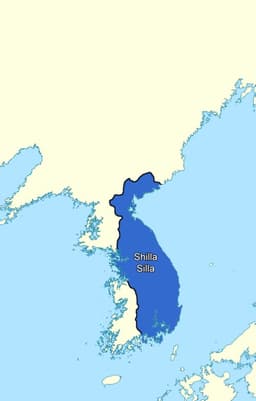
Beopheung of Silla
Emperor · Ancient
54.3Total

Napoleon Bonaparte
General · Modern
70.9Total
Basic Information
Born
487
1769
Died
514
1821
Era
Ancient
Modern
Nationality
Korea
France
Occupation
Emperor
General
Civilization
Eastern
Western
Score Comparison
Military (10%)
25.9
94.0
Political (20%)
68.0
72.0
Influence (20%)
54.9
40.0
Legacy (20%)
52.0
80.0
Leadership (15%)
74.0
78.0
Strategy (15%)
36.8
90.0
TOTAL
54.3
70.9
Napoleon Bonaparte — Complete Timeline
1799 AD
Coup of 18 BrumaireOther◆ Major
Napoleon Bonaparte, with support from his brother Lucien and key political figures, overthrew the Directory in a bloodless coup. He established the Consulate with himself as First Consul, effectively becoming the ruler of France. This event ended the French Revolution's most unstable period.
French RevolutionCoupRise to Power
Impact: regional
1804 AD
Promulgation of the Napoleonic CodeOther◆ Major
Napoleon enacted the Civil Code of the French, known as the Napoleonic Code, a comprehensive set of laws that replaced the fragmented feudal legal systems. The code established legal equality, protected property rights, and secularized law. It became the basis for legal systems in many European and world countries.
Legal ReformNapoleonic CodeCivil Law
Impact: globalconstructive
1805 AD
Battle of AusterlitzWar◆ Major
Napoleon's Grande Arm
Napoleonic WarsBattleDecisive Victory
Impact: global
1812 AD
Invasion of RussiaWar◆ Major
Napoleon led the Grande Arm
Napoleonic WarsInvasionDisaster
Impact: globaldestructive
1815 AD
Battle of WaterlooWar◆ Major
Napoleon's French army was defeated by the combined forces of the Duke of Wellington's Anglo-Allied army and Gebhard Leberecht von Bl
Napoleonic WarsBattleFinal Defeat
Impact: globaldestructive
Expert Analysis
beopheung-of-silla-vs-napoleon-bonaparte
The Conqueror and the King
On a June morning in 1815, a French emperor watched his dreams shatter in the mud of Waterloo. Nearly thirteen centuries earlier and half a world away, a Korean king knelt before a Buddhist monk, his kingdom trembling under the weight of tradition. One man sought to remake the world through cannon and code; the other through faith and law. Why did Napoleon Bonaparte, the titan of modern Europe, die in exile on a remote Atlantic island, while Beopheung of Silla, a figure almost forgotten in the West, secured a dynasty that would endure for a thousand years? The answer lies not in the scale of their conquests, but in the nature of their ambitions.
Origins
Napoleon was born in 1769 on Corsica, an island that had only recently become French. His family was minor nobility, but his education at French military academies exposed him to the revolutionary currents sweeping Europe. The old order was crumbling, and a young artillery officer with a talent for mathematics and a hunger for glory could rise faster than any prince. He was a child of the Enlightenment and the Revolution, a man who believed that will and reason could reshape society.
Beopheung was born in 487 into the royal Kim clan of Silla, one of three kingdoms on the Korean peninsula. His world was ancient, hierarchical, and deeply rooted in shamanistic traditions. The aristocracy held immense power, and the king was more a first among equals than an absolute ruler. Beopheung inherited a kingdom that was the smallest and weakest of the three, constantly threatened by its neighbors, Goguryeo and Baekje. His challenge was not to conquer the world, but to ensure his kingdom survived.
Rise to Power
Napoleon’s rise was meteoric. In 1793, at age 24, he recaptured the port of Toulon from British-backed royalists. By 1796, he commanded the French army in Italy, where his lightning campaigns stunned Europe. He was not merely a general; he was a master of propaganda, writing his own dispatches to shape his legend. The coup of 18 Brumaire in 1799 made him First Consul, and by 1804 he crowned himself Emperor. Every step was a gamble, every victory a stepping stone. He rose because the Revolution had shattered the old rules of power.
Beopheung’s path was slower, more deliberate. He became king of Silla in 514, but his authority was circumscribed by powerful aristocratic clans who controlled land and military levies. He had no army of conquest; he had a court of rivals. His first major act, in 520, was the promulgation of a legal code—a system of administrative and penal laws that defined the king’s power and the subject’s duties. This was not a dramatic revolution, but a quiet assertion of royal authority. His true turning point came in 527, when he declared Buddhism the state religion.
Leadership & Governance
Napoleon governed with a blend of brilliance and tyranny. He centralized the French state, created the Bank of France, and reformed education. His Napoleonic Code, enacted in 1804, established legal equality, protected property rights, and secularized law. It was a masterpiece of Enlightenment principles—but also a tool of control, restricting women’s rights and reestablishing slavery in French colonies. Militarily, his genius was tactical: he used speed, massed artillery, and decisive strikes to shatter enemy armies at Austerlitz (1805) and Jena (1806). But he could not stop. Each victory demanded another, and his empire grew brittle.
Beopheung ruled through patience and symbolism. He understood that power in Silla was not won on battlefields but in the hearts of his subjects. By adopting Buddhism, he offered a universal faith that transcended clan loyalties. The martyrdom of Ichadon, a court official executed in 527 for defying aristocratic opposition, became a powerful legend: Ichadon prophesied that his blood would turn white, and when it did, the aristocrats were awed into submission. Beopheung then built Heungnyunsa Temple, the first Buddhist temple in Silla, on the site of Ichadon’s martyrdom. He did not crush his enemies; he outflanked them with piety.
Triumph & Tragedy
Napoleon’s greatest triumph was the Empire at its height in 1810, stretching from Spain to Poland. His tragedy was the invasion of Russia in 1812. He marched with 600,000 men; fewer than 100,000 returned. The disaster broke his aura of invincibility. Exiled to Elba in 1814, he escaped and ruled for a Hundred Days, only to be destroyed at Waterloo in 1815. His final exile on Saint Helena was a slow, bitter end.
Beopheung’s triumph was quieter but more enduring. By establishing Buddhism as the state religion, he gave Silla a unifying ideology that would later fuel its unification of Korea under King Munmu in 668. His legal code provided the framework for a stable bureaucracy. There was no dramatic fall, no exile. He died in 514, likely in his palace, his kingdom stronger than he found it. His tragedy was that his name is little known outside Korea, overshadowed by the generals and conquerors of later centuries.
Character & Destiny
Napoleon was driven by an insatiable ambition. “Impossible,” he once said, “is a word to be found only in the dictionary of fools.” He believed that a man of genius could bend history to his will. This confidence made him a conqueror, but it also made him blind to limits. He could not stop, because stopping meant admitting that his vision of a unified Europe under French rule was unrealizable. His destiny was to burn bright and be consumed.
Beopheung was a different kind of leader. He understood that power often lies in restraint. By choosing Buddhism, he aligned himself with a faith that preached harmony and submission to a higher order. He did not seek to conquer his neighbors; he sought to strengthen his kingdom from within. His character was patient, calculating, and devout. His destiny was to plant seeds that would flower long after his death.
Legacy
Napoleon’s legacy is immense and contested. He spread the ideals of the French Revolution—legal equality, secular governance, nationalism—across Europe, but at the cost of millions of lives. His military innovations are studied in war colleges; his code remains the basis of law in many countries. Yet he also revived slavery, suppressed dissent, and crowned himself emperor, betraying the revolution he claimed to embody. He is remembered as both liberator and tyrant.
Beopheung’s legacy is more focused. He established Buddhism as the spiritual foundation of Silla, shaping Korean culture for centuries. The legal code he enacted became a model for later dynasties. He is revered in Korea as a wise king who strengthened his kingdom through law and faith, not war. His legacy is not one of conquest, but of endurance.
Conclusion
Napoleon and Beopheung lived worlds apart, yet both faced the same fundamental question: how to lead a kingdom through turbulent times. Napoleon answered with fire and steel, reshaping Europe in his image. Beopheung answered with patience and piety, building a foundation that would last a millennium. One died in exile, the other in his palace. One is a legend of ambition, the other a symbol of wisdom. Their stories remind us that greatness is not measured by the size of an empire, but by the depth of its roots. The conqueror’s glory fades; the king’s legacy endures.
Rankings
🥇
Napoleon BonaparteLeader
Mil: 94.0Pol: 72.0Inf: 40.0
70.9
🥈
Beopheung of Silla
Mil: 25.9Pol: 68.0Inf: 54.9
54.3
+16.6 behind
How This Comparison Works
Algorithm
Each figure is scored on 6 dimensions (0—100 scale) based on structured historical data: Military (10%), Political (20%), Influence (20%), Legacy (20%), Leadership (15%), Strategy (15%). The weighted total produces the final ranking.
Data Sources
Scores are computed from structured sub-indicators in the database. Scale factors adjust for era (Ancient ×0.85, Modern ×1.0) and civilization size (Eastern ×1.05, Other ×0.80) to account for differences in population and military scale.
Maximum 3 Figures
Comparisons are limited to 2—3 figures to ensure readability and statistical meaningfulness.
Error Margins
±5 points per dimension — Sub-scores are derived from historical records with inherent uncertainty. Two figures within 5 points on a dimension should be considered roughly equivalent in that area.
Total Score Accuracy
±3 points overall — The weighted combination of 6 dimensions produces a total score with approximately ±3 points of uncertainty. Differences of less than 3 points are not statistically significant— the figures are effectively tied.
Known Limitations
- Historical records are incomplete and uneven across civilizations
- Figures from oral-tradition societies may be underrepresented
- Occupation labels can misclassify multi-role figures
- Scores measure capability and impact, not moral character
- Quantitative scoring is a comparison tool, not absolute truth
Capability Radar
Military (10%) — Battles & Warfare
Battles
10
95
Win Rate
10
90
Expansion
10
95
Political (20%) — Governance & Reform
Reform
70
95
Diplomacy
50
80
Economy
40
85
Influence (20%) — Cultural & Global Reach
Cultural
60
85
Global
30
90
Legacy (20%) — Historical Impact
Historical
60
95
Longevity
60
90
Leadership (15%) — Power & Stability
Tenure
60
85
Stability
50
70
Strategy (15%) — Tactics & Innovation
Strategy
10
95
Tactics
10
98
Reform
10
92
Similar Comparisons
Comments & Discussion
Napoleon'sWill6/17/2026
As a military historian, Napoleon's real genius wasn't battlefield tactics—it was logistics and organizational reform. Waterloo wasn't lost by Grouchy; it was lost in Russia. Blaming weather or allies misses the point. Napoleon's empire was top-heavy with ambition, hollow in structure. Beopheung understood that lasting power requires institutional foundations, not just charismatic leadership. That's why Silla's monarchy outlived Napoleon's legacy by centuries.
炮灰愤青6/17/2026
拿破仑算什么征服者?滑铁卢在比利时打了不到一天,你们吹了二百年。看看我们的武烈王,他在韩半岛三百年分裂中硬是凭一己之力统一了三国。拿破仑输给威灵顿和布吕歇尔,这叫水平。武烈王赢了百济和高句丽,这才是王者。西方人总是拿自己那点破事当世界史,真是笑死。
DataSkepticus6/17/2026
Classic Napoleon overhype. At Waterloo, he had 72,000 men against Wellington's 68,000 and Blücher's 48,000 arriving later. That's a 120,000 vs 72,000 advantage when the Prussians arrived—Napoleon still lost. Meanwhile, Beopheung's Silla had maybe 30,000-40,000 troops total against rival kingdoms, not exactly epic scale. The comparison stacks a continental empire against a small peninsula kingdom. Apples vs. oranges, but Western bias loves the big numbers.
古典学人6/17/2026
拿破仑研究法典和启蒙思想固然不凡,但抛开军事神话看本质,他不过是在欧洲旧有版图上争夺霸权的一介武夫。而法兴王敢于废弛骨品制度,引进佛教统一思想,这是制度创新和文化革命。西方人总喜欢把拿破仑比作亚历山大大帝,却不知东方已有七世法统的传承。法兴王不是打天下的,是定天下的。
ReformistEyes6/17/2026
Comparing Beopheung to Napoleon is like comparing a marathon runner to a sprinter. Napoleon burned bright, conquered fast, died alone. Beopheung planted seeds: he abolished the bone-rank system, centralized power, and adopted Buddhism as state ideology. That's not just ruling—that's nation-building. Napoleon gave France the Civil Code; Beopheung gave Silla a cultural identity that defined Korea for a millennium. Exile or lasting legacy—choose wisely.