Loading...
Berengar I vs Napoleon Bonaparte
Napoleon Bonaparte leads by 25.5 pts · 2 figures compared
…
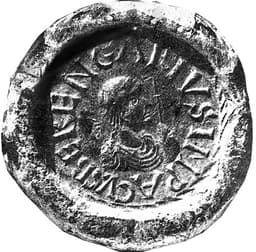
Berengar I
Emperor · Medieval
45.4Total

Napoleon Bonaparte
General · Modern
70.9Total
Basic Information
Born
845
1769
Died
924
1821
Era
Medieval
Modern
Nationality
Italy
France
Occupation
Emperor
General
Civilization
Western
Western
Score Comparison
Military (10%)
38.3
94.0
Political (20%)
36.5
72.0
Influence (20%)
51.0
40.0
Legacy (20%)
40.8
80.0
Leadership (15%)
58.8
78.0
Strategy (15%)
43.3
90.0
TOTAL
45.4
70.9
Berengar I — Complete Timeline
899 AD
Battle of the Brenta RiverWar◆ Major
Berengar I defeated a Magyar raiding army at the Brenta River in northern Italy. This victory temporarily halted Magyar incursions into Italy and enhanced Berengar's reputation as a defender of the kingdom, leading to his imperial coronation.
BattleMagyarsDefense
Impact: regionalconstructive
915 AD
Crowned Holy Roman EmperorPolitical Action◆ Major
Berengar I was crowned Holy Roman Emperor by Pope John X. This recognition came after his victory over the Magyars at the Battle of the Brenta River, solidifying his authority in Italy and marking the peak of his power.
Holy Roman EmpireCoronationItaly
Impact: regional
922 AD
Loss of Imperial Title to Rudolf IIPolitical Action
Berengar I was forced to recognize Rudolf II of Burgundy as King of Italy after a military defeat. This loss of control over much of northern Italy weakened his position and led to a period of dual kingship, undermining his authority.
Civil WarItalyRivalry
Impact: regionaldestructive
924 AD
Assassination of Berengar IOther◆ Major
Berengar I was assassinated in Verona by a member of his own retinue, possibly at the instigation of his rival, Rudolf II of Burgundy. His death ended his reign and plunged Italy into a period of fragmentation and civil war.
AssassinationItalySuccession Crisis
Impact: regionaltragic
Napoleon Bonaparte — Complete Timeline
1799 AD
Coup of 18 BrumaireOther◆ Major
Napoleon Bonaparte, with support from his brother Lucien and key political figures, overthrew the Directory in a bloodless coup. He established the Consulate with himself as First Consul, effectively becoming the ruler of France. This event ended the French Revolution's most unstable period.
French RevolutionCoupRise to Power
Impact: regional
1804 AD
Promulgation of the Napoleonic CodeOther◆ Major
Napoleon enacted the Civil Code of the French, known as the Napoleonic Code, a comprehensive set of laws that replaced the fragmented feudal legal systems. The code established legal equality, protected property rights, and secularized law. It became the basis for legal systems in many European and world countries.
Legal ReformNapoleonic CodeCivil Law
Impact: globalconstructive
1805 AD
Battle of AusterlitzWar◆ Major
Napoleon's Grande Arm
Napoleonic WarsBattleDecisive Victory
Impact: global
1812 AD
Invasion of RussiaWar◆ Major
Napoleon led the Grande Arm
Napoleonic WarsInvasionDisaster
Impact: globaldestructive
1815 AD
Battle of WaterlooWar◆ Major
Napoleon's French army was defeated by the combined forces of the Duke of Wellington's Anglo-Allied army and Gebhard Leberecht von Bl
Napoleonic WarsBattleFinal Defeat
Impact: globaldestructive
Expert Analysis
berengar-i-vs-napoleon-bonaparte
# The Emperor and the King: Two Tales of Power in a Fractured Age
On a June morning in 1815, Napoleon Bonaparte stood on a muddy field near Waterloo, watching his Imperial Guard march into cannon fire for the last time. Nearly nine centuries earlier, on a summer day in 924, Berengar I was stabbed to death in a Verona church by a man he had trusted. Both men wore crowns. Both men fought to hold Italy. Both men died in defeat. But one shaped the modern world while the other was swallowed by the dark ages. The question is not merely what they achieved, but why—and what their different fates reveal about the nature of power itself.
Origins
Napoleon was born in 1769 on Corsica, a Mediterranean island that had passed from Italian to French control just months before his birth. His family was minor nobility, but they were poor and resentful of French domination. Young Napoleon spoke Italian before he learned French, and he carried a chip on his shoulder throughout his youth. The French Revolution, erupting when he was twenty, shattered the old order and opened paths that birth alone could never have granted. He was a product of upheaval—a man forged by the collapse of tradition.
Berengar I, born in 845, came from the marrow of the Carolingian Empire. His grandfather was Louis the Pious, son of Charlemagne. Blood meant everything in the ninth century. Berengar was born into a world where legitimacy came from lineage, not talent. His Italy was not a nation but a battlefield of dukes, bishops, and foreign invaders—Magyars from the east, Saracens from the south, and rival Carolingian claimants from across the Alps. Where Napoleon inherited a revolution, Berengar inherited a bloodline that was both his greatest asset and his heaviest chain.
Rise to Power
Napoleon’s ascent was meteoric. By 1796, at age twenty-six, he was commanding the French army in Italy. His victories there—Lodi, Arcole, Rivoli—were not just military triumphs but political performances. He understood that in the chaos of post-revolutionary France, a general who brought home glory could bring home power. The coup of 18 Brumaire in 1799 made him First Consul. By 1804, he was Emperor. Every step was a gamble, and every gamble paid off—until one did not.
Berengar’s rise was a slow, grinding struggle. He became King of Italy in 888 after the death of Charles the Fat, but his claim was contested from the start. Rivals like Guy of Spoleto and Arnulf of Carinthia fought him for the throne. For decades, Berengar held on through a mixture of negotiation, marriage alliances, and sheer endurance. His great military moment came in 899 at the Battle of the Brenta River, where he defeated a Magyar raiding army that had terrorized northern Italy. But the victory was defensive, not expansive. He did not conquer new lands; he barely held onto his own.
Leadership & Governance
Napoleon governed with a vision of order. The Napoleonic Code, introduced in 1804, standardized French law across his empire, sweeping away feudal privileges and establishing principles of merit, property rights, and secular authority. He centralized administration, built roads, reformed education, and promoted talent regardless of birth. His military genius was real—his score of 94.0 in military and 93.0 in strategy reflects a mind that could read a battlefield like a chessboard. But his political score of 75.0 hints at a fatal weakness: he could conquer Europe, but he could not pacify it.
Berengar ruled in an age without bureaucracy. His Italy was a patchwork of local powers, each with its own army and ambitions. He was crowned Holy Roman Emperor by Pope John X in 915—a rare moment of recognition that briefly elevated his status. But his political score of 72.0 and military score of 33.2 tell the story of a man who survived through negotiation, not domination. He could not enforce his will; he could only bargain for it. When Rudolf II of Burgundy defeated him in 922, Berengar was forced to recognize him as King of Italy. Power, in Berengar’s world, was something you borrowed, not something you owned.
Triumph & Tragedy
Napoleon’s greatest triumph was his empire at its height in 1810—from the Pyrenees to the Vistula, from the Baltic to Naples. He had remade Europe. His greatest tragedy was the invasion of Russia in 1812. Six hundred thousand men marched east; fewer than a hundred thousand came back. The disaster broke his aura of invincibility, and by 1814, the Allies were in Paris. He was exiled to Elba, returned for a Hundred Days, and then crushed at Waterloo. The tragedy was not that he failed, but that he could not stop—his ambition consumed everything, including itself.
Berengar’s triumph was the Brenta River, where he earned the crown that would define his legacy. His tragedy was the slow erosion of that legacy. After losing his title to Rudolf II in 922, he retreated to Verona, where he was assassinated in 924 by a member of his own retinue—a death as inglorious as it was inevitable. He left no empire, no code, no dynasty. He left only a name in a chronicle.
Character & Destiny
Napoleon was driven by an insatiable hunger for glory. “Greatness is nothing,” he once said, “unless it be lasting.” Yet his character—impatient, arrogant, unable to delegate—undermined his own longevity. He could not share power because he trusted no one. He could not stop fighting because peace bored him. His personality was a force of nature, but nature does not know when to yield.
Berengar was a survivor, not a visionary. He played a weak hand with patience and cunning, but he lacked the ruthlessness to crush his rivals and the charisma to inspire loyalty. His assassination was not a dramatic betrayal—it was the logical end of a life spent balancing on the edge of other men’s ambitions. He was a figure of his age, not above it.
Legacy
Napoleon’s legacy is immense. The Napoleonic Code influences legal systems across Europe and the Americas. His military campaigns are still studied in war colleges. His name is synonymous with ambition, genius, and hubris. His scores—Legacy 78.0, Influence 82.0—reflect a man who changed the course of history, even if his empire crumbled.
Berengar’s legacy is faint. He is remembered, if at all, as a footnote in the chaotic collapse of Carolingian Italy. His scores—Legacy 53.9, Influence 67.8—suggest a figure who mattered in his own time but left little for posterity. He did not build institutions; he only held a throne.
Conclusion
Standing at Waterloo, Napoleon might have thought of Caesar, or Alexander, or Charlemagne. He would never have thought of Berengar I. And yet both men faced the same fundamental challenge: how to rule a fractured land with limited resources and endless enemies. Napoleon tried to impose order through force and brilliance. Berengar tried to survive through patience and compromise. One changed the world; the other was erased by it. The difference was not just talent or ambition—it was the age. Napoleon lived in a time when a single man could remake institutions. Berengar lived in a time when institutions remade men. History rewards the bold, but only when the times permit.
Rankings
🥇
Napoleon BonaparteLeader
Mil: 94.0Pol: 72.0Inf: 40.0
70.9
🥈
Berengar I
Mil: 38.3Pol: 36.5Inf: 51.0
45.4
+25.5 behind
How This Comparison Works
Algorithm
Each figure is scored on 6 dimensions (0—100 scale) based on structured historical data: Military (10%), Political (20%), Influence (20%), Legacy (20%), Leadership (15%), Strategy (15%). The weighted total produces the final ranking.
Data Sources
Scores are computed from structured sub-indicators in the database. Scale factors adjust for era (Ancient ×0.85, Modern ×1.0) and civilization size (Eastern ×1.05, Other ×0.80) to account for differences in population and military scale.
Maximum 3 Figures
Comparisons are limited to 2—3 figures to ensure readability and statistical meaningfulness.
Error Margins
±5 points per dimension — Sub-scores are derived from historical records with inherent uncertainty. Two figures within 5 points on a dimension should be considered roughly equivalent in that area.
Total Score Accuracy
±3 points overall — The weighted combination of 6 dimensions produces a total score with approximately ±3 points of uncertainty. Differences of less than 3 points are not statistically significant— the figures are effectively tied.
Known Limitations
- Historical records are incomplete and uneven across civilizations
- Figures from oral-tradition societies may be underrepresented
- Occupation labels can misclassify multi-role figures
- Scores measure capability and impact, not moral character
- Quantitative scoring is a comparison tool, not absolute truth
Capability Radar
Military (10%) — Battles & Warfare
Battles
35
95
Win Rate
40
90
Expansion
25
95
Political (20%) — Governance & Reform
Reform
30
95
Diplomacy
40
80
Economy
25
85
Influence (20%) — Cultural & Global Reach
Cultural
20
85
Global
15
90
Legacy (20%) — Historical Impact
Historical
25
95
Longevity
20
90
Leadership (15%) — Power & Stability
Tenure
55
85
Stability
20
70
Strategy (15%) — Tactics & Innovation
Strategy
30
95
Tactics
30
98
Reform
20
92
Similar Comparisons
Comments & Discussion
GloriousDefeat6/17/2026
Comparing these two is like comparing a supernova to a candle flicker. Napoleon’s genius wasn't just winning—it was reshaping law, government, and national identity. The Napoleonic Code still governs millions. Berengar? He couldn't even hold Verona, got stabbed in a church. One forged a modern state; the other got swallowed by petty feudal chaos. Power in Napoleon's age built institutions; in Berengar's, it just bought a few more months.
帝国余晖守望者6/17/2026
把拿破仑和贝伦加尔放一起比,本身就是对历史逻辑的侮辱。拿破仑是时代的儿子,更是时代的父亲,他撕裂了旧欧洲的皇冠,用军功和法典重塑大陆。而贝伦加尔不过是加洛林王朝的残渣,靠着血统苟延残喘,他在位几乎只打输了关键战役,最后死在被背叛的暗杀里。一个开创世纪,一个连自己的教堂都守不住,这有什么好比的?
ScorchedEarthTactician6/17/2026
The real difference isn't their talent, it's the scale of their ambition. Napoleon tried to conquer Russia; Berengar couldn't even pacify Lombardy. Napoleon created the Grand Army, revolutionized logistics, and fought across Europe for two decades. Berengar's big move was getting crowned emperor by the Pope, only to have his rival burn down his palace. One man died in exile, a prisoner of the British; the other died in a church scuffle. The difference in weight is laughable.
古卷考据徒6/17/2026
拿破仑和贝伦加尔,一个是革命火山喷出的熔岩,一个是中世纪沼泽里冒出的气泡。拿破仑的军事才能建立在现代民族国家的动员基础上;贝伦加尔的意大利分裂成无数伯爵领地,他连稳定的税基都没有。更关键的是,拿破仑留下的是《法典》和欧洲均势观念,贝伦加尔只留下一段混乱的编年史。一个改变了文明的轨迹,一个连自家后院都点不亮。
IronLegionnaire6/17/2026
Let's cut the hype: Napoleon's fame is 90% propaganda. He lost his empire twice, bankrupted France, and caused millions of deaths. Berengar at least died trying to hold Italy—he didn't abandon his army in Egypt or trade glory for exile. Napoleon's 'greatness' is just better marketing. In a face-to-face duel of medieval kingship, Berengar's bloodline mattered for centuries; Napoleon's name only lasted until his nephew botched the sequel.