Loading...
Berengar I vs Sweyn Forkbeard
Sweyn Forkbeard leads by 0.6 pts · 2 figures compared
…
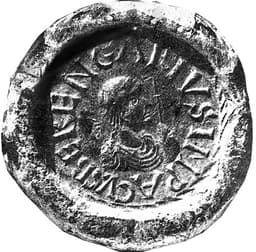
Berengar I
Emperor · Medieval
45.4Total

Sweyn Forkbeard
Emperor · Medieval
46.0Total
Basic Information
Born
845
960
Died
924
1014
Era
Medieval
Medieval
Nationality
Italy
Denmark
Occupation
Emperor
Emperor
Civilization
Western
Western
Score Comparison
Military (10%)
38.3
45.0
Political (20%)
36.5
35.1
Influence (20%)
51.0
53.3
Legacy (20%)
40.8
43.3
Leadership (15%)
58.8
51.9
Strategy (15%)
43.3
43.3
TOTAL
45.4
46.0
Berengar I — Complete Timeline
899 AD
Battle of the Brenta RiverWar◆ Major
Berengar I defeated a Magyar raiding army at the Brenta River in northern Italy. This victory temporarily halted Magyar incursions into Italy and enhanced Berengar's reputation as a defender of the kingdom, leading to his imperial coronation.
BattleMagyarsDefense
Impact: regionalconstructive
915 AD
Crowned Holy Roman EmperorPolitical Action◆ Major
Berengar I was crowned Holy Roman Emperor by Pope John X. This recognition came after his victory over the Magyars at the Battle of the Brenta River, solidifying his authority in Italy and marking the peak of his power.
Holy Roman EmpireCoronationItaly
Impact: regional
922 AD
Loss of Imperial Title to Rudolf IIPolitical Action
Berengar I was forced to recognize Rudolf II of Burgundy as King of Italy after a military defeat. This loss of control over much of northern Italy weakened his position and led to a period of dual kingship, undermining his authority.
Civil WarItalyRivalry
Impact: regionaldestructive
924 AD
Assassination of Berengar IOther◆ Major
Berengar I was assassinated in Verona by a member of his own retinue, possibly at the instigation of his rival, Rudolf II of Burgundy. His death ended his reign and plunged Italy into a period of fragmentation and civil war.
AssassinationItalySuccession Crisis
Impact: regionaltragic
Sweyn Forkbeard — Complete Timeline
985 AD
Rebelled against Harald BluetoothPolitical Action◆ Major
Sweyn Forkbeard led a rebellion against his father, King Harald Bluetooth, forcing him into exile. This uprising was driven by opposition to Harald's Christianization policies and centralized rule, and it resulted in Sweyn seizing the Danish throne.
RebellionDynastic ConflictPower Transition
Impact: regionaldestructive
1013 AD
Invaded EnglandWar◆ Major
Sweyn Forkbeard launched a full-scale invasion of England, leading a Danish fleet. He conquered large parts of the country, forcing King
InvasionEnglandViking Conquest
Impact: regional
Crowned King of EnglandPolitical Action◆ Major
After his successful invasion, Sweyn Forkbeard was crowned King of England in late 1013. He ruled England for only a few weeks before his death in February 1014, but his conquest paved the way for his son Cnut the Great's later rule over England.
CoronationEnglandDanish Rule
Impact: regional
1014 AD
Died suddenly in GainsboroughOther◆ Major
Sweyn Forkbeard died suddenly in Gainsborough, Lincolnshire, in February 1014, after ruling England for only about five weeks. His death led to the temporary restoration of
DeathSuccession CrisisEngland
Impact: regionaltragic
Expert Analysis
Origins
Berengar I was born around 845 in Friuli, Italy, into the Carolingian aristocracy. His father was Eberhard, Duke of Friuli, and his mother was Gisela, a daughter of Emperor Louis the Pious. This lineage placed Berengar in a network of Frankish nobility. He inherited the March of Friuli in 874, a strategic border territory. Berengar's early life was shaped by the fragmentation of the Carolingian Empire and the constant threat of Magyar raids.
Sweyn Forkbeard was born around 960 in Denmark, the son of King Harald Bluetooth and a likely Polish or Wendish mother. His upbringing was steeped in Viking traditions and the recent Christianization of Denmark. Sweyn's name, "Forkbeard," may refer to a distinctive beard style. He grew up amidst palace intrigues and the ongoing conflict between pagan and Christian factions.
Rise to Power
Berengar I rose through the turbulent politics of post-Carolingian Italy. After the death of Emperor Charles the Fat in 888, Berengar claimed the Iron Crown of Lombardy, becoming King of Italy. He faced immediate rivals: Guy of Spoleto, Arnulf of Carinthia, and later Louis of Provence. Berengar's key turning point came in 898 when he defeated the Magyars at the Battle of the Brenta River, a victory that temporarily halted Magyar incursions and earned him recognition from Pope John X, who crowned him Holy Roman Emperor in 915. However, his power remained contested.
Sweyn Forkbeard's rise began with a rebellion against his father, Harald Bluetooth, around 985. Sweyn opposed Harald's forced Christianization and centralization. He allied with pagan factions and forced Harald into exile. By 986, Sweyn controlled Denmark. He then expanded his influence through raids and alliances. His major turning point was the invasion of England in 1013, capitalizing on the weak rule of Æthelred the Unready. Sweyn conquered large parts of England and was crowned king in late 1013.
Leadership & Governance
Berengar I's leadership style was reactive and pragmatic. He relied on military force but often negotiated with rivals. He granted lands and privileges to secure loyalty. For example, he confirmed the privileges of the Church of Milan. However, his governance was weak; he could not maintain control over northern Italy. His military score of 38.3 reflects his limited success, while his political score of 36.5 indicates his inability to build stable alliances.
Sweyn Forkbeard's leadership was decisive and ruthless. He used Viking tactics: swift invasions, terror, and strategic alliances. He imposed heavy taxes on conquered territories, such as the Danegeld in England. His political score of 35.1 is slightly lower than Berengar's, but his military score of 45.0 shows more effective force. Sweyn's governance in Denmark and England was centralized, but his rule in England lasted only weeks.
Triumph & Tragedy
Berengar I's greatest success was his imperial coronation in 915, which symbolized his peak influence. He also defended Italy from Magyars temporarily. His greatest failure was his inability to secure lasting power. He was defeated by Rudolf II of Burgundy in 923 and forced to surrender the Italian crown. His assassination in 924 by his own retinue ended his reign in tragedy.
Sweyn Forkbeard's triumph was conquering England in 1013, a feat that made him a Viking king of a major kingdom. His failure was his sudden death in February 1014, just five weeks after his coronation, causing his empire to collapse. His son Cnut the Great later rebuilt it, but Sweyn's own rule was ephemeral.
Character & Destiny
Berengar I was cautious and diplomatic, but indecisive. He often sought compromise, which weakened his authority. His character led to a destiny of constant struggle and eventual betrayal. Historians view him as a competent but unlucky ruler.
Sweyn Forkbeard was ambitious and aggressive, willing to challenge his father and invade a kingdom. His ruthlessness brought success, but his sudden death suggests possible health issues or assassination. His character forged a legacy of Viking expansion, but his early death prevented consolidation.
Legacy
Berengar I's legacy is limited. He was the last Carolingian emperor in Italy, and his rule highlighted the fragmentation of the region. His victory at the Brenta River is remembered, but his scores reflect minimal long-term impact: influence 51.0, legacy 40.8.
Sweyn Forkbeard's legacy is more significant. He established a Danish dynasty in England, leading to his son Cnut's rule. The Danelaw and Viking influence in England persisted. His scores: influence 53.3, legacy 43.3. Sweyn is remembered as a successful Viking king who briefly conquered England.
Conclusion
Sweyn Forkbeard had a greater impact than Berengar I. Sweyn's military score of 45.0 surpasses Berengar's 38.3, and his conquest of England, though brief, set the stage for later Danish rule. Berengar's imperial title was hollow, and his political failures led to a short-lived legacy. Sweyn's total score of 46.0 edges Berengar's 45.4, but the qualitative difference is clear: Sweyn achieved a tangible, transformative conquest, while Berengar struggled to maintain power. Sweyn Forkbeard is the more significant figure.
Rankings
🥇
Sweyn ForkbeardLeader
Mil: 45.0Pol: 35.1Inf: 53.3
46.0
🥈
Berengar I
Mil: 38.3Pol: 36.5Inf: 51.0
45.4
+0.6 behind
How This Comparison Works
Algorithm
Each figure is scored on 6 dimensions (0—100 scale) based on structured historical data: Military (10%), Political (20%), Influence (20%), Legacy (20%), Leadership (15%), Strategy (15%). The weighted total produces the final ranking.
Data Sources
Scores are computed from structured sub-indicators in the database. Scale factors adjust for era (Ancient ×0.85, Modern ×1.0) and civilization size (Eastern ×1.05, Other ×0.80) to account for differences in population and military scale.
Maximum 3 Figures
Comparisons are limited to 2—3 figures to ensure readability and statistical meaningfulness.
Error Margins
±5 points per dimension — Sub-scores are derived from historical records with inherent uncertainty. Two figures within 5 points on a dimension should be considered roughly equivalent in that area.
Total Score Accuracy
±3 points overall — The weighted combination of 6 dimensions produces a total score with approximately ±3 points of uncertainty. Differences of less than 3 points are not statistically significant— the figures are effectively tied.
Known Limitations
- Historical records are incomplete and uneven across civilizations
- Figures from oral-tradition societies may be underrepresented
- Occupation labels can misclassify multi-role figures
- Scores measure capability and impact, not moral character
- Quantitative scoring is a comparison tool, not absolute truth
Capability Radar
Military (10%) — Battles & Warfare
Battles
35
45
Win Rate
40
50
Expansion
25
55
Political (20%) — Governance & Reform
Reform
30
25
Diplomacy
40
35
Economy
25
30
Influence (20%) — Cultural & Global Reach
Cultural
20
30
Global
15
20
Legacy (20%) — Historical Impact
Historical
25
35
Longevity
20
25
Leadership (15%) — Power & Stability
Tenure
55
40
Stability
20
25
Strategy (15%) — Tactics & Innovation
Strategy
30
45
Tactics
30
40
Reform
20
20
Similar Comparisons
Comments & Discussion
No comments yet. Be the first to share your thoughts!