Loading...
Bermudo II of Leon vs Napoleon Bonaparte
Napoleon Bonaparte leads by 31.3 pts · 2 figures compared
…
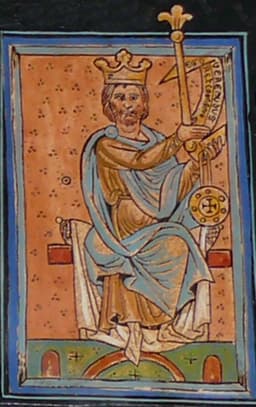
Bermudo II of Leon
Emperor · Medieval
39.6Total

Napoleon Bonaparte
General · Modern
70.9Total
Basic Information
Born
953
1769
Died
999
1821
Era
Medieval
Modern
Nationality
Leon
France
Occupation
Emperor
General
Civilization
Western
Western
Score Comparison
Military (10%)
25.9
94.0
Political (20%)
27.9
72.0
Influence (20%)
48.6
40.0
Legacy (20%)
40.8
80.0
Leadership (15%)
45.0
78.0
Strategy (15%)
36.8
90.0
TOTAL
39.6
70.9
Bermudo II of Leon — Complete Timeline
981 AD
Battle of RuedaWar◆ Major
Bermudo II suffered a major defeat at the hands of Almanzor at the Battle of Rueda. The Leonese army was routed, and Bermudo was forced to flee. This defeat led to the payment of tribute to Cordoba and a period of Leonese subordination to the caliphate.
DefeatAlmanzorTribute
Impact: regionaltragic
990 AD
Alliance with the County of CastilePolitical Action
Bermudo II formed an alliance with the County of Castile under Count Sancho Garcia to resist Almanzor's campaigns. The alliance included marriage ties and military cooperation, but it failed to prevent further Cordoban incursions into Leonese territory.
AllianceCastileAlmanzor
Impact: regionalconstructive
997 AD
Loss of Santiago de Compostela to AlmanzorWar◆ Major
Bermudo II's kingdom was invaded by the Cordoban general Almanzor, who captured and sacked the city of Santiago de Compostela, the holiest Christian shrine in Iberia. The city's churches were destroyed, and its bells were taken to Cordoba. This defeat was a profound humiliation for the Leonese king.
SackSantiago de CompostelaAlmanzor
Impact: regionaltragic
Napoleon Bonaparte — Complete Timeline
1799 AD
Coup of 18 BrumaireOther◆ Major
Napoleon Bonaparte, with support from his brother Lucien and key political figures, overthrew the Directory in a bloodless coup. He established the Consulate with himself as First Consul, effectively becoming the ruler of France. This event ended the French Revolution's most unstable period.
French RevolutionCoupRise to Power
Impact: regional
1804 AD
Promulgation of the Napoleonic CodeOther◆ Major
Napoleon enacted the Civil Code of the French, known as the Napoleonic Code, a comprehensive set of laws that replaced the fragmented feudal legal systems. The code established legal equality, protected property rights, and secularized law. It became the basis for legal systems in many European and world countries.
Legal ReformNapoleonic CodeCivil Law
Impact: globalconstructive
1805 AD
Battle of AusterlitzWar◆ Major
Napoleon's Grande Arm
Napoleonic WarsBattleDecisive Victory
Impact: global
1812 AD
Invasion of RussiaWar◆ Major
Napoleon led the Grande Arm
Napoleonic WarsInvasionDisaster
Impact: globaldestructive
1815 AD
Battle of WaterlooWar◆ Major
Napoleon's French army was defeated by the combined forces of the Duke of Wellington's Anglo-Allied army and Gebhard Leberecht von Bl
Napoleonic WarsBattleFinal Defeat
Impact: globaldestructive
Expert Analysis
bermudo-ii-of-leon-vs-napoleon-bonaparte
# The Conqueror and the Crippled King
On a June morning in 1815, Napoleon Bonaparte watched his Imperial Guard march up the muddy slope of Mont-Saint-Jean ridge near Waterloo, the fate of Europe riding on their bayonets. Eight hundred years earlier and a thousand miles to the southwest, another king—Bermudo II of León—lay in his palace, unable to stand, as the great mosque of Córdoba sent forth an army that would strip him of his holiest city. Both men faced annihilation. One had conquered an empire; the other could barely conquer his own body. Yet their stories, so unequal in glory, reveal something profound about the nature of leadership and the cruelty of historical memory.
Origins
Napoleon Bonaparte was born in 1769 on the island of Corsica, a place that had belonged to France for barely a year. His family were minor nobility, speaking Italian more readily than French, and young Napoleon grew up with a chip on his shoulder—a provincial outsider in a kingdom that sneered at his accent. The French Revolution, which erupted when he was twenty, shattered the old order and opened doors that birth alone could never have unlocked. For a brilliant artillery officer with nothing to lose, the 1790s were a golden age of opportunity.
Bermudo II came into the world in 953, a prince of the Kingdom of León, the Christian bastion in northern Iberia that claimed descent from the Visigothic kings. His birthright was clear, but his body betrayed him from the start. Chroniclers describe him as "the Gouty," a man crippled by a disease that in the Middle Ages was seen as a mark of luxury and weakness—a moral failing as much as a physical one. While Napoleon’s era was one of revolutionary upheaval, Bermudo’s was one of grinding attrition: the *Reconquista*, a centuries-long struggle between Christian kingdoms and the Caliphate of Córdoba.
Rise to Power
Napoleon rose through talent alone. At the siege of Toulon in 1793, the twenty-four-year-old captain devised the artillery plan that drove the British from the harbor. By 1796, he commanded the Army of Italy; by 1799, he was First Consul of France. His path was a straight line of ambition, each victory a stepping stone. In 1804, he crowned himself Emperor in Notre-Dame, taking the crown from the Pope’s hands and placing it on his own head—a gesture that said everything about his belief in self-made destiny.
Bermudo II became king in 984, not through conquest but through inheritance, and not without contest. He was the son of Ordoño III, but his claim was disputed by his cousin, Ramiro III. The kingdom he inherited was already shrinking, its treasury drained, its armies demoralized. Where Napoleon seized power, Bermudo had power thrust upon him like a heavy crown that did not fit.
Leadership & Governance
As a military commander, Napoleon is nearly without peer. His 94.0 military score reflects campaigns that rewrote the rules of war: the lightning march through the Alps in 1800, the destruction of the Austrian army at Austerlitz in 1805, the brutal efficiency of Jena in 1806. He governed with the same energy, reforming French law through the Napoleonic Code, centralizing the state, and building a meritocracy where soldiers could rise from the ranks to marshal. His political score of 75.0, however, hints at his fatal weakness: he could conquer but not consolidate, inspire but not compromise.
Bermudo II’s scores tell a different story. His military rating of 14.0 is abysmal, but his political rating of 44.6 suggests a man who understood his limitations. In 990, he formed an alliance with the County of Castile under Count Sancho García to resist Almanzor, the vizier of Córdoba who had become the terror of Christian Spain. The alliance was necessary, but it was also desperate—a king reduced to begging for help from his own vassals. Bermudo’s strategy rating of 41.7 reflects a leader who fought defensive wars he could not win, not because he was foolish, but because he had no other choice.
Triumph & Tragedy
Napoleon’s greatest moment came in December 1805, when he crushed the combined armies of Russia and Austria at Austerlitz. "Soldiers," he told his men before the battle, "I shall direct your battalions; keep your places; if you do, you will conquer." He did conquer, and for a decade he was the master of Europe. His tragedy was Waterloo in 1815, where the same tactical brilliance that had made him failed against the Duke of Wellington’s dogged defense and the Prussian arrival. Exiled to Saint Helena, he died in 1821 at fifty-one, a prisoner of the British.
Bermudo II’s tragedy came earlier and more completely. In 997, Almanzor marched north and captured Santiago de Compostela, the holiest shrine in Christian Spain. The city was sacked, its bells taken to Córdoba and melted down to make lamps for the mosque. Bermudo could do nothing. He watched from his gout-ridden bed as the heart of his kingdom was torn out. He died two years later, in 999, at forty-six—not in battle, but in bed, his kingdom intact but humiliated.
Character & Destiny
Napoleon’s character was ambition incarnate. "Impossible," he once said, "is a word to be found only in the dictionary of fools." He believed that will could overcome any obstacle, and for a long time, it did. But his arrogance blinded him. The invasion of Russia in 1812, the refusal to accept peace terms, the return from Elba in 1815—each decision was driven by a hunger that could not be satisfied. His destiny was to rise higher than any man of his age, and to fall further.
Bermudo II’s character was shaped by suffering. Chroniclers describe him as pious and patient, a king who endured what he could not change. His gout was not just a physical ailment; it was a metaphor for his reign. He was a crippled king in an age that demanded a warrior. Where Napoleon bent the world to his will, Bermudo bent his will to the world. His destiny was to be forgotten—a footnote in histories that celebrate the victors.
Legacy
Napoleon’s legacy is immense. The Napoleonic Code influences legal systems from Europe to Latin America. His military innovations are still studied at war colleges. His name is synonymous with genius and tyranny, glory and disaster. His score of 82.4 overall places him among the great figures of history, and his influence rating of 82.0 reflects a man who reshaped the modern world.
Bermudo II’s legacy is minimal. His score of 46.4 overall places him among the forgotten. The kingdom of León would later merge with Castile, and his reign would be remembered only as a low point in the *Reconquista*. Yet his story matters, because it reminds us that history is not just written by the victors, but by the healthy, the strong, the ambitious. Bermudo II did not choose his era, his disease, or his enemies. He did what he could with what he had, and he failed.
Conclusion
Standing on opposite ends of the historical spectrum, Napoleon and Bermudo II illuminate the same truth: that leadership is as much about circumstance as character. Napoleon had everything—health, talent, an age of revolution—and used it to conquer the world. Bermudo had nothing—a crippled body, a collapsing kingdom, an invincible enemy—and used it to survive. One built an empire that crumbled; the other held a kingdom that endured. Perhaps the measure of a leader is not how high they rise, but how well they bear what they cannot change.
Rankings
🥇
Napoleon BonaparteLeader
Mil: 94.0Pol: 72.0Inf: 40.0
70.9
🥈
Bermudo II of Leon
Mil: 25.9Pol: 27.9Inf: 48.6
39.6
+31.3 behind
How This Comparison Works
Algorithm
Each figure is scored on 6 dimensions (0—100 scale) based on structured historical data: Military (10%), Political (20%), Influence (20%), Legacy (20%), Leadership (15%), Strategy (15%). The weighted total produces the final ranking.
Data Sources
Scores are computed from structured sub-indicators in the database. Scale factors adjust for era (Ancient ×0.85, Modern ×1.0) and civilization size (Eastern ×1.05, Other ×0.80) to account for differences in population and military scale.
Maximum 3 Figures
Comparisons are limited to 2—3 figures to ensure readability and statistical meaningfulness.
Error Margins
±5 points per dimension — Sub-scores are derived from historical records with inherent uncertainty. Two figures within 5 points on a dimension should be considered roughly equivalent in that area.
Total Score Accuracy
±3 points overall — The weighted combination of 6 dimensions produces a total score with approximately ±3 points of uncertainty. Differences of less than 3 points are not statistically significant— the figures are effectively tied.
Known Limitations
- Historical records are incomplete and uneven across civilizations
- Figures from oral-tradition societies may be underrepresented
- Occupation labels can misclassify multi-role figures
- Scores measure capability and impact, not moral character
- Quantitative scoring is a comparison tool, not absolute truth
Capability Radar
Military (10%) — Battles & Warfare
Battles
20
95
Win Rate
15
90
Expansion
5
95
Political (20%) — Governance & Reform
Reform
20
95
Diplomacy
25
80
Economy
20
85
Influence (20%) — Cultural & Global Reach
Cultural
20
85
Global
10
90
Legacy (20%) — Historical Impact
Historical
25
95
Longevity
20
90
Leadership (15%) — Power & Stability
Tenure
40
85
Stability
15
70
Strategy (15%) — Tactics & Innovation
Strategy
10
95
Tactics
15
98
Reform
5
92
Similar Comparisons
Comments & Discussion
LEGIONARY_LEGACY6/17/2026
Waterloo was a masterpiece of self-destruction, not genius. Napoleon sent his Imperial Guard up that muddy slope too late—after wasting the entire morning waiting for dry ground instead of flanking the Prussians. Compare that to Bermudo II, who at least knew his limits: he ceded Santiago to Almanzor but kept his kingdom alive. Bonaparte had 70,000 men and still managed to lose everything in one day.
统计叛徒6/17/2026
这比较根本就是苹果比橘子。拿破仑打仗和治国都有数据记录,税收到军队人数都能查,你拿他和一个连站都站不稳的中世纪国王比?伯穆多在位时莱昂王国领土缩水,内斗不断,后世的史书句子都是教会写的,你拿什么来“分析”?先拿出同时代可信的拉丁文手稿再说吧,否则就是浪漫想象。
PHALANX_FANATIC6/17/2026
You're ignoring the structural asymmetry of command. Napoleon was a Corsican upstart who earned his marshals through merit, but Bermudo II was a Gothic king bound by feudal oaths—his nobles could and did depose him when Almanzor humiliated him at Santiago. The real difference isn't glory vs. suffering; it's that Napoleon controlled a centralized state, while Bermudo ruled a faction-ridden kingdom where even his own bishops spied for Córdoba.
铁血幽灵6/17/2026
讲历史记忆不公正?伯穆多被叫作“痛风王”和“倒霉蛋”,但看他实际做了什么:他主动放弃了圣地亚哥城避免屠杀,还重建了莱昂的主教制度。而拿破仑呢?他从厄尔巴岛回来只打了百日就又流放了——两次跟头都栽在自己膨胀的野心下。谁才是真正懂得退让的领导人?不是那个军事天才,而是那个站不起来的国王。
CRUSADER_NOIR6/17/2026
Let's be honest: Bermudo II is only remembered because his failure was so spectacular—losing Santiago de Compostela, the holiest city in Christian Spain, without a fight. Napoleon at least went down swinging at Waterloo, bayonets fixed and eagles flying. The Leonese king was a political corpse long before Almanzor's army arrived, betrayed by his own gout and his noblemen's cowardice. History forgives great defeats but never pathetic capitulations.