Loading...
Bhoja vs Charles VI of France
Bhoja leads by 16.0 pts · 2 figures compared
…
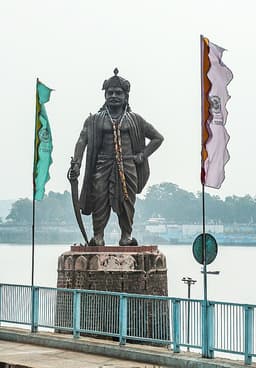
Bhoja
Emperor · Medieval
55.9Total
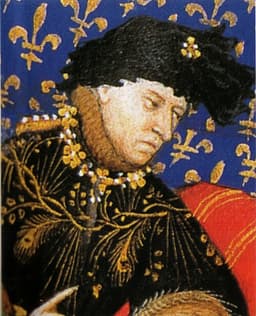
Charles VI of France
Emperor · Medieval
39.9Total
Basic Information
Born
1010
1368
Died
1055
1422
Era
Medieval
Medieval
Nationality
India
France
Occupation
Emperor
Emperor
Civilization
Indian
Western
Score Comparison
Military (10%)
50.0
10.2
Political (20%)
53.8
32.1
Influence (20%)
58.3
50.2
Legacy (20%)
58.0
45.0
Leadership (15%)
53.2
38.1
Strategy (15%)
57.5
45.0
TOTAL
55.9
39.9
Bhoja — Complete Timeline
1030 AD
Patronage of the University of DharaCultural
Bhoja patronized the university at Dhara, his capital, attracting scholars from across India. He established a library and supported studies in grammar, philosophy, and astronomy. This made Dhara a major center of learning.
EducationPatronageScholarship
Impact: regionalconstructive
1040 AD
Composition of the Samarangana SutradharaCultural◆ Major
Bhoja wrote the Samarangana Sutradhara, a comprehensive treatise on architecture and engineering. The text covers temple construction, town planning, and mechanical devices. It became a foundational work in Indian architectural theory.
ArchitectureEngineeringScholarship
Impact: regionalconstructive
1042 AD
Defeat by the Chaulukya King Bhima IWar◆ Major
Bhoja's army was defeated by the Chaulukya king Bhima I of Gujarat in a battle near the Narmada River. This loss halted Paramara expansion westward and forced Bhoja to pay tribute. It marked a significant setback for his reign.
Chaulukya WarMilitary DefeatGujarat
Impact: regionaltragic
1050 AD
Construction of the Bhojeshwar TempleCultural◆ Major
Bhoja began construction of the Bhojeshwar Temple at Bhojpur, dedicated to Shiva. The temple features a massive lingam and a large dome, but was left incomplete at his death. It remains a significant example of Paramara architecture.
Temple BuildingShivaArchitecture
constructive
Charles VI of France — Complete Timeline
1392 AD
Onset of Mental IllnessOther
Charles VI suffered his first major episode of madness while on a military campaign in Brittany. He killed several of his own knights in a fit of frenzy. This began a lifelong pattern of intermittent insanity that crippled royal authority.
Mental IllnessCapetian
Impact: nationaltragic
1407 AD
Armagnac-Burgundian Civil WarWar◆ Major
Charles VI's reign saw the outbreak of a civil war between the Armagnac and Burgundian factions, who fought for control of the mad king. This internal conflict weakened France and allowed Henry V of England to conquer much of the kingdom.
Civil WarHundred Years' WarCapetian
Impact: nationaldestructive
1420 AD
Treaty of TroyesPolitical Action
Charles VI signed the Treaty of Troyes, which disinherited his son, the future Charles VII, and recognized Henry V of England as his heir. This treaty was forced by the Burgundian faction and effectively made France a dual monarchy with England.
TreatyHundred Years' WarCapetian
Impact: globaltragic
Expert Analysis
Origins
Bhoja was born around 1010 CE into the Paramara dynasty of central India, likely in the city of Dhara (modern Dhar, Madhya Pradesh). His father, King Sindhuraja, was a capable ruler, and his mother, Queen Savitri, was known for her piety. Bhoja received a comprehensive education in statecraft, philosophy, and the arts, which later shaped his identity as a scholar-king. He ascended the throne around 1010 CE after his father's death.
Charles VI was born on December 3, 1368, in Paris, France, to King Charles V and Queen Jeanne de Bourbon. His upbringing was marked by the rigorous training expected of a future monarch. He became king at the age of 11 in 1380 upon his father's death, with his uncles acting as regents until he assumed personal rule in 1388.
Rise to Power
Bhoja's rise was relatively smooth as the legitimate heir. He quickly consolidated power by strengthening the Paramara kingdom's borders and engaging in diplomatic marriages. His early reign focused on administrative reforms and cultural patronage, which earned him the title 'Kaviraja' (King of Poets). He established Dhara as a center of learning, attracting scholars like Dhanapala and Udayaditya.
Charles VI's ascent was more turbulent. After Charles V's death, the regency was contested among his uncles: Philip the Bold of Burgundy, Louis I of Anjou, and John of Berry. In 1388, Charles VI dismissed his uncles and reinstated the Marmousets, the former advisors of his father. However, his first episode of madness in 1392 during a campaign against Brittany shattered his authority. He killed several of his own knights, leading to a loss of confidence. From then on, the kingdom was effectively ruled by his uncles and later his queen, Isabeau of Bavaria, plunging France into factional strife.
Leadership & Governance
Bhoja was an enlightened ruler who combined military ambition with intellectual pursuits. He composed the *Samarangana Sutradhara*, a treatise on architecture and engineering covering temple construction, town planning, and mechanical devices. He also wrote on grammar, medicine, and philosophy, with over 20 works attributed to him. His governance emphasized infrastructure: he built reservoirs, temples, and promoted trade. However, his military campaigns were less successful; his army was defeated by the Chaulukya king Bhima I of Gujarat around 1055 CE, halting Paramara expansion.
Charles VI's governance was defined by his mental illness. During his lucid intervals, he attempted to rule but lacked consistency. His reign saw the deepening of the Armagnac-Burgundian Civil War (1407-1435), as noble factions fought for control. The king's weakness led to the Treaty of Troyes in 1420, which disinherited his son Charles VII and recognized Henry V of England as heir to the French throne. This treaty was a catastrophic failure of leadership, effectively surrendering the French crown.
Triumph & Tragedy
Bhoja's greatest triumph was his cultural legacy. The Bhojeshwar Temple at Bhojpur, though unfinished, features a massive lingam and a dome of remarkable engineering; it remains a testament to his patronage. His architectural treatise influenced temple building across India. His patronage of the University of Dhara fostered a golden age of learning. His tragedy was military: the defeat by Bhima I and the failure to expand the Paramara kingdom. After his death around 1055 CE, the dynasty declined.
Charles VI's early reign saw the suppression of the Harelle peasant revolt in 1382, a temporary success. But his tragedy was profound: his madness led to the loss of royal authority, civil war, and the humiliation of the Treaty of Troyes. He died in 1422, leaving a fractured kingdom. His son Charles VII would later reverse these losses with the help of Joan of Arc.
Character & Destiny
Bhoja's character combined intellectual curiosity with a sense of duty. He was a patron and a scholar, which shaped his legacy positively. His decision to focus on cultural projects over military conquest ultimately limited his realm's power but ensured his fame. He scored 50.0 in military and 53.8 in political, reflecting his moderate success in these areas.
Charles VI's character was tragic: a kind and well-meaning king whose mental illness destroyed his reign. His episodes of madness, possibly schizophrenia or bipolar disorder, made him unpredictable. His inability to govern led to the civil war and the treaty that disinherited his son. He scored 10.2 in military and 32.1 in political, reflecting his catastrophic leadership.
Legacy
Bhoja's legacy endures through his writings and the Bhojeshwar Temple. The *Samarangana Sutradhara* remains a key text on Indian architecture. His influence on education and culture in medieval India is significant, with a legacy score of 58.0. He is remembered as a model of the scholar-king in Indian history.
Charles VI's legacy is that of a cautionary tale: a king whose illness ruined a kingdom. The Treaty of Troyes and the civil war weakened France for decades. However, his reign also spurred later unification under Charles VII. His influence score of 50.2 and legacy score of 45.0 reflect a mixed but ultimately negative impact.
Conclusion
Bhoja had a greater impact than Charles VI. His contributions to architecture, literature, and education were lasting and positive, scoring a total of 55.9 against Charles VI's 39.9. Charles VI's reign was a disaster for France, marked by internal strife and foreign dominance. While Bhoja's kingdom did not expand, his cultural achievements shaped Indian civilization. Charles VI's legacy is one of failure, whereas Bhoja's endures as a symbol of enlightened rule. Thus, Bhoja's impact is superior.
Rankings
🥇
BhojaLeader
Mil: 50.0Pol: 53.8Inf: 58.3
55.9
🥈
Charles VI of France
Mil: 10.2Pol: 32.1Inf: 50.2
39.9
+16.0 behind
How This Comparison Works
Algorithm
Each figure is scored on 6 dimensions (0—100 scale) based on structured historical data: Military (10%), Political (20%), Influence (20%), Legacy (20%), Leadership (15%), Strategy (15%). The weighted total produces the final ranking.
Data Sources
Scores are computed from structured sub-indicators in the database. Scale factors adjust for era (Ancient ×0.85, Modern ×1.0) and civilization size (Eastern ×1.05, Other ×0.80) to account for differences in population and military scale.
Maximum 3 Figures
Comparisons are limited to 2—3 figures to ensure readability and statistical meaningfulness.
Error Margins
±5 points per dimension — Sub-scores are derived from historical records with inherent uncertainty. Two figures within 5 points on a dimension should be considered roughly equivalent in that area.
Total Score Accuracy
±3 points overall — The weighted combination of 6 dimensions produces a total score with approximately ±3 points of uncertainty. Differences of less than 3 points are not statistically significant— the figures are effectively tied.
Known Limitations
- Historical records are incomplete and uneven across civilizations
- Figures from oral-tradition societies may be underrepresented
- Occupation labels can misclassify multi-role figures
- Scores measure capability and impact, not moral character
- Quantitative scoring is a comparison tool, not absolute truth
Capability Radar
Military (10%) — Battles & Warfare
Battles
45
10
Win Rate
50
10
Expansion
45
5
Political (20%) — Governance & Reform
Reform
65
10
Diplomacy
55
10
Economy
70
10
Influence (20%) — Cultural & Global Reach
Cultural
70
20
Global
40
20
Legacy (20%) — Historical Impact
Historical
65
40
Longevity
60
30
Leadership (15%) — Power & Stability
Tenure
60
40
Stability
60
5
Strategy (15%) — Tactics & Innovation
Strategy
50
5
Tactics
55
5
Reform
40
5
Similar Comparisons
Comments & Discussion
No comments yet. Be the first to share your thoughts!