Loading...
Bilge Khagan vs Napoleon Bonaparte
Napoleon Bonaparte leads by 5.9 pts · 2 figures compared
…
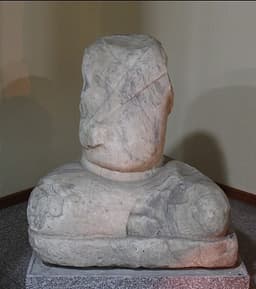
Bilge Khagan
Emperor · Medieval
65.0Total

Napoleon Bonaparte
General · Modern
70.9Total
Basic Information
Born
683
1769
Died
734
1821
Era
Medieval
Modern
Nationality
Second Turkic Khaganate
France
Occupation
Emperor
General
Civilization
Eastern
Western
Score Comparison
Military (10%)
60.0
94.0
Political (20%)
59.3
72.0
Influence (20%)
65.0
40.0
Legacy (20%)
65.0
80.0
Leadership (15%)
72.0
78.0
Strategy (15%)
68.1
90.0
TOTAL
65.0
70.9
Bilge Khagan — Complete Timeline
716 AD
Accession as Bilge KhaganPolitical Action◆ Major
Bilge Khagan ascended to the throne of the Second Turkic Khaganate after the death of his father, Qapaghan Qaghan. His reign marked a period of stability and cultural flourishing.
SuccessionKhaganateLeadership
Impact: regionalconstructive
720 AD
Reforms and consolidation of the khaganateReform◆ Major
Bilge Khagan implemented administrative and military reforms to strengthen the khaganate. He centralized authority, reorganized the army, and promoted trade along the Silk Road, enhancing the khaganate's prosperity.
ReformAdministrationMilitary
Impact: regionalconstructive
725 AD
Diplomatic relations with Tang ChinaPolitical Action
Bilge Khagan established peaceful diplomatic relations with the Tang dynasty, exchanging embassies and gifts. This d
DiplomacyTang DynastyPeace
Impact: regionalconstructive
732 AD
Construction of the Orkhon inscriptionsCultural
Bilge Khagan commissioned the Orkhon inscriptions, monumental stelae inscribed in Old Turkic script. These inscriptions recorded the history and achievements of the Turkic Khaganate, providing a key source for Turkic history.
InscriptionsCultural HeritageWriting System
Impact: globalconstructive
734 AD
Death and legacyPolitical Action◆ Major
Bilge Khagan died in 734, possibly poisoned by a minister. His death led to a period of instability, but his legacy endured through the Orkhon inscriptions, which became a symbol of Turkic identity.
DeathLegacyInstability
Impact: regionaltragic
Napoleon Bonaparte — Complete Timeline
1799 AD
Coup of 18 BrumaireOther◆ Major
Napoleon Bonaparte, with support from his brother Lucien and key political figures, overthrew the Directory in a bloodless coup. He established the Consulate with himself as First Consul, effectively becoming the ruler of France. This event ended the French Revolution's most unstable period.
French RevolutionCoupRise to Power
Impact: regional
1804 AD
Promulgation of the Napoleonic CodeOther◆ Major
Napoleon enacted the Civil Code of the French, known as the Napoleonic Code, a comprehensive set of laws that replaced the fragmented feudal legal systems. The code established legal equality, protected property rights, and secularized law. It became the basis for legal systems in many European and world countries.
Legal ReformNapoleonic CodeCivil Law
Impact: globalconstructive
1805 AD
Battle of AusterlitzWar◆ Major
Napoleon's Grande Arm
Napoleonic WarsBattleDecisive Victory
Impact: global
1812 AD
Invasion of RussiaWar◆ Major
Napoleon led the Grande Arm
Napoleonic WarsInvasionDisaster
Impact: globaldestructive
1815 AD
Battle of WaterlooWar◆ Major
Napoleon's French army was defeated by the combined forces of the Duke of Wellington's Anglo-Allied army and Gebhard Leberecht von Bl
Napoleonic WarsBattleFinal Defeat
Impact: globaldestructive
Expert Analysis
bilge-khagan-vs-napoleon-bonaparte
# The Eagle and the Steppe: Two Visions of Power in an Age of Empires
On a June morning in 1815, Napoleon Bonaparte stood on a muddy ridge near Waterloo, watching his Imperial Guard march into the muzzles of British cannon. Less than a century earlier and thousands of miles to the east, another ruler—Bilge Khagan—had gazed across the endless grasslands of Mongolia, not at an enemy army, but at stone stelae carved with his people’s story. Both men commanded empires; both shaped history. Yet one ended in exile, the other in a tomb whose inscriptions still speak. What separated the conqueror from the consolidator? The answer lies not in their ambitions, but in their understanding of what power truly requires.
Origins
Napoleon Bonaparte was born in 1769 on the island of Corsica, a place recently annexed by France. His family was minor nobility, poor enough to feel the sting of inferiority but proud enough to resent it. The French Revolution, which erupted when he was twenty, shattered the old order and opened paths that birth alone could never have provided. For a brilliant, ambitious young artillery officer, this was not chaos—it was opportunity.
Bilge Khagan, born in 683, inherited a different world. The Second Turkic Khaganate was a steppe confederation held together by kinship, honor, and the sword. His father, Qapaghan Qaghan, had expanded the realm through relentless warfare, but such expansion came at a cost: the tribes were restless, the Chinese to the south were ever watchful, and the khaganate’s unity depended on the personal authority of its ruler. Bilge grew up not in a palace of stone, but in a tent of felt, learning that power on the steppe was earned, not inherited.
Rise to Power
Napoleon’s ascent was meteoric. At twenty-four, he drove the British out of Toulon. At twenty-six, he crushed a royalist uprising in Paris with a “whiff of grapeshot.” By thirty, he had conquered Italy and Egypt, returning to France in 1799 to seize control in a coup. His rise was a product of the Revolution’s meritocracy: talent mattered more than blood, and victory mattered more than lineage.
Bilge’s path was slower and more treacherous. When his father died in 716, the khaganate was in turmoil. His uncle had been assassinated; rivals circled. Bilge did not storm a capital—he gathered the tribal leaders, reminded them of their shared heritage, and presented himself not as a conqueror but as a unifier. His accession was a political action, not a military one, and it set the tone for his reign.
Leadership & Governance
Here the two men diverged most sharply. Napoleon was a military genius—his 94.0 Military score and 93.0 Strategy score reflect a commander who could read a battlefield like a chessboard. He reformed French law with the Napoleonic Code, centralizing administration and secularizing society. But his governance was personal, autocratic, and expansionist. Every reform served his ambition; every victory fed his need for more.
Bilge Khagan, by contrast, governed with restraint. His Military score of 62.0 and Strategy score of 66.4 suggest a ruler who understood that conquest was not the same as strength. In 720, he implemented reforms that centralized authority and reorganized the military not for expansion, but for stability. He established diplomatic relations with Tang China in 725, exchanging embassies and gifts—a détente that secured his borders without war. Where Napoleon sought to remake Europe, Bilge sought to preserve his people.
Triumph & Tragedy
Napoleon’s greatest triumph was Austerlitz in 1805, where he destroyed an Austro-Russian army and crowned himself master of continental Europe. His greatest tragedy was the invasion of Russia in 1812—a campaign that bled his Grand Army white and exposed the limits of his ambition. Waterloo, in 1815, was the final act: a brilliant but desperate gamble that failed when his generals could not coordinate, and the Prussians arrived.
Bilge’s triumph was subtler. In 732, he commissioned the Orkhon inscriptions—monumental stelae carved in Old Turkic script that recorded the history, laws, and identity of his people. These were not trophies of war; they were anchors of civilization. His tragedy came in 734, when he was poisoned—possibly by a minister—and died. The khaganate fractured soon after, but the words on those stones outlasted the empire itself.
Character & Destiny
Napoleon was driven by an insatiable hunger. “Power is my mistress,” he once said, and he pursued her across the continent. His personality—brilliant, impatient, and ruthlessly pragmatic—shaped every decision. He trusted his own genius above all else, and that trust ultimately betrayed him. He could not stop; he could not consolidate. Victory was never enough.
Bilge was driven by a different imperative: survival. The Orkhon inscriptions quote him warning his people: “Do not be seduced by the soft life of the Chinese.” He understood that empires collapse when they forget who they are. His character was that of a steward, not a conqueror. He built institutions, not monuments to himself—though the monuments remain.
Legacy
Napoleon’s legacy is immense and contradictory. He spread the ideals of the French Revolution—legal equality, secular governance, national self-determination—even as he trampled the nations of Europe. His Napoleonic Code influenced legal systems from Latin America to the Middle East. But he also left a trail of war dead and a template for modern dictatorship. His score of 78.0 in Legacy reflects this ambivalence: admired, reviled, unforgettable.
Bilge Khagan’s legacy is quieter but perhaps more profound. The Orkhon inscriptions are the earliest known written records of a Turkic language, a foundation stone for the cultural identity of millions today. His score of 75.1 in Legacy places him close to Napoleon in lasting impact, but of a different kind: not the legacy of power, but of memory. He gave his people a voice that would echo across centuries.
Conclusion
Napoleon Bonaparte and Bilge Khagan both ruled empires, but they ruled with different souls. Napoleon believed that power meant expansion, that glory was measured in territory and titles. Bilge believed that power meant endurance, that the greatest victory was to ensure your people remembered who they were. One built an empire that crumbled within a generation; the other built words that still stand on the Mongolian steppe. Perhaps the deepest lesson is this: the eagle soars and falls, but the stone endures.
Rankings
🥇
Napoleon BonaparteLeader
Mil: 94.0Pol: 72.0Inf: 40.0
70.9
🥈
Bilge Khagan
Mil: 60.0Pol: 59.3Inf: 65.0
65.0
+5.9 behind
How This Comparison Works
Algorithm
Each figure is scored on 6 dimensions (0—100 scale) based on structured historical data: Military (10%), Political (20%), Influence (20%), Legacy (20%), Leadership (15%), Strategy (15%). The weighted total produces the final ranking.
Data Sources
Scores are computed from structured sub-indicators in the database. Scale factors adjust for era (Ancient ×0.85, Modern ×1.0) and civilization size (Eastern ×1.05, Other ×0.80) to account for differences in population and military scale.
Maximum 3 Figures
Comparisons are limited to 2—3 figures to ensure readability and statistical meaningfulness.
Error Margins
±5 points per dimension — Sub-scores are derived from historical records with inherent uncertainty. Two figures within 5 points on a dimension should be considered roughly equivalent in that area.
Total Score Accuracy
±3 points overall — The weighted combination of 6 dimensions produces a total score with approximately ±3 points of uncertainty. Differences of less than 3 points are not statistically significant— the figures are effectively tied.
Known Limitations
- Historical records are incomplete and uneven across civilizations
- Figures from oral-tradition societies may be underrepresented
- Occupation labels can misclassify multi-role figures
- Scores measure capability and impact, not moral character
- Quantitative scoring is a comparison tool, not absolute truth
Capability Radar
Military (10%) — Battles & Warfare
Battles
65
95
Win Rate
70
90
Expansion
75
95
Political (20%) — Governance & Reform
Reform
80
95
Diplomacy
75
80
Economy
70
85
Influence (20%) — Cultural & Global Reach
Cultural
85
85
Global
70
90
Legacy (20%) — Historical Impact
Historical
80
95
Longevity
85
90
Leadership (15%) — Power & Stability
Tenure
70
85
Stability
75
70
Strategy (15%) — Tactics & Innovation
Strategy
80
95
Tactics
75
98
Reform
70
92
Similar Comparisons
Comments & Discussion
SteppeConqueror6/17/2026
Bilge Khagan would've crushed Napoleon in any real fight. The Turkic Khagan's mobile cavalry armies could ride 100 km in a day, while Napoleon's Grande Armée limped at 20 km. Waterloo was lost because Napoleon faced rain and mud; Bilge fought in the actual steppe winter and won. The comparison isn't even close — Napoleon was a European tactician, Bilge mastered the art of war itself. Give me the Orkhon inscriptions over the Congress of Vienna any day.
草原铁血6/17/2026
拿破仑就是个穿紧身裤的装腔作势者。他拿滑铁卢的泥巴地当借口,但真正的统帅像毗伽可汗那样,在零下四十度的草原上也能打赢战争。法兰西帝国十几年就垮了,突厥汗国延续上百年,这差距还不够明显吗?欧洲人总吹《拿破仑法典》,但毗伽可汗留下的《啖欲谷碑》才是真正的治国智慧。
DataSkeptic6/17/2026
This comparison is ridiculous — we're comparing a conqueror known through detailed European archives with a steppe ruler whose entire known legacy fits on 2 stone stelae. Napoleon had 73 battles documented; Bilge's military record is reconstructed from 2,000 Turkic runes and Chinese court chronicles. We don't even know the size of his army! It's like comparing a Hollywood movie with a cave painting. Let's be honest: Bilge is historically relevant, but Napoleon shaped the modern world.
数据求真者6/17/2026
别被浪漫化的草原传说骗了。历史记录显示,毗伽可汗的“帝国”实际是个部落联盟,人口可能不到50万。拿破仑统治了超过7000万欧洲人,改变了整个大陆的法律、教育和军事体系。把这两个人物放在一起比较,就像把蒙古包和凡尔赛宫比豪华程度——根本不在一个量级。
ClassicsScholar6/17/2026
The real tragedy here is two brilliant rulers who failed differently. Napoleon tried to codify his legacy through law and institutions, but his hubris at Moscow and Waterloo destroyed it all. Bilge Khagan understood that empires die when leaders forget their roots — his inscriptions literally warn against adopting Chinese customs. One emperor died alone on St. Helena, the other was buried in a kurgan with his ancestors. Both deserved better endings.
古典沉思者6/17/2026
拿破仑的失败源于他试图征服不可能征服的土地——俄罗斯的冬天。毗伽可汗的失败则更为深刻:他死后十年,突厥汗国就灭亡了,因为他培养的继承者不够强大。有意思的是,拿破仑的“百日王朝”和突厥汗国的“复兴”都是短暂的幻灭。历史告诉我们,再伟大的领袖也无法保证他的帝国比他的墓碑活得更久。
RevisionistCritic6/17/2026
Everyone romantic