Loading...
This comparison has not been analyzed yet.
One-time AI generation (~1 minute). Scores and timeline are already available below.
Bilge Khagan vs Oleg of Novgorod
Bilge Khagan leads by 10.2 pts · 2 figures compared
…
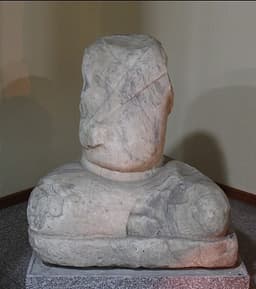
Bilge Khagan
Emperor · Medieval
65.0Total

Oleg of Novgorod
Emperor · Medieval
54.8Total
Basic Information
Born
683
845
Died
734
912
Era
Medieval
Medieval
Nationality
Second Turkic Khaganate
Kievan Rus
Occupation
Emperor
Emperor
Civilization
Eastern
Western
Score Comparison
Military (10%)
60.0
70.0
Political (20%)
59.3
40.8
Influence (20%)
65.0
54.9
Legacy (20%)
65.0
47.5
Leadership (15%)
72.0
67.0
Strategy (15%)
68.1
60.0
TOTAL
65.0
54.8
Bilge Khagan — Complete Timeline
716 AD
Accession as Bilge KhaganPolitical Action◆ Major
Bilge Khagan ascended to the throne of the Second Turkic Khaganate after the death of his father, Qapaghan Qaghan. His reign marked a period of stability and cultural flourishing.
SuccessionKhaganateLeadership
Impact: regionalconstructive
720 AD
Reforms and consolidation of the khaganateReform◆ Major
Bilge Khagan implemented administrative and military reforms to strengthen the khaganate. He centralized authority, reorganized the army, and promoted trade along the Silk Road, enhancing the khaganate's prosperity.
ReformAdministrationMilitary
Impact: regionalconstructive
725 AD
Diplomatic relations with Tang ChinaPolitical Action
Bilge Khagan established peaceful diplomatic relations with the Tang dynasty, exchanging embassies and gifts. This d
DiplomacyTang DynastyPeace
Impact: regionalconstructive
732 AD
Construction of the Orkhon inscriptionsCultural
Bilge Khagan commissioned the Orkhon inscriptions, monumental stelae inscribed in Old Turkic script. These inscriptions recorded the history and achievements of the Turkic Khaganate, providing a key source for Turkic history.
InscriptionsCultural HeritageWriting System
Impact: globalconstructive
734 AD
Death and legacyPolitical Action◆ Major
Bilge Khagan died in 734, possibly poisoned by a minister. His death led to a period of instability, but his legacy endured through the Orkhon inscriptions, which became a symbol of Turkic identity.
DeathLegacyInstability
Impact: regionaltragic
Oleg of Novgorod — Complete Timeline
882 AD
Conquest of KievWar
Oleg, a Varangian prince, captured Kiev from Askold and Dir, two Varangian leaders. He made Kiev the capital of his realm, uniting Novgorod and Kiev under his rule and founding the Kievan Rus state.
Founding of Kievan RusCapitalUnification
Impact: regional
907 AD
Rus' Siege of ConstantinopleWar◆ Major
Oleg led a fleet of 2,000 ships against the Byzantine capital, Constantinople. He blockaded the city and forced Emperor Leo VI to negotiate a favorable trade treaty, securing tribute and commercial rights for Rus merchants.
Byzantine-Rus WarTrade TreatyNaval Campaign
Impact: regional
911 AD
Rus'-Byzantine Treaty of 911Political Action◆ Major
Oleg's envoys finalized a comprehensive treaty with the Byzantine Empire in Constantinople. The treaty regulated trade, legal disputes, and military service, establishing formal diplomatic relations between Kievan Rus and Byzantium.
DiplomacyTradeByzantine Empire
Impact: regionalconstructive
This comparison has not been analyzed yet.
One-time AI generation (~1 minute). Scores and timeline are already available below.
Rankings
🥇
Bilge KhaganLeader
Mil: 60.0Pol: 59.3Inf: 65.0
65.0
🥈
Oleg of Novgorod
Mil: 70.0Pol: 40.8Inf: 54.9
54.8
+10.2 behind
How This Comparison Works
Algorithm
Each figure is scored on 6 dimensions (0—100 scale) based on structured historical data: Military (10%), Political (20%), Influence (20%), Legacy (20%), Leadership (15%), Strategy (15%). The weighted total produces the final ranking.
Data Sources
Scores are computed from structured sub-indicators in the database. Scale factors adjust for era (Ancient ×0.85, Modern ×1.0) and civilization size (Eastern ×1.05, Other ×0.80) to account for differences in population and military scale.
Maximum 3 Figures
Comparisons are limited to 2—3 figures to ensure readability and statistical meaningfulness.
Error Margins
±5 points per dimension — Sub-scores are derived from historical records with inherent uncertainty. Two figures within 5 points on a dimension should be considered roughly equivalent in that area.
Total Score Accuracy
±3 points overall — The weighted combination of 6 dimensions produces a total score with approximately ±3 points of uncertainty. Differences of less than 3 points are not statistically significant— the figures are effectively tied.
Known Limitations
- Historical records are incomplete and uneven across civilizations
- Figures from oral-tradition societies may be underrepresented
- Occupation labels can misclassify multi-role figures
- Scores measure capability and impact, not moral character
- Quantitative scoring is a comparison tool, not absolute truth
Capability Radar
Military (10%) — Battles & Warfare
Battles
65
55
Win Rate
70
60
Expansion
75
60
Political (20%) — Governance & Reform
Reform
80
30
Diplomacy
75
45
Economy
70
35
Influence (20%) — Cultural & Global Reach
Cultural
85
40
Global
70
30
Legacy (20%) — Historical Impact
Historical
80
45
Longevity
85
40
Leadership (15%) — Power & Stability
Tenure
70
50
Stability
75
40
Strategy (15%) — Tactics & Innovation
Strategy
80
55
Tactics
75
50
Reform
70
20
Similar Comparisons
Comments & Discussion
No comments yet. Be the first to share your thoughts!