Loading...
Bilge Qaghan vs Napoleon Bonaparte
Napoleon Bonaparte leads by 5.4 pts · 2 figures compared
…
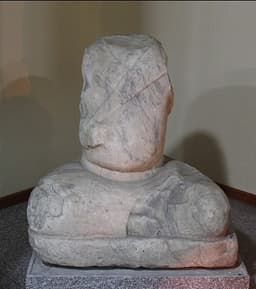
Bilge Qaghan
Emperor · Medieval
65.5Total

Napoleon Bonaparte
General · Modern
70.9Total
Basic Information
Born
683
1769
Died
734
1821
Era
Medieval
Modern
Nationality
Gokturk Khaganate
France
Occupation
Emperor
General
Civilization
Eastern
Western
Score Comparison
Military (10%)
78.0
94.0
Political (20%)
70.0
72.0
Influence (20%)
62.0
40.0
Legacy (20%)
56.0
80.0
Leadership (15%)
72.0
78.0
Strategy (15%)
69.1
90.0
TOTAL
65.5
70.9
Bilge Qaghan — Complete Timeline
716 AD
Restoration of the Eastern Turkic KhaganatePolitical Action◆ Major
After the Eastern Turkic Khaganate was destroyed by the Tang dynasty in 630, Bilge Qaghan, with the help of his brother Kul Tigin and vizier Tonyukuk, revived the khaganate. He defeated the Tang and their allies, re-establishing Turkic independence.
RestorationTurkic Revival
Impact: regionalconstructive
717 AD
Battle of the Irtysh RiverWar◆ Major
Bilge Qaghan led a campaign against the Tang and their Turkic allies, defeating them at the Irtysh River. This victory secured the khaganate's western borders and demonstrated the military prowess of the revived Turkic state.
BattleTang-Turkic War
Impact: regionaldestructive
727 AD
Peace treaty with the Tang dynastyPolitical Action◆ Major
Bilge Qaghan negotiated a peace treaty with the Tang dynasty, ending decades of conflict. The treaty established the borders between the two empires and allowed for trade and diplomatic exchanges, bringing stability to the region.
TreatyPeace
Impact: regionalconstructive
732 AD
Construction of the Orkhon inscriptionsCultural◆ Major
Bilge Qaghan commissioned the Orkhon inscriptions, monumental stelae inscribed with runic Turkic script. These inscriptions, written by Tonyukuk and later by Bilge's son, recorded the history and achievements of the Turkic Khaganate, providing a key source for Turkic history.
InscriptionsCultural Heritage
Impact: regionalconstructive
734 AD
Assassination of Bilge QaghanPolitical Action◆ Major
Bilge Qaghan was poisoned by a minister, possibly on the orders of the Tang court. His death led to a period of instability and decline for the Eastern Turkic Khaganate, which eventually fell to the Uyghurs in 744.
AssassinationDecline
Impact: regionaltragic
Napoleon Bonaparte — Complete Timeline
1799 AD
Coup of 18 BrumaireOther◆ Major
Napoleon Bonaparte, with support from his brother Lucien and key political figures, overthrew the Directory in a bloodless coup. He established the Consulate with himself as First Consul, effectively becoming the ruler of France. This event ended the French Revolution's most unstable period.
French RevolutionCoupRise to Power
Impact: regional
1804 AD
Promulgation of the Napoleonic CodeOther◆ Major
Napoleon enacted the Civil Code of the French, known as the Napoleonic Code, a comprehensive set of laws that replaced the fragmented feudal legal systems. The code established legal equality, protected property rights, and secularized law. It became the basis for legal systems in many European and world countries.
Legal ReformNapoleonic CodeCivil Law
Impact: globalconstructive
1805 AD
Battle of AusterlitzWar◆ Major
Napoleon's Grande Arm
Napoleonic WarsBattleDecisive Victory
Impact: global
1812 AD
Invasion of RussiaWar◆ Major
Napoleon led the Grande Arm
Napoleonic WarsInvasionDisaster
Impact: globaldestructive
1815 AD
Battle of WaterlooWar◆ Major
Napoleon's French army was defeated by the combined forces of the Duke of Wellington's Anglo-Allied army and Gebhard Leberecht von Bl
Napoleonic WarsBattleFinal Defeat
Impact: globaldestructive
Expert Analysis
bilge-qaghan-vs-napoleon-bonaparte
# The Eagle and the Steppe Wolf
In 1815, Napoleon Bonaparte stood on the windswept field of Waterloo, watching his Imperial Guard crumble before the British squares. Half a world away and eleven centuries earlier, Bilge Qaghan lay dying in his tent on the Mongolian steppe, poisoned by a trusted minister. Both men had built empires from chaos, yet their fates diverged in ways that reveal the deepest truths about power, culture, and the nature of historical memory. Why did one become a global legend while the other remains largely unknown outside his homeland?
Origins
Napoleon was born in 1769 on the Mediterranean island of Corsica, a place conquered by France only months before his birth. His family were minor nobility, speaking Italian and nursing resentments against their French overlords. The young Napoleon channeled this outsider’s fury into ambition, studying artillery at French military academies where his accent marked him as an upstart.
Bilge Qaghan emerged from an entirely different world—the wind-scoured grasslands of Central Asia in 683. His people, the Göktürks, had been crushed by the Tang dynasty in 630, their khaganate destroyed. Bilge grew up in the shadow of Chinese domination, learning that survival meant either submission or rebellion. Where Napoleon learned strategy from textbooks, Bilge learned it from the rhythm of horse hooves and the migrations of herds.
Napoleon’s Europe was fragmenting—the old order of kings and priests cracking under the weight of Enlightenment ideas. Bilge’s steppe was consolidating—the Tang empire reaching its zenith, absorbing nomadic peoples into its vast bureaucratic machine. One man rose in an age of revolution, the other in an age of empires.
Rise to Power
Napoleon’s ascent was meteoric. In 1793, at age 24, he drove British forces from Toulon with a brilliant artillery barrage. By 1796 he commanded the Army of Italy, turning starving soldiers into conquerors. The Directory, France’s corrupt government, saw him as a useful tool—until November 1799, when he staged a coup and made himself First Consul. He was thirty years old.
Bilge’s path was bloodier and more circuitous. His uncle, the khagan Ilterish, had rebuilt the Göktürk state from nothing in 682, but the empire remained fragile. When Ilterish died in 693, his son Qapaghan took power and ruled for twenty-three years, expanding the khaganate through relentless warfare. Bilge served as his general, learning statecraft through blood. In 716, Qapaghan was killed in battle, and the empire teetered on collapse. Bilge, with his brother Kül Tegin, crushed the rebellion and seized the throne. Unlike Napoleon’s coup, Bilge’s rise was a family affair—he was restoring a dynasty, not inventing one.
Leadership & Governance
Napoleon governed through sheer force of personality and institutional genius. His Napoleonic Code, introduced in 1804, standardized French law, abolished feudal privileges, and established meritocracy. He created the Bank of France, reformed education, and built roads and canals. But he also crowned himself emperor, placed his brothers on thrones, and centralized power to an absolute degree. His military strategy was revolutionary—fast marches, massed artillery, and the corps system that allowed independent armies to converge on a battlefield.
Bilge governed through consensus and cultural revival. He understood that the Göktürks could not defeat the Tang through war alone—they needed a distinct identity. In 727, he negotiated a peace treaty with the Tang dynasty, ending decades of conflict. The treaty established the border along the Gobi Desert and allowed trade, but Bilge insisted on equal status, not tributary submission. He promoted Turkic language and traditions, rejecting Chinese customs that had corrupted earlier khagans. His brother Kül Tegin was his military arm, but Bilge’s wisdom lay in knowing when to fight and when to talk.
The difference is stark: Napoleon imposed his will on a continent through law and war; Bilge preserved his people through diplomacy and cultural assertion. Napoleon’s governance was expansionist, Bilge’s was defensive.
Triumph & Tragedy
Napoleon’s greatest moment came at Austerlitz in 1805, where he destroyed the combined armies of Austria and Russia. His greatest tragedy was the 1812 invasion of Russia—600,000 soldiers marched east, fewer than 100,000 returned. The disaster broke his aura of invincibility, leading to his first abdication in 1814. He returned in 1815 for the Hundred Days, only to meet final defeat at Waterloo.
Bilge’s triumph was the Orkhon inscriptions, commissioned in 732. These monumental stelae, carved in runic Turkic script, recorded his achievements and warned future generations: “The Turkic people, when they submit to the Chinese, lose their state and their culture.” His tragedy came in 734, when he was poisoned by a minister, likely bribed by the Tang court. His death plunged the khaganate into chaos, and within a decade, the Second Turkic Khaganate collapsed.
Napoleon died in exile on Saint Helena, his empire shattered but his legend intact. Bilge died in his tent, his empire intact but his legacy fragile—preserved only in stone.
Character & Destiny
Napoleon was restless, brilliant, and consumed by ambition. “Power is my mistress,” he once said. He trusted no one fully, believing that fortune favored the bold. This drove him to conquer Europe but also to overreach—he could not stop, could not consolidate. His character was his destiny: a man who built a world that depended on his genius, and when he fell, it all collapsed.
Bilge was patient, pragmatic, and deeply aware of history. The Orkhon inscriptions reveal a leader who understood that empires die when people forget who they are. He was cautious where Napoleon was reckless, diplomatic where Napoleon was domineering. But his caution came from weakness—he knew the Göktürks were outnumbered and surrounded. His destiny was to buy time, not to conquer.
Legacy
Napoleon is remembered as the man who reshaped Europe. His legal codes, military tactics, and administrative reforms influenced nations from Brazil to Japan. He is both hero and villain—liberator of peoples from feudalism, tyrant who drowned revolutions in blood. His name is synonymous with ambition.
Bilge Qaghan is remembered by historians and linguists. The Orkhon inscriptions are the oldest known Turkic texts, foundational for understanding Central Asian history. In Mongolia and Turkey, he is honored as a father of the nation. But in the West, he is unknown. His legacy is written in stone, not in textbooks.
Conclusion
Two men, two worlds. Napoleon conquered Europe and became a myth; Bilge preserved his people and became a monument. The difference is not in their abilities—both were brilliant—but in their circumstances. Napoleon had the printing press, the nation-state, and a continent in turmoil. Bilge had the steppe, oral tradition, and a Chinese empire that could outlast any rebellion. One built an empire of glory, the other an empire of memory. Which is more lasting? Perhaps the stone that survives the eagle.
Rankings
🥇
Napoleon BonaparteLeader
Mil: 94.0Pol: 72.0Inf: 40.0
70.9
🥈
Bilge Qaghan
Mil: 78.0Pol: 70.0Inf: 62.0
65.5
+5.4 behind
How This Comparison Works
Algorithm
Each figure is scored on 6 dimensions (0—100 scale) based on structured historical data: Military (10%), Political (20%), Influence (20%), Legacy (20%), Leadership (15%), Strategy (15%). The weighted total produces the final ranking.
Data Sources
Scores are computed from structured sub-indicators in the database. Scale factors adjust for era (Ancient ×0.85, Modern ×1.0) and civilization size (Eastern ×1.05, Other ×0.80) to account for differences in population and military scale.
Maximum 3 Figures
Comparisons are limited to 2—3 figures to ensure readability and statistical meaningfulness.
Error Margins
±5 points per dimension — Sub-scores are derived from historical records with inherent uncertainty. Two figures within 5 points on a dimension should be considered roughly equivalent in that area.
Total Score Accuracy
±3 points overall — The weighted combination of 6 dimensions produces a total score with approximately ±3 points of uncertainty. Differences of less than 3 points are not statistically significant— the figures are effectively tied.
Known Limitations
- Historical records are incomplete and uneven across civilizations
- Figures from oral-tradition societies may be underrepresented
- Occupation labels can misclassify multi-role figures
- Scores measure capability and impact, not moral character
- Quantitative scoring is a comparison tool, not absolute truth
Capability Radar
Military (10%) — Battles & Warfare
Battles
75
95
Win Rate
80
90
Expansion
80
95
Political (20%) — Governance & Reform
Reform
85
95
Diplomacy
75
80
Economy
70
85
Influence (20%) — Cultural & Global Reach
Cultural
60
85
Global
50
90
Legacy (20%) — Historical Impact
Historical
65
95
Longevity
55
90
Leadership (15%) — Power & Stability
Tenure
70
85
Stability
75
70
Strategy (15%) — Tactics & Innovation
Strategy
75
95
Tactics
70
98
Reform
85
92
Similar Comparisons
Comments & Discussion
No comments yet. Be the first to share your thoughts!