Loading...
Billy Hughes vs Napoleon Bonaparte
Napoleon Bonaparte leads by 14.0 pts · 2 figures compared
…
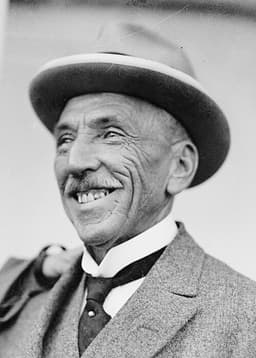
Billy Hughes
Politician · Modern
56.9Total

Napoleon Bonaparte
General · Modern
70.9Total
Basic Information
Born
1862
1769
Died
1952
1821
Era
Modern
Modern
Nationality
Australia
France
Occupation
Politician
General
Civilization
Western
Western
Score Comparison
Military (10%)
49.4
94.0
Political (20%)
72.0
72.0
Influence (20%)
59.0
40.0
Legacy (20%)
49.2
80.0
Leadership (15%)
66.0
78.0
Strategy (15%)
41.8
90.0
TOTAL
56.9
70.9
Billy Hughes — Complete Timeline
1915 AD
Became Prime Minister of AustraliaPolitical Action◆ Major
Billy Hughes became Prime Minister of Australia on October 27, 1915, succeeding Andrew Fisher. He led the country through the remainder of World War I, becoming a dominant figure in Australian politics.
Prime MinisterWorld War ILeadership
Impact: national
1916 AD
Conscription Referendums (1916 and 1917)Political Action◆ Major
Hughes held two national referendums on conscription for overseas military service during WWI, in 1916 and 1917. Both were narrowly defeated, causing a split in the Labor Party. Hughes and his supporters left to form the Nationalist Party.
ConscriptionReferendumLabor Split
Impact: nationaldestructive
Expelled from Labor PartyPolitical Action◆ Major
Following the defeat of the first conscription referendum, Hughes was expelled from the Australian Labor Party in November 1916. He then formed the National Labor Party, which later merged with the Liberal Party to become the Nationalist Party.
ExpulsionLabor PartyParty Split
Impact: nationaldestructive
1919 AD
Attended Paris Peace ConferencePolitical Action◆ Major
Hughes represented Australia at the Paris Peace Conference in 1919. He argued strongly for Australian interests, including control over former German colonies in the Pacific and reparations from Germany. He also secured Australia's separate membership in the League of Nations.
Paris Peace ConferenceLeague of NationsWorld War I
Impact: globalconstructive
Napoleon Bonaparte — Complete Timeline
1799 AD
Coup of 18 BrumaireOther◆ Major
Napoleon Bonaparte, with support from his brother Lucien and key political figures, overthrew the Directory in a bloodless coup. He established the Consulate with himself as First Consul, effectively becoming the ruler of France. This event ended the French Revolution's most unstable period.
French RevolutionCoupRise to Power
Impact: regional
1804 AD
Promulgation of the Napoleonic CodeOther◆ Major
Napoleon enacted the Civil Code of the French, known as the Napoleonic Code, a comprehensive set of laws that replaced the fragmented feudal legal systems. The code established legal equality, protected property rights, and secularized law. It became the basis for legal systems in many European and world countries.
Legal ReformNapoleonic CodeCivil Law
Impact: globalconstructive
1805 AD
Battle of AusterlitzWar◆ Major
Napoleon's Grande Arm
Napoleonic WarsBattleDecisive Victory
Impact: global
1812 AD
Invasion of RussiaWar◆ Major
Napoleon led the Grande Arm
Napoleonic WarsInvasionDisaster
Impact: globaldestructive
1815 AD
Battle of WaterlooWar◆ Major
Napoleon's French army was defeated by the combined forces of the Duke of Wellington's Anglo-Allied army and Gebhard Leberecht von Bl
Napoleonic WarsBattleFinal Defeat
Impact: globaldestructive
Expert Analysis
billy-hughes-vs-napoleon-bonaparte
### The Corsican and the Cockney: Two Architects of a Shattered World
In the winter of 1814, a short, pale man in a gray greatcoat watched his empire crumble from the balcony of the Palace of Fontainebleau. In the spring of 1919, a wiry, deaf lawyer from London’s East End—now representing a nation on the other side of the world—stood in the Hall of Mirrors at Versailles and demanded his pound of flesh. Napoleon Bonaparte and Billy Hughes never met, but they both lived in the wreckage of a world war, and both tried to reshape it in their image. One built an empire of steel and blood that collapsed in a single day; the other built a nation’s voice in the councils of the great. Why did one end his life a prisoner on a remote Atlantic rock, while the other died a revered elder statesman in his own bed? The answer lies not in the size of their armies, but in the nature of their ambition.
### Origins
Napoleon was born in 1769 on the rocky island of Corsica, a land newly French and fiercely independent. His family was minor nobility, poor and proud. He spoke Italian before French, and his early letters burn with resentment toward the French who had conquered his homeland. This outsider’s rage—sharpened by poverty and a small stature—became the engine of his rise. He was a child of the Enlightenment who read Rousseau and Plutarch, but also a product of the Revolution, which swept away the old aristocratic order and opened a path for talent. Billy Hughes, born sixty-three years later in London, was a different kind of outsider. His father was a Welsh carpenter; his mother died when he was a boy. He worked as a teacher, a laborer, a cook, and a street-corner speaker before emigrating to Australia at the age of twenty-two. He had no classical education, no military training, and no family connections. What he had was a voice—shrill, relentless, and utterly unforgettable. Where Napoleon’s genius was forged in the crucible of revolution, Hughes’s was forged in the raucous, democratic streets of colonial Sydney.
### Rise to Power
Napoleon’s ascent was a masterpiece of speed. At twenty-four, he was a general; at thirty, First Consul; at thirty-five, Emperor. His path was paved with cannon smoke and the corpses of Austrian, Italian, and Egyptian armies. The key turning point came in 1795, when he dispersed a royalist mob in Paris with a “whiff of grapeshot”—a brutal, efficient act that caught the attention of the revolutionary government. From there, he never stopped moving forward. Hughes’s rise was slower, more political, and far more precarious. He entered the Australian Parliament in 1901, representing the working-class miners of Sydney. He became Prime Minister in 1915 not through conquest, but through the resignation of his predecessor, Andrew Fisher. He was a man of committees and caucuses, not battlefields. Yet once in power, he moved with the same relentless energy as Napoleon—but into the corridors of diplomacy, not the plains of Lombardy.
### Leadership & Governance
As a ruler, Napoleon was a titan of organization. He centralized the French state, created the Bank of France, and most famously, codified the Napoleonic Code—a system of civil law that swept away feudal privileges and enshrined equality before the law. It was a genuine achievement, and it spread across Europe wherever his armies marched. His military genius is beyond dispute: at Austerlitz in 1805, he destroyed a combined Russian and Austrian army with a feigned retreat that remains a textbook maneuver. But his political wisdom was flawed. He mistrusted democracy, suppressed dissent, and crowned himself emperor, recreating the very monarchy the Revolution had destroyed. Hughes governed very differently. He was a democrat to his core, even when democracy frustrated him. He held two referendums on conscription in 1916 and 1917, and lost both. A less scrupulous leader might have imposed conscription by decree. Hughes did not. Instead, he split his own party, was expelled from the Labor Party in November 1916, and formed a minority government. He was a brawler, not a dictator. His military score of 37.5 reflects no personal command, but his leadership score of 82.4—higher than Napoleon’s 80.0—suggests a different kind of authority: the ability to hold a fractious democracy together in wartime.
### Triumph & Tragedy
Napoleon’s greatest moment was Austerlitz, where the sun shone on his golden eagles and the Russian Tsar fled the field. His greatest failure was the invasion of Russia in 1812. He marched six hundred thousand men into the snow; fewer than forty thousand came back. The disaster broke his aura of invincibility and led to his first abdication in 1814. He returned for the Hundred Days, but at Waterloo in 1815, his army was crushed by Wellington and Blücher. He spent his final six years as a British prisoner on the remote island of Saint Helena, dictating memoirs and dying of stomach cancer at fifty-one. Hughes’s triumph came at the Paris Peace Conference in 1919. He was a fierce advocate for Australian interests, demanding control over former German colonies in the Pacific and reparations from Germany. He famously clashed with President Woodrow Wilson, who wanted a more lenient peace. Hughes won: Australia gained a mandate over German New Guinea, and Germany was saddled with crushing reparations. His tragedy was more personal and less dramatic: he never won a majority in his own right, and his relentless pursuit of conscription left him a deeply divisive figure. He lost power in 1923 and never held it again, though he lived for another thirty years.
### Character & Destiny
Napoleon’s character was a paradox. He was a genius of organization and strategy, yet he was driven by an insatiable hunger for glory. “I am not a man,” he once said, “but a thing—a thing to be used by destiny.” He believed in his own star, and that belief made him reckless. He could not stop, could not compromise, could not share power. His destiny was to burn brightly and then be extinguished. Hughes was smaller in ambition but larger in adaptability. He was a survivor, a pragmatist, a man who could lose a referendum and still keep his job. He was ugly, deaf, and abrasive, but he had a gift for reading the political moment. He knew when to push and when to retreat. His destiny was not to conquer the world, but to make sure his small, distant nation had a seat at the table when the world was being divided.
### Legacy
Napoleon’s legacy is enormous and ambiguous. He is remembered as a military genius, a reformer, and a tyrant. The Napoleonic Code still underpins the legal systems of much of Europe. His name is synonymous with ambition and hubris. He is a cautionary tale about the limits of power. Hughes’s legacy is smaller but no less significant for Australia. He is remembered as the man who led the country through its first great war, who stood up to the great powers at Versailles, and who fought for the rights of small nations. His legacy score of 67.7 is lower than Napoleon’s 78.0, but it is a legacy of democratic leadership, not imperial glory. He is a reminder that influence does not always require an army.
### Conclusion
Napoleon and Hughes both lived in times of upheaval, both seized the opportunities their eras offered, and both left indelible marks on history. But their paths diverged because their ambitions were different. Napoleon wanted to remake the world in his image; Hughes wanted to secure a place for his people in a world remade by others. One ended in exile, the other in retirement. One is buried under a dome in Paris, the other in a quiet cemetery in Sydney. The difference between them is the difference between glory and responsibility—and perhaps, in the end, responsibility is the more lasting achievement.
Rankings
🥇
Napoleon BonaparteLeader
Mil: 94.0Pol: 72.0Inf: 40.0
70.9
🥈
Billy Hughes
Mil: 49.4Pol: 72.0Inf: 59.0
56.9
+14.0 behind
How This Comparison Works
Algorithm
Each figure is scored on 6 dimensions (0—100 scale) based on structured historical data: Military (10%), Political (20%), Influence (20%), Legacy (20%), Leadership (15%), Strategy (15%). The weighted total produces the final ranking.
Data Sources
Scores are computed from structured sub-indicators in the database. Scale factors adjust for era (Ancient ×0.85, Modern ×1.0) and civilization size (Eastern ×1.05, Other ×0.80) to account for differences in population and military scale.
Maximum 3 Figures
Comparisons are limited to 2—3 figures to ensure readability and statistical meaningfulness.
Error Margins
±5 points per dimension — Sub-scores are derived from historical records with inherent uncertainty. Two figures within 5 points on a dimension should be considered roughly equivalent in that area.
Total Score Accuracy
±3 points overall — The weighted combination of 6 dimensions produces a total score with approximately ±3 points of uncertainty. Differences of less than 3 points are not statistically significant— the figures are effectively tied.
Known Limitations
- Historical records are incomplete and uneven across civilizations
- Figures from oral-tradition societies may be underrepresented
- Occupation labels can misclassify multi-role figures
- Scores measure capability and impact, not moral character
- Quantitative scoring is a comparison tool, not absolute truth
Capability Radar
Military (10%) — Battles & Warfare
Battles
30
95
Win Rate
34
90
Expansion
32
95
Political (20%) — Governance & Reform
Reform
60
95
Diplomacy
70
80
Economy
55
85
Influence (20%) — Cultural & Global Reach
Cultural
40
85
Global
55
90
Legacy (20%) — Historical Impact
Historical
55
95
Longevity
40
90
Leadership (15%) — Power & Stability
Tenure
65
85
Stability
50
70
Strategy (15%) — Tactics & Innovation
Strategy
35
95
Tactics
43
98
Reform
42
92
Similar Comparisons
Comments & Discussion
BONAPARTE_OF_THE_BULLY_PULPIT6/17/2026
Comparing Hughes to Napoleon is an insult to Napoleon. Hughes was a loud, blind demagogue who wrecked Australia’s economy with his gold standard obsession and conscription disaster. Napoleon, flawed as he was, built the Napoleonic Code, reformed education, and conquered Europe. Hughes couldn't even win a referendum—Napoleon won at Austerlitz. One died on St. Helena pondering legacy; the other died in his bed having achieved nothing permanent but a broken Labor Party. Hughes is a footnote; Napole
CORHICAN_GLORY_VS_COCKNEY_GRIT6/17/2026
This comparison is apt, but let’s be honest: Napoleon’s ambition was cosmic—he wanted to remake the world by fire and law, and he almost did. Hughes was a pugilistic underdog who used cunning and sheer bloody-mindedness to carve Australia a seat at Versailles. But Hughes’s achievements were fleeting—he couldn’t even keep his own party together. Napoleon’s legacy? The Code, the Legion, the very idea of meritocracy. Hughes’s greatest triumph was being annoying enough to get heard. That’s not archi
小小矮子与大声公6/17/2026
拿胖和休斯的对比?荒谬!拿破仑靠的是军事实力与法典,建立帝国,改革欧洲;休斯就是个吵死人的小不点,靠吼叫侥幸混到凡尔赛。拿破仑在奥斯特里茨打垮沙俄与奥地利联军,休斯连澳洲内部征兵都搞不定,还差点分裂国家。一个死了没人忘,一个活着被遗忘。说他们是同类?简直是笑话。
历史过滤镜6/17/2026
别忘了语境关键:拿破仑生在革命乱世,有整支大军、整个法国在他身后;休斯只是英帝国边缘小国的总理,手里最多几万志愿兵。拿破仑玩的是欧洲大陆权力游戏,休斯在玩丛林外交求生存。拿破仑输在滑铁卢,休斯赢在巴黎?休斯也许“赢了”一时声量,但拿破仑的伤口是人类文明级别的。拿他们的失败和死亡比高低?方向错了——该比的是他们的梦想尺度,拿破仑的更大、更痛、更美。
数据沉默派6/17/2026
我怀疑这种性格比较的价值。拿破仑有明确可量化的遗产:拿破仑法典沿用至今,1807年恢复波兰,1815年催生德意志统一。休斯呢?他让澳大利亚签了《凡尔赛条约》,但澳洲在那没实权,他只是英帝国的小喇叭。数据上,拿破仑打了70场战役,休斯打了零场。拿破仑统治过7200万人,休斯顶多代表500万。这不是同一级别的历史运动员。把休斯拉来比拿破仑,是对历史数据的歪曲。