Loading...
Billy Hughes vs Justin Trudeau
Billy Hughes leads by 5.6 pts · 2 figures compared
…
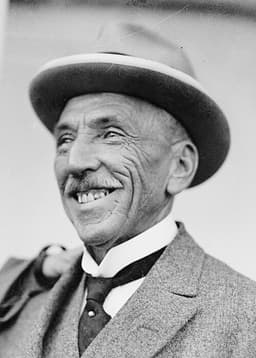
Billy Hughes
Politician · Modern
56.9Total

Justin Trudeau
Politician · Modern
51.3Total
Basic Information
Born
1862
1971
Died
1952
—
Era
Modern
Modern
Nationality
Australia
Canada
Occupation
Politician
Politician
Civilization
Western
Western
Score Comparison
Military (10%)
49.4
10.0
Political (20%)
72.0
68.0
Influence (20%)
59.0
55.0
Legacy (20%)
49.2
46.7
Leadership (15%)
66.0
72.0
Strategy (15%)
41.8
38.6
TOTAL
56.9
51.3
Billy Hughes — Complete Timeline
1915 AD
Became Prime Minister of AustraliaPolitical Action◆ Major
Billy Hughes became Prime Minister of Australia on October 27, 1915, succeeding Andrew Fisher. He led the country through the remainder of World War I, becoming a dominant figure in Australian politics.
Prime MinisterWorld War ILeadership
Impact: national
1916 AD
Conscription Referendums (1916 and 1917)Political Action◆ Major
Hughes held two national referendums on conscription for overseas military service during WWI, in 1916 and 1917. Both were narrowly defeated, causing a split in the Labor Party. Hughes and his supporters left to form the Nationalist Party.
ConscriptionReferendumLabor Split
Impact: nationaldestructive
Expelled from Labor PartyPolitical Action◆ Major
Following the defeat of the first conscription referendum, Hughes was expelled from the Australian Labor Party in November 1916. He then formed the National Labor Party, which later merged with the Liberal Party to become the Nationalist Party.
ExpulsionLabor PartyParty Split
Impact: nationaldestructive
1919 AD
Attended Paris Peace ConferencePolitical Action◆ Major
Hughes represented Australia at the Paris Peace Conference in 1919. He argued strongly for Australian interests, including control over former German colonies in the Pacific and reparations from Germany. He also secured Australia's separate membership in the League of Nations.
Paris Peace ConferenceLeague of NationsWorld War I
Impact: globalconstructive
Justin Trudeau — Complete Timeline
2015 AD
Election as Prime Minister of CanadaPolitical Action
Trudeau led the Liberal Party to a majority government victory, defeating Stephen Harper's Conservatives. His campaign focused on 'real change' and included promises of electoral reform, legalizing cannabis, and running deficits to stimulate the economy.
Canadian ElectionLiberal PartyMajority Government
Impact: nationalprogressive
2018 AD
Legalization of Cannabis in CanadaReform◆ Major
Trudeau's government passed the Cannabis Act, making Canada the second country in the world to legalize recreational cannabis. The law aimed to regulate production, distribution, and possession, while reducing the illegal market and criminal penalties.
Cannabis LegalizationDrug PolicySocial Reform
Impact: nationalprogressive
2019 AD
SNC-Lavalin ScandalPolitical Action◆ Major
Trudeau faced allegations that his office pressured Attorney General Jody Wilson-Raybould to intervene in the criminal prosecution of engineering firm SNC-Lavalin. The scandal led to Wilson-Raybould's resignation and damaged Trudeau's reputation for ethical governance.
Ethics ScandalPolitical InterferenceJustice
Impact: nationaldestructive
Expert Analysis
Origins
Billy Hughes was born on September 28, 1862, in London, England, to Welsh parents. He emigrated to Australia in 1884, working as a laborer and shearer before becoming involved in unionism. He entered the New South Wales Parliament in 1894 as a Labor member, and later served in federal parliament from 1901. His early life was marked by poverty and a struggle for education, which shaped his combative political style.
Justin Trudeau was born on December 25, 1971, in Ottawa, Canada, to Prime Minister Pierre Trudeau and Margaret Trudeau. He grew up in the political spotlight, attending prestigious schools including McGill University and the University of British Columbia. He worked as a teacher before entering politics. His upbringing gave him a privileged but scrutinized childhood, influencing his focus on diversity and inclusion.
Rise to Power
Hughes rose to prominence as a Labor Party firebrand, serving as Attorney General from 1910. He became Prime Minister on October 27, 1915, succeeding Andrew Fisher during World War I. His key turning point was the 1916 conscription crisis, where he pushed for mandatory overseas service. When the first referendum failed, he was expelled from the Labor Party in November 1916 and formed the Nationalist Party, winning the 1917 election.
Trudeau entered politics later, winning a seat in 2008. He became Liberal Party leader in 2013, and led the party to a majority victory on October 19, 2015, defeating Stephen Harper's Conservatives. His campaign focused on 'real change' and progressive policies, capitalizing on his family name and charisma. He won a second term in 2019 but lost the majority.
Leadership & Governance
Hughes' leadership was defined by his single-minded focus on winning WWI. He introduced the War Precautions Act, giving the government sweeping powers, and pursued conscription despite public opposition. He argued fiercely at the Paris Peace Conference in 1919, securing Australian control over German New Guinea. His style was confrontational and dictatorial, leading to party splits.
Trudeau's governance emphasized social liberalism: he legalized recreational cannabis via the Cannabis Act in 2018, introduced a carbon tax, and championed gender equality in cabinet. He faced criticism for the SNC-Lavalin scandal in 2019, where his office pressured the Attorney General. His leadership score of 72.0 reflects a consensus-oriented approach, but his strategy score of 38.6 indicates indecisiveness on some issues.
Triumph & Tragedy
Hughes' greatest triumph was his role at the Paris Peace Conference, where he successfully argued for Australian mandates, and his wartime leadership kept Australia engaged in the war effort. His tragedy was the defeat of both conscription referendums (1916 and 1917), which deeply divided Australian society and led to his expulsion from the Labor Party. His political score of 72.0 shows effectiveness, but his legacy score of 49.2 reflects the divisive nature of his policies.
Trudeau's triumph includes legalizing cannabis, which scored him points on social progress, and his handling of the COVID-19 pandemic initially boosted his approval. His tragedy is the SNC-Lavalin scandal and the ethics violations that damaged his reputation. His influence score of 55.0 is moderate, and his military score of 10.0 reflects minimal defense focus.
Character & Destiny
Hughes was known for his tenacity, sharp intellect, and bellicose temperament. His character drove him to fight for Australia's interests but also made him inflexible, leading to political isolation. He scored 66.0 in leadership, reflecting his ability to command during crisis, but his strategy score of 41.8 suggests he lacked long-term planning.
Trudeau is charismatic and media-savvy, but critics point to a pattern of ethical lapses and poor judgment. His leadership score of 72.0 is higher than Hughes', but his strategy score of 38.6 is lower, indicating a tendency to prioritize optics over substance.
Legacy
Hughes is remembered as a wartime leader who shaped Australia's foreign policy. His push for conscription left a lasting scar, but his advocacy at Versailles established Australia's sovereignty. His legacy score of 49.2 reflects mixed views.
Trudeau's legacy is still forming, but his legalization of cannabis and gender-balanced cabinet have had lasting impacts. His legacy score of 46.7 is slightly lower than Hughes', but his influence on global progressive movements is notable.
Conclusion
Billy Hughes had a greater impact on Australia's trajectory during a critical war period. Despite his lower leadership score (66.0 vs Trudeau's 72.0), his political score (72.0) and influence (59.0) are higher. His total score of 56.9 surpasses Trudeau's 51.3 by 5.6 points. Hughes' decisions on conscription and international representation fundamentally altered Australia's role in the world, whereas Trudeau's reforms, while significant, are more incremental. In a historical context, Hughes' wartime leadership outweighs Trudeau's peacetime progressivism.
Rankings
🥇
Billy HughesLeader
Mil: 49.4Pol: 72.0Inf: 59.0
56.9
🥈
Justin Trudeau
Mil: 10.0Pol: 68.0Inf: 55.0
51.3
+5.6 behind
How This Comparison Works
Algorithm
Each figure is scored on 6 dimensions (0—100 scale) based on structured historical data: Military (10%), Political (20%), Influence (20%), Legacy (20%), Leadership (15%), Strategy (15%). The weighted total produces the final ranking.
Data Sources
Scores are computed from structured sub-indicators in the database. Scale factors adjust for era (Ancient ×0.85, Modern ×1.0) and civilization size (Eastern ×1.05, Other ×0.80) to account for differences in population and military scale.
Maximum 3 Figures
Comparisons are limited to 2—3 figures to ensure readability and statistical meaningfulness.
Error Margins
±5 points per dimension — Sub-scores are derived from historical records with inherent uncertainty. Two figures within 5 points on a dimension should be considered roughly equivalent in that area.
Total Score Accuracy
±3 points overall — The weighted combination of 6 dimensions produces a total score with approximately ±3 points of uncertainty. Differences of less than 3 points are not statistically significant— the figures are effectively tied.
Known Limitations
- Historical records are incomplete and uneven across civilizations
- Figures from oral-tradition societies may be underrepresented
- Occupation labels can misclassify multi-role figures
- Scores measure capability and impact, not moral character
- Quantitative scoring is a comparison tool, not absolute truth
Capability Radar
Military (10%) — Battles & Warfare
Battles
30
0
Win Rate
34
0
Expansion
32
0
Political (20%) — Governance & Reform
Reform
60
55
Diplomacy
70
60
Economy
55
50
Influence (20%) — Cultural & Global Reach
Cultural
40
50
Global
55
55
Legacy (20%) — Historical Impact
Historical
55
40
Longevity
40
30
Leadership (15%) — Power & Stability
Tenure
65
65
Stability
50
45
Strategy (15%) — Tactics & Innovation
Strategy
35
0
Tactics
43
0
Reform
42
5
Similar Comparisons
Comments & Discussion
No comments yet. Be the first to share your thoughts!