Loading...
Bisher al-Khasawneh vs Lee Teng-hui
Lee Teng-hui leads by 13.7 pts · 2 figures compared
…

Bisher al-Khasawneh
Politician · Modern
42.9Total
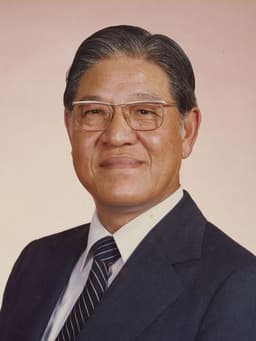
Lee Teng-hui
Politician · Modern
56.6Total
Basic Information
Born
1969
1923
Died
—
—
Era
Modern
Modern
Nationality
Jordan
China
Occupation
Politician
Politician
Civilization
Middle Eastern
Eastern
Score Comparison
Military (10%)
18.2
14.3
Political (20%)
40.8
78.0
Influence (20%)
47.9
55.0
Legacy (20%)
36.7
58.0
Leadership (15%)
65.7
78.0
Strategy (15%)
39.5
35.3
TOTAL
42.9
56.6
Bisher al-Khasawneh — Complete Timeline
2020 AD
Appointed Prime Minister of JordanPolitical Action◆ Major
Bisher al-Khasawneh was appointed Prime Minister of Jordan by King Abdullah II on October 7, 2020, succeeding Omar Razzaz. His appointment came during the COVID-19 pandemic and economic challenges, tasked with implementing reforms and managing the health crisis.
AppointmentGovernmentJordan
Impact: national
Formed government amid COVID-19 pandemicPolitical Action◆ Major
Al-Khasawneh formed his first cabinet on October 12, 2020, focusing on economic recovery and pandemic response. The government implemented lockdowns, vaccination campaigns, and economic stimulus measures to address the health and economic impacts of COVID-19 in Jordan.
COVID-19Government FormationPublic Health
Impact: national
2024 AD
Resigned as Prime MinisterPolitical Action◆ Major
Al-Khasawneh submitted his resignation to King Abdullah II on September 15, 2024, following parliamentary elections. His resignation was accepted, and he was succeeded by Jafar Hassan, ending his four-year tenure as prime minister.
ResignationGovernment ChangeJordan
Impact: national
Lee Teng-hui — Complete Timeline
1987 AD
End of martial law and democratizationPolitical Action◆ Major
As president, Lee Teng-hui oversaw the lifting of martial law in Taiwan, ending 38 years of military rule. This allowed for the formation of opposition parties and expanded political freedoms.
Martial LawDemocratization
Impact: nationalprogressive
1996 AD
First direct presidential electionPolitical Action◆ Major
Lee Teng-hui won Taiwan's first direct presidential election, a landmark in the island's democratization. China conducted missile tests near Taiwan during the campaign to intimidate voters.
ElectionDemocratization
Impact: nationalprogressive
1999 AD
Special state-to-state relations statementPolitical Action◆ Major
Lee described cross-strait relations as 'special state-to-state relations,' implying Taiwan's separate sovereignty. This statement angered China and heightened tensions across the Taiwan Strait.
Cross-Strait RelationsSovereignty
Impact: regionaldestructive
Expert Analysis
Origins
Bisher al-Khasawneh was born on January 1, 1969, in Amman, Jordan, into a prominent Circassian family with a history of political service. He earned a law degree from the University of Jordan and later a PhD in international law from the University of London. His early career included diplomatic posts, serving as Jordan's ambassador to Egypt and the Arab League.
Lee Teng-hui was born on January 15, 1923, in Sanzhi, Taiwan (then under Japanese rule). He studied agricultural economics at Kyoto Imperial University and later at Cornell University, earning a PhD. He returned to Taiwan and worked as a professor and government technocrat, eventually joining the Kuomintang (KMT).
Rise to Power
Al-Khasawneh's rise was steady and technocratic. He served as director of the Jordanian Intelligence Department from 2007 to 2011, then as ambassador to Egypt and the Arab League. In 2017, he became deputy prime minister and foreign minister. On October 7, 2020, King Abdullah II appointed him Prime Minister, succeeding Omar Razzaz amid the COVID-19 pandemic.
Lee Teng-hui's rise was accelerated by Taiwan's political opening. He became mayor of Taipei in 1981, then governor of Taiwan Province. In 1984, he was elected vice president under Chiang Ching-kuo. Upon Chiang's death in 1988, Lee succeeded as president, becoming the first native Taiwanese to hold the office. He consolidated power within the KMT and pushed for democratization.
Leadership & Governance
Al-Khasawneh's governance focused on crisis management. He formed a cabinet on October 12, 2020, prioritizing economic recovery and pandemic response. His government implemented lockdowns, vaccine procurement, and economic stimulus. He scored 65.7 in leadership, reflecting his crisis management, but only 39.5 in strategy, indicating limited long-term vision. His tenure was marked by political stability under the monarchy, with no major reforms.
Lee Teng-hui's leadership was transformative. He oversaw the end of martial law in 1987 (as president, though lifting began under Chiang), legalized opposition parties, and held Taiwan's first direct presidential election in 1996, which he won. His political score of 78.0 reflects his role in democratization. However, his strategy score of 35.3 was low due to provocative statements like the 'special state-to-state relations' in 1999, which escalated cross-strait tensions.
Triumph & Tragedy
Al-Khasawneh's greatest success was managing the COVID-19 pandemic, keeping infection rates relatively low. His government also passed economic reforms. However, his tenure saw limited political liberalization and persistent economic challenges. His failure to address corruption and unemployment led to public dissatisfaction, culminating in his resignation on September 15, 2024, after parliamentary elections.
Lee Teng-hui's triumph was democratizing Taiwan without major violence. His 1996 election was a landmark, with China conducting missile tests in response. His tragedy was the 'special state-to-state' statement, which damaged cross-strait relations and led to a more confrontational stance from China. He also faced accusations of corruption and authoritarian tendencies, though his democratic legacy remains strong.
Character & Destiny
Al-Khasawneh is seen as a technocratic, cautious leader, loyal to the monarchy. His character shaped his fate: he was appointed to manage crises, not to lead reform. His low risk-taking limited his impact. Historians rate his influence at 47.9, reflecting his role as a caretaker.
Lee Teng-hui was pragmatic but bold. He navigated Taiwan's transition from authoritarianism to democracy, often testing boundaries. His character—assertive and strategic—enabled him to push through reforms, but also led to conflicts. His leadership score of 78.0 and legacy of 58.0 reflect his transformative yet controversial role.
Legacy
Al-Khasawneh's legacy is limited. He will be remembered as a competent manager during a global crisis, but his reforms were incremental. His total score of 42.9 places him as a minor figure in Jordan's modern history.
Lee Teng-hui's legacy is profound. He is credited as the 'father of Taiwanese democracy' for ending martial law and holding direct elections. His policies reshaped Taiwan's identity and its relations with China. His total score of 56.6 reflects his significant impact on Taiwan's political landscape.
Conclusion
Lee Teng-hui had greater impact than Bisher al-Khasawneh. While al-Khasawneh managed a crisis effectively, Lee fundamentally transformed Taiwan's political system. Lee's leadership (78.0 vs 65.7) and political scores (78.0 vs 40.8) far exceed al-Khasawneh's. The score gap of 13.7 points reflects this disparity. Lee's democratization legacy endures, while al-Khasawneh's tenure was a brief chapter in Jordan's stability. Lee Teng-hui stands as a more significant historical figure.
Rankings
🥇
Lee Teng-huiLeader
Mil: 14.3Pol: 78.0Inf: 55.0
56.6
🥈
Bisher al-Khasawneh
Mil: 18.2Pol: 40.8Inf: 47.9
42.9
+13.7 behind
How This Comparison Works
Algorithm
Each figure is scored on 6 dimensions (0—100 scale) based on structured historical data: Military (10%), Political (20%), Influence (20%), Legacy (20%), Leadership (15%), Strategy (15%). The weighted total produces the final ranking.
Data Sources
Scores are computed from structured sub-indicators in the database. Scale factors adjust for era (Ancient ×0.85, Modern ×1.0) and civilization size (Eastern ×1.05, Other ×0.80) to account for differences in population and military scale.
Maximum 3 Figures
Comparisons are limited to 2—3 figures to ensure readability and statistical meaningfulness.
Error Margins
±5 points per dimension — Sub-scores are derived from historical records with inherent uncertainty. Two figures within 5 points on a dimension should be considered roughly equivalent in that area.
Total Score Accuracy
±3 points overall — The weighted combination of 6 dimensions produces a total score with approximately ±3 points of uncertainty. Differences of less than 3 points are not statistically significant— the figures are effectively tied.
Known Limitations
- Historical records are incomplete and uneven across civilizations
- Figures from oral-tradition societies may be underrepresented
- Occupation labels can misclassify multi-role figures
- Scores measure capability and impact, not moral character
- Quantitative scoring is a comparison tool, not absolute truth
Capability Radar
Military (10%) — Battles & Warfare
Battles
22
16
Win Rate
29
15
Expansion
28
20
Political (20%) — Governance & Reform
Reform
25
85
Diplomacy
40
70
Economy
30
75
Influence (20%) — Cultural & Global Reach
Cultural
10
60
Global
15
60
Legacy (20%) — Historical Impact
Historical
10
70
Longevity
10
55
Leadership (15%) — Power & Stability
Tenure
30
75
Stability
35
65
Strategy (15%) — Tactics & Innovation
Strategy
30
22
Tactics
34
25
Reform
40
30
Similar Comparisons
Comments & Discussion
No comments yet. Be the first to share your thoughts!