Loading...
Emeka Anyaoku vs Lee Teng-hui
Lee Teng-hui leads by 0.6 pts · 2 figures compared
…

Emeka Anyaoku
Politician · Modern
56.0Total
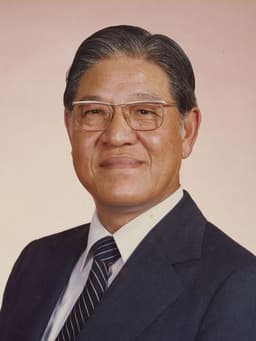
Lee Teng-hui
Politician · Modern
56.6Total
Basic Information
Born
1933
1923
Died
—
—
Era
Modern
Modern
Nationality
Nigeria
China
Occupation
Politician
Politician
Civilization
Other
Eastern
Score Comparison
Military (10%)
24.9
14.3
Political (20%)
72.0
78.0
Influence (20%)
55.0
55.0
Legacy (20%)
50.0
58.0
Leadership (15%)
79.8
78.0
Strategy (15%)
45.1
35.3
TOTAL
56.0
56.6
Emeka Anyaoku — Complete Timeline
1990 AD
Elected Commonwealth Secretary-GeneralPolitical Action◆ Major
Emeka Anyaoku was elected as the third Commonwealth Secretary-General at the Commonwealth Heads of Government Meeting in Harare, Zimbabwe, in 1991. He took office on July 1, 1990, becoming the first African to hold the position.
CommonwealthDiplomacyNigeria
Impact: globalconstructive
1991 AD
Oversaw Commonwealth Response to ApartheidPolitical Action◆ Major
During his tenure, Anyaoku played a key role in coordinating Commonwealth policy on the dismantling of apartheid in South Africa. He supported the transition to majority rule and the readmission of South Africa to the Commonwealth in 1994 after the election of Nelson Mandela.
ApartheidSouth AfricaCommonwealth
Impact: globalconstructive
1995 AD
Suspended Nigeria from the CommonwealthPolitical Action◆ Major
Under Anyaoku's leadership, the Commonwealth suspended Nigeria's membership in 1995 following the execution of Ken Saro-Wiwa and eight other Ogoni activists by the military regime of Sani Abacha. This was a significant diplomatic sanction against his own country.
SanctionsNigeriaHuman Rights
Impact: global
Lee Teng-hui — Complete Timeline
1987 AD
End of martial law and democratizationPolitical Action◆ Major
As president, Lee Teng-hui oversaw the lifting of martial law in Taiwan, ending 38 years of military rule. This allowed for the formation of opposition parties and expanded political freedoms.
Martial LawDemocratization
Impact: nationalprogressive
1996 AD
First direct presidential electionPolitical Action◆ Major
Lee Teng-hui won Taiwan's first direct presidential election, a landmark in the island's democratization. China conducted missile tests near Taiwan during the campaign to intimidate voters.
ElectionDemocratization
Impact: nationalprogressive
1999 AD
Special state-to-state relations statementPolitical Action◆ Major
Lee described cross-strait relations as 'special state-to-state relations,' implying Taiwan's separate sovereignty. This statement angered China and heightened tensions across the Taiwan Strait.
Cross-Strait RelationsSovereignty
Impact: regionaldestructive
Expert Analysis
Origins
Emeka Anyaoku was born on January 18, 1933, in Obosi, Nigeria, into a royal family; his father was a traditional chief. He studied classics at the University of Ibadan and later pursued a career in diplomacy, joining the Nigerian Foreign Service in 1959. His early postings included service at the Nigerian High Commission in London and the United Nations, where he developed expertise in international relations and decolonization.
Lee Teng-hui was born on January 15, 1923, in Sanzhi, Taiwan, under Japanese rule. He studied agricultural economics at Kyoto Imperial University and later at National Taiwan University. After earning a Ph.D. in agricultural economics from Cornell University in 1968, he entered politics as a technocrat, serving in various government roles under the Kuomintang (KMT) regime.
Rise to Power
Anyaoku rose through the ranks of the Commonwealth Secretariat, serving as Assistant Director of International Affairs from 1966 and later as Deputy Secretary-General. His diplomatic skills and advocacy for anti-colonialism and racial equality led to his election as Commonwealth Secretary-General in 1991 at the Harare CHOGM, succeeding Sir Shridath Ramphal. He was the first African to hold the post.
Lee Teng-hui rose to prominence after being appointed Governor of Taiwan Province in 1981 and later Vice President in 1984. Following President Chiang Ching-kuo's death in 1988, Lee succeeded him as president, despite initial resistance from KMT hardliners. He consolidated power by outmaneuvering rivals and championing political reforms.
Leadership & Governance
Anyaoku's leadership focused on consensus-building and moral authority. He strengthened the Commonwealth's role in promoting democracy and human rights, notably coordinating the Harare Declaration (1991) which set standards for member states. His governance approach was diplomatic and multilateral: he facilitated dialogue between South Africa's apartheid government and liberation movements, and suspended Nigeria (his own country) in 1995 for human rights abuses. This demonstrated his commitment to principles over personal ties.
Lee Teng-hui oversaw Taiwan's transition from authoritarianism to democracy. He lifted martial law in 1987 (as president from 1988), legalized opposition parties, and held the first direct presidential election in 1996, which he won. His governance style was pragmatic and gradual, but he also made controversial statements on cross-strait relations, such as the 'special state-to-state relations' in 1999, which escalated tensions with China. He scored 78.0 in Political and 78.0 in Leadership, reflecting his effective democratic reforms but also strategic missteps.
Triumph & Tragedy
Anyaoku's greatest triumph was his role in ending apartheid: he oversaw the Commonwealth's support for sanctions and later welcomed South Africa back as a member in 1994 after Nelson Mandela's election. His tragedy was the suspension of Nigeria, his homeland, which caused personal and political strain. Despite this, he maintained that the Commonwealth's credibility depended on upholding its values.
Lee's triumph was democratizing Taiwan: he ended 38 years of martial law, enabled free elections, and fostered a vibrant civil society. His tragedy was the erosion of cross-strait stability: his 'state-to-state' remarks provoked Chinese missile tests in 1995-1996, and his legacy remains contested between those who see him as a democratizer and those who view him as a separatist. His Leadership score of 78.0 is balanced by a Strategy score of only 35.3, indicating poor long-term geopolitical planning.
Character & Destiny
Anyaoku was measured, principled, and diplomatic. He prioritized institutional integrity over personal ambition, as shown by his willingness to discipline Nigeria. His character earned him respect across the Commonwealth, but his cautious approach meant he was less transformative than more aggressive leaders. He scored 79.8 in Leadership, reflecting his steady guidance.
Lee Teng-hui was shrewd, determined, and sometimes provocative. He outmaneuvered KMT conservatives to push reforms, but his nationalist rhetoric alienated China and increased tensions. His destiny was to be both a liberator for many Taiwanese and a divisive figure in international relations. His total score of 56.6 slightly edges Anyaoku's 56.0, but his strategic missteps limit his long-term impact.
Legacy
Anyaoku's legacy is the Commonwealth's evolution as a force for democracy and human rights. The Harare Declaration and the suspension of Nigeria set precedents for enforcing norms. He also promoted the Commonwealth's role in small states and development. Today, he is remembered as a principled diplomat who upheld multilateralism.
Lee's legacy is Taiwan's democracy: he is celebrated as the 'father of Taiwanese democracy' for ending martial law and enabling free elections. However, his cross-strait policies left a fragile status quo. His influence on Taiwan's identity is profound, but his strategic legacy is mixed. His Legacy score of 58.0 reflects his enduring impact on Taiwan's political system.
Conclusion
While Lee Teng-hui scores slightly higher overall (56.6 vs 56.0), his impact is largely confined to Taiwan, whereas Anyaoku's influence spanned 54 member states. Anyaoku's principled leadership in ending apartheid and enforcing Commonwealth values had global ramifications. Lee's democratization of Taiwan was historic, but his strategic missteps undermined regional stability. On balance, Emeka Anyaoku had greater and more positive impact on the world stage, despite the narrow score gap.
Rankings
🥇
Lee Teng-huiLeader
Mil: 14.3Pol: 78.0Inf: 55.0
56.6
🥈
Emeka Anyaoku
Mil: 24.9Pol: 72.0Inf: 55.0
56.0
+0.6 behind
How This Comparison Works
Algorithm
Each figure is scored on 6 dimensions (0—100 scale) based on structured historical data: Military (10%), Political (20%), Influence (20%), Legacy (20%), Leadership (15%), Strategy (15%). The weighted total produces the final ranking.
Data Sources
Scores are computed from structured sub-indicators in the database. Scale factors adjust for era (Ancient ×0.85, Modern ×1.0) and civilization size (Eastern ×1.05, Other ×0.80) to account for differences in population and military scale.
Maximum 3 Figures
Comparisons are limited to 2—3 figures to ensure readability and statistical meaningfulness.
Error Margins
±5 points per dimension — Sub-scores are derived from historical records with inherent uncertainty. Two figures within 5 points on a dimension should be considered roughly equivalent in that area.
Total Score Accuracy
±3 points overall — The weighted combination of 6 dimensions produces a total score with approximately ±3 points of uncertainty. Differences of less than 3 points are not statistically significant— the figures are effectively tied.
Known Limitations
- Historical records are incomplete and uneven across civilizations
- Figures from oral-tradition societies may be underrepresented
- Occupation labels can misclassify multi-role figures
- Scores measure capability and impact, not moral character
- Quantitative scoring is a comparison tool, not absolute truth
Capability Radar
Military (10%) — Battles & Warfare
Battles
22
16
Win Rate
23
15
Expansion
25
20
Political (20%) — Governance & Reform
Reform
60
85
Diplomacy
75
70
Economy
55
75
Influence (20%) — Cultural & Global Reach
Cultural
50
60
Global
65
60
Legacy (20%) — Historical Impact
Historical
55
70
Longevity
50
55
Leadership (15%) — Power & Stability
Tenure
70
75
Stability
60
65
Strategy (15%) — Tactics & Innovation
Strategy
32
22
Tactics
33
25
Reform
34
30
Similar Comparisons
Comments & Discussion
No comments yet. Be the first to share your thoughts!