Loading...
Bogu Qaghan vs Napoleon Bonaparte
Napoleon Bonaparte leads by 18.3 pts · 2 figures compared
…
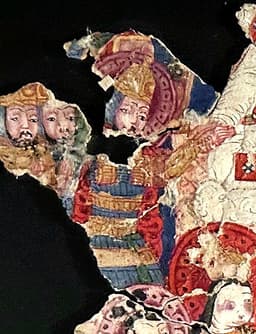
Bogu Qaghan
Emperor · Medieval
52.6Total

Napoleon Bonaparte
General · Modern
70.9Total
Basic Information
Born
724
1769
Died
780
1821
Era
Medieval
Modern
Nationality
Uyghur Khaganate
France
Occupation
Emperor
General
Civilization
Eastern
Western
Score Comparison
Military (10%)
40.0
94.0
Political (20%)
61.3
72.0
Influence (20%)
56.4
40.0
Legacy (20%)
45.0
80.0
Leadership (15%)
64.0
78.0
Strategy (15%)
45.0
90.0
TOTAL
52.6
70.9
Bogu Qaghan — Complete Timeline
759 AD
Accession as Bogu QaghanPolitical Action◆ Major
Bogu Qaghan ascended to the throne of the Uyghur Khaganate after the death of his father. His reign saw the khaganate reach its peak in power and influence.
SuccessionKhaganateLeadership
Impact: regionalconstructive
762 AD
Suppression of the An Lushan RebellionWar◆ Major
Bogu Qaghan sent Uyghur cavalry to aid the Tang dynasty in suppressing the An Lushan Rebellion. The Uyghur forces helped recapture the Tang capital Chang'an, strengthening the alliance with Tang.
Military AidTang DynastyRebellion
Impact: regionalconstructive
763 AD
Conversion to ManichaeismCultural
Bogu Qaghan converted to Manichaeism after meeting Manichaean missionaries from Sogdiana. He declared Manichaeism the state religion of the Uyghur Khaganate, a unique development among steppe empires.
ReligionManichaeismConversion
Impact: regionalconstructive
779 AD
Assassination by Tun Bagha TarkhanPolitical Action
Bogu Qaghan was assassinated by his minister Tun Bagha Tarkhan, who opposed his pro-Sogdian policies and Manichaean conversion. This coup ended Bogu's reign and led to a shift in Uyghur policy.
AssassinationCoupPolicy Change
Impact: regionaltragic
Napoleon Bonaparte — Complete Timeline
1799 AD
Coup of 18 BrumaireOther◆ Major
Napoleon Bonaparte, with support from his brother Lucien and key political figures, overthrew the Directory in a bloodless coup. He established the Consulate with himself as First Consul, effectively becoming the ruler of France. This event ended the French Revolution's most unstable period.
French RevolutionCoupRise to Power
Impact: regional
1804 AD
Promulgation of the Napoleonic CodeOther◆ Major
Napoleon enacted the Civil Code of the French, known as the Napoleonic Code, a comprehensive set of laws that replaced the fragmented feudal legal systems. The code established legal equality, protected property rights, and secularized law. It became the basis for legal systems in many European and world countries.
Legal ReformNapoleonic CodeCivil Law
Impact: globalconstructive
1805 AD
Battle of AusterlitzWar◆ Major
Napoleon's Grande Arm
Napoleonic WarsBattleDecisive Victory
Impact: global
1812 AD
Invasion of RussiaWar◆ Major
Napoleon led the Grande Arm
Napoleonic WarsInvasionDisaster
Impact: globaldestructive
1815 AD
Battle of WaterlooWar◆ Major
Napoleon's French army was defeated by the combined forces of the Duke of Wellington's Anglo-Allied army and Gebhard Leberecht von Bl
Napoleonic WarsBattleFinal Defeat
Impact: globaldestructive
Expert Analysis
bogu-qaghan-vs-napoleon-bonaparte
# The Conqueror and the Convert: Napoleon and Bogu Qaghan
In the summer of 763, deep in the steppes of Central Asia, a khagan knelt before Manichaean priests and declared his empire's soul transformed. In the winter of 1815, on a muddy field in Belgium, an emperor watched his dream of European dominion dissolve into rain and retreat. Two men, separated by a millennium and half a world, each seized history by the throat—and history seized them back. What drove Napoleon Bonaparte, the Corsican artilleryman who crowned himself master of Europe, and Bogu Qaghan, the Uyghur ruler who traded his ancestors' gods for a Persian prophet, to such different destinies? The answer lies not in their achievements alone, but in the worlds they inhabited and the choices they made.
Origins
Napoleon was born in 1769 on the island of Corsica, a place newly French and fiercely independent. His family was minor nobility, impoverished and resentful. The young Napoleon devoured books on military history and Enlightenment philosophy, speaking French with a thick accent that marked him as an outsider. France itself was a powder keg of revolution, and Napoleon—ambitious, brilliant, hungry—was the spark.
Bogu Qaghan, born in 724, emerged from a different crucible. The Uyghur Khaganate was a steppe empire built on horse archers and trade routes, a world where loyalty was measured in plunder and power was won with the sword. Bogu inherited a throne already stable, his father having crushed rivals and secured the Silk Road. Where Napoleon clawed his way up from obscurity, Bogu was born to rule—but rule over a people who worshipped the sky and the spirits, not the written word of distant prophets.
Rise to Power
Napoleon’s ascent was a whirlwind of audacity. At 24, he cleared the streets of Paris with a "whiff of grapeshot," saving the revolutionary government. At 27, he led a ragged army over the Alps into Italy, winning battles that seemed impossible. By 1804, at 35, he crowned himself Emperor of the French in Notre-Dame Cathedral, snatching the crown from the Pope’s hands and placing it on his own head. Every step was a gamble, a calculated defiance of the old order.
Bogu’s path was quieter but no less decisive. When his father died in 759, Bogu ascended without bloodshed, inheriting a khaganate at its peak. His great moment came in 762, when the Tang dynasty, reeling from the An Lushan Rebellion, begged for Uyghur help. Bogu sent 4,000 cavalry, who rode into Chang’an and crushed the rebels. The Tang emperor rewarded him with silk and titles, but Bogu saw something more: the weakness of a settled civilization, and the power of ideas.
Leadership & Governance
Napoleon governed with a pen as sharp as his sword. The Napoleonic Code, enacted in 1804, standardized French law, abolished feudal privileges, and enshrined meritocracy. He built schools, roads, and a central bank. He appointed generals based on talent, not birth. Yet his leadership was also tyrannical: he censored the press, suppressed dissent, and crowned his brothers kings. His military genius—scoring a 93 in strategy—was matched only by his inability to stop fighting.
Bogu ruled differently. As khagan, his power was absolute but constrained by tradition. He could not simply decree; he had to persuade the tribal aristocracy. His conversion to Manichaeism in 763 was a masterstroke of political vision: by adopting a religion of light and darkness, good and evil, he sought to unite his diverse subjects under a single moral order. He built Manichaean temples, translated scriptures, and made the faith the state religion. But his political score of 72 reveals the limits of his vision: the steppe nobles, suspicious of Persian priests and settled ways, never fully accepted this foreign god.
Triumph & Tragedy
Napoleon’s greatest triumph was Austerlitz in 1805, where he destroyed a combined Russian and Austrian army, ending the Holy Roman Empire. His tragedy was the invasion of Russia in 1812: 600,000 men marched east; fewer than 100,000 returned. The Grande Armée, once invincible, was consumed by winter and distance. Exiled to Elba, he escaped and ruled for 100 days before Waterloo, where his old magic failed him. He died in 1821 on Saint Helena, a prisoner of the British, scribbling memoirs and nursing grievances.
Bogu’s triumph was his conversion, a bold attempt to reshape his civilization. His tragedy came in 779, when his uncle Tun Bagha Tarkhan, a steppe traditionalist, led a coup. Bogu was assassinated in his tent, his Manichaean temples torn down, his reforms reversed. The khaganate survived, but its soul was broken. Bogu’s legacy score of 61 reflects how quickly his vision was erased.
Character & Destiny
Napoleon was a creature of will. He believed he could bend reality to his ambition, and for a decade, he did. His personality—restless, arrogant, brilliant—drove him to conquer but also to overreach. He could not stop, because stopping meant admitting limits. His total score of 82.4 reflects a man who achieved greatness but paid for it with exile and defeat.
Bogu was a creature of faith. He saw the world as a battlefield between light and darkness, and he chose the light. But his conversion was not merely spiritual; it was political, an attempt to bind his empire with ideas rather than swords. His personality—visionary, perhaps naive—led him to underestimate the power of tradition. His total score of 65.6 reflects a ruler who reached for eternity but was dragged back by his own people.
Legacy
Napoleon’s legacy is everywhere: in the legal codes of Europe, in the shape of modern warfare, in the very idea of the self-made man. He is remembered as a genius and a tyrant, a liberator and a destroyer. His influence score of 82 endures because he changed how the world works.
Bogu’s legacy is a footnote, known only to specialists. The Uyghur Khaganate fell to the Kyrgyz in 840, and Manichaeism faded into history. Yet Bogu’s conversion was one of the first attempts to bring a world religion to the steppes, a precursor to the later Islamization of Central Asia. He failed, but his failure illuminates the tension between nomadic freedom and settled order, between the horse and the book.
Conclusion
Standing at the edge of their respective worlds, Napoleon and Bogu both reached for something beyond their grasp. Napoleon wanted to rule everything; Bogu wanted to remake everything. One died alone on an island, the other in a tent, betrayed by his own blood. Their scores, their dates, their battles—all are dust. What remains is the question they pose: What drives a man to risk everything for a vision? Perhaps it is the same force that drove them both—a hunger for meaning, for permanence, for a name that outlasts the body. Napoleon found his, written in stone and law. Bogu found his, written in the wind.
Rankings
🥇
Napoleon BonaparteLeader
Mil: 94.0Pol: 72.0Inf: 40.0
70.9
🥈
Bogu Qaghan
Mil: 40.0Pol: 61.3Inf: 56.4
52.6
+18.3 behind
How This Comparison Works
Algorithm
Each figure is scored on 6 dimensions (0—100 scale) based on structured historical data: Military (10%), Political (20%), Influence (20%), Legacy (20%), Leadership (15%), Strategy (15%). The weighted total produces the final ranking.
Data Sources
Scores are computed from structured sub-indicators in the database. Scale factors adjust for era (Ancient ×0.85, Modern ×1.0) and civilization size (Eastern ×1.05, Other ×0.80) to account for differences in population and military scale.
Maximum 3 Figures
Comparisons are limited to 2—3 figures to ensure readability and statistical meaningfulness.
Error Margins
±5 points per dimension — Sub-scores are derived from historical records with inherent uncertainty. Two figures within 5 points on a dimension should be considered roughly equivalent in that area.
Total Score Accuracy
±3 points overall — The weighted combination of 6 dimensions produces a total score with approximately ±3 points of uncertainty. Differences of less than 3 points are not statistically significant— the figures are effectively tied.
Known Limitations
- Historical records are incomplete and uneven across civilizations
- Figures from oral-tradition societies may be underrepresented
- Occupation labels can misclassify multi-role figures
- Scores measure capability and impact, not moral character
- Quantitative scoring is a comparison tool, not absolute truth
Capability Radar
Military (10%) — Battles & Warfare
Battles
45
95
Win Rate
40
90
Expansion
25
95
Political (20%) — Governance & Reform
Reform
55
95
Diplomacy
50
80
Economy
40
85
Influence (20%) — Cultural & Global Reach
Cultural
45
85
Global
25
90
Legacy (20%) — Historical Impact
Historical
40
95
Longevity
30
90
Leadership (15%) — Power & Stability
Tenure
60
85
Stability
35
70
Strategy (15%) — Tactics & Innovation
Strategy
30
95
Tactics
35
98
Reform
20
92
Similar Comparisons
Comments & Discussion
Steppe_Salien6/17/2026
Calling Napoleon a conqueror and Bogu a convert misses that both used religion as a political weapon. Napoleon crowned himself Emperor in Notre-Dame with papal blessing despite his Enlightenment skepticism. Bogu adopted Manichaeism not from sudden piety but to unify Sogdian merchants against Chinese Buddhist influence. Both manipulated faith for empire. One built alliances, the other built cathedrals — neither was ever truly converted.
草原之剑6/17/2026
拿破仑与牟羽可汗,看似天差地别,实则都是时代的产物。拿破仑凭炮兵起家,用民法典重构欧洲;牟羽可汗借回鹘骑兵称霸,用粟特文书写帝国。一个以理性征服,一个以宗教凝聚。但他们都明白:权力不在刀剑中,而在人心的归属里。拿破仑败于滑铁卢的雨水,牟羽可汗亡于政变的血夜——霸权何其脆弱,文化却能长存。
Data_Crusher6/17/2026
The comparison inflates Bogu Qaghan’s impact. Napoleon reshaped Europe’s legal and political landscape for centuries — his Civil Code still governs parts of the world. Bogu adopted a religion that barely survived his reign; Manichaeism was extinct in Central Asia within two generations. One created enduring institutions, the other made a fleeting cultural swerve. That’s not a conqueror and a convert — that’s a titan and a footnote.
归途学者6/17/2026
虽然拿破仑影响更深远,但牟羽可汗的选择更具哲学勇气。他放弃了腾格里和祖先的萨满传统,选择了一个被波斯和唐朝都视为异端的宗教。这不是政治的权宜之计,而是灵魂的冒险。拿破仑信的是理性与荣耀,牟羽可汗信的是光明与黑暗的永恒之战。谁更伟大?历史已定论,但谁更勇敢?我投可汗一票。
Revisionist_Edge6/17/2026
"The Conqueror and the Convert" is a tidy but false binary. Bogu didn't "convert" — he implemented a state religion as a top-down administrative decision, much like Constantine did with Christianity. Napoleon didn't just "conquer" — he was a revolutionary who betrayed revolution. Call Bogu a pragmatic statesman and Napoleon a grandiose opportunist. Both were masters of narrative, not destiny. The real difference: Bogu’s empire crumbled from within; Napoleon’s was crushed from without.