Loading...
Aslan Maskhadov vs Lee Teng-hui
Lee Teng-hui leads by 9.3 pts · 2 figures compared
…
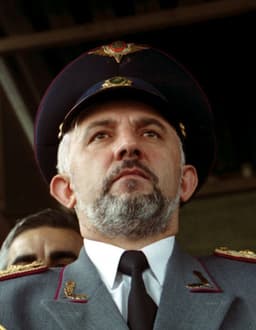
Aslan Maskhadov
Politician · Modern
47.3Total
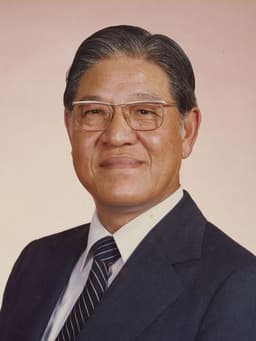
Lee Teng-hui
Politician · Modern
56.6Total
Basic Information
Born
1951
1923
Died
—
—
Era
Modern
Modern
Nationality
Chechnya
China
Occupation
Politician
Politician
Civilization
Western
Eastern
Score Comparison
Military (10%)
50.0
14.3
Political (20%)
36.5
78.0
Influence (20%)
54.1
55.0
Legacy (20%)
44.2
58.0
Leadership (15%)
51.9
78.0
Strategy (15%)
45.0
35.3
TOTAL
47.3
56.6
Aslan Maskhadov — Complete Timeline
1997 AD
Elected President of IchkeriaPolitical Action◆ Major
Aslan Maskhadov was elected as the second president of the Chechen Republic of Ichkeria after Dudayev's death. He won a democratic election but faced challenges from radical factions within Chechnya.
ChechnyaElectionIchkeria
Impact: regionalconstructive
1999 AD
Second Chechen War BeginsWar
Russian forces launched a second invasion of Chechnya after the apartment bombings in Russia. Maskhadov led the Chechen resistance but was unable to prevent Russian forces from capturing Grozny and establishing control.
Chechen WarRussiaInvasion
Impact: regionaltragic
2005 AD
Killed by Russian ForcesWar◆ Major
Maskhadov was killed by Russian special forces during a raid in the village of Tolstoy-Yurt. His death was a major victory for Russia in the Second Chechen War. He was succeeded by radical leaders.
AssassinationChechnyaRussia
Impact: regionaltragic
Lee Teng-hui — Complete Timeline
1987 AD
End of martial law and democratizationPolitical Action◆ Major
As president, Lee Teng-hui oversaw the lifting of martial law in Taiwan, ending 38 years of military rule. This allowed for the formation of opposition parties and expanded political freedoms.
Martial LawDemocratization
Impact: nationalprogressive
1996 AD
First direct presidential electionPolitical Action◆ Major
Lee Teng-hui won Taiwan's first direct presidential election, a landmark in the island's democratization. China conducted missile tests near Taiwan during the campaign to intimidate voters.
ElectionDemocratization
Impact: nationalprogressive
1999 AD
Special state-to-state relations statementPolitical Action◆ Major
Lee described cross-strait relations as 'special state-to-state relations,' implying Taiwan's separate sovereignty. This statement angered China and heightened tensions across the Taiwan Strait.
Cross-Strait RelationsSovereignty
Impact: regionaldestructive
Expert Analysis
Origins
Aslan Maskhadov was born on September 21, 1951, in the Kazakh SSR to a Chechen family deported under Stalin. He grew up in exile, returning to Chechnya in the 1960s. Maskhadov pursued a military career, graduating from the Tbilisi Higher Artillery Command School and later serving in the Soviet Army, rising to the rank of colonel. His formative years were shaped by the trauma of deportation and the desire for Chechen self-determination.
Lee Teng-hui was born on January 15, 1923, in Sanzhi, Taiwan (then under Japanese rule). His family was Hakka Chinese. Lee studied at Kyoto Imperial University in Japan and later at National Taiwan University. He earned a PhD in agricultural economics from Cornell University. Lee's early life was marked by Japanese colonial education and later the transition to Chinese Nationalist rule, which influenced his views on Taiwan's identity.
Rise to Power
Maskhadov rose to prominence during the First Chechen War (1994-1996). As chief of staff of the Chechen forces, he played a key role in the Battle of Grozny and negotiated the Khasav-Yurt Accord in 1996, which ended the war. In 1997, he was elected president of the Chechen Republic of Ichkeria with 59% of the vote, defeating field commanders like Shamil Basayev. However, his authority was undermined by warlords and the rise of Islamist factions.
Lee Teng-hui entered politics under the Kuomintang (KMT) regime. He served as mayor of Taipei (1978-1981) and governor of Taiwan Province (1981-1984). In 1984, he became vice president under Chiang Ching-kuo. Upon Chiang's death in 1988, Lee succeeded him as president. He consolidated power by outmaneuvering KMT hardliners and gradually promoted democratization.
Leadership & Governance
Maskhadov's leadership style was moderate and conciliatory, but he struggled to maintain control. He sought to build a secular state with democratic institutions, but faced armed opposition from warlords like Basayev, who conducted the 1999 invasion of Dagestan. Maskhadov's governance score of 36.5 reflects his inability to enforce authority or provide stability. He condemned terrorism but could not prevent it.
Lee Teng-hui was a pragmatic reformer. He ended martial law in 1987 (before becoming president) and oversaw the lifting of the Temporary Provisions Effective During the Period of Communist Rebellion in 1991. He held Taiwan's first direct presidential election in 1996, winning 54% of the vote despite Chinese missile tests. Lee's political score of 78.0 indicates effective leadership in democratic transition, though his strategy score of 35.3 reflects miscalculations in cross-strait relations.
Triumph & Tragedy
Maskhadov's greatest triumph was negotiating the Khasav-Yurt Accord, which secured Chechen de facto independence. However, his presidency was plagued by economic collapse, lawlessness, and the rise of radicalism. His tragedy was his inability to prevent the Second Chechen War (1999-2009) and his own death in a Russian special forces raid on March 8, 2005. He was killed in Tolstoy-Yurt, unable to unite Chechnya.
Lee's triumph was democratizing Taiwan without major violence, establishing a multi-party system. He also promoted Taiwanese identity, leading to the 'Taiwanization' of politics. However, his 'special state-to-state relations' statement in 1999 escalated tensions with China, and his legacy is marred by accusations of corruption (though not convicted). He failed to secure international recognition for Taiwan's sovereignty.
Character & Destiny
Maskhadov was a military professional who sought a political solution. His character was cautious and diplomatic, but destiny placed him among warlords who rejected compromise. He was unable to control his own commanders, leading to his downfall. Historians assess him as a tragic figure who was more a victim than a master of events.
Lee Teng-hui was a shrewd and ambitious politician. He used his academic background to craft a moderate image but was ruthless in eliminating rivals. His character led him to push for democratization while maintaining stability. His destiny was to be a transformative figure in Taiwan's history, though his legacy remains contested.
Legacy
Maskhadov's legacy is mixed. He is remembered as a legitimate leader by Chechen nationalists but overshadowed by the radicalism of Basayev. His democratic experiment failed, and Chechnya remains under Russian control. His influence score of 54.1 reflects symbolic importance but limited practical impact.
Lee Teng-hui's legacy is profound in Taiwan. He is credited with ending authoritarian rule and establishing democratic institutions. However, his legacy complicates cross-strait relations. His influence score of 55.0 and legacy score of 58.0 indicate enduring impact, though his political score of 78.0 is his highest.
Conclusion
Lee Teng-hui had greater impact with a total score of 56.6 compared to Maskhadov's 47.3. Lee's democratization of Taiwan affected 23 million people and altered the political landscape of East Asia. Maskhadov's struggle, while significant, ended in failure and did not achieve lasting independence. Lee's governance and political scores (78.0 each) far exceed Maskhadov's (36.5 and 51.9). Although Maskhadov's military score (50.0) is higher than Lee's (14.3), the overall comparison favors Lee due to his successful institutional reforms. Lee's legacy endures through Taiwan's democracy, while Maskhadov's Chechnya remains under authoritarian rule.
Rankings
🥇
Lee Teng-huiLeader
Mil: 14.3Pol: 78.0Inf: 55.0
56.6
🥈
Aslan Maskhadov
Mil: 50.0Pol: 36.5Inf: 54.1
47.3
+9.3 behind
How This Comparison Works
Algorithm
Each figure is scored on 6 dimensions (0—100 scale) based on structured historical data: Military (10%), Political (20%), Influence (20%), Legacy (20%), Leadership (15%), Strategy (15%). The weighted total produces the final ranking.
Data Sources
Scores are computed from structured sub-indicators in the database. Scale factors adjust for era (Ancient ×0.85, Modern ×1.0) and civilization size (Eastern ×1.05, Other ×0.80) to account for differences in population and military scale.
Maximum 3 Figures
Comparisons are limited to 2—3 figures to ensure readability and statistical meaningfulness.
Error Margins
±5 points per dimension — Sub-scores are derived from historical records with inherent uncertainty. Two figures within 5 points on a dimension should be considered roughly equivalent in that area.
Total Score Accuracy
±3 points overall — The weighted combination of 6 dimensions produces a total score with approximately ±3 points of uncertainty. Differences of less than 3 points are not statistically significant— the figures are effectively tied.
Known Limitations
- Historical records are incomplete and uneven across civilizations
- Figures from oral-tradition societies may be underrepresented
- Occupation labels can misclassify multi-role figures
- Scores measure capability and impact, not moral character
- Quantitative scoring is a comparison tool, not absolute truth
Capability Radar
Military (10%) — Battles & Warfare
Battles
45
16
Win Rate
40
15
Expansion
10
20
Political (20%) — Governance & Reform
Reform
25
85
Diplomacy
40
70
Economy
15
75
Influence (20%) — Cultural & Global Reach
Cultural
30
60
Global
25
60
Legacy (20%) — Historical Impact
Historical
35
70
Longevity
20
55
Leadership (15%) — Power & Stability
Tenure
35
75
Stability
10
65
Strategy (15%) — Tactics & Innovation
Strategy
50
22
Tactics
55
25
Reform
30
30
Similar Comparisons
Comments & Discussion
No comments yet. Be the first to share your thoughts!