Loading...
Burhanuddin Rabbani vs Napoleon Bonaparte
Napoleon Bonaparte leads by 23.5 pts · 2 figures compared
…
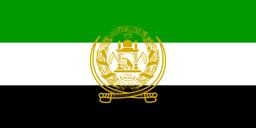
Burhanuddin Rabbani
Politician · Modern
47.4Total

Napoleon Bonaparte
General · Modern
70.9Total
Basic Information
Born
1940
1769
Died
—
1821
Era
Modern
Modern
Nationality
Afghanistan
France
Occupation
Politician
General
Civilization
Middle Eastern
Western
Score Comparison
Military (10%)
36.6
94.0
Political (20%)
37.9
72.0
Influence (20%)
53.3
40.0
Legacy (20%)
42.5
80.0
Leadership (15%)
58.8
78.0
Strategy (15%)
52.8
90.0
TOTAL
47.4
70.9
Burhanuddin Rabbani — Complete Timeline
1992 AD
Elected President of AfghanistanPolitical Action◆ Major
Burhanuddin Rabbani was elected president of the Islamic State of Afghanistan after the fall of the communist government. His presidency was marked by civil war among mujahideen factions, leading to instability.
AfghanistanPresidencyCivil War
Impact: national
1996 AD
Loss of Kabul to TalibanWar
Rabbani's government was overthrown when the Taliban captured Kabul. He fled to the north and joined the Northern Alliance. This defeat marked the beginning of Taliban rule in Afghanistan.
TalibanAfghanistanDefeat
Impact: nationaltragic
2011 AD
Assassination by Suicide BomberPolitical Action◆ Major
Rabbani was killed by a suicide bomber who posed as a Taliban peace envoy. The attack occurred at his home in Kabul. His death was a major blow to Afghan peace efforts.
AssassinationAfghanistanPeace
Impact: nationaltragic
Napoleon Bonaparte — Complete Timeline
1799 AD
Coup of 18 BrumaireOther◆ Major
Napoleon Bonaparte, with support from his brother Lucien and key political figures, overthrew the Directory in a bloodless coup. He established the Consulate with himself as First Consul, effectively becoming the ruler of France. This event ended the French Revolution's most unstable period.
French RevolutionCoupRise to Power
Impact: regional
1804 AD
Promulgation of the Napoleonic CodeOther◆ Major
Napoleon enacted the Civil Code of the French, known as the Napoleonic Code, a comprehensive set of laws that replaced the fragmented feudal legal systems. The code established legal equality, protected property rights, and secularized law. It became the basis for legal systems in many European and world countries.
Legal ReformNapoleonic CodeCivil Law
Impact: globalconstructive
1805 AD
Battle of AusterlitzWar◆ Major
Napoleon's Grande Arm
Napoleonic WarsBattleDecisive Victory
Impact: global
1812 AD
Invasion of RussiaWar◆ Major
Napoleon led the Grande Arm
Napoleonic WarsInvasionDisaster
Impact: globaldestructive
1815 AD
Battle of WaterlooWar◆ Major
Napoleon's French army was defeated by the combined forces of the Duke of Wellington's Anglo-Allied army and Gebhard Leberecht von Bl
Napoleonic WarsBattleFinal Defeat
Impact: globaldestructive
Expert Analysis
burhanuddin-rabbani-vs-napoleon-bonaparte
# The Emperor and the Exile: Two Paths Through Modernity
On a misty morning in June 1815, Napoleon Bonaparte watched his Imperial Guard crumble near a Belgian village called Waterloo. Half a world away and nearly two centuries later, on a quiet evening in September 2011, Burhanuddin Rabbani welcomed a visitor to his Kabul home—a man who claimed to carry peace from the Taliban. Both men were undone by betrayal, but the nature of that betrayal, and the worlds they built around themselves, could not have been more different. Napoleon had conquered Europe; Rabbani had tried to hold Afghanistan together. One died in exile on a remote Atlantic island, the other in a blast that shattered his living room. What drove these two leaders—both products of turbulent eras, both men of ambition—to such divergent ends?
Origins
Napoleon Buonaparte was born in 1769 on Corsica, an island that had only recently become French. His family was minor nobility, but they were not wealthy. The young Napoleon was short, intense, and fiercely ambitious—a boy who read military history obsessively and taught himself mathematics. Corsica was a place of rugged independence, and its spirit never left him. He entered French military school at nine, where his accent and poverty marked him as an outsider. But France was convulsing with revolution, and for a man of talent, the old barriers were collapsing.
Burhanuddin Rabbani was born in 1940 in Faizabad, a provincial town in northeastern Afghanistan. His family were religious scholars, and he followed their path: studying Islamic law at Kabul University, then earning a master’s degree at Al-Azhar in Cairo. He spoke Persian and Arabic fluently, and his mind was shaped by the great debates of the Muslim world—modernity versus tradition, secularism versus faith. When the Soviet Union invaded Afghanistan in 1979, Rabbani was a professor of theology. He did not pick up a rifle himself, but he became the political leader of Jamiat-e-Islami, one of the most powerful mujahideen factions. His war would be fought not on open fields, but in the labyrinth of Afghan politics.
Rise to Power
Napoleon’s rise was meteoric. At twenty-four, he drove the British out of Toulon. By twenty-six, he was commanding the Army of Italy, where his lightning campaigns humiliated the Austrians. He was not just a general; he was a phenomenon. His soldiers adored him because he shared their rations and remembered their names. His political genius was equally sharp: when he returned from Egypt in 1799, he found France ruled by a corrupt Directory. Within weeks, he had staged a coup and made himself First Consul. He was thirty years old.
Rabbani’s path was slower and more brutal. For thirteen years, he fought the Soviets from the mountains and valleys of northern Afghanistan. When the communist government in Kabul collapsed in 1992, the mujahideen factions turned on each other. Rabbani was elected president that year, but his authority was hollow. He controlled only parts of Kabul; his former allies controlled the rest. The city became a battlefield. Rabbani was a scholar, not a warlord, and he struggled to impose order. His presidency was a negotiation, not a command.
Leadership & Governance
Napoleon governed with the same energy he brought to war. He reformed French law into the Napoleonic Code—a system based on merit, not birth. He built roads, canals, and schools. He centralized the state and created the Bank of France. His military genius was staggering: at Austerlitz in 1805, he destroyed a larger Russian-Austrian army by feigning weakness, then striking at the decisive point. His strategy score of 93 reflects a mind that saw war as a chessboard of movement, timing, and morale. He believed that "in war, the moral is to the physical as three to one."
Rabbani’s leadership was of a different kind. He was a unifier, not a conqueror. After the Taliban captured Kabul in 1996, he fled north and joined the Northern Alliance. He spent years trying to hold together a coalition of warlords, ethnic leaders, and religious factions. His military score is low—23.7—because he never commanded armies in the field. But his political score of 53.3 reflects a man who understood that in Afghanistan, power flows through relationships, not battles. He was patient, diplomatic, and deeply religious. He believed that Afghanistan’s future lay in Islamic democracy, not tribal feudalism.
Triumph & Tragedy
Napoleon’s greatest moment was Austerlitz—the "Battle of the Three Emperors," where he crushed the combined might of Russia and Austria. His greatest tragedy was the invasion of Russia in 1812. He marched 600,000 men east; fewer than 100,000 returned. The Russian winter, the scorched earth, and his own overreach destroyed his Grand Army. He was exiled to Elba in 1814, escaped, and ruled for a hundred days before Waterloo ended it all. He died in 1821 on Saint Helena, a prisoner of the British.
Rabbani’s triumph was surviving the Soviet war and becoming president. His tragedy was that he could never turn that title into real power. The Taliban’s capture of Kabul in 1996 was a humiliation, but he kept fighting. In 2001, after the American invasion, he returned to Kabul. He served as chairman of the peace council, trying to negotiate with the Taliban. On September 20, 2011, a man claiming to be a Taliban envoy hugged him—and detonated a bomb hidden in his turban. Rabbani was killed instantly.
Character & Destiny
Napoleon was driven by an insatiable hunger for glory. He once said, "I live only for posterity." His ambition was his engine and his flaw. He could not stop—not at the Pyrenees, not at the Elbe, not at the gates of Moscow. He believed that destiny was something to be seized, not accepted.
Rabbani was driven by faith and duty. He believed that God had placed him in a difficult time for a purpose. He was not a man of grand gestures; he was a man of patience. He once told a journalist, "In Afghanistan, you cannot rush. The mountains do not move quickly." His destiny was to be a symbol—of resistance, of negotiation, of a peace that never came.
Legacy
Napoleon’s legacy is immense. The Napoleonic Code influenced legal systems across Europe and the Americas. He reshaped the map of Europe, ended feudalism, and inspired nationalism. He is remembered as both a tyrant and a reformer—a man who brought war and progress in equal measure. His total score of 82.4 reflects his enduring impact.
Rabbani’s legacy is quieter but real. He is remembered in Afghanistan as a man who tried to build a democratic state from the ruins of war. His assassination deepened the country’s chaos and paved the way for the Taliban’s return. His legacy score of 55.6 is modest, but it reflects a truth: in a land of warriors, a scholar-politician could only do so much.
Conclusion
Napoleon and Rabbani never met, never could have met. One conquered an empire; the other tried to save a nation. One died alone on an island; the other died in his own home, betrayed by a false embrace. Their lives remind us that leadership is not a single quality, but a response to circumstance. Napoleon’s Europe was a chessboard; Rabbani’s Afghanistan was a maze. Both men moved through their worlds with courage and conviction. But the world itself—its geography, its history, its limits—shaped what they could become. In the end, the difference between them is not talent. It is terrain.
Rankings
🥇
Napoleon BonaparteLeader
Mil: 94.0Pol: 72.0Inf: 40.0
70.9
🥈
Burhanuddin Rabbani
Mil: 36.6Pol: 37.9Inf: 53.3
47.4
+23.5 behind
How This Comparison Works
Algorithm
Each figure is scored on 6 dimensions (0—100 scale) based on structured historical data: Military (10%), Political (20%), Influence (20%), Legacy (20%), Leadership (15%), Strategy (15%). The weighted total produces the final ranking.
Data Sources
Scores are computed from structured sub-indicators in the database. Scale factors adjust for era (Ancient ×0.85, Modern ×1.0) and civilization size (Eastern ×1.05, Other ×0.80) to account for differences in population and military scale.
Maximum 3 Figures
Comparisons are limited to 2—3 figures to ensure readability and statistical meaningfulness.
Error Margins
±5 points per dimension — Sub-scores are derived from historical records with inherent uncertainty. Two figures within 5 points on a dimension should be considered roughly equivalent in that area.
Total Score Accuracy
±3 points overall — The weighted combination of 6 dimensions produces a total score with approximately ±3 points of uncertainty. Differences of less than 3 points are not statistically significant— the figures are effectively tied.
Known Limitations
- Historical records are incomplete and uneven across civilizations
- Figures from oral-tradition societies may be underrepresented
- Occupation labels can misclassify multi-role figures
- Scores measure capability and impact, not moral character
- Quantitative scoring is a comparison tool, not absolute truth
Capability Radar
Military (10%) — Battles & Warfare
Battles
5
95
Win Rate
5
90
Expansion
5
95
Political (20%) — Governance & Reform
Reform
30
95
Diplomacy
35
80
Economy
20
85
Influence (20%) — Cultural & Global Reach
Cultural
30
85
Global
30
90
Legacy (20%) — Historical Impact
Historical
35
95
Longevity
20
90
Leadership (15%) — Power & Stability
Tenure
40
85
Stability
15
70
Strategy (15%) — Tactics & Innovation
Strategy
5
95
Tactics
5
98
Reform
5
92
Similar Comparisons
Comments & Discussion
FrenchyPhantom6/17/2026
Comparing Napoleon to Rabbani is like comparing a thunderstorm to a candle. Bonaparte's betrayal at Waterloo came from his own hubris and military miscalculation—he'd already been exiled once and still didn't learn. Rabbani's betrayal was an assassination by suicide bomber posing as a peace envoy, which is a different species of treachery. Napoleon died on St. Helena sipping wine; Rabbani was blown to pieces in his own home. The only thing they share is that both trusted someone who smiled while
沙漠之狐6/17/2026
拿破仑靠战术和法典改变欧洲,拉巴尼连喀布尔都守不住,这不是同一量级。拿破仑输了滑铁卢,但还有百日王朝和无数崇拜者;拉巴尼被塔利班赶出喀布尔,最后还被自称和平使者的卧底炸死,连像样的纪念碑都没有。历史只记住赢家和有戏剧性的失败者,拉巴尼两者都不沾,硬比是侮辱拿破仑的军事天赋。
DataSkeptic976/17/2026
Your "similarity" is statistically bankrupt. Napoleon commanded over 600,000 men at his peak in 1812 and fought more than 60 battles. Rabbani led a faction that never controlled more than 30% of Afghanistan after 1992. One reshaped European legal systems with the Napoleonic Code—still used in 40+ countries. The other left behind a civil war that killed 50,000+ civilians in Kabul alone. The only common variable is their exit strategy being betrayal, but that's like saying a hurricane and a drizzl
古典学人6/17/2026
拿破仑是古典悲剧英雄,拉巴尼只是地缘政治的牺牲品。前者有科西嘉的叛逆血统,少年时读凯撒和高乃依,从炮兵少尉一路打到皇帝,连死前都像普鲁塔克笔下的人物——流放中写回忆录,玩国际象棋。后者是个伊斯兰学者,被拖进苏联和内战漩涡,最后死于信任一个不该信任的信使。一个是命运的巨人,一个只是命运的尘埃,比较本身就像拿《伊利亚特》和街头小报并列。
RevisionistReaper6/17/2026
You're whitewashing Rabbani's role in Afghanistan's destruction. He was president from 1992 to 1996, and his government was a kleptocracy that alienated Pashtuns and enabled the Taliban's rise. Meanwhile, Napoleon—whatever his faults—actually built institutions, spread meritocracy, and unified France after revolutionary chaos. Rabbani couldn't even stop his own allies from shelling neighborhoods. He died not as a martyr, but as a man who'd already lost Afghanistan twice. That's not a tragedy; it