Loading...
This comparison has not been analyzed yet.
One-time AI generation (~1 minute). Scores and timeline are already available below.
Burhanuddin Rabbani vs Teofila Zofia Sobieska
Burhanuddin Rabbani leads by 0.5 pts · 2 figures compared
…
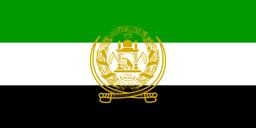
Burhanuddin Rabbani
Politician · Modern
47.4Total

Teofila Zofia Sobieska
Politician · Modern
46.9Total
Basic Information
Born
1940
1607
Died
—
1661
Era
Modern
Modern
Nationality
Afghanistan
Poland-Lithuania
Occupation
Politician
Politician
Civilization
Middle Eastern
Western
Score Comparison
Military (10%)
36.6
50.0
Political (20%)
37.9
39.4
Influence (20%)
53.3
50.2
Legacy (20%)
42.5
41.7
Leadership (15%)
58.8
58.8
Strategy (15%)
52.8
42.0
TOTAL
47.4
46.9
Burhanuddin Rabbani — Complete Timeline
1992 AD
Elected President of AfghanistanPolitical Action◆ Major
Burhanuddin Rabbani was elected president of the Islamic State of Afghanistan after the fall of the communist government. His presidency was marked by civil war among mujahideen factions, leading to instability.
AfghanistanPresidencyCivil War
Impact: national
1996 AD
Loss of Kabul to TalibanWar
Rabbani's government was overthrown when the Taliban captured Kabul. He fled to the north and joined the Northern Alliance. This defeat marked the beginning of Taliban rule in Afghanistan.
TalibanAfghanistanDefeat
Impact: nationaltragic
2011 AD
Assassination by Suicide BomberPolitical Action◆ Major
Rabbani was killed by a suicide bomber who posed as a Taliban peace envoy. The attack occurred at his home in Kabul. His death was a major blow to Afghan peace efforts.
AssassinationAfghanistanPeace
Impact: nationaltragic
Teofila Zofia Sobieska — Complete Timeline
1627 AD
Marriage to Jakub SobieskiPolitical Action◆ Major
Teofila Zofia Sobieska married Jakub Sobieski, a powerful magnate and later castellan of Krakow. The marriage strengthened her family's political position and produced future King Jan III Sobieski.
MarriagePolitical AllianceSobieski Family
Impact: nationalconstructive
1629 AD
Birth of Jan III SobieskiOther◆ Major
Teofila Zofia gave birth to Jan Sobieski, who would later become King of Poland and Grand Duke of Lithuania. Her influence and education shaped his early life and political ambitions.
BirthRoyal FamilySobieski
Impact: nationalconstructive
1646 AD
Management of Sobieski EstatesPolitical Action
After her husband's death, Teofila Zofia managed the vast Sobieski estates and political interests. She maintained the family's influence during the turbulent Khmelnytsky Uprising period.
Estate ManagementPolitical InfluenceSobieski Family
constructive
This comparison has not been analyzed yet.
One-time AI generation (~1 minute). Scores and timeline are already available below.
Rankings
🥇
Burhanuddin RabbaniLeader
Mil: 36.6Pol: 37.9Inf: 53.3
47.4
🥈
Teofila Zofia Sobieska
Mil: 50.0Pol: 39.4Inf: 50.2
46.9
+0.5 behind
How This Comparison Works
Algorithm
Each figure is scored on 6 dimensions (0—100 scale) based on structured historical data: Military (10%), Political (20%), Influence (20%), Legacy (20%), Leadership (15%), Strategy (15%). The weighted total produces the final ranking.
Data Sources
Scores are computed from structured sub-indicators in the database. Scale factors adjust for era (Ancient ×0.85, Modern ×1.0) and civilization size (Eastern ×1.05, Other ×0.80) to account for differences in population and military scale.
Maximum 3 Figures
Comparisons are limited to 2—3 figures to ensure readability and statistical meaningfulness.
Error Margins
±5 points per dimension — Sub-scores are derived from historical records with inherent uncertainty. Two figures within 5 points on a dimension should be considered roughly equivalent in that area.
Total Score Accuracy
±3 points overall — The weighted combination of 6 dimensions produces a total score with approximately ±3 points of uncertainty. Differences of less than 3 points are not statistically significant— the figures are effectively tied.
Known Limitations
- Historical records are incomplete and uneven across civilizations
- Figures from oral-tradition societies may be underrepresented
- Occupation labels can misclassify multi-role figures
- Scores measure capability and impact, not moral character
- Quantitative scoring is a comparison tool, not absolute truth
Capability Radar
Military (10%) — Battles & Warfare
Battles
5
28
Win Rate
5
32
Expansion
5
34
Political (20%) — Governance & Reform
Reform
30
20
Diplomacy
35
40
Economy
20
30
Influence (20%) — Cultural & Global Reach
Cultural
30
20
Global
30
10
Legacy (20%) — Historical Impact
Historical
35
30
Longevity
20
20
Leadership (15%) — Power & Stability
Tenure
40
30
Stability
15
25
Strategy (15%) — Tactics & Innovation
Strategy
5
37
Tactics
5
43
Reform
5
42
Similar Comparisons
Comments & Discussion
No comments yet. Be the first to share your thoughts!