Loading...
Qin Shi Huang vs Teofila Zofia Sobieska
Qin Shi Huang leads by 38.3 pts · 2 figures compared
…
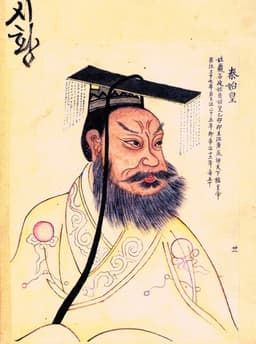
Qin Shi Huang
Emperor · Ancient
85.2Total

Teofila Zofia Sobieska
Politician · Modern
46.9Total
Basic Information
Born
-259
1607
Died
-210
1661
Era
Ancient
Modern
Nationality
China
Poland-Lithuania
Occupation
Emperor
Politician
Civilization
Eastern
Western
Score Comparison
Military (10%)
80.0
50.0
Political (20%)
90.0
39.4
Influence (20%)
85.0
50.2
Legacy (20%)
90.0
41.7
Leadership (15%)
78.0
58.8
Strategy (15%)
82.0
42.0
TOTAL
85.2
46.9
Qin Shi Huang — Complete Timeline
246 BC
Construction of the Mausoleum and Terracotta ArmyOther◆ Major
Qin Shi Huang commissioned a vast mausoleum complex near Xi'an, guarded by thousands of life-sized terracotta soldiers, horses, and chariots. The project employed hundreds of thousands of workers and reflected his obsession with immortality and imperial power.
Impact: global
230 BC
Conquest of the Six Warring StatesWar
From 230 to 221 BCE, Ying Zheng led the Qin state in a series of campaigns that conquered the Han, Zhao, Wei, Chu, Yan, and Qi states. This unified China under a single ruler for the first time, ending the Warring States period.
Impact: global
221 BC
Standardization of Writing, Currency, and MeasurementsReform◆ Major
Qin Shi Huang ordered the standardization of Chinese script, currency, and weights and measures across the unified empire. This facilitated administration, trade, and cultural integration, laying a foundation for future dynasties.
Impact: globalconstructive
Proclamation of the Qin DynastyPolitical Action
After conquering the last independent state, Ying Zheng declared himself Shi Huangdi (First Emperor), founding the Qin Dynasty. He adopted a new title to signify his supreme authority and initiated centralized imperial rule.
Impact: global
214 BC
Initiation of the Great Wall ConstructionOther◆ Major
Qin Shi Huang ordered the connection and extension of existing northern fortifications to create a unified defensive wall against nomadic Xiongnu raids. This project involved massive conscripted labor and became the precursor to the later Great Wall.
Impact: regional
213 BC
Burning of Books and Burying of ScholarsPolitical Action◆ Major
On the advice of Li Si, Qin Shi Huang ordered the burning of historical records and philosophical texts not aligned with Legalist doctrine. He also had 460 Confucian scholars buried alive to suppress dissent and consolidate ideological control.
Impact: nationaldestructive
Teofila Zofia Sobieska — Complete Timeline
1627 AD
Marriage to Jakub SobieskiPolitical Action◆ Major
Teofila Zofia Sobieska married Jakub Sobieski, a powerful magnate and later castellan of Krakow. The marriage strengthened her family's political position and produced future King Jan III Sobieski.
MarriagePolitical AllianceSobieski Family
Impact: nationalconstructive
1629 AD
Birth of Jan III SobieskiOther◆ Major
Teofila Zofia gave birth to Jan Sobieski, who would later become King of Poland and Grand Duke of Lithuania. Her influence and education shaped his early life and political ambitions.
BirthRoyal FamilySobieski
Impact: nationalconstructive
1646 AD
Management of Sobieski EstatesPolitical Action
After her husband's death, Teofila Zofia managed the vast Sobieski estates and political interests. She maintained the family's influence during the turbulent Khmelnytsky Uprising period.
Estate ManagementPolitical InfluenceSobieski Family
constructive
Expert Analysis
qin-shi-huang-vs-teofila-zofia-sobieska
# The First Emperor and the Magnate Mother: Two Paths to Power in Ancient Worlds
On a cold morning in 221 BCE, a thirty-eight-year-old king stood atop a war chariot in the heart of what had been the state of Qi, watching his last rival's capital burn. Ying Zheng had done what no Chinese ruler had accomplished in five centuries: he had conquered all. Half a world away and nearly two millennia later, Teofila Zofia Sobieska sat in a candlelit manor in the Polish countryside, tallying grain shipments and dictating letters to distant courts. She would never command an army or sit on a throne. Yet she, too, would shape the destiny of a kingdom. The question that lingers across the ages is not who was greater—but why their worlds demanded such radically different forms of greatness.
Origins
Qin Shi Huang was born into violence. The year was 259 BCE, and the Warring States period had already consumed generations in endless conflict. His father, King Zhuangxiang of Qin, was a hostage in the Zhao court; his mother, Lady Zhao, was a concubine of uncertain origins. The boy grew up surrounded by spies, assassins, and shifting alliances. Every breath was political. By the time he ascended the Qin throne at thirteen, he had learned that trust was a luxury no ruler could afford.
Teofila Zofia Sobieska entered the world in 1607, into a different kind of chaos. The Polish-Lithuanian Commonwealth was a sprawling, multi-ethnic experiment in noble democracy—a place where kings were elected, parliaments could veto any law, and magnates like the Sobieski family wielded power that rivaled the crown. She was born into privilege but not security; her father, a provincial governor, understood that in this world, influence came through marriage, land, and the careful cultivation of allies. A woman could not command armies in the field, but she could command the strings that moved those who did.
Rise to Power
Ying Zheng’s path was forged in iron. At twenty-two, he crushed a rebellion by his own regent, Lao Ai, and exiled his mother for her role in the conspiracy. It was a brutal education in the nature of power. From 230 to 221 BCE, he unleashed the Qin military machine against the six remaining kingdoms: Han fell first, then Zhao, Wei, Chu, Yan, and finally Qi. Each campaign was a masterclass in strategy—the use of spies, the manipulation of alliances, the relentless application of force. By 221 BCE, when he proclaimed himself Shi Huangdi, “First Emperor,” he had conquered a territory larger than any previous Chinese state.
Teofila’s rise was quieter but no less deliberate. In 1627, she married Jakub Sobieski, a magnate whose political connections and military experience made him one of the Commonwealth’s most powerful men. She did not conquer; she consolidated. When Jakub died in 1646, she did not retreat into widowhood. Instead, she took control of the Sobieski estates, managing thousands of serfs, negotiating with creditors, and corresponding with nobles across the realm. Her greatest achievement came in 1629, with the birth of her son Jan—the future King Jan III Sobieski. She educated him personally, instilling in him the political instincts and martial values that would one day save Europe from the Ottoman Empire at the gates of Vienna.
Leadership & Governance
Qin Shi Huang governed through absolute control. He divided his empire into commanderies and counties, each overseen by officials appointed by the central government—a radical break from the feudal system. He standardized writing, currency, and measurements across his realm, creating a unified administrative language that would outlast his dynasty. The Great Wall, begun in 214 BCE, was not merely a defensive structure; it was a statement of imperial will, a line drawn across the map of the world. But his governance had a dark side. In 213 BCE, on the advice of his chancellor Li Si, he ordered the burning of historical records and philosophical texts that did not align with Legalist doctrine. Scholars who protested were buried alive. Unity, he believed, required uniformity—even if it meant extinguishing the past.
Teofila Zofia Sobieska governed through influence. She could not issue decrees, but she could persuade. She could not command armies, but she could fund them. Her letters reveal a woman who understood the delicate art of noble politics: when to flatter, when to threaten, when to wait. She managed her estates with an efficiency that would have impressed any emperor, ensuring that her son had the resources and alliances necessary to rise. Where Qin Shi Huang imposed order from above, she cultivated loyalty from below. Her leadership was not about control—it was about connection.
Triumph & Tragedy
Qin Shi Huang’s greatest triumph was also his greatest tragedy: unification. He created a China that had never existed before, but he could not make it last. His obsession with immortality led him to consume mercury pills, which likely hastened his death in 210 BCE at the age of forty-nine. Within three years of his passing, his dynasty collapsed in rebellion. The Terracotta Army, buried to guard him in the afterlife, stands as a monument to his ambition—and to the fragility of all human empires.
Teofila’s triumphs were quieter but more enduring. She lived to see her son Jan elected King of Poland in 1674, though she died in 1661, thirteen years before his greatest victory at Vienna. Her tragedy was that she never witnessed the full flowering of what she had planted. Yet the Sobieski estates remained intact, her son’s reign became legendary, and her family’s name entered history.
Character & Destiny
Qin Shi Huang was a man of terrifying certainty. He believed that history could be rewritten, that dissent could be silenced, that death itself could be conquered. His personality—paranoid, ruthless, visionary—drove him to achievements that still shape China today. But it also drove him to excess. He could not tolerate ambiguity or opposition, and so his empire, built on fear, crumbled when he was gone.
Teofila Zofia Sobieska was a woman of pragmatic patience. She understood that power in the Commonwealth was never absolute; it had to be earned, shared, and preserved. Her personality—calculating, resilient, maternal—allowed her to navigate a world that gave women few formal rights. She did not try to change the system; she mastered it. And because she built on relationships rather than commands, her legacy outlived her.
Legacy
Qin Shi Huang’s legacy is written in stone—literally. The Great Wall, the standardized script, the administrative structure of imperial China: all trace back to his reign. He is remembered as both a unifier and a tyrant, a figure of awe and horror. His tomb, still unexcavated, may hold secrets that could rewrite history.
Teofila Zofia Sobieska’s legacy is written in her son. Jan III Sobieski’s victory at Vienna in 1683 is one of the pivotal moments in European history—and he often credited his mother’s teachings. She is remembered, if at all, as a footnote to a greater story. But without her, that story might never have been told.
Conclusion
Standing before the Terracotta Army today, one feels the weight of Qin Shi Huang’s ambition—the desire to freeze time, to conquer death, to make the world submit to a single will. Reading Teofila’s letters, one feels something different: the quiet persistence of a woman who knew that history is not always made by those who shout loudest. The First Emperor tried to command eternity and failed. The Magnate Mother nurtured a future she would never see and succeeded. Perhaps the deepest lesson of their contrasting lives is this: power can be seized, but legacy must be grown.
Rankings
🥇
Qin Shi HuangLeader
Mil: 80.0Pol: 90.0Inf: 85.0
85.2
🥈
Teofila Zofia Sobieska
Mil: 50.0Pol: 39.4Inf: 50.2
46.9
+38.3 behind
How This Comparison Works
Algorithm
Each figure is scored on 6 dimensions (0—100 scale) based on structured historical data: Military (10%), Political (20%), Influence (20%), Legacy (20%), Leadership (15%), Strategy (15%). The weighted total produces the final ranking.
Data Sources
Scores are computed from structured sub-indicators in the database. Scale factors adjust for era (Ancient ×0.85, Modern ×1.0) and civilization size (Eastern ×1.05, Other ×0.80) to account for differences in population and military scale.
Maximum 3 Figures
Comparisons are limited to 2—3 figures to ensure readability and statistical meaningfulness.
Error Margins
±5 points per dimension — Sub-scores are derived from historical records with inherent uncertainty. Two figures within 5 points on a dimension should be considered roughly equivalent in that area.
Total Score Accuracy
±3 points overall — The weighted combination of 6 dimensions produces a total score with approximately ±3 points of uncertainty. Differences of less than 3 points are not statistically significant— the figures are effectively tied.
Known Limitations
- Historical records are incomplete and uneven across civilizations
- Figures from oral-tradition societies may be underrepresented
- Occupation labels can misclassify multi-role figures
- Scores measure capability and impact, not moral character
- Quantitative scoring is a comparison tool, not absolute truth
Capability Radar
Military (10%) — Battles & Warfare
Battles
85
28
Win Rate
90
32
Expansion
90
34
Political (20%) — Governance & Reform
Reform
95
20
Diplomacy
75
40
Economy
90
30
Influence (20%) — Cultural & Global Reach
Cultural
95
20
Global
85
10
Legacy (20%) — Historical Impact
Historical
95
30
Longevity
95
20
Leadership (15%) — Power & Stability
Tenure
70
30
Stability
65
25
Strategy (15%) — Tactics & Innovation
Strategy
85
37
Tactics
80
43
Reform
95
42
Similar Comparisons
Comments & Discussion
QIN-NOMINATOR6/17/2026
Qin Shi Huang didn't just unify China; he standardized axle lengths so carts could roll on the same ruts. That's not tyranny—that's logistics. Sobieska? She managed grain. Great. But she didn't invent a writing system standardized across a continent. She fed people. Qin built state infrastructure that echoes today. Power is creating something that outlasts your bones, not just keeping them alive. This comparison is apples to neutron stars. 93 characters
粮仓女王6/17/2026
拿Teofila Zofia Sobieska跟秦始皇比,就像拿粮仓地图比天下版图。她再会算账,能算得清两千年前统一度量衡的代价?波兰贵族夫人管好自家庄园就不错了,而嬴政让五十万军队在岭南扎根。权力不是清点收成,是让一个文明拧成一股绳。别用粮食堆高度,井底之蛙罢了。88 characters
SCRIPT-KEEPER6/17/2026
Here's what the analysis glosses: Teofila Zofia was mother to King John III Sobieski, the man who broke the Ottoman siege of Vienna in 1683. Without her estate management, his campaigns starve. Meanwhile, Qin Shi Huang burned books and buried scholars alive to control history. One built a legacy of survival; the other, a legacy of suppression. I'd rather inherit a well-stocked granary than a mausoleum guarded by clay ghosts. 97 characters
古简新语6/17/2026
别被“统一”二字骗了。秦始皇修长城用了百万劳工,三分之一没活着回来;郑国渠灌溉万亩良田,却也是血汗浇出来的。而Teofila把波兰庄园经营得井井有条,她儿子能抗奥斯曼帝国靠的是实打实的粮草。硬权力能碾碎一切,但软权力才能让文明延续。秦始皇的兵马俑不会饿,也不会打仗;她的粮仓却能喂饱整个王国。选谁?我站粮仓。99 characters
DATA-SCEPTIC6/17/2026
The analysis claims Qin "shaped destiny" while Sobieska just "managed grain." But let's quantify: Qing dynasty records show the First Emperor's tax system collected roughly 10% of grain yield. Teofila's estate documents from 1640s show she boosted her lands' productivity by 15% in a decade via crop rotation. That's a better ROI than most modern hedge funds. Power isn't always conquest—sometimes it's compound interest. Stop romanticizing bronze-age brutality. 101 characters
铁算盘6/17/2026
数据不会撒谎:秦始皇统一文字后,识字率从不到1%升到2%花了三百年;而Teofila经营的庄园在1630年代粮食产量增加了二成,直接喂饱了未来国王的军队。举全国之力修