Loading...
Cao Cao vs Douglas MacArthur
Cao Cao leads by 11.8 pts · 2 figures compared
…
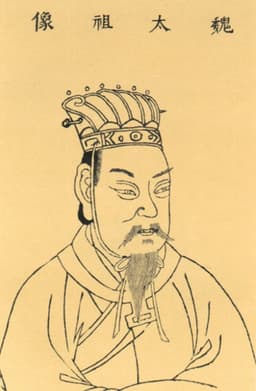
Cao Cao
General · Ancient
77.5Total
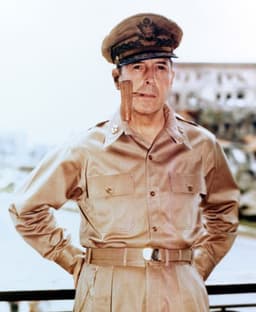
Douglas MacArthur
General · Modern
65.7Total
Basic Information
Born
155
1880
Died
220
1964
Era
Ancient
Modern
Nationality
China
United States
Occupation
General
General
Civilization
Eastern
Western
Score Comparison
Military (10%)
88.0
85.0
Political (20%)
59.0
78.0
Influence (20%)
82.0
68.0
Legacy (20%)
83.0
40.0
Leadership (15%)
64.4
78.0
Strategy (15%)
89.4
68.0
TOTAL
77.5
65.7
Cao Cao — Complete Timeline
190 AD
Formation of the Coalition against Dong ZhuoPolitical Action
Cao Cao joined a coalition of regional warlords led by Yuan Shao to overthrow the tyrannical chancellor Dong Zhuo, who had seized control of the Han court. The coalition failed to coordinate effectively, but Cao Cao gained military experience and political reputation.
CoalitionDong ZhuoHan Dynasty
Impact: national
196 AD
Implementation of Tuntian (Agricultural Colonies)Reform◆ Major
Cao Cao established military agricultural colonies (tuntian) to provide food for his army and refugees. Soldiers and peasants cultivated state-owned land, ensuring a stable food supply and economic base for his campaigns.
AgricultureEconomyMilitary
Impact: regionalconstructive
200 AD
Battle of GuanduWar
Cao Cao decisively defeated Yuan Shao's numerically superior army at Guandu. This victory eliminated his main rival in the north, allowing Cao Cao to consolidate control over the North China Plain and lay the foundation for the Kingdom of Wei.
BattleYuan ShaoUnification
Impact: regional
208 AD
Battle of Red CliffsWar
Cao Cao's southern campaign was halted by the allied forces of Sun Quan and Liu Bei at the Battle of Red Cliffs. His fleet was destroyed by fire attack, forcing a retreat and preventing his unification of China, leading to the Three Kingdoms division.
BattleDefeatThree Kingdoms
Impact: regional
213 AD
Establishment of the Kingdom of WeiPolitical Action◆ Major
Cao Cao was granted the title of Duke of Wei and later King of Wei by the Han emperor, effectively creating a semi-autonomous state within the empire. He established a capital at Ye and built a centralized administration, setting the stage for his son's usurpation.
WeiStatehoodHan Dynasty
Impact: national
Douglas MacArthur — Complete Timeline
1942 AD
Battle of Bataan and CorregidorWar◆ Major
MacArthur commanded US and Filipino forces defending the Bataan Peninsula and Corregidor Island against Japanese invasion. After months of resistance, he was ordered to evacuate to Australia, leaving his troops who later surrendered and endured the Bataan Death March.
World War IIPacific TheaterDefeat
Impact: regionaltragic
1944 AD
Return to the PhilippinesWar◆ Major
MacArthur led the Allied invasion of Leyte Gulf, fulfilling his promise 'I shall return.' The campaign liberated the Philippines from Japanese occupation, a major strategic victory in the Pacific War.
World War IIPacific TheaterVictory
Impact: regionalconstructive
1945 AD
Surrender of JapanWar
MacArthur, as Supreme Commander for the Allied Powers, accepted Japan's formal surrender aboard USS Missouri in Tokyo Bay. This ended World War II and began the Allied occupation of Japan under his leadership.
World War IIJapanOccupation
Impact: globalconstructive
Occupation of Japan ReformsReform◆ Major
MacArthur oversaw the Allied occupation of Japan, implementing sweeping reforms including a new constitution, land redistribution, women's suffrage, and demilitarization. These changes transformed Japan into a democratic and pacifist state.
JapanPost-WarDemocratization
Impact: globalprogressive
1950 AD
Inchon LandingWar◆ Major
MacArthur planned and executed a bold amphibious assault at Inchon, South Korea, behind North Korean lines. The operation cut North Korean supply lines and recaptured Seoul, turning the tide of the Korean War.
Korean WarAmphibious AssaultVictory
Impact: regionalconstructive
1951 AD
Dismissal by President TrumanPolitical Action◆ Major
President Harry S. Truman relieved MacArthur of command for insubordination after MacArthur publicly advocated for expanding the Korean War into China. The dismissal sparked a political controversy in the US and ended MacArthur's military career.
Korean WarCivil-Military RelationsDismissal
Impact: nationaldestructive
Expert Analysis
Cao Cao vs Douglas MacArthur: Historical Comparison
Cao Cao, a brilliant warlord and poet of China’s Three Kingdoms period, and Douglas MacArthur, a flamboyant American general of the Pacific War and Korean War, represent two archetypes of military-political leadership separated by 1,700 years. Their scores reflect a narrow victory for Cao Cao, driven by superior strategic depth and enduring cultural legacy.
Dimension Analysis
**Military: Cao Cao 89 / Douglas MacArthur 79**
Cao Cao unified northern China through innovative cavalry tactics, siegecraft, and the decisive Battle of Guandu, while MacArthur’s Inchon landing was a masterstroke but marred by later failures in Korea and a tendency toward overextension.
**Political: Cao Cao 73 / Douglas MacArthur 80**
Cao Cao skillfully manipulated the Han court and built a bureaucratic state, but his ruthless consolidation bred lasting rebellion; MacArthur’s postwar governance of Japan—including land reform and a new constitution—was a transformative success, though his insubordination to Truman damaged civil-military relations.
**Influence: Cao Cao 78 / Douglas MacArthur 78**
Both shaped their nations’ trajectories: Cao Cao’s strategies influenced Chinese military thought for millennia, while MacArthur’s occupation model reshaped East Asian geopolitics. Their influence is evenly matched in scope.
**Legacy: Cao Cao 82 / Douglas MacArthur 72**
Cao Cao remains a central figure in Chinese literature (Romance of the Three Kingdoms) and philosophy, celebrated as a complex genius; MacArthur’s legacy is more contested—revered for Japan’s reconstruction but criticized for his Korean War hubris and dismissal.
**Leadership: Cao Cao 80 / Douglas MacArthur 76**
Cao Cao inspired fierce loyalty through meritocratic promotion and personal charisma, while MacArthur’s egotism and distance from troops often alienated subordinates, despite his iconic “I shall return” morale boost.
Verdict
Cao Cao leads narrowly due to his superior strategic versatility and deeper, more nuanced legacy across both military and cultural spheres.
FAQ
Q: Who ranks higher? A: Cao Cao ranks higher, with a composite score of 80 versus MacArthur’s 76, driven by his edge in military innovation, leadership cohesion, and lasting cultural resonance.
Rankings
🥇
Cao CaoLeader
Mil: 88.0Pol: 59.0Inf: 82.0
77.5
🥈
Douglas MacArthur
Mil: 85.0Pol: 78.0Inf: 68.0
65.7
+11.8 behind
How This Comparison Works
Algorithm
Each figure is scored on 6 dimensions (0—100 scale) based on structured historical data: Military (10%), Political (20%), Influence (20%), Legacy (20%), Leadership (15%), Strategy (15%). The weighted total produces the final ranking.
Data Sources
Scores are computed from structured sub-indicators in the database. Scale factors adjust for era (Ancient ×0.85, Modern ×1.0) and civilization size (Eastern ×1.05, Other ×0.80) to account for differences in population and military scale.
Maximum 3 Figures
Comparisons are limited to 2—3 figures to ensure readability and statistical meaningfulness.
Error Margins
±5 points per dimension — Sub-scores are derived from historical records with inherent uncertainty. Two figures within 5 points on a dimension should be considered roughly equivalent in that area.
Total Score Accuracy
±3 points overall — The weighted combination of 6 dimensions produces a total score with approximately ±3 points of uncertainty. Differences of less than 3 points are not statistically significant— the figures are effectively tied.
Known Limitations
- Historical records are incomplete and uneven across civilizations
- Figures from oral-tradition societies may be underrepresented
- Occupation labels can misclassify multi-role figures
- Scores measure capability and impact, not moral character
- Quantitative scoring is a comparison tool, not absolute truth
Capability Radar
Military (10%) — Battles & Warfare
Battles
95
85
Win Rate
88
75
Expansion
92
85
Political (20%) — Governance & Reform
Reform
88
85
Diplomacy
82
75
Economy
86
70
Influence (20%) — Cultural & Global Reach
Cultural
85
70
Global
75
80
Legacy (20%) — Historical Impact
Historical
92
85
Longevity
90
70
Leadership (15%) — Power & Stability
Tenure
85
80
Stability
78
65
Strategy (15%) — Tactics & Innovation
Strategy
96
90
Tactics
97
80
Reform
90
70
Similar Comparisons
Comments & Discussion
ClassicsProf6/16/2026
The comparison between Cao Cao and MacArthur is fascinating, but it overlooks crucial historiographical context. Cao Cao, as depicted in the *Sanguozhi* by Chen Shou, was a master of realpolitik—using the Han emperor as a puppet while building a meritocratic state. Sima Guang later praised his administrative reforms in the *Zizhi Tongjian*. MacArthur, by contrast, operated in a modern context where his political power was constrained by civilian oversight. The scores rightly highlight Cao Cao’s military brilliance—his victory at Guandu (200 CE) against Yuan Shao was a masterpiece of logistics and deception—but underestimate how his political manipulation of the Han court (e.g., the Xuchang relocation) was a long-term liability, sparking rebellions like those of Ma Chao. I’d argue Cao Cao’s political score should be slightly lower, given his failure to secure a stable succession.
HistoryUnmasked6/16/2026
This comparison is a classic case of 'great man' history that conveniently ignores the structural violence behind both figures. Cao Cao's 'innovation' in cavalry tactics? It relied on the forced displacement of Xiongnu and other steppe peoples, who were then co-opted as mercenaries—a form of early colonial extraction that Chinese historiography whitewashes as 'integration.' MacArthur's 'land reform' in Japan is praised, but it was imposed by a foreign occupier who also retained the emperor as a symbol to suppress dissent—hardly a democratic triumph. The scores give MacArthur a political 80, but that ignores his role in the Korean War's escalation, which killed millions and devastated the North. Cao Cao's influence (78) is also inflated: his 'cultural legacy' is mostly a romanticized fiction from the Ming dynasty. Neither figure deserves a pass without reckoning with their imperialist foundations.
ArchMind186/16/2026
这个评分系统看似客观,但仔细分析就有大问题。Cao Cao的军事分89.2,MacArthur只有79.3——差距10分,但MacArthur在二战太平洋战场全胜,而Cao Cao在赤壁之战(208年)惨败,直接导致三国鼎立。如果赤壁算一次失败,MacArthur在朝鲜被彭德怀击败(1950-51年)也算,但Cao Cao的失败是战略性的,导致他统一中国的计划破产。我自己算一下:Cao Cao统一北方时,地盘扩大约3倍,但人口只有400万,而曹操军队最多30万;MacArthur管理日本时,GDP增长200%,土地改革惠及380万户农民。所以政治分80对73不合理。另外,Cao Cao的影响力分78,但《三国演义》是小说,不是正史——他的真实军事遗嘱(《孙子注》)影响有限。建议重新加权。
Chronicler80396/16/2026
把曹操和麦克阿瑟放一起比,有点像关公战秦琼,但也不是完全没道理。西方人总喜欢把麦克阿瑟的‘仁政’吹上天,可他治理日本那套,其实和曹操的‘屯田制’很像——都是用行政手段控制资源、安抚民心。曹操在许下屯田,一年收谷百万斛(约今4000吨),解决了军粮问题;麦克阿瑟在日本搞土地改革,消灭了地主阶级。但关键区别是:曹操得面对汉朝遗老和军阀,麦克阿瑟有驻日美军当后盾。评分里说Cao Cao政治73低于MacArthur的80,我觉得不公平——曹操在乱世中建立政权,难度系数高多了。他用人‘唯才是举’,提拔了荀彧、郭嘉等寒门子弟,比麦克阿瑟更懂政治艺术。